
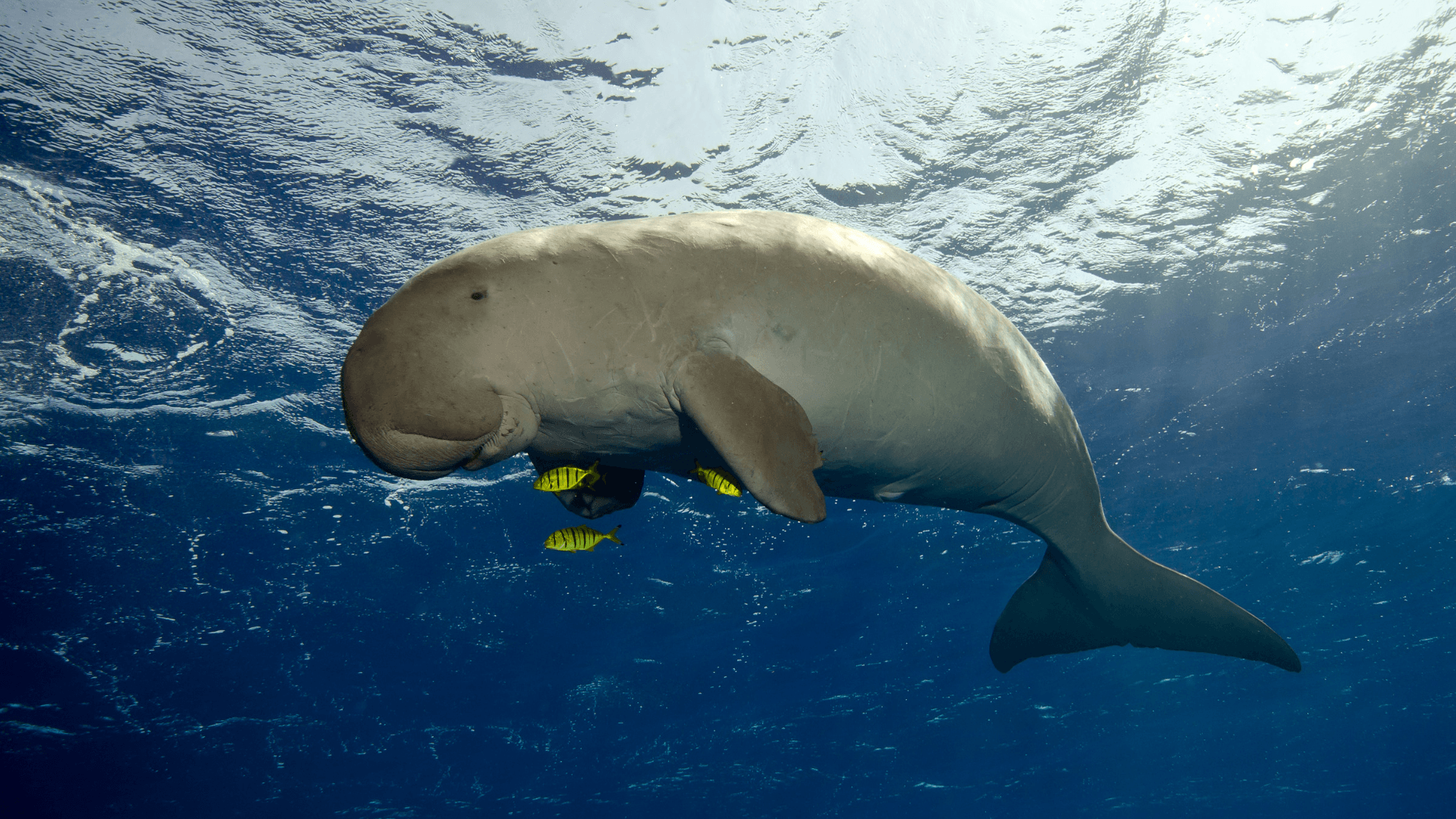
Palk Bay, on the southeast coast of India, is one of the country’s most important seagrass landscapes. Its shallow coastal waters support rich biodiversity, productive fisheries, and local livelihoods. The region is also home to the world’s first Dugong Conservation Reserve, created in 2022 to protect the reserves namesake, alongside the seagrass meadows on which dugongs depend.
Throughout 2026, OMCAR Foundation and Project Seagrass have been working together to strengthen the conservation and sustainable management of seagrass ecosystems in Palk Bay. Our partnership has focused on generating local evidence, building technical capacity, supporting community-centred conservation, and strengthening and deploying tools that can help inform the future management of this globally important seagrass seascape.
Founded in 2007 by Dr. V. Balaji, OMCAR Foundation is a marine conservation organisation dedicated to the conservation of coastal ecosystems and enhancing the well-being of communities in the Palk Bay region of Tamil Nadu, India. Through our partnership, OMCAR and Project Seagrass have worked together to better understand how seagrass ecosystems support people, fisheries, biodiversity, and conservation planning in the region.
Turning local knowledge into evidence
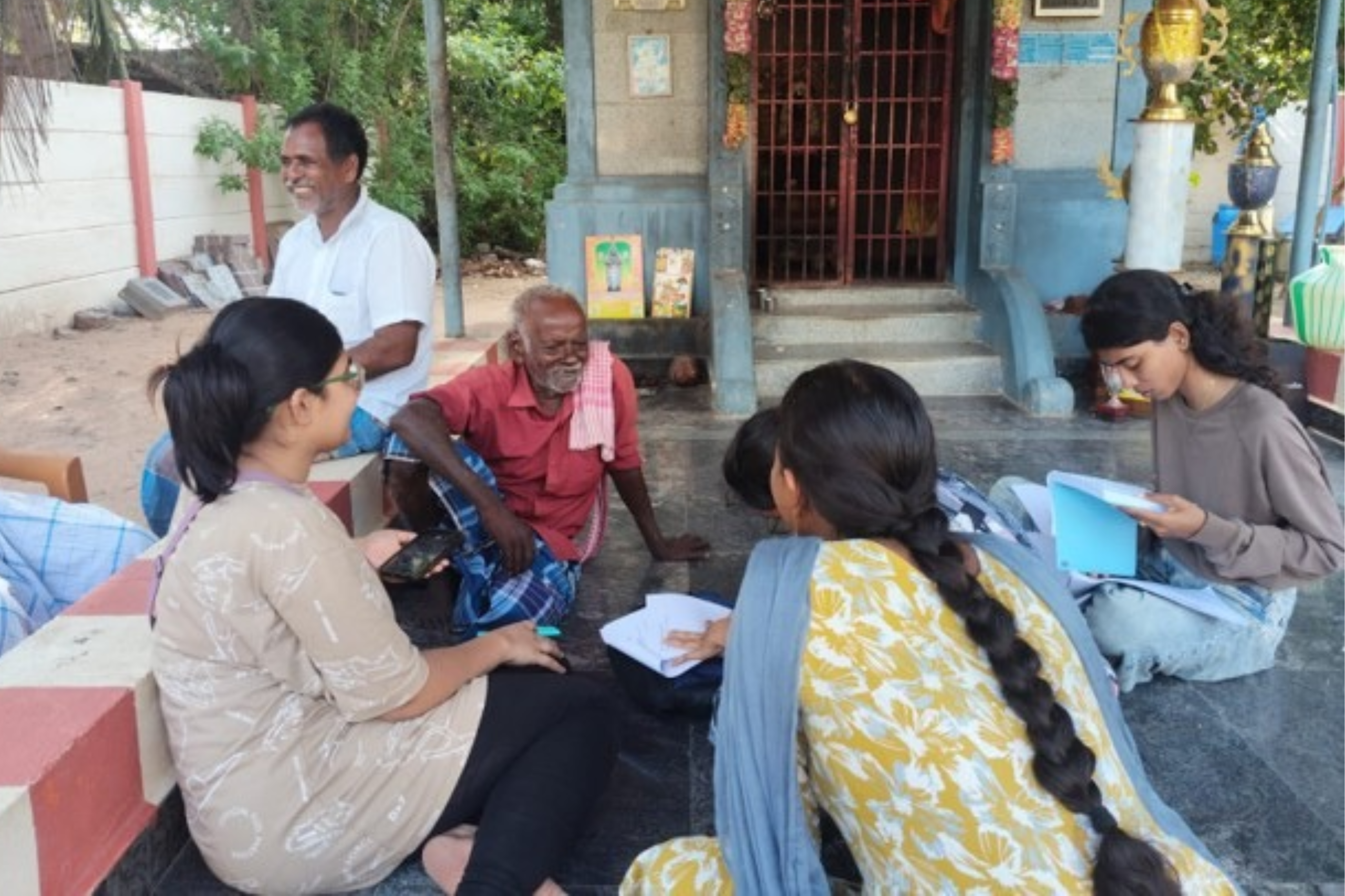
One of the major aims of our partnership was to generate new community-centred evidence on seagrass-associated fisheries. Many small-scale, subsistence, and community fisheries are poorly represented in formal monitoring systems. Long-term records of catch, effort, fish size, and ecosystem change are often limited or absent. Yet fishers and harvesters frequently hold decades of detailed experience about how fisheries have changed over time. To help capture this knowledge in a structured way, we provided training to OMCAR staff and students on the Best Catch Assessment, or BECAA, methodology developed by Chief Conservation Officer, Dr. Benjamin Jones. This training aimed to support OMCAR to assess changes in seagrass fisheries over time.
What is BECAA?
BECAA is a method designed to help understand changes in fisheries where formal monitoring data are limited. Rather than treating local knowledge as anecdotal, the method records memorable fishing experiences as structured evidence. Fishers and harvesters are asked about their best catches now and in the past. Their responses are recorded as numbers, including year, catch size, effort, and other relevant details. When many responses are brought together, they can reveal patterns in catch, effort, fish size, and change over time.
The approach also draws upon the Wisdom of Crowds theory, where many individual estimates can be combined to create a stronger collective picture.
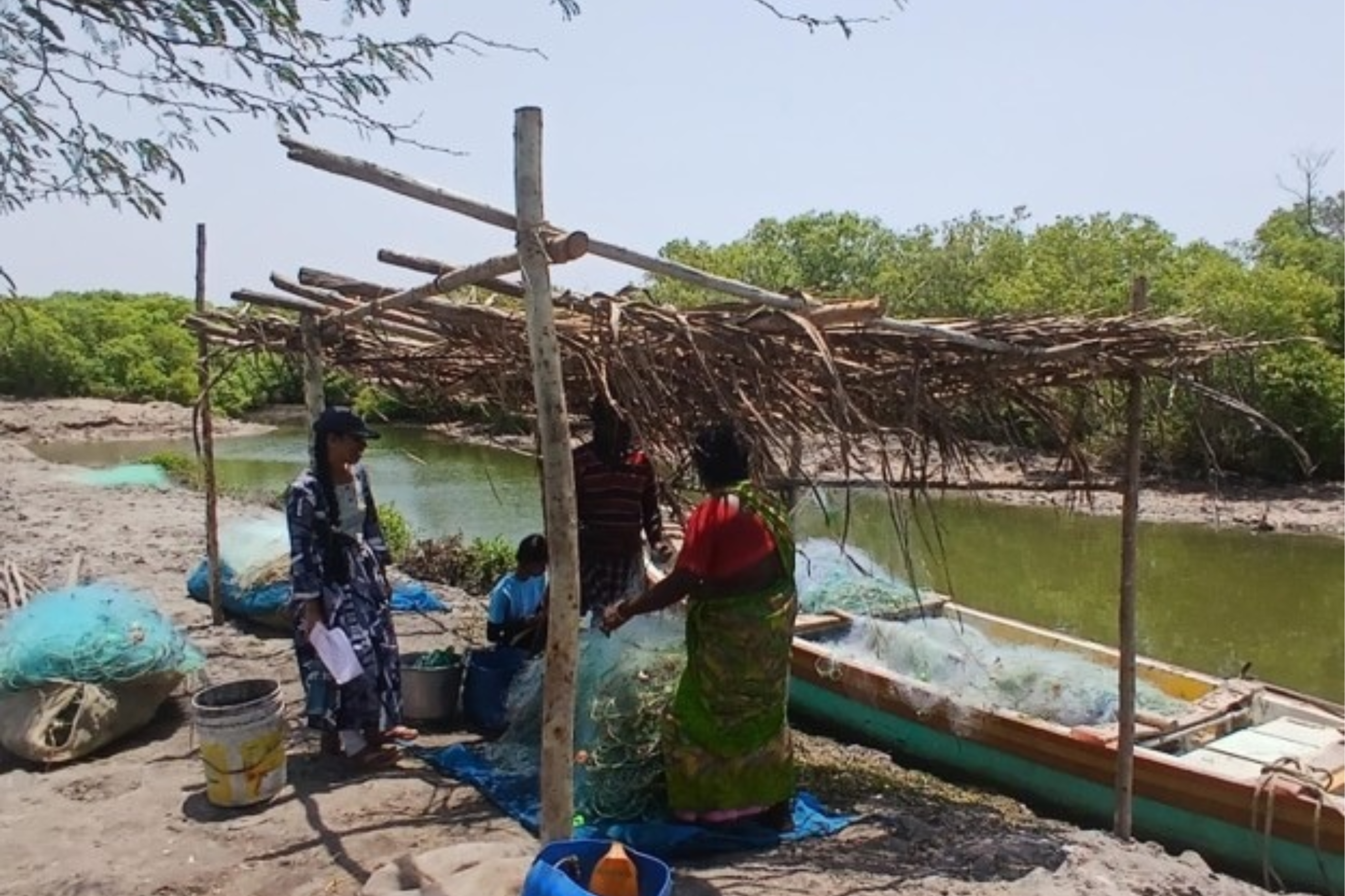
Through this partnership, BECAA was applied for the first time in a small-scale fisheries context. Data were collected by OMCAR staff and students, creating valuable new insights into local fisheries dynamics and how these may have changed over time. This work will help inform future social-ecological management in Palk Bay, supporting both conservation planning and local food systems.
The results from this aspect of the project have been compiled into the report: Reading change without a time series: Catch, value and livelihood trajectories in a seagrass fishery of Palk Bay, India
Understanding vulnerability in seagrass-dependent communities
Alongside the BECAA work, Project Seagrass and OMCAR also worked together to analyse household and village survey data collected by OMCAR during 2025. This analysis, led by Senior Science Officer for our Global Programme, Dr. Lucy Coals, aimed to translate existing socio-economic data into practical insights for seagrass management. In particular, the work explored which seagrass-dependent fishing villages may be most vulnerable if seagrass condition, access to fishing areas, or fish catches decline.
By looking at social, economic, livelihood, and environmental pressures together, the analysis helped us and OMCAR identify where different forms of support may be needed. Some communities may require stronger livelihood support, others may benefit from co-management approaches, while others may be well placed to act as stewardship or learning sites.
We presented these findings to the Tamil Nadu government in late September, and the full results are presented in the report: Recognising patterns of vulnerability in a seagrass-dependent social-ecological system to support place-based management.
This work is especially timely in light of new research showing the importance of integrating seagrass ecosystems into poverty alleviation, food security, and sustainable development strategies. Seagrass conservation is not only about protecting biodiversity. In places like Palk Bay, it is also about recognising the people, livelihoods, and local food systems connected to these underwater meadows.
Raising awareness of Palk Bay’s seagrass and dugongs
During summer 2026, our Digital Content Creator, Tim Horton teamed up with cinematographer Rahul Demello to co-produce a short awareness film about the creation of the Palk Bay Dugong Conservation Reserve.
The film highlights the importance of local seagrass meadows, the role of the reserve, and the network of people and organisations involved in dugong and seagrass conservation across the region. It brings together the ecological importance of the area with the human stories behind conservation action.
The film will be used by OMCAR Foundation and Project Seagrass as an awareness-raising tool to communicate the global value of the reserve for seagrass, dugongs, fisheries, and coastal communities.
Making seagrass citizen science more accessible
As part of the partnership, Project Seagrass also worked to improve access to SeagrassSpotter, our global citizen science platform for recording seagrass observations.
To support wider participation, SeagrassSpotter was translated into Tamil, Malayalam and Hindi. These updates will help more people engage with seagrass citizen science in their own language, making it easier to record sightings, share knowledge, and contribute to global understanding of seagrass distribution and condition.
Citizen science tools like SeagrassSpotter can play an important role in connecting local observations to wider conservation action. In regions where seagrass meadows are extensive, biodiverse, and socially important, accessible tools are essential for building shared knowledge and long-term stewardship.
A partnership for people, seagrass, and biodiversity
Our partnership with OMCAR and what we’ve achieved in Palk Bay shows why seagrass conservation must be rooted in both ecological and social evidence. In India and more broadly across the Indo-Pacific, seagrass meadows support charismatic species like dugongs, fisheries, biodiversity, and coastal communities. Protecting them requires strong local partnerships, practical tools, community-centred data, and approaches that recognise the needs and knowledge of the people who depend on them. Embracing these, our partnership with OMCAR Foundation has helped strengthen the foundations for long-term seagrass conservation and sustainable management in Palk Bay.
However, this is only one step in a wider journey. Building the evidence, capacity, and shared understanding needed to support seagrass ecosystems and the communities connected to them is central to the work that Project Seagrass is trying to achieve through the Global Seagrass Challenge Fund. But we need support to develop further partnerships and continue existing ones. If you’d like to support more work on-the-ground in regions where communities are reliant on seagrass for food security and livelihoods, please back the Global Seagrass Challenge Fund.
This work was carried out as part of the IKI Seagrass Ecosystem Services Project, coordinated by the Dugong MOU Secretariat under the Convention on Migratory Species and supported by the International Climate Initiative. The International Climate Initiative is supported by the Federal Government of Germany and anchored in the Federal Ministry for the Environment, Climate Action, Nature Conservation and Nuclear Safety.