Tag: monitoring

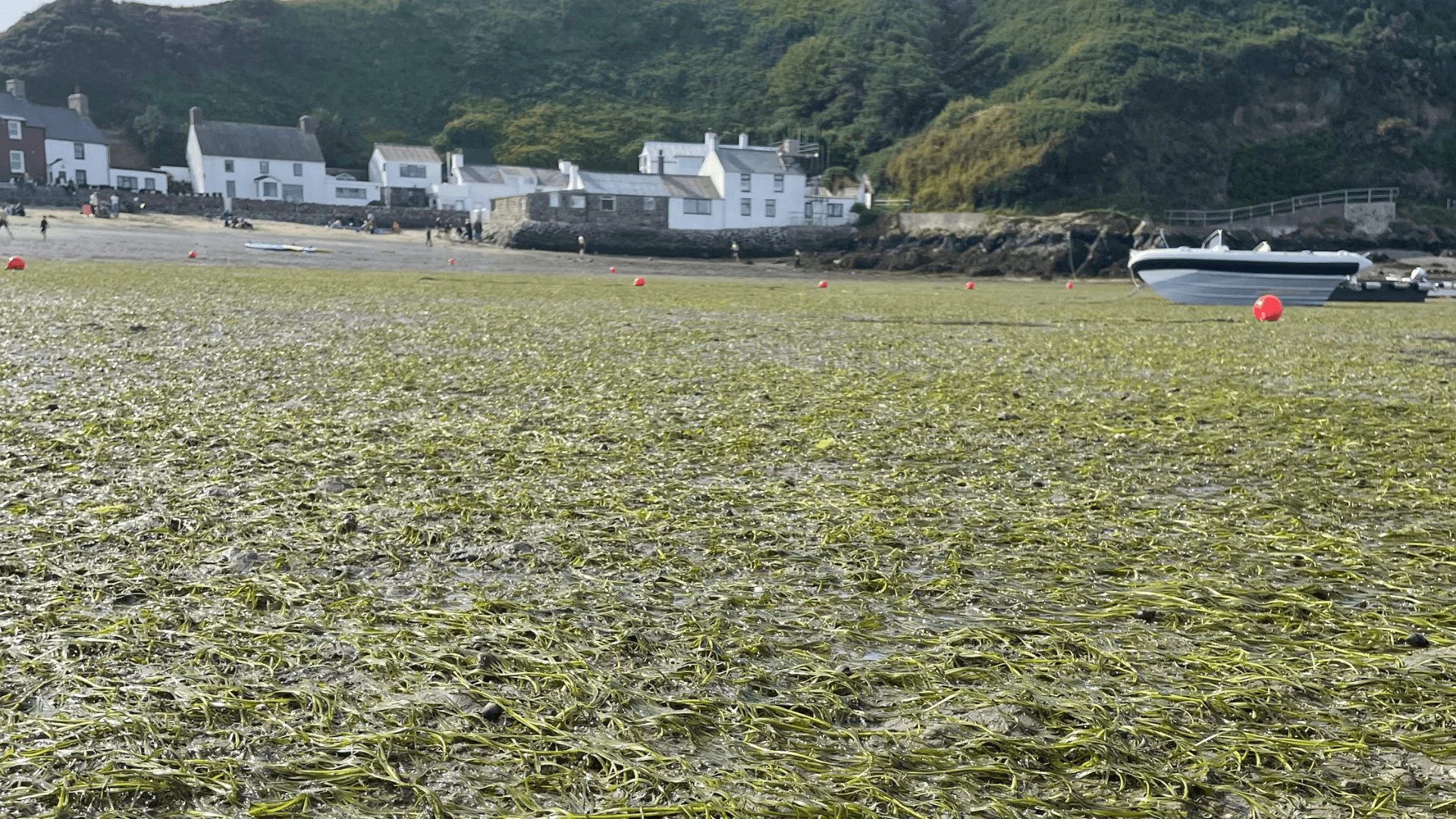
Seagrass meadow at Porthdinllaen meadow exposed at low tide,

Seagrass-Watch & Restoration Update – North Wales

Earlier this year, Project Seagrass welcomed Rhys Bowen to the team to support our work in North Wales as part of the Seagrass Ocean Rescue North Wales programme. This follows on from Rhys’ involvement in the programme during 2024 where we worked as one of the Marine Futures Interns at

Read More »
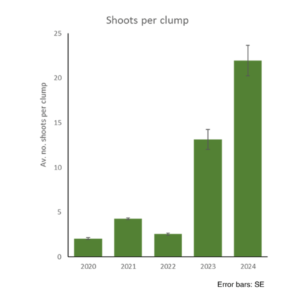
Graph showing shoots per clump from recent monitoring in Dale

Dale Seagrass Update

Following scientific trials in 2019, in 2020 many seagrass seeds were planted in Dale, supported by the community, school children and local organisations. Since planting, the seagrass area has been reseeded several times to infill gaps and support it as it develops. Despite some setbacks, the restoration area is now

Read More »
Posidonia species of seagrass in tropical blue waters underwater

Hurricanes devastated Florida’s East Coast. Then seagrass made an unexpected comeback

Hannah Harrero and Stephanie Insalaco-Wyner, geographers from Florida, comment on differing methods of monitoring the resilience of seagrass meadows in Florida’s ‘Mosquito Lagoon’, following a number of extreme weather events. Florida’s Indian River Lagoon has been an ecosystem in decline going back to 2011, when harmful algal blooms led to a severe decline in seagrass, the foundational component of shallow coastal ecosystems. Seagrass meadows stabilize sediments, improve water clarity and provide critical habitat and forage for species ranging from invertebrates to sea turtles and manatees. Seagrass also generates a significant amount of economic activity in the state of Florida. The loss of seagrass in the Indian River Lagoon System undermined fisheries, tourism and wildlife, ultimately leading to the starvation of more than 1,200 manatees from 2020-25, peaking in 2021-22. Mosquito Lagoon is part of the Indian River Lagoon system that spans 28 miles (45 kilometers), running from Cape Canaveral in the south up to Ponce Inlet in the north. As in the rest of the lagoon system, years of nutrient pollution and recurring algal blooms had diminished seagrass cover to nearly zero by the early 2020s. By most accounts, Mosquito Lagoon had crossed a critical ecological tipping point. In the fall of 2022, hurricanes Ian and Nicole struck Florida’s east coast within six weeks of one another, bringing intense rainfall, storm surges and coastal erosion. In the immediate aftermath, seagrass declined even further. But a few months later, in the spring of 2023, seagrass began to return. Satellite imagery revealed rapid and widespread regrowth. Hannah and I are geographers who study environmental change. Our research documents this unexpected recovery and examines what it may reveal about ecosystem resilience in heavily degraded coastal systems. One of us, Hannah Herrero, is a Volusia County native who grew up around the lagoon. She returned to her hometown at the outset of the COVID-19 pandemic. It was there that some local guides and fishermen she’d known for years suggested that our team should use satellite imagery to look at the state of collapse in the lagoon. The study we designed as a result used satellite imagery and machine learning, a type of artificial intelligence that uses advanced algorithms to learn and predict patterns, to track seagrass dynamics in Mosquito Lagoon before, during and after the storms. This approach allowed us to observe change at a scale and frequency that is difficult to achieve using only traditional field survey methods.   Florida Manatee Tracking seagrass from space Monitoring seagrass coverage “the old-fashioned way” involves going into the lagoon and laying out transects, straight lines that cut through a landscape, so standard observations could be recorded. We would then have to boat or wade all along those lines to measure seagrass extent and locations and create digital maps manually to show where it is present. As you can imagine, this is a time-intensive process that’s limited by how far you can boat or swim in a day, and by financial resources. So we decided to use satellite imagery instead. This method is not without its own challenges—water turbidity, or cloudiness, seasonal variability and the patchy nature of vegetation that grows on the bottom of the lagoon all make it difficult to observe seagrass growth directly on the imagery. To address this challenge, our study used imagery from NASA’s Harmonized Landsat–Sentinel program, which combines data from multiple satellites into a consistent record of photos of the same areas taken frequently over time. We analyzed imagery collected between September 2022 and January 2024, focusing on periods before and immediately after the hurricanes and throughout the subsequent recovery. We applied a type of machine learning model called Random Forest to classify each image into seagrass and nonseagrass categories. The machine learning algorithm is informed by training samples collected in the field, but once the model has learned the signature of seagrass, it is able to then apply the classification model to the rest of the lagoon and across time with limited human input. We can then validate this classification.   Heading into the field First, we had to train the model using hundreds of GPS points collected in the field over multiple seasons. This step helps to ensure that satellite classifications align with on-the-ground conditions and are accurately interpreting the images. Over several weeks during the summers of 2020 through 2023, our team spent many hours navigating Mosquito Lagoon in a small skiff designed for shallow depths, recording seagrass presence. It wasn’t always easy — Florida summers are intensely hot and humid, and Mosquito Lagoon definitely lived up to its name. But we got to see a wide variety of wildlife, including manatees, dolphins, sea turtles and alligators. And occasionally, on lucky days, we even spotted a roseate spoonbill or reddish egret. Our experience in the field highlighted why this system matters: Mosquito Lagoon is a remarkably vibrant place, teeming with wildlife. These long days on the lagoon, surrounded by its biodiversity and immersed in its unique sense of place, are what anchor the remote sensing data to on-the-ground ecological conditions and make the resulting models credible.   The authors wade into Mosquito Lagoon to track seagrass growth as they train their AI model. Captain William B. Wolfson, Grassroots Guide Service, New Smyrna Beach, FL What we found Our analysis reveals three distinct phases of seagrass coverage. First, seagrass declined sharply following hurricanes Ian and Nicole. By December 2022 and early 2023, satellite imagery showed virtually no detectable seagrass across the lagoon. Then, in March 2023, we identified a statistically significant shift. Seagrass began to reappear, initially in small, scattered patches. Finally, during late spring and summer 2023, seagrass expanded rapidly. By July 2023, it covered more than 20% of the lagoon—levels not observed in more than a decade. Coverage then declined again during the winter of 2023–24, as expected based on seasonal growth cycles. But even our last observation, completed in January 2024, showed seagrass covering 4.3% of the lagoon, substantially higher than pre-recovery levels during the winter season. In spring 2026, seagrass in Mosquito Lagoon has remained at stable levels. Although it still experiences fluctuations due to algal blooms, seasonality and other changes in the ecosystem, we have not seen a
Read More »
A species of seagrass; Zostera marina. Credit Ben Jones

‘Protected’ seagrass meadows aren’t necessarily healthy – because pollution doesn’t stop at the shoreline

Heidi McIlvenny, PhD researcher from Queen’s University Belfast, comments on seagrass meadows in Northern Ireland and how seagrass meadows can recover but only if we tackle the pollution at its source. I spent last summer wading through seagrass meadows across Northern Ireland, from the sheltered waters of Strangford Lough to the exposed coast at Waterfoot Bay. I was collecting seagrass leaves and testing them for nitrogen pollution. Every meadow I visited sits inside a marine protected area – a stretch of sea that’s been given legal protection to safeguard the wildlife living there. And every single one was polluted beyond the limit for healthy seagrass. Seagrass meadows are among the most valuable habitats in our coastal waters. They store carbon, nurture young fish and shellfish, stabilise sediment and buffer shorelines from storms. They are also woven into the heritage of coastal communities who have fished and foraged around them for generations. But they are disappearing worldwide, and nitrogen pollution from farming, sewage and urban runoff is one of the biggest reasons why. It’s easy to assume that designating an area as “protected” keeps the habitat inside it safe. My research shows that, for seagrass, this assumption is dangerously wrong. Physical protection from anchors and dredging means little when pollution flows freely across the boundary from the land. What matters most for seagrass is not lines drawn on a map, but what happens on shore. To understand how much nitrogen pollution seagrass is absorbing, we can measure nitrogen content in the leaves themselves. Seagrass continuously takes up nutrients from the surrounding water, so the chemistry of its tissue works like a long-term pollution record. And my results showed that every meadow in Northern Ireland exceeded the pollution limit. But knowing the pollution level is only useful if you know how much is too much, and what it means for the health of the meadow. To answer that, we pulled together data from 13 countries across the northern hemisphere and found a clear pattern.   A catshark shelters among seagrass. Shannon Moran / Ocean Image Bank When nitrogen in the leaves rises above 1.8%, seagrass starts to suffer and loose plant growth. Above 2.8%, the decline accelerates rapidly, and in this danger zone small increases in pollution trigger disproportionately large plant losses. Think of it as a traffic light system: green is below 1.8% where meadows can cope; amber is between 1.8% and 2.8%, where managers should be watching closely and acting to reduce pollution; and red is above 2.8%, where urgent intervention is needed before the damage becomes irreversible. The starkest example of a meadow in the red zone comes from Dundrum Bay, on the County Down coast. According to government assessments, it’s healthy. But my data tells a different story. Nitrogen levels here were nearly double the pollution limit of 1.8%. Surveys over the past decade paint an even bleaker picture: where lush meadows once thrived, dense mats of green algae now smother what little remains. This meadow has likely crossed a tipping point, and may never recover even if we clean up the pollution. A few miles up the coast we see a very different picture. At Castle Espie, beside a wetland reserve in Strangford Lough, a seagrass meadow is thriving. The plants here belong to the same genetic population as struggling meadows elsewhere in the lough. But the difference is that the reserve’s reedbeds and willows act as natural filters, cleaning the water that runs from the land before it reaches the sea. The same species with the same level of marine protection, but dramatically different outcomes. The difference is what happens on land. But current monitoring methods aren’t designed to spot this kind of trouble before it’s too late. An early warning system Current monitoring methods tend to measure how much seagrass is still there. But by the time a meadow visibly shrinks, the damage may already be done. The tissue chemistry approach we used picks up stress signals much earlier, while there is still time to act. The nitrogen thresholds my research identifies could give environmental agencies a practical early warning system: meadows at or above 1.8% need closer watching, and those at or above 2.8% need urgent action to reduce nutrient pollution from catchments. Seagrass meadows can recover but only if we tackle the pollution at its source. That means better management of urban and agricultural runoff, investment in sewage treatment and recognising that marine conservation cannot stop at the high tide mark. If we lose these meadows, we lose their carbon stores, their fish nurseries, the coastal protection they provide, along with a piece of our coastal heritage. More information: This article is republished from The Conversation

Read More »
Seagrass meadow at Porthdinllaen meadow exposed at low tide,

Seagrass-Watch & Restoration Update – North Wales

Earlier this year, Project Seagrass welcomed Rhys Bowen to the team to support our work in North Wales as part of the Seagrass Ocean Rescue North Wales programme. This follows on from Rhys’ involvement in the programme during 2024 where we worked as one of the Marine Futures Interns at our Seagrass Ocean Rescue partner, the North Wales Wildlife Trust. Rhys splits his time between Project Seagrass and North Wales Wildlife Trust. In this blog article Rhys reflects on recent seagrass monitoring he has been involved with in North Wales: Over the past few months, I’ve had the privilege of monitoring several key seagrass meadows and restoration sites across North Wales. These meadows, both old and new, play a vital role in our national marine conservation efforts. Seagrass Watch at Porthdinllaen, Llyn Peninsula In May, with the help of Dylan and Reece from North Wales Wildlife Trust, I conducted monitoring at our longstanding seed donor site in Porthdinllaen. We used the internationally recognised Seagrass Watch protocol which has been implemented at this meadow since 2015 and follows a rigorous, standardised approach. Using 50 cm² quadrats along three fixed transects, I collected data every 5 meters on: Seagrass cover. Epiphyte and algal presence. Average leaf lengths. This consistent monitoring at the same locations allows us to track changes in seagrass health over time and helps inform both conservation and restoration strategies. Seagrass meadow at Porthdinllaen. Photo Credit Rhys Bowen Project Seagrass Seagrass Watch monitoring at Porthdinllaen. Photo Credit Rhys Bowen Project Seagrass Restoration Efforts on Ynys Môn (Anglesey) As the Seagrass Ocean Rescue programme entered its fourth year, we continue to strive towards our goal to plant Zostera marina over an area of ten hectares across North Wales between 2022 and 2026. This year, at Penrhos and Penrhyn on Anglesey, we planted nearly 1 million seagrass seeds using two methods: The DIS (Dispenser Injection Seeding) technique. A manually powered seeding machine, developed by The Fieldwork Company designed to efficiently distribute mud-seed mixtures over large areas.   Both methods have proved effective and the machine quickly won fans among our volunteers! Of which, none of this would be possible without the incredible support from our community groups, dedicated local volunteers, and the amazing Ocean Rescue Champions at the North Wales Wildlife Trust. Massive thanks to everyone who braved the weather and mud with us! As someone who is new to restoration, it was eye-opening to be a part of this ongoing work and witness the precision and care that goes into giving these tiny seeds the best chance of developing into healthy adult plants and meadows. First Signs of Growth In late June over the spring tides, I returned to Holyhead Bay with volunteers to assess the seagrass we had planted out in spring. We used 1m² quadrats to count seagrass shoots and measure leaf length and epiphyte coverage withing our planting plots. Following this period of monitoring I’m thrilled to report: Seagrass is growing across nearly all our planted plots. Shoots from both planting methods (DIS and Seeding machine) have emerged. Some leaves have already reached lengths of 12 cm and appear healthy.   Monitoring will continue throughout the year alongside collection of environmental data. This will continue to inform and support our restoration work. The Seagrass Ocean Rescue team would like to thank the partners and volunteers for their continued support. Keep an eye out for more opportunities to get involved by signing up to our newsletter! Seagrass Watch Monitoring in Porthdinllaen

Read More »
Graph showing shoots per clump from recent monitoring in Dale

Dale Seagrass Update

Following scientific trials in 2019, in 2020 many seagrass seeds were planted in Dale, supported by the community, school children and local organisations. Since planting, the seagrass area has been reseeded several times to infill gaps and support it as it develops. Despite some setbacks, the restoration area is now doing well, with a great increase in growth this year seen in recent monitoring. The natural patch of seagrass closer to the shore (Frenchman’s Bay area) is also doing well, likely due to seagrass seeds being transported to this area from the restoration area, and natural growth. Scuba divers went out in autumn 2024 and covered 3,000 m² of the restoration area, surveying in ten distinct lines. The results show that the average number of shoots within each seagrass clump has greatly increased since 2023. This means that the clumps of seagrass are larger, with the potential to patch together with more growth to form a meadow. The seagrass in the restoration is looking healthy and growing well!  The average number of shoots across the whole restoration area has also increased since 2023, and recovered since a trawling and storm incidentthat impacted the seagrass from 2021 to 2022. Leaf length of the seagrass has remained stable from 2023 to 2024, suggesting that the seagrass is reaching it’s maximum length for the environmental conditions. We’ve also been co-delivering many seagrass related activities with local businesses – including seagrass paddleboard and snorkel safaris, art activities, seine netting, community meetings and more. We have our first Sensitive Ecosystem Responsible Fisher (SERF) and are trialling seagrass friendly lobster pots. We also continue to support the visitor moorings located outside of the restoration area – with donations encouraged for use. We couldn’t have achieved what has been without the ongoing support of Dale Seagrass Stakeholder Group, who continue to provide oversight to the project.

Read More »