Tag: seagrass

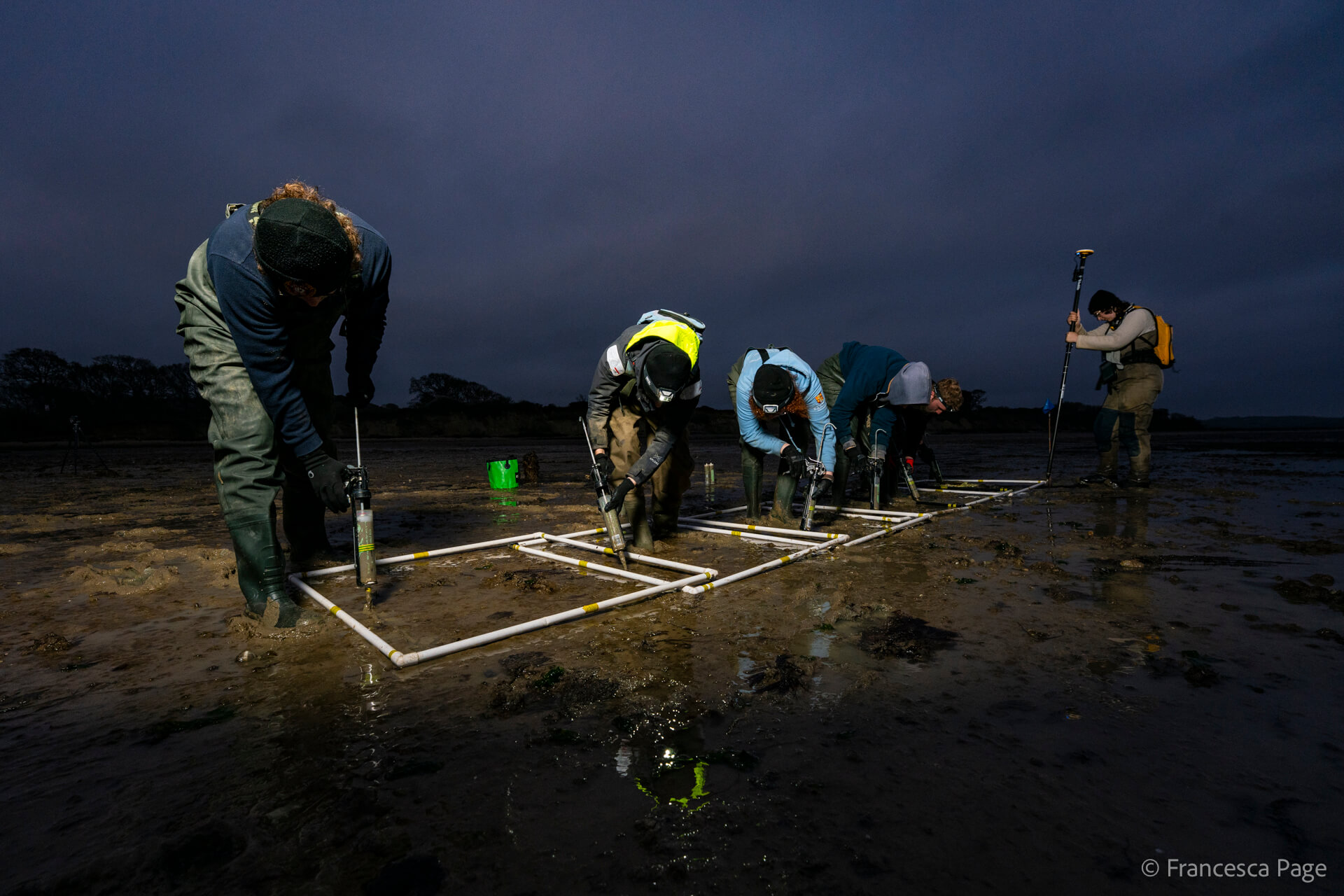
Members of Project Seagrass staff are planting seagrass seeds using DIS guns. They are planting into quadrats. It is early morning and the sun hasn't yet risen.

Rethinking Marine Restoration: Why Permits Could Be Holding Us Back

The Ocean is in crisis. Coral reefs are bleaching, seagrass meadows are vanishing, mangroves are being cleared, and biodiversity is plummeting. Scientists estimate we’ve already lost up to 50% of global saltmarshes, 35% of mangroves, and 20% of seagrasses. Yet alongside this sobering decline, momentum for marine restoration has never

Read More »
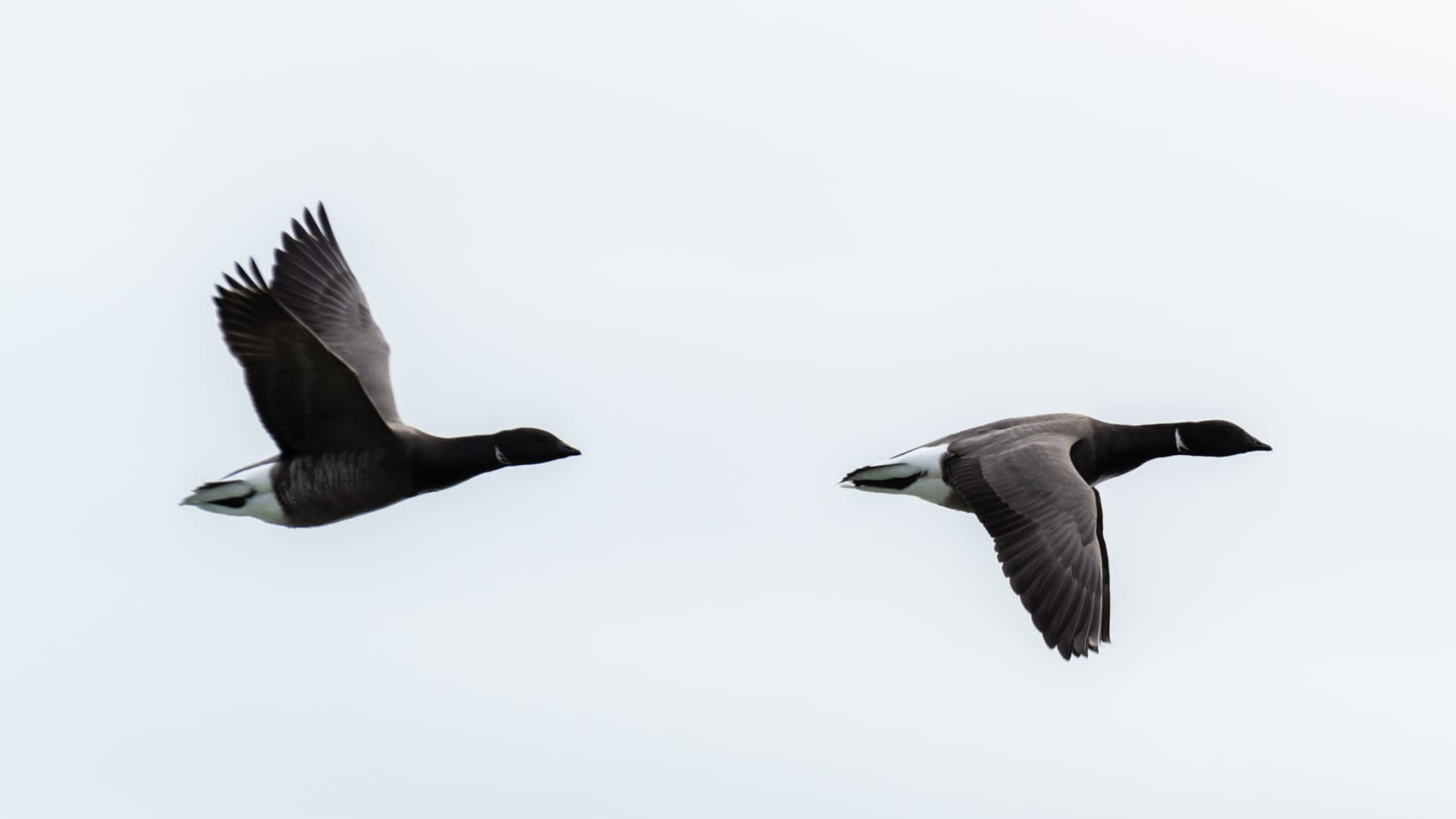
A pair of dark bellied Brent Geese fly through the sky. The sky is grey

The Brent Goose: Creatures that call seagrass home

In a new blog series, our Conservation Trainee Abi David explores some of the amazing creatures that call seagrass meadows their home. The Brent Goose Branta bernicla is of a similar size to a Mallard duck, making it one of the smallest goose species in the world. They are a

Read More »
Seagrass meadow shift in warming seas

Beneath seagrass meadows, a shift in warming seas could decide which underwater habitats survive

On the western side of Lake Macquarie in New South Wales, Australia, sits Myuna Bay – a quiet bay with meadows of seagrass waving beneath the water. The most common marine plant species you find there is Zostera muelleri. It has long ribbon-like leaves that grow from stems (called rhizomes) buried beneath the sediment and provides important shelter for small fish, shrimp and crabs. Although Myuna Bay looks quite normal, it is actually a bit unusual. For decades, the nearby Eraring power station released warm water into the lake that was used to cool down their systems, causing water temperatures here to be consistently 1°C to 3°C higher than nearby sites. This made the bay a rare natural laboratory for understanding what warming oceans might mean for coastal ecosystems. In our new research, published today in the journal New Phytologist, we used this setting to investigate what happens to seagrass and the microbes living in the sediment when ocean temperatures increase in the way climate models predict they will in the future. Experimental design. Sediments (intact or disrupted microbial communities via autoclaving) and seagrass (Zostera muelleri) plants (with intact or disrupted rhizosphere microbial community) were transplanted into the warm environment to test how belowground microbes affect seagrass performance under elevated ocean temperatures. Six plants (two from each of the three ambient and warm sites) were randomly placed into each pot with five replicate pots per treatment. Credit: New Phytologist (2026).   One of the most important coastal habitats   Seagrasses are often overlooked, but they are among the most important coastal habitats on Earth. They are marine flowering plants that stabilize sediments, improve water clarity and provide food and shelter for many marine animals. They also store large amounts of carbon in the sediments beneath them, making them important for slowing climate change. But seagrasses don’t function alone. Beneath the leaves, in the sediments, lives a hidden ecosystem of microbes: bacteria, fungi and other microscopic organisms that interact with the plant. Just as plants on land depend on soil microbes, seagrasses rely on microbial communities in the sediment around their roots. These microbes carry out many important processes. Some provide nutrients that plants need to grow. Others break down organic matter or detoxify harmful compounds in the sediment. In some ways, the relationship can be compared to the partnership between corals and the microscopic algae living inside them. Corals rely on those algae for energy, while seagrasses depend on microbes to help maintain a healthy environment around their roots. But not all microbes are helpful. Some produce sulfide, a compound that can be toxic to seagrass roots when it accumulates in sediments. We are starting to find out that whether microbial communities help or harm the plant can depend strongly on environmental conditions, including increases in ocean temperatures due to climate change.   Simulating future ocean warming in the field   To understand how ocean warming might affect the relationship between seagrasses and microbes in the sediment under realistic future conditions, we designed a field experiment at Myuna Bay. We collected seagrass plants and sediments from both warmer and “normal” temperature sites in Lake Macquarie. Some plants were grown in sediments with their microbial communities intact. In other treatments, the sediments were heated to 121°C to disrupt the microbes; this reduces total bacterial abundance by more than 95%. This allowed us to test how plants performed when the microbial community was intact versus when it had been disrupted. We then placed plants in pots with those different sediments and exposed the plants to warmer conditions at Myuna Bay, similar to those expected in the future. After one month, we monitored how the plants responded. We measured how they survived, how many shoots they produced and how their biomass changed over time. At the same time, we analyzed the bacterial communities in the sediment using DNA sequencing to see how they differed between treatments.   Looking beyond plants   When plants were grown in sediments from “normal” temperature sites, seagrass performed well whether the microbes were intact or disrupted. But when plants were grown in sediments from warmer sites, the outcome changed: plants growing with intact sediment microbial communities performed worse. These sediments from the warm areas also contained different bacterial communities, which may help explain the lower plant biomass we observed. One possible explanation involves sulfide. In seagrass sediments, certain microbes produce sulfide as part of their metabolism. At high concentrations, sulfide can be toxic for seagrasses. Warmer temperatures may stimulate microbial activity, increasing sulfide production and tipping the balance from a supportive microbial community to one that harms the plant. Our findings highlight an important idea: the impacts of climate change on seagrasses can’t be understood by looking at the plants alone. The microbial communities living in the sediment can also influence how these plants respond to warming. This has important implications for conservation and restoration. Around the world, seagrass meadows are declining due to coastal development, pollution and climate change. Restoration projects often focus on planting seagrass shoots or seeds. But the condition of the surrounding sediment, including its microbial community, may also determine whether restoration succeeds. As oceans continue to warm, the future of seagrass meadows may depend not only on the plants we see when snorkelling, but also on the microscopic microbes living in the sediment beneath them.   More information: This article is republished from Phys.org Read the research paper here: Ocean warming indirectly affects seagrass performance through effects on sediment microbial communities – Jongen – New Phytologist – Wiley Online Library

Read More »
Members of Project Seagrass staff are planting seagrass seeds using DIS guns. They are planting into quadrats. It is early morning and the sun hasn't yet risen.

Rethinking Marine Restoration: Why Permits Could Be Holding Us Back

The Ocean is in crisis. Coral reefs are bleaching, seagrass meadows are vanishing, mangroves are being cleared, and biodiversity is plummeting. Scientists estimate we’ve already lost up to 50% of global saltmarshes, 35% of mangroves, and 20% of seagrasses. Yet alongside this sobering decline, momentum for marine restoration has never been greater. The United Nations’ Decade on Ecosystem Restoration (2021–2030) and the Kunming–Montreal Global Biodiversity Framework both set ambitious targets: restoring 30% of degraded ecosystems, including those underwater, by 2030. So the question is: if the will, the science, and the funding are building, what’s holding us back? According to a team of 25 scientists and practitioners from 18 countries, one of the biggest obstacles isn’t just the technical challenge of restoration itself, it’s the licensing and regulation systems designed to govern it. In their recent paper, Rethinking Marine Restoration Permitting to Urgently Advance Efforts, they argue that outdated, overly complex permitting processes are unintentionally slowing down the very projects needed to restore the oceans. Marine Restoration Is Still Young Unlike reforestation on land, which has centuries of trial and error behind it, marine restoration is still in its infancy. Early projects in kelp, oysters, and seagrass go back decades, but systematic science-based restoration is relatively new. Failures are common, often because methods are untested or ecological dynamics are poorly understood. But those failures are not a reason to stop—they are opportunities to learn. Unfortunately, knowledge sharing is patchy, with unsuccessful projects often going unreported. This means mistakes are repeated instead of avoided. When Regulation Backfires No one disputes that regulations are essential to protect fragile ecosystems. But the paper highlights a paradox: the very laws meant to safeguard marine environments can also block or delay restoration. Permitting processes are frequently designed for terrestrial development projects, not marine habitat recovery. This mismatch means approvals are expensive, slow, and sometimes impossible to obtain. For instance, restoration within marine protected areas is often heavily restricted, even when the activity would clearly benefit the marine ecosystems and its biodiversity. The result? Practitioners may choose suboptimal sites just to avoid regulatory headaches, or abandon projects altogether. In some cases, frustrated groups even take matters into their own hands through “covert restoration,” risking legal trouble to get reefs or seagrasses replanted. Why “Business as Usual” Won’t Work Complicating matters further is climate change. Even if the world manages to stay under the 1.5°C target of the Paris Agreement, marine ecosystems face enormous risks. Marine heatwaves, shifting species ranges, and rising seas mean that simply recreating past habitats is no longer realistic. Instead, the authors argue for a forward-looking approach: restoration must aim to create resilient ecosystems for the future, not replicas of the past. That may involve controversial tools like assisted gene flow, assisted migration, or even repurposing invasive species to provide ecological functions. While these approaches raise ethical questions, the authors stress that clinging to outdated baselines is more dangerous than carefully exploring new ones. The Case for Innovation “Sandpits” One of the paper’s most intriguing proposals is the creation of innovation sandpits, dedicated spaces where scientists and practitioners can test new restoration methods under flexible permitting conditions. The idea is to encourage creativity and experimentation, similar to the culture of innovation that drove the U.S. “moonshot” program. Such sandpits could allow restoration at meaningful scales, where failures are expected but also monitored and shared, building collective knowledge. Crucially, this would need to be done with free, prior, and informed consent from local communities, ensuring equity and transparency. Scaling Up Takes Time Another bottleneck is time. Most restoration permits are short-term, three to five years at most. But successful marine recovery often requires decades of continuous effort. Seagrass meadows, oyster reefs, and mangrove forests don’t mature overnight. Short permits create interruptions, forcing projects to restart and making funding insecure. For large-scale recovery, licensing must align with ecological realities: long-term horizons, continuity, and scale. Small, scattered projects will never be enough. Strategic national and international coordination is needed to identify suitable areas, streamline approvals, and pool resources. Equity and Responsibility The paper also highlights the importance of equity. Restoration is not just about biodiversity; it directly impacts the people who live alongside these ecosystems. Indigenous communities, local fishers, and coastal residents must have a say in how projects are planned and implemented. Otherwise, well-meaning initiatives could unintentionally restrict access to resources or sideline traditional knowledge. The authors emphasise that urgency must not become an excuse for ignoring equity. Social inclusion, fairness, and justice are essential for lasting success. Six Steps Toward Better Restoration Licensing The authors conclude with a six-point agenda for change: Embrace novelty: Use innovative tools (genetics, assisted migration, new technologies) to prepare for future conditions, not past baselines. Establish sandpits: Create safe zones for testing and scaling new methods. Strategic restoration zones: Designate areas where permits are streamlined and projects are protected from future disturbance. Transparent reporting: Mandate open sharing of successes and failures, so the whole field can learn. Streamlined, long-term permits: Align licensing with ecological timescales and assume restoration is a positive activity by default. Remove fees, add incentives: Instead of charging for permits, reward landowners and stakeholders who enable restoration. Looking Ahead Marine restoration has the potential to be a cornerstone of the “blue revolution” needed to sustain life on Earth. But to succeed, governments, regulators, scientists, and communities must rethink how we design the systems that enable it. As the authors argue, the goal is not deregulation, but smarter, more adaptive regulation. The ocean is changing rapidly, and restoration must change with it. By fostering innovation, embracing uncertainty, and prioritising resilience and equity, we can give our seas a fighting chance.
Read More »
A pair of dark bellied Brent Geese fly through the sky. The sky is grey

The Brent Goose: Creatures that call seagrass home

In a new blog series, our Conservation Trainee Abi David explores some of the amazing creatures that call seagrass meadows their home. The Brent Goose Branta bernicla is of a similar size to a Mallard duck, making it one of the smallest goose species in the world. They are a highly social species and form strong bonds within the groups they live in. If you spot a group of Brent Geese, look out for the ‘compass’ goose – this is the leader of the group and will lead the way between foraging areas. Depending on the species of Brent Goose, individuals may have a dark or light belly, along with a dark head and body, with adults having a small white patch on their necks. They can be seen throughout the UK during the autumn/ winter months in marine, intertidal or wetland areas. Dark bellied Brent Geese. Photo Credit Emma Butterworth Migration Just like many other bird species, Brent Geese carry out an annual migration. They spend summer months breeding and raising chicks in the Arctic and migrate to Western Europe for more temperate winters. Generally, the individuals we get overwintering here in the UK are from Siberia. Due to these long migration routes and small body size, Brent Geese have a high food demand meaning they heavily rely on stopovers to refuel. Their most popular stopover sites tend to be Zostera marina meadows. Large numbers of Brent Geese have been spotted for several weeks each year in Izembek Lagoon (Alaska), lagoons in Baja California, the German/Danish Wadden Sea, the Golfe du Morbihan (France), British estuaries, and the White Sea (Western Russian Arctic). Diet Brent Geese are heavily herbivorous and mainly consume seagrass. They have relatively short necks and lack the ability to dive so can only reach plants at low tide or in shallow water. Interestingly, during breeding season the geese will consume a wide range of plant species but show a strong preference for Zostera species throughout non-breeding seasons due to the high digestibility and nutritional value compared to other options. They have been observed eating both the leaves and rhizomes of the plants. Importance of seagrass for Brent Goose populations As mentioned previously, Brent Geese rely heavily on seagrass during their migrations. This can be seen in population trends. In the 1930s, Zostera species across the North American coast were heavily affected by wasting disease and there was a significant population decline. At the same time, a steep decline in Brent Goose population was also observed on both sides of the Atlantic, with estimates ranging from 75 – 90% of populations lost. During the 1950s, there was a good recovery of seagrass beds in the areas previously affected, which was followed by a recovery of Brent Goose populations from around 15,000 to over 100,000. Similar smaller scale events like this have been observed, showing just how important healthy seagrass meadows are for species like the Brent Goose that rely so heavily on them. Are Brent Geese bad for seagrass restoration? It could be argued that Brent Geese are bad for seagrass and bad for seagrass restoration due to their consumption of the plants. However, there is a bit more to it than that. Seagrass provides services for many species, and a food source is one of those. Anecdotally, there have been instances where restoration has occurred only for geese to come along and eat all of the freshly planted shoots, which really isn’t ideal. In the scientific literature, there is mixed evidence about how much the geese will consume and how this affects the meadow’s health, which makes it difficult to quantify their impact. Some research notes that the percent the geese eat out of the whole meadow is actually quite small and a healthy meadow should have no issue recovering from any damage. The geese could even be useful in seagrass restoration. They tend to only be seen where food is available and as such are an indicator species for the health of an ecosystem. Like all birds, they are useful for their ability to spread nutrients and seeds through their faeces, helping to spread plant species more widely than they would on their own. Additionally, they are an important food source for predators such as foxes and raptors in their Arctic breeding grounds. Brent Geese, like any other species using seagrass, are carrying out behaviours that have evolved over thousands of years. Therefore, the question of whether geese are bad for seagrass restoration is not a straightforward one. What do you think? Sources: Ganter, B. (2000). Seagrass ( Zostera spp.) as food for brent geese ( Branta bernicla ): an overview. Helgoland Marine Research, 54(2–3), 63–70. https://doi.org/10.1007/s101520050003 Find out more the role that seagrass plays for migratory birds here.

Read More »