Tag: social ecological systems

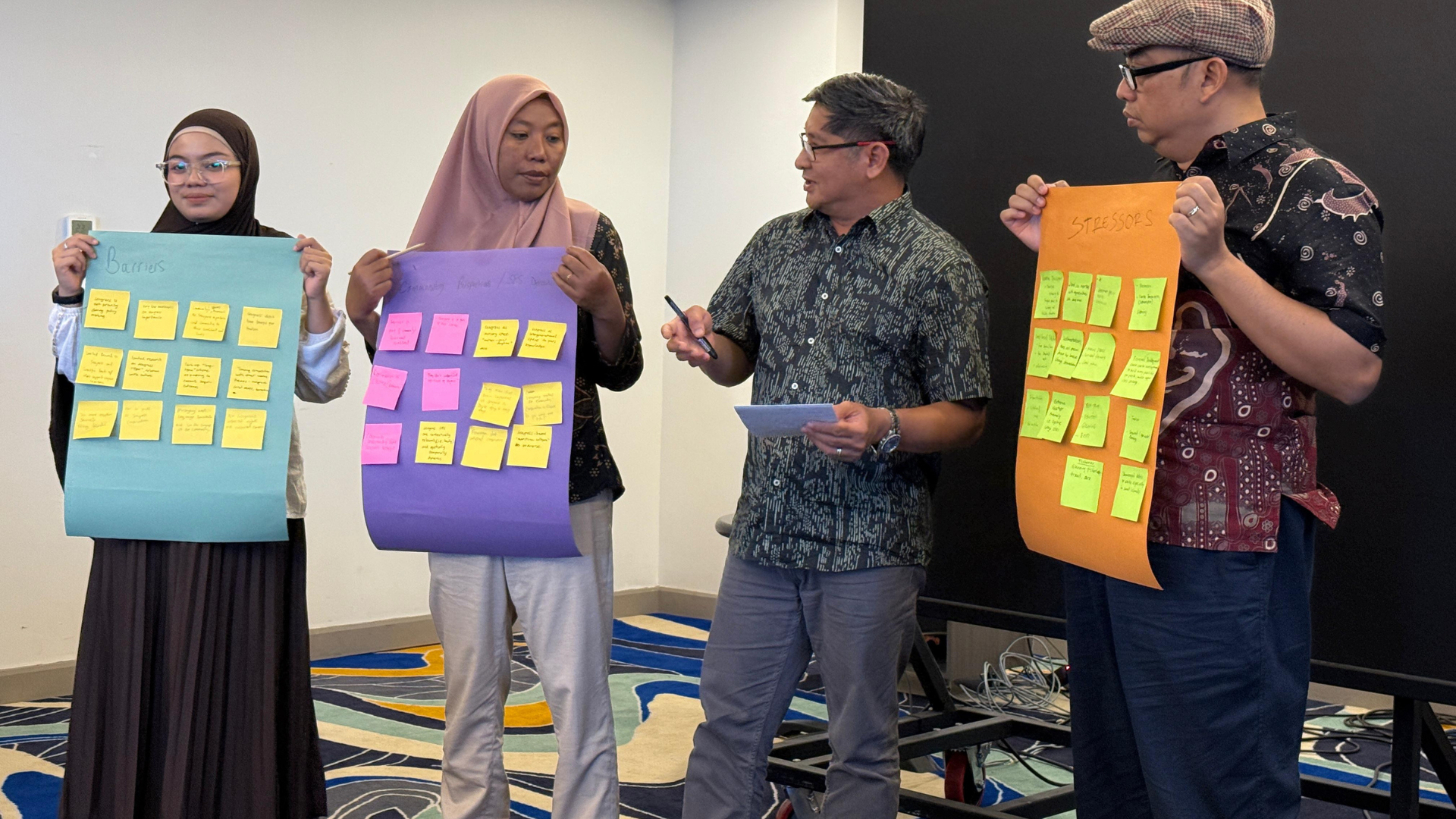
Four people are standing at the front of a room. Three members of the group are holding paper with post-it notes on as part of a workshop activity.

Reflections from the Seagrass Knowledge for Action in Southeast Asia Workshop

This summer, teams came together in Makassar, Indonesia, for the Seagrass Knowledge for Action in Southeast Asia workshop to explore pathways forward for strengthening knowledge, building research capacity, and development to further safeguard local seagrass social-ecological systems. Co-hosted by Universitas Hasanuddin (UNHAS) and Project Seagrass, the workshop involved teams from

Read More »
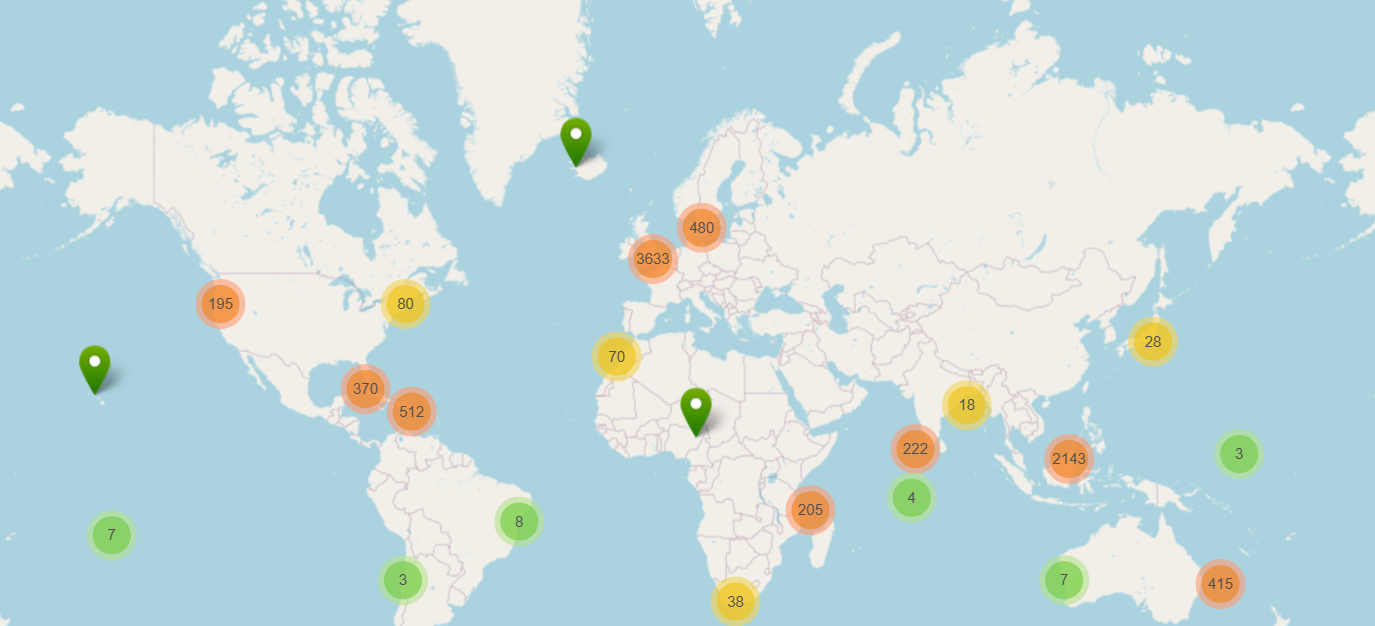
A map of the world showing where seagrass has been spotted using SeagrassSpotter

Harnessing open data to understand coastal social-ecological systems

Our oceans and coasts are home to ecosystems that provide immense benefits to people, from food and livelihoods to carbon storage and coastal protection. In particular, seagrass meadows are archetypal social-ecological systems (SES), linking human well-being to ecosystem health. But to manage these systems effectively, we need access to both ecological

Read More »
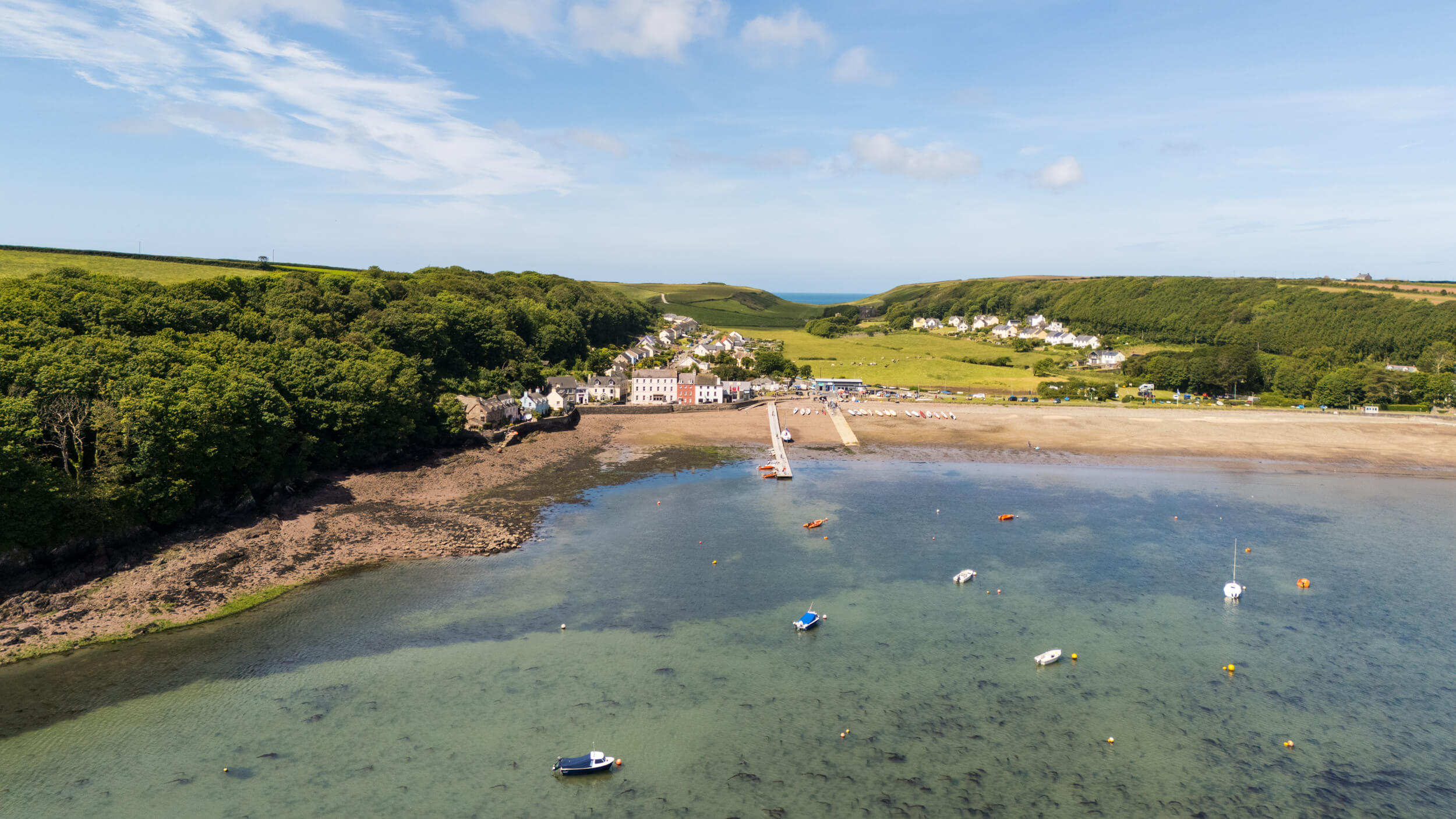
An ariel shot of Dale Bay.

Voices of Dale bay: The community in west Wales bringing seagrass back to life

Dale Bay on a summer’s day bustles with a community in motion. Yachts bob on their moorings, a group explores rockpool life on the shore, holiday makers catch crabs from the pontoon and a local fishing boat putters out to check on shellfish pots. Setting off from the slip way,  a group of paddleboarders cruises across the bay and stops. Their leader is pointing to a dark patch beneath them, “It’s here, see?“  Just beneath the surface lies a hidden sweep of Welsh natural heritage, a vibrant carpet of seagrass. Not a seaweed, but a plant rooted in the sediment with leaves and flowers and seeds, growing beneath the waves. For decades, these underwater meadows were in decline, slipping away shoot by shoot.  Today scientists, volunteers and the local community have united to turn things around. Through an approach known as co-production, the restoration plan for Dale Bay’s seagrass was developed collectively through a series of public meetings and discussions with local stakeholders. Together with scientists, the restoration of Dale Bay’s seagrass is being championed by the people who live, work, and play on these waters. By working together the community is helping to bring Dale’s seagrass meadow back to life.  Dale Bay in Pembrokeshire was the location of the UK’s first major seagrass restoration project. Paddleboarders explore seagrass in Dale Bay as part of a seagrass celebration event. The hidden heritage of Dale bay Seagrass meadows once carpeted thousands of hectares of the UK’s shallow coastal waters. Over the last century, an estimated 92% of that habitat has been lost to declining water quality, coastal development, and disease. Welsh seagrass has shown a similar decline, and the meadow off the shores of Dale Bay has thinned to a fraction of its historic extent. But the bay sits within the Pembrokeshire Marine Special Area of Conservation and it was here that Project Seagrass chose to test whether the loss could be reversed. The restoration area is roughly the size of three rugby pitches. Originally a 2-hectare planted area, it was extended towards the foreshore last year with the community’s approval and now covers 3 hectares. A tiny fragment of the thousands of hectares lost nationally. But the point was never the size of the patch. It was whether the model for restoration could work.  Finding common ground: co-production in action Restoring ecosystems and habitat works best when the people who live and work in them are leading the charge. Co-producing a project with communities and stakeholders, though complex, can lead to long-term support for the project and huge ecological wins. Dale was a landmark case, the first of its kind in UK seagrass restoration, and one of the few marine restoration projects where the co-production process itself has been formally studied. It was a huge source of learning and scientists reported that for marine restoration to truly be successful, projects need to work with local people from the outset, particularly those likely to be impacted. The seagrass meadows in Dale are now thriving, through the work of Project Seagrass, Swansea University and the local community, and with funding from WWF and Sky Ocean Rescue, and supported by the Pembrokeshire Marine SAC and Pembrokeshire Coastal Forum laying the foundations. This was followed by many years of additional work and support from partners, alongside the dedication of local volunteers. The resulting numbers for Dale reflect the success. In one year (2019-2020) 2,107 volunteers, from 44 separate organisations planted 800,000 seagrass seeds over 4,170 person-hours. At just one event in March 2026, 50 volunteers gathered to help Project Seagrass with their latest round of planting. Participants included local residents, enthusiasts from across the UK, and students from Swansea University. Using modified caulking guns developed by The Fieldwork Company in the Netherlands, the team injected 40,000 seeds into the sediment in  coordinated quadrats, with a further 180 nursery-grown plants set by hand. Local volunteers support seagrass planting efforts in Dale Bay, spring 2026. Volunteers have been central to seagrass planting efforts in Dale Bay. But beyond the numbers, the impact of co-production is reflected in the community changes: the formation of the Dale Seagrass Stakeholder Group, local freediving groups assisting with planting, moorings installed for visiting sailors, local skippers supporting annual dive monitoring, and Windswept Watersports running educational sessions about the seagrass for community groups and the general public.  Local pot fisher Mark, of Lilly May Fishing, worked with Project Seagrass from the outset, helping to identify the best site for restoration and deploy monitoring equipment. Concerned that lifting his gear was tearing up the meadow, he designed a modified shellfish pot that reduces entanglement without affecting the catch. This is a genuine example of local knowledge feeding back into restoration practice. The Pembrokeshire Coastal Forum facilitated the development of the Dale Seagrass Stakeholder Group which now meets twice yearly. This group brings together community representatives from Dale Yacht Club, mooring holders, local fishers, business owners, Dale Fort Field Centre and the Community Council, alongside statutory bodies including the Pembrokeshire Marine SAC, and the Project Seagrass staff. It is chaired not by Project Seagrass, but by community member Fil Marshall. This means the community sits at the heart of the project’s operation, with the stakeholder group co-managing the site and the visitor moorings. Its founding Terms of Reference anticipate that it will eventually become a self-sustaining local management body involving a slow transfer of governance from project to place. So what is it that makes the co-production model in Dale Bay so crucial for long-term marine protection? Pembrokeshire SAC Officer, Sue Burton puts it this way, “Quite simply, marine protection needs massive collective action to start making any meaningful differences across the globe, but this starts with small-scale local action. Local management and protection needs involvement and support from local people in order to be successful. Involving local people builds a sense of ownership and that is what we need for long-term management.” Burton describes an example where she was getting frequent calls from
Read More »
Four people are standing at the front of a room. Three members of the group are holding paper with post-it notes on as part of a workshop activity.

Reflections from the Seagrass Knowledge for Action in Southeast Asia Workshop

This summer, teams came together in Makassar, Indonesia, for the Seagrass Knowledge for Action in Southeast Asia workshop to explore pathways forward for strengthening knowledge, building research capacity, and development to further safeguard local seagrass social-ecological systems. Co-hosted by Universitas Hasanuddin (UNHAS) and Project Seagrass, the workshop involved teams from across Indonesia and the Philippines including Forkani, Yapeka, and C3 (Philippines) who joined forces to discuss highlights, setbacks and future dreams for seagrass conservation, protection and restoration in their local contexts and more broadly within the region. The workshop provided an opportunity to discuss our plans for future collaborative work in Southeast Asia, building upon work undertaken through the Seagrass Ecosystem Services project. Partners discussed pervasive threats to seagrass within each of their local study regions and explored the numerous commonalities between their organisation’s locations. In addition to threats, the limitations that prevent partners from addressing these threats and undertaking social-ecological research were identified. A diverse and numerous array of research and capacity building barriers were discussed which were associated with governance, social, ecological, socio-cultural, cultural, spiritual, logistical, and funding limitations. Though nuanced, and taking different forms for each organisation, the identification of these barriers provides essential context for helping to develop research and build local capacity in partner organisations. Each partner discussed their research priorities which concerned many dimensions of seagrass social-ecological systems and the just protection and conservation of seagrass meadows for food security, poverty alleviation, cultural importance, and local livelihood support. Through these conversations, partners explored the spaces within these research priorities that require conservation actions, what these actions may well be, and what support may be required to bring these priorities to reality. Following these in-depth discussions partners also worked on shaping a paper focusing on persistent threats and urgent calls to action to reduce these threats. From 2026, Project Seagrass’ international strategy will also include grant giving, which has been co-conceptualised and developed with local NGO’s, and has been evidenced by others.

Read More »
A map of the world showing where seagrass has been spotted using SeagrassSpotter

Harnessing open data to understand coastal social-ecological systems

Our oceans and coasts are home to ecosystems that provide immense benefits to people, from food and livelihoods to carbon storage and coastal protection. In particular, seagrass meadows are archetypal social-ecological systems (SES), linking human well-being to ecosystem health. But to manage these systems effectively, we need access to both ecological data (such as habitat extent, biodiversity, or water quality) and social data (such as fishing activity, governance, or community use). In a new paper led by Uppsala University, Project Seagrass Chief Conservation Officer Dr. Benjamin Jones, joined forces with scientists from Sweden and the USA to explore how researchers and managers can better use open-access data to integrate these perspectives and improve decision-making. Why this data matters Over the past decade, the amount of freely available ecological and social data has exploded. From satellite-derived habitat maps to global fisheries datasets, there is now a wealth of information that could support more holistic approaches to conservation and management. Such data includes the likes of our very own SeagrassSpotter dataset. Yet, this opportunity comes with challenges. For many practitioners, the biggest barrier is knowing where to find relevant datasets and how to make sense of them in a way that reflects both the ecological and social dimensions of coastal systems. Without broad interdisciplinary training, it can be easy to feel overwhelmed by the sheer volume and complexity of open data sources. To address this challenge, we developed a workflow based on a social-ecological systems framework to help researchers systematically identify the types of variables they need (e.g., ecological, social, or governance-related) and guides the search for appropriate open datasets. The workflow was demonstrated using seagrass meadows in the Tropical Indo-Pacific, a region where millions of people depend directly on coastal ecosystems. This provides a strong test case for exploring how open data can inform both research and management and highlights just how much open-access information is already available, from global biodiversity repositories to socioeconomic databases, and how it can be assembled into a more complete picture of system dynamics. The study underscores the huge potential of open data to support inclusive and interdisciplinary approaches in coastal science. It allows researchers to explore ecological and social indicators side by side, ask new, cross-cutting research questions, support management decisions even in data-poor regions and facilitate collaboration across disciplines and geographies. However, there are important challenges. First, data can be patchy or biased, with strong coverage of biophysical variables but limited social or long-term monitoring data. Second, many datasets are coarsely aggregated or inconsistent in spatial and temporal coverage. Third, users often require specialised technical skills to access, harmonise, and analyse the data and finally, the “paradox of choice” means the sheer volume of available datasets can be overwhelming without a clear framework to guide selection. These limitations highlight the need for continued investment in training, better tools, and improved data-sharing practices. The paper also emphasises the importance of contributing data back into open repositories such as the Ocean Biodiversity Information System. By sharing primary data openly, researchers and practitioners not only enhance the value of their own work but also support a stronger, more connected global community. Project Seagrass is committed to this via its open access SeagrassSpotter database, and the newly launched SeagrassRestorer.  This cultural shift towards open data sharing, proper attribution of data collectors, and incentivising contributions is essential if we are to unlock the full potential of open data in advancing coastal science and conservation. Frameworks like this provide a structured way of navigating the open-data landscape. By combining social and ecological variables, researchers and managers can move beyond siloed approaches to develop a truly integrated understanding of coastal systems. For seagrass meadows and other critical coastal habitats, this means being better equipped to anticipate change, design effective interventions, and ensure the long-term provision of ecosystem services that millions of people depend upon. In short: open data, when harnessed effectively, is a powerful tool for bridging science and society and for building more sustainable futures for our coasts.

Read More »