Tag: Policy

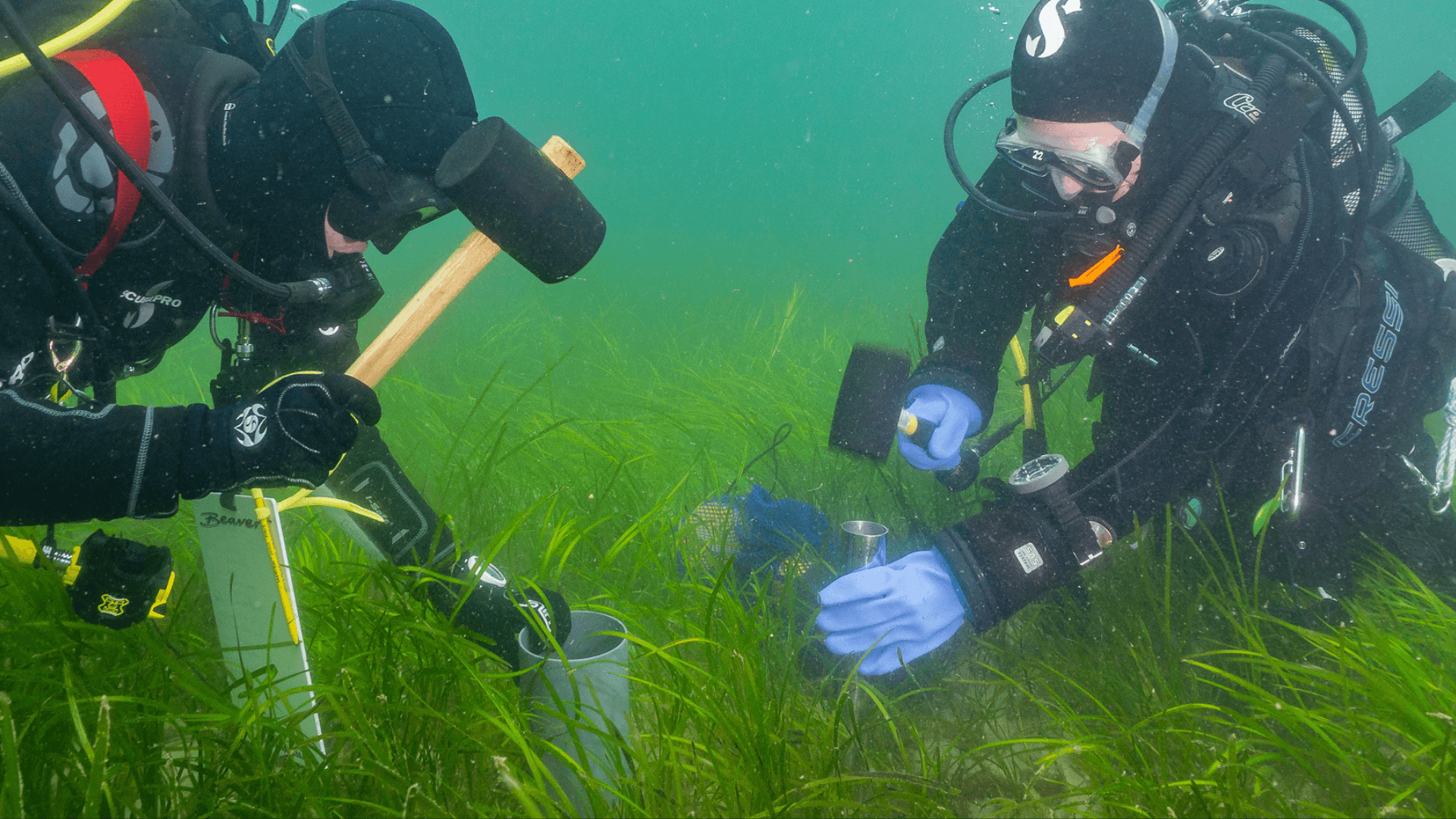
Two divers are taking seagrass cores from a seagrass meadow in Orkney as part of research into the biodiversity within these meadows.

Open Letter to Crown Estate Scotland. Scottish Seagrass Collaborative Response to: Approach to Marine Enhancement Proposals (issued November 2025)

The Scottish Seagrass Collaborative, responds to Crown Estate Scotland’s Approach to Marine Enhancement Proposals: We write as marine scientists, restoration practitioners, and organisations working across Scotland’s coasts and seas, in response to Crown Estate Scotland’s Approach to Marine Enhancement Proposals. We welcome Crown Estate Scotland’s commitment to responsible stewardship of

Read More »
Seagrass meadow in Orkney.

Our response to the Scottish Government Blue Carbon Action Plan

Earlier this year, the Scottish Government circulated a draft version of Scotland’s first Blue Carbon Action Plan with key stakeholders to gather comments and feedback. Project Seagrass was one of the organisations contacted as part of this process. The Blue Carbon Action Plan sets out the Scottish Government’s position and

Read More »
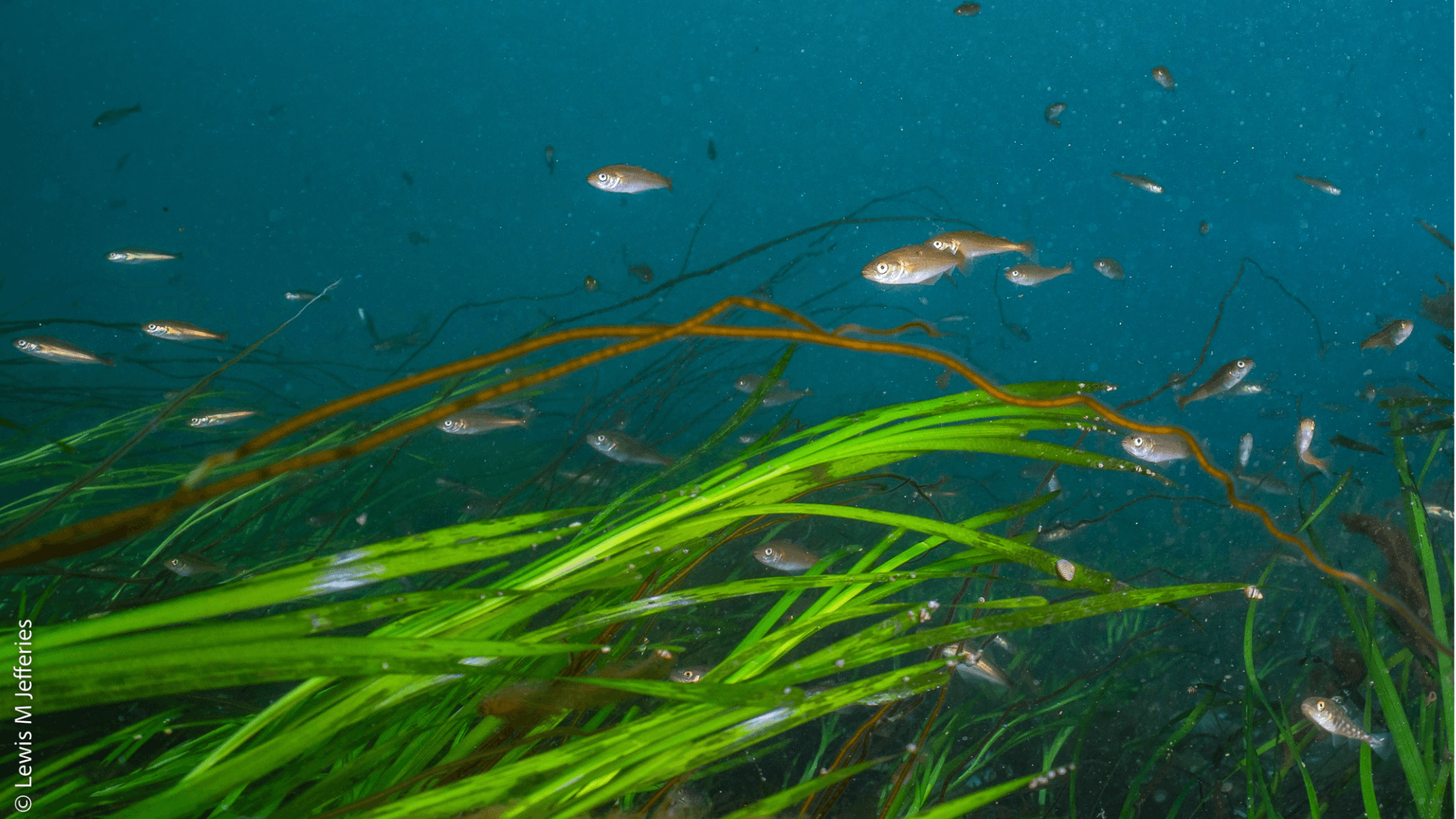
Fish swim in a seagrass meadow in Orkney

Scottish Government launches public consultation to protect Scotland’s inshore

Project Seagrass Policy Officer Udara Nagodavithana explores the Scottish Government’s consultation on proposed fisheries management measures within inshore waters:  The Scottish Government’s Marine Directorate is consulting on protecting more of the inshore seabed. After many years of delay, the government has addressed its commitment under Scotland’s National Marine Plan. The consultation is our chance to have a say in what those measures for protection look like. Marine Directorate have identified 11 of the most vulnerable Priority Marine Features (PMFs) in Scottish inshore waters (within the six nautical miles) in need of protection. Seagrass beds are one of the eleven PMFs. Seagrass beds are also identified in the UK Biodiversity Action Plan habitat and as an OSPAR threatened and declining habitat. Whilst we welcome the opportunity to consult on the fisheries management measures for Scotland’s inshore Marine Protected Areas (MPAs) and PMFs, we believe that the current MPAs network does not go far enough to protect seagrass beds in Scotland. Despite seagrass beds being protected under MPA designations in 26 locations, these habitats are still vulnerable to destruction from bottom towed gear. What the consultation looks like? The consultation covers 76 MPAs and 90 Proposed PMF Management Areas. We can see that this consultation is targeted at a specialist audience. The supporting material is particularly lengthy, with 620 consultation questions that can be answered. The Our Seas coalition is finding a way to make the consultation digestible for all audiences, in the form of regional briefings, online information sessions, and an e-action linked at the end of the blog. At Project Seagrass, one of our strongest values is our evidence-led approach in everything we do. Consequently, we are going to be responding to the consultation using the best available scientific evidence. If you want to respond to questions regarding seagrass beds, we have created an interactive map that combines our SeagrassTools data with NatureScot and JNCC data in GeMS (which is the database used for this consultation). SeagrassTools is a single unified suite for seagrass science, conservation, and management bringing together: SeagrassSpotter (collecting and validating seagrass observations from citizen scientists), SeagrassTracker (monitoring change and evaluating conservation outcomes), and SeagrassRestorer (tracking restoration projects and sharing what has been learned). You can view this data on the map below, alongside layers which show options for management proposed under seabed MPAs (sites with benthic features) and PMF Management areas that would offer seagrass beds protection. Please make use of this map to inform your response. We have endeavoured to show the best resolution possible and the most up to date fishing activity by mobile bottom contact gear, since the consultation used data published prior to 2016. Click here to expand the map. If anyone is looking for guidance with responses related to seagrass, Project Seagrass are happy to provide support. Please contact udaranagodavithana@projectseagrass.org to discuss further. What are PMFs? Priority Marine Features (PMFs) are a list of 81 prioritised habitats and species that are considered marine conservation priorities in Scotland. What do the proposals for PMFs look like? The protections for the 11 PMFs are afforded by PMF Management Areas. These were identified using data in GeMS. The proposals wish to fulfil General Policy 9, subsection 9b of the National Marine Plan, where the use of the sea must ‘not result in significant impact on the national status of the Priority Marine Features’. 21 PMF Management Areas have been identified for seagrass beds. Using SeagrassSpotter data, we have found 5 PMF Management Areas that have seagrass beds, yet have been omitted from being listed as a marine feature. The proposals for PMF Management Areas include sites with only one management option and sites with an extended area offering more protection. Both options protect the identified feature from all demersal mobile gear (bottom trawling and dredging). Do either option go far enough to protect seagrass beds? From our initial look at the consultation, the PMF Management Areas fall short of the Scottish Government’s commitment to the ecosystem approach identified in the Fisheries Act 2020 and Sea Fisheries Part 1 of the National Marine Plan, whereby fishing activity is managed to avoid damage to fragile habitats, ensure protection for juvenile and spawning stock grounds, and protect the seabed. Instead PMF Management Areas are tied closely to benthic features, and some key areas are missed out where there is evidence of high pressure from bottom trawling. The consultation does not reflect the true extent of nursery grounds for PMF species such as cod and herring. Under General Policy 9b of the National Marine Plan, looking at all 81 of the PMFs holistically as part of this consultation would have informed the delivery of the ‘ecosystem approach’ to marine management in Scotland. Several of the PMF Management Areas fail to encompass instances of the 11 PMFs. Some areas have boundaries drawn too closely to PMFs, failing to encompass buffer areas. For seagrass beds within the Loch nan Ceall PMF Management Area, SeagrassSpotter data shows a seagrass bed located amongst the maerl in the area. The same is true for management areas: Port Ellen, Eigg South-East, Loch Scavaig (Skye), and North of Crowlin Islands and Eilean na Ba (Inner Sound). In many areas, we suspect that the seagrass beds extend beyond the proposed areas mapped. For Loch Sligachan (Skye), where the proposals state ‘intertidal seagrass and blue mussel beds present, but they were not considered as part of the process due to there being no overlaps with bottom-contacting fisheries and intertidal beds’, point data from SeagrassSpotter suggest otherwise. This is also in an area, that is suggested by ICES/OSPAR VMS 2025 data, to have around 100hrs/year of mobile bottom contact gear. This is a similar story for Loch Bracadale (Skye). Seagrass beds promote sustainable fisheries and offer communities viable careers in fishing. They act as crucial nursery and spawning grounds for commercially important species. However, without protection from bottom trawling and dredging, we risk losing these essential habitats. We recognise the approach taken by NatureScot to summarise the

Read More »
Two divers are taking seagrass cores from a seagrass meadow in Orkney as part of research into the biodiversity within these meadows.

Open Letter to Crown Estate Scotland. Scottish Seagrass Collaborative Response to: Approach to Marine Enhancement Proposals (issued November 2025)

The Scottish Seagrass Collaborative, responds to Crown Estate Scotland’s Approach to Marine Enhancement Proposals: We write as marine scientists, restoration practitioners, and organisations working across Scotland’s coasts and seas, in response to Crown Estate Scotland’s Approach to Marine Enhancement Proposals. We welcome Crown Estate Scotland’s commitment to responsible stewardship of the seabed and its recognition that marine enhancement activities—such as seagrass meadow and native oyster restoration—deliver important public benefits. We also recognise the intention behind the Non-Commercial Enhancement Licence to provide a light-touch mechanism to support this work. However, we are concerned that the approach, as currently set out, risks creating unintended barriers to marine science, restoration, and climate action in Scotland—particularly through the inclusion of low-impact scientific surveys and sediment sampling (such as coring) within licensable activities. We ask: a zero-cost exemption for non-commercial, not-for-profit restoration activities to incentivise biodiversity positive activities rather than impose barriers and work collaboratively in consultation with the research and restoration community to develop all current and future guidance. Why sediment sampling matters Sediment coring and similar sampling methods are essential scientific tools. They are used to: identify and map habitats that store “blue carbon”; measure how much carbon is currently stored, and how much could be restored; design effective and well-targeted restoration projects; monitor whether restoration is successful over time; meet Scotland’s national and international obligations on climate and biodiversity reporting. These activities are temporary, small-scale, and reversible. A typical sediment core affects an area measured in centimetres, not metres, and causes negligible environmental impact. Treating this type of research in the same way as seabed occupation, construction, or extractive use risks undermining proportionality and evidence-based decision-making. Risks to restoration and blue carbon science Scotland is recognised internationally for leadership in marine nature-based solutions and blue carbon research. Yet marine carbon cannot be measured or verified without physical sampling of seabed sediments.  Requiring licences, fees, and extended approval timelines for this work risks: creating significant barriers to non-commercial marine restoration at a time when policy and science point toward the need for rapid development and scale-up. Applying fees and additional bureaucracy to generative, public-benefit restoration is counterproductive and misaligned with national biodiversity and climate goals. Marine habitat restoration is non-commercial, non-extractive, and enhances seabed value delivering public benefits (blue carbon, fish nurseries, nutrient remediation) that exceed licence costs. slowing down urgently needed research at a time when climate and biodiversity action must accelerate. Non-Commercial Marine Habitat Restoration in Scotland is currently driven by small non-profit eNGOs and community-led projects that struggle for funding. For example, the charity Seawilding is trialing seagrass and native oyster restoration methodologies in multiple sites in Argyll and Wester Ross. Along with others, the charity is developing the science, the know-how, and the methodologies to allow restoration at scale. The existing licensing regime and cost is already burdensome. To pile on more poses an existential threat to Seawilding and this essential work. creating barriers to delivering the Scottish Biodiversity Strategy to 2045 and the Marine and Coastal Restoration Plan. The proposed charges are counter to the Strategy & Plan, which encourages active restoration by community-based organisations and advocates streamlining and simplifying the process. In addition, the charges will create additional barriers to achieving targets in the Scottish Biodiversity Strategy to 2045 and the upcoming Natural Environment Scotland bill. Recent work by a panel of expert restoration researchers and practitioners highlighted that adding licensing costs and complexity makes small-scale restoration increasingly unfeasible and favours large developers without restoration expertise. Read more here. making publicly funded research harder to deliver within fixed budgets and timelines. discouraging foundational science before any future natural capital markets are even considered. adding bureaucracy where policy intent is to enable, not constrain, restoration. While the policy excludes natural capital markets, the paradox is that the research needed to responsibly inform any future policy on blue carbon is now harder to carry out. All public bodies, including seabed owners, have duties to support biodiversity recovery and climate action. Those goals cannot be met without access to the seabed for scientific research. Our request We respectfully ask Crown Estate Scotland to: Explicitly exempt low-impact, non-commercial scientific sampling (including sediment coring) carried out for research, restoration design, monitoring, and blue carbon assessment from licensing requirements; or Introduce a clear, fast-tracked, cost-free notification or consent process for these activities, separate from enhancement or occupation licences; and Work collaboratively with the research and restoration community to develop guidance that recognises the essential role of scientific sampling in delivering national biodiversity, climate, and nature-recovery objectives. Closing We strongly support Crown Estate Scotland’s ambition to be a responsible and proactive steward of the seabed. We believe this ambition will be best realised by ensuring that essential scientific research is enabled rather than hindered. Applying fees and additional bureaucracy to low-impact, public-benefit restoration science risks creating significant unintended barriers at a critical moment for Scotland’s seas. We ask for the Crown Estate to incentivise biodiversity positive activities rather than impose barriers such as this licensing and fee. Letter endorsed by: Action West Climavore Loch Dail an Inbhire croft Heriot Watt University Moray Ocean Community Open Seas Project Seagrass Scotland’s Rural College Seawilding Shark and Skate Scotland Solway Firth Partnership University of Edinburgh University of Glasgow


Read More »
Seagrass meadow in Orkney.

Our response to the Scottish Government Blue Carbon Action Plan

Earlier this year, the Scottish Government circulated a draft version of Scotland’s first Blue Carbon Action Plan with key stakeholders to gather comments and feedback. Project Seagrass was one of the organisations contacted as part of this process. The Blue Carbon Action Plan sets out the Scottish Government’s position and priorities for blue carbon habitats with emphasis in the Plan placed on the need to protect existing carbon stores in blue carbon habitats.  Project Seagrass’ Senior Science Officer and Scotland Team Lead Dr Elizabeth Lacey reviewed the Plan and met with Scottish Government to share a series of recommendations to ensure that the Actions outlined in the Plan effectively represented and addressed knowledge gaps surrounding Scotland’s important seagrass habitats. It is disappointing that none of the recommendations provided by Project Seagrass have been incorporated into the final Scottish Blue Carbon Action Plan published earlier this month. Read the recommendations that we provided to the Scottish Government as part of the consultation process below: Key Areas for Improvement and Additional Action Items 1. Evaluate Carbon Sequestration Rates in Scottish Seagrass Meadows The Plan’s introductory text accurately highlights the lack of measured carbon sequestration rates for Scottish seagrass. However, this is not reflected in the list of action items. Measuring sequestration rates is well-established in the literature and could be incorporated into current or planned monitoring frameworks with relatively modest additional investment. Including this as a specific action would address an important evidence gap. 2. Improve Mapping of Seagrass Habitat Extent The under-mapping of seagrass beds in Scotland is acknowledged in the Plan, yet no corresponding action is outlined. Comprehensive habitat mapping is critical for understanding carbon storage potential, informing protection strategies, and guiding restoration efforts. This is an urgent need and should be prioritized as a stand-alone action. 3. Improve Mapping of Seagrass Carbon Capture While the Plan includes detailed biomass and carbon mapping for salt marshes, similar work is not proposed for seagrass. Parameters such as biomass and sediment characteristics, which inform carbon stock estimates, are currently lacking for Scottish seagrass meadows. Including such surveys for seagrass would bring parity with other blue carbon habitats. Tools such as LIDAR—already proposed for salt marshes—could also be used to map seagrass-associated bathymetry, sediment dynamics, and coastal erosion. If coordinated with salt marsh mapping flights, this would offer efficient cross-habitat benefits for multiple agencies. 4. Understand Seagrass Health and Pressures An action to assess the health of seagrass meadows and the pressures acting on them would strengthen the Plan. While this is included for salt marshes, it is not currently addressed for seagrass. Data on the impacts of water quality, dredging, sedimentation, and nutrient inputs are especially lacking in Scotland. These data are crucial to inform effective management and protection strategies and to identify opportunities for both active and passive restoration. 5. Support Habitat Restoration and Creation The Plan opens with strong language in support of passive restoration—reducing pressures to allow natural recovery—but the associated actions lean heavily toward active restoration projects. Passive approaches are often more cost-effective and ecologically successful. Globally, numerous studies have developed habitat suitability models for active restoration, yet actual implementation success remains limited. An alternative, and potentially more impactful approach, would be to model areas experiencing seagrass decline and identify known pressures. This would help highlight locations with the highest potential for recovery through pressure reduction—supporting more strategic, evidence-based passive restoration. Comments on Existing Action Items Action 6 – Baseline Survey of Carbon Uptake and Storage in New Seagrass Projects We have some concerns regarding the emphasis on measuring carbon in seagrass restoration areas. Current research indicates that it may take 10 years or more before restored seagrass meadows begin storing detectable levels of carbon. Moreover, SMEEF projects are intended to demonstrate effort, not guarantee ecological success. As such, relying on these sites for baseline data may lead to inaccurate or premature conclusions. Instead, we recommend prioritizing measurements in existing meadows across a range of environmental settings. This would provide more ecologically relevant and accurate data to inform national blue carbon estimates. Furthermore, the suggestion that this work will help “standardise monitoring of carbon storage” could benefit from clarification. Robust and standardised methods for measuring seagrass carbon storage already exist and are widely used by the global scientific community. Rather than developing new standards, Scotland could adopt these existing protocols to ensure comparability and scientific rigor. Action 7 – Supporting Habitat Restoration and Creation As noted above, we recommend adding a complementary focus on passive restoration. Developing ‘opportunity maps’ that identify areas where seagrass is most likely to recover following pressure reduction would be a valuable tool. This would support more targeted interventions and help align restoration efforts with the most ecologically feasible and cost-effective strategies. Action 8 – Understanding Existing and Proposed Protections While we recognize that fishing pressure is an important concern in some regions, our experience suggests that other stressors—including land-based runoff, pollution, aquaculture, and dredging—are more widespread and pressing in the context of Scottish seagrass meadows. These pressures are often overlooked in current management frameworks and would benefit from more explicit inclusion in future protection and policy planning.

Read More »