Tag: climate change

Seagrass to the rescue and rescue to the seagrass

In an article for Halloween, Grace Cutler, one of Project Seagrass’ Interns for the 2025-26 academic year, explores the frightening reality of continued seagrass loss as a result of anthropogenic activity and how this in turn threatens seagrass’ role in supporting people and planet. Werewolves are struck down by silver

Read More »
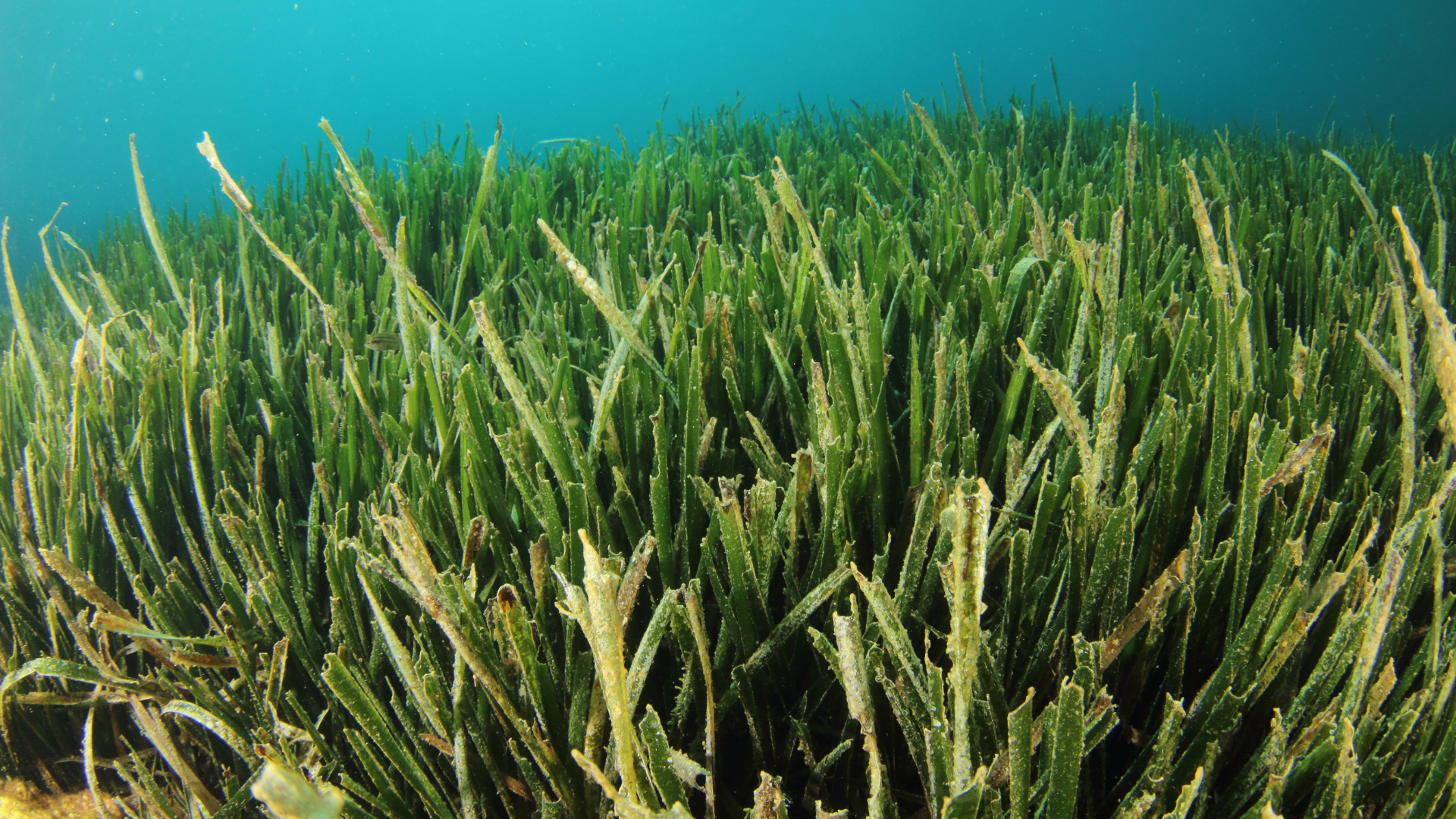
Posidonia species of seagrass in tropical blue waters underwater

Hurricanes devastated Florida’s East Coast. Then seagrass made an unexpected comeback

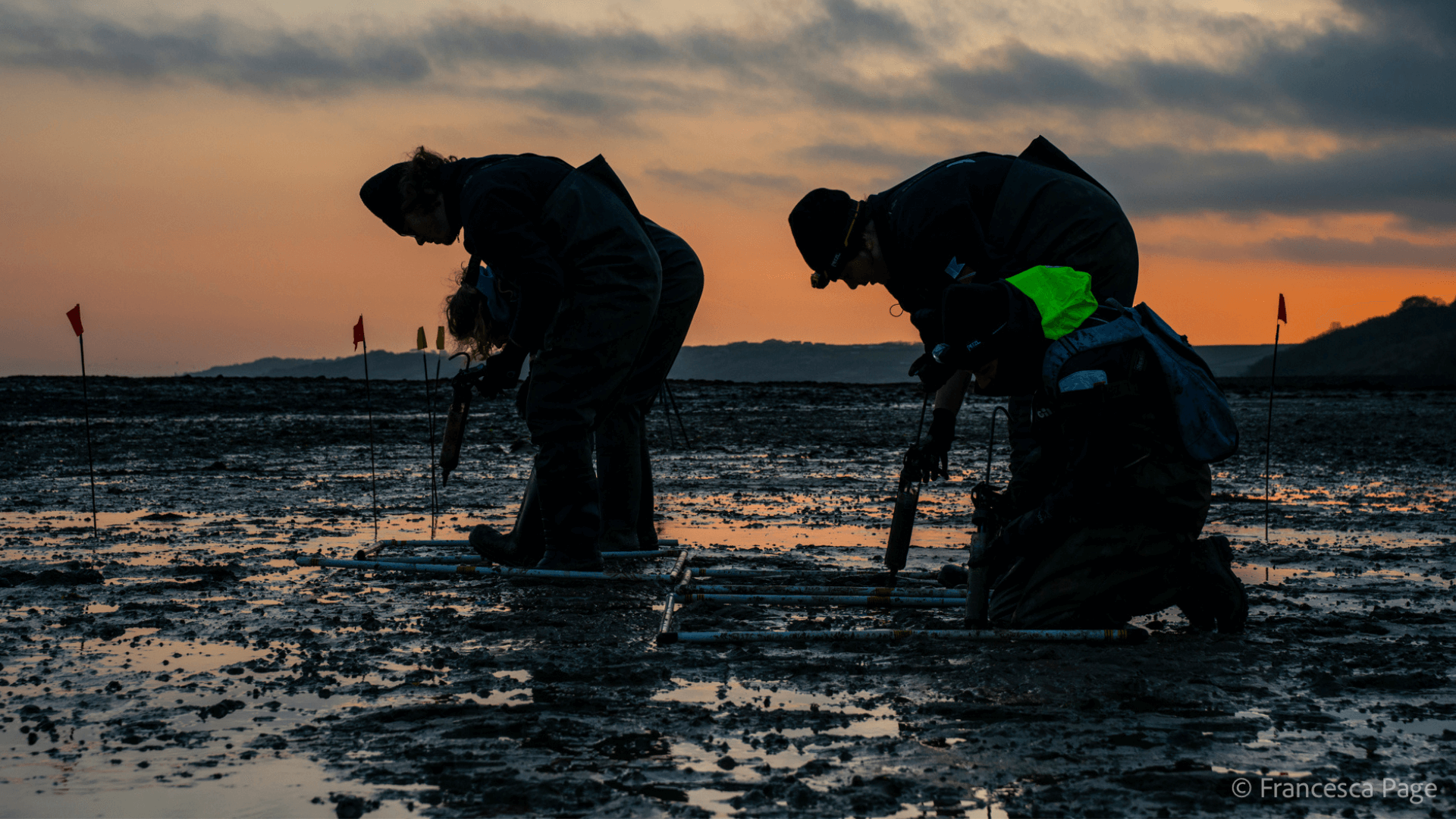
Hannah Harrero and Stephanie Insalaco-Wyner, geographers from Florida, comment on differing methods of monitoring the resilience of seagrass meadows in Florida’s ‘Mosquito Lagoon’, following a number of extreme weather events. Florida’s Indian River Lagoon has been an ecosystem in decline going back to 2011, when harmful algal blooms led to a severe decline in seagrass, the foundational component of shallow coastal ecosystems. Seagrass meadows stabilize sediments, improve water clarity and provide critical habitat and forage for species ranging from invertebrates to sea turtles and manatees. Seagrass also generates a significant amount of economic activity in the state of Florida. The loss of seagrass in the Indian River Lagoon System undermined fisheries, tourism and wildlife, ultimately leading to the starvation of more than 1,200 manatees from 2020-25, peaking in 2021-22. Mosquito Lagoon is part of the Indian River Lagoon system that spans 28 miles (45 kilometers), running from Cape Canaveral in the south up to Ponce Inlet in the north. As in the rest of the lagoon system, years of nutrient pollution and recurring algal blooms had diminished seagrass cover to nearly zero by the early 2020s. By most accounts, Mosquito Lagoon had crossed a critical ecological tipping point. In the fall of 2022, hurricanes Ian and Nicole struck Florida’s east coast within six weeks of one another, bringing intense rainfall, storm surges and coastal erosion. In the immediate aftermath, seagrass declined even further. But a few months later, in the spring of 2023, seagrass began to return. Satellite imagery revealed rapid and widespread regrowth. Hannah and I are geographers who study environmental change. Our research documents this unexpected recovery and examines what it may reveal about ecosystem resilience in heavily degraded coastal systems. One of us, Hannah Herrero, is a Volusia County native who grew up around the lagoon. She returned to her hometown at the outset of the COVID-19 pandemic. It was there that some local guides and fishermen she’d known for years suggested that our team should use satellite imagery to look at the state of collapse in the lagoon. The study we designed as a result used satellite imagery and machine learning, a type of artificial intelligence that uses advanced algorithms to learn and predict patterns, to track seagrass dynamics in Mosquito Lagoon before, during and after the storms. This approach allowed us to observe change at a scale and frequency that is difficult to achieve using only traditional field survey methods.   Florida Manatee Tracking seagrass from space Monitoring seagrass coverage “the old-fashioned way” involves going into the lagoon and laying out transects, straight lines that cut through a landscape, so standard observations could be recorded. We would then have to boat or wade all along those lines to measure seagrass extent and locations and create digital maps manually to show where it is present. As you can imagine, this is a time-intensive process that’s limited by how far you can boat or swim in a day, and by financial resources. So we decided to use satellite imagery instead. This method is not without its own challenges—water turbidity, or cloudiness, seasonal variability and the patchy nature of vegetation that grows on the bottom of the lagoon all make it difficult to observe seagrass growth directly on the imagery. To address this challenge, our study used imagery from NASA’s Harmonized Landsat–Sentinel program, which combines data from multiple satellites into a consistent record of photos of the same areas taken frequently over time. We analyzed imagery collected between September 2022 and January 2024, focusing on periods before and immediately after the hurricanes and throughout the subsequent recovery. We applied a type of machine learning model called Random Forest to classify each image into seagrass and nonseagrass categories. The machine learning algorithm is informed by training samples collected in the field, but once the model has learned the signature of seagrass, it is able to then apply the classification model to the rest of the lagoon and across time with limited human input. We can then validate this classification.   Heading into the field First, we had to train the model using hundreds of GPS points collected in the field over multiple seasons. This step helps to ensure that satellite classifications align with on-the-ground conditions and are accurately interpreting the images. Over several weeks during the summers of 2020 through 2023, our team spent many hours navigating Mosquito Lagoon in a small skiff designed for shallow depths, recording seagrass presence. It wasn’t always easy — Florida summers are intensely hot and humid, and Mosquito Lagoon definitely lived up to its name. But we got to see a wide variety of wildlife, including manatees, dolphins, sea turtles and alligators. And occasionally, on lucky days, we even spotted a roseate spoonbill or reddish egret. Our experience in the field highlighted why this system matters: Mosquito Lagoon is a remarkably vibrant place, teeming with wildlife. These long days on the lagoon, surrounded by its biodiversity and immersed in its unique sense of place, are what anchor the remote sensing data to on-the-ground ecological conditions and make the resulting models credible.   The authors wade into Mosquito Lagoon to track seagrass growth as they train their AI model. Captain William B. Wolfson, Grassroots Guide Service, New Smyrna Beach, FL What we found Our analysis reveals three distinct phases of seagrass coverage. First, seagrass declined sharply following hurricanes Ian and Nicole. By December 2022 and early 2023, satellite imagery showed virtually no detectable seagrass across the lagoon. Then, in March 2023, we identified a statistically significant shift. Seagrass began to reappear, initially in small, scattered patches. Finally, during late spring and summer 2023, seagrass expanded rapidly. By July 2023, it covered more than 20% of the lagoon—levels not observed in more than a decade. Coverage then declined again during the winter of 2023–24, as expected based on seasonal growth cycles. But even our last observation, completed in January 2024, showed seagrass covering 4.3% of the lagoon, substantially higher than pre-recovery levels during the winter season. In spring 2026, seagrass in Mosquito Lagoon has remained at stable levels. Although it still experiences fluctuations due to algal blooms, seasonality and other changes in the ecosystem, we have not seen a

Read More »

Seagrass to the rescue and rescue to the seagrass

In an article for Halloween, Grace Cutler, one of Project Seagrass’ Interns for the 2025-26 academic year, explores the frightening reality of continued seagrass loss as a result of anthropogenic activity and how this in turn threatens seagrass’ role in supporting people and planet. Werewolves are struck down by silver bullets, vampires are defeated with wooden stakes; the environment is protected by seagrass. While it may not be as dramatic, the narrative that aligns seagrass as the ultimate solution to combating the environmental crisis is popular. As someone studying this remarkable habitat, it’s easy to see why. The only marine flowering plant in the world, seagrass offers numerous ecological benefits, supporting both our planet and humanity. Despite this, we risk ignoring the crux of the issue by relying on these green solutions. We keep polluting. It is because we continue to pollute our environment, be it through greenhouse gases, plastic pollution, or general waste production, that the very things that help to prevent the environmental crisis, are dying. A Natural Water Filter? While seagrass may not clean water bodies, it increases particle deposition rates by slowing the speed of waves and allowing more time for particles to sink to the ocean floor. Particles can then become trapped in the seagrass meadow and are prevented from ending up elsewhere in waterways. This process has been shown to capture excess nutrients, waste products, and even pathogens. A study conducted in the greater Seattle Metropolitan Area showed that mussels placed in seagrass habitats had 65% less relative abundance of some pathogens when compared to mussels placed in habitats without seagrass. Yet, the most apparent threat to seagrass, identified by UK researchers, is water quality. Like most plant species, seagrass can function in polluted water quality up to a point or ‘threshold value’. Similar to how humans can eat a certain number of toffee apples until it becomes too much and we get a sugar crash. Once this threshold is exceeded, seagrass will decline and, in some severe instances, disappear from the environment entirely. One such instance can be seen in the Chinese province Hainan, where researchers found that a dissolved inorganic nitrogen concentration of 8μM or above will cause seagrass meadows to disappear. This is because an excess of nutrients in water bodies, like nitrogen, stimulates the production of algae which blooms on the surface of the water and prevents sunlight from reaching seagrass beds. Additionally, some nutrients like ammonium and sulphides can have direct negative effects on seagrass growth. Fortifying our Coastlines Imagine a castle that is under attack. If it is strong and maintained, the castle will be better at defending itself against intruders. However, the next time it is under attack, there are holes and weak points left in it from the previous battle. Over time, this castle falls into disrepair and becomes a ruin, leaving it unable to protect its inhabitants. Seagrass is similar. Its inhabitants are our coastlines. Coastlines today are facing threats on all fronts. Sea level rise, extreme storms, and erosion are just some of the problems they experience. With that said, some have considered using seagrass as a way of minimising the impact of storms causing erosion in these areas. Through their matted root systems, called rhizomes, seagrass meadows have been shown to improve the stability of sediments and reduce wave energy before it reaches the shore in some hydrodynamic systems. Yet, seagrass is also harmed by these storms. Meadows that are struck by intense physical disturbances can be uprooted or die back, initiating a positive feedback loop where meadows in decline are more vulnerable to disturbances. This means when the next storm hits, seagrass not only will be more susceptible to decline, but they are also less able to protect our coasts. What About Carbon? Carbon storage is a phrase often thrown around. It may be the key reason why people are interested in seagrass as an answer to climate change. With anxiety surrounding our warming planet on the rise, this isn’t unprecedented. However, seagrass may not be quite the antidote we think it is. Recent evidence has shown that following disturbances, carbon stored in the soil of meadows may be re-released into their environment as carbon dioxide. Such disturbances can range from direct physical effects, such as dredging and construction work, or indirect global threats stimulated by climate change. A 2011 marine heat wave struck the West-coast of Australia, causing the reported loss of over 1000 km2 of seagrass in Shark Bay. Another instance of mass seagrass loss occurred in the Gulf of Mexico, where two seagrass species (Halodule wrightii and Syringodium filiform) disappeared following sea level rise in 2014.  Without seagrass, the carbon stored in these soils is easily remineralised and released back into the environment. What’s Next? Thankfully, the main factor contributing to seagrass decline appears to be anthropogenic impacts such as dredging, overfishing, and agricultural runoff. This means that with changes in how we do things, we can stop the death of seagrass. However, this means seagrass mustn’t be painted as a plaster to patch up the pollution of the planet. To help seagrass, we must reduce pollution, reduce nutrient runoff, protect seagrass so it can protect us! References Ranking the risk of CO2 emissions from seagrass soil carbon stocks under global change threats Extreme climate events lower resilience of foundation seagrass at edge of biogeographical range Too hot to handle: Unprecedented seagrass death driven by marine heatwave in a World Heritage Area Rapid sea level rise causes loss of seagrass meadows Seagrass ecosystems as green urban infrastructure to mediate human pathogens in seafood Toxic effects of increased sediment nutrient and organic matter loading on the seagrass Zostera noltii Losses and recovery of organic carbon from a seagrass ecosystem following disturbance Continual migration of patches within a Massachusetts seagrass meadow limits carbon accretion and storage Mediterranean seagrasses provide essential coastal protection under climate change

Read More »
Seagrass Restoration taking place in the Solent at sunrise.

Our open letter to Secretary of State for Environment, Food and Rural Affairs Rt Hon Steve Reed OBE MP

Dr Richard Unsworth, Chief Scientific Officer at Project Seagrass, along with 35 other leading scientists from across the UK, responds to proposals from the UK government to make licensing for marine restoration more complex and costly. Dear Rt Hon Steve Reed OBE MP and team, This letter sets out our response as leading scientists, practitioners, and NGOs to the DEFRA consultation “Marine licences: changes to fees, exemptions and self-service licences”. We believe the proposed increases in fees and restrictions for marine licences will seriously undermine restoration efforts, making an already difficult activity even more challenging and, in many cases, unviable. The current licensing system for marine restoration is already unjust and fundamentally at odds with the UK Government’s national and international commitments. To introduce additional fees, administrative burdens, and restrictions at this time is, quite frankly, perverse. We specifically oppose: Any increase in fees for marine restoration licences. The urgent need is to remove fees entirely, not add to them. Further restrictions and additional charges on marine restoration projects larger than 5 hectares (we need marine restoration exemptions from this). Evidence clearly shows that scaling up restoration delivers greater resilience and enhanced ecosystem service (natural capital) benefits compared with small, fragmented projects. We specifically request: Practitioners need DEFRA to create a simplified, consistent, cost-free, and science-based licensing system for marine and coastal conservation. Currently, licensing is one of the most significant barriers to restoring the health of the UK’s seas. We see these proposed changes under the consultation as a missed opportunity to create such a system. The urgency could not be greater. Our climate and natural systems are breaking down, and the ocean is in crisis. In each of the last three summers (2023–2025), UK seas have endured unprecedented marine heatwaves. Never before has there been such a critical need for healthy coastal ecosystems that can bolster resilience, buffer climate impacts, and support food security. Yet our habitats have been decimated and continue to decline with DEFRA’s own assessment concluding that the UK marine environment is failing on 13 out of 15 indicators. Marine restoration is not optional; it is essential for our collective future. Restoring and conserving ocean habitats is also a legal obligation. The UK is a signatory to the Kunming–Montreal Global Biodiversity Framework and, under the Environment Act 2021, has binding targets for nature recovery. These commitments require all public bodies, including seabed owners to conserve and enhance biodiversity. The UK has already missed the Aichi Biodiversity Targets, largely due to regulatory barriers of the very kind now being proposed. Repeating these mistakes would be indefensible. The benefits of a streamlined licensing system are profound. It would enhance our capacity to tackle the climate and biodiversity crises, strengthen coastal resilience, and improve national food security. International examples demonstrate that simplified frameworks accelerate recovery and generate long-term ecological and social benefits. At conferences such as ReMeMaRe, UKSS, and the Seascape Conference, frustration with England’s current licensing regime has been a recurring theme. The system is widely regarded as unpredictable, inconsistent, costly, and burdensome, treating restoration projects as if they damage rather than enhance the marine environment. This not only delays urgent work but risks deterring vital investment in ocean recovery. The state of our marine environment illustrates the scale of the problem: estuaries are degraded, mudflats retreating, saltmarshes fragmented, and most seagrass meadows lost. Remaining habitats are scarce and highly vulnerable to climate change. Immediate reform is essential. Wales and Scotland are already moving in the right direction. Dialogue and regulatory reforms are creating enabling environments for restoration. England must now do the same. Without urgent change, regulation will remain a barrier to the large-scale environmental renewal that is desperately needed. We no longer have healthy ecosystems to use as restoration baselines. Historic habitats such as oyster reefs have vanished, while global heating accelerates ecological change. Restoration must therefore look forward, building climate-resilient ecosystems that reflect future needs rather than only past states. To do so, we need a legal and regulatory framework that supports ambition. The Kunming–Montreal Framework and the Environment Act 2021 require bold action, but these targets cannot be met without enabling legislation. In addition to the consequences of further restrictions on marine restoration for biodiversity, we also believe these restrictions place further restrictions upon our ability to reach Net Zero, and therefore see this as an issue not only for DEFRA but also for DESNZ. We therefore call on the Government to act swiftly to reform the licensing system for marine and coastal restoration. This is a practical and achievable step that would deliver immediate benefits for biodiversity, climate resilience, and food security. As scientists and practitioners at the forefront of UK marine research and restoration, we would welcome the opportunity to meet with you and your team to discuss solutions and pathways for progress. Yours sincerely, Dr Richard Unsworth FRSB, FHEA Associate Professor (Swansea University), Chief Scientific Officer (Project Seagrass) Signed on behalf of the following: Prof Martin J Attrill, Professor of Marine Ecology, University of Plymouth Dr Dan Barrios-O’Neill, Head of Marine Conservation, Cornwall Wildlife Trust Prof Michael Chadwick, King’s College London Sarah Chatfield, Nature Recovery Partnership Manager, Chichester Harbour Conservancy Dr Leanne Cullen-Unsworth, Chief Executive, Project Seagrass Dr Aline da Silva Cerqueira, Sussex Bay & King’s College London Dr Tim Ferrero, Senior Specialist – Hampshire & Isle of Wight Wildlife Trust Zia Fikardos, Marine Policy Officer, Royal Society for the Protection of Birds (RSPB) Angus Garbutt, Principal Scientist, UK Centre for Ecology & Hydrology Chris Graham, Head of Ocean Regeneration, Marine Conservation Society Tom Godfrey, Founder, Earth Change Dr Ian Hendy, Coastal Ecologist, Senior Lecturer, University of Portsmouth Chloë James, Seagrass Project Officer, Cornwall Wildlife Trust Prof Chris Laing, University of Exeter Dr Sally Little, Nottingham Trent University Louise MacCallum, Solent Seascape Project Manager, Blue Marine Foundation Niall McGrath, CEO, Robocean Ltd. Anouska Mendzil, Senior Science Officer, Project Seagrass & Swansea University Nigel Mortimer, Estuaries Officer, South Devon National Landscape Estuaries Partnership Dr Simon J. Pittman, School of Geography
Read More »

Seascape Restoration: New study calls for urgent habitat reconnection to meet climate and biodiversity goals

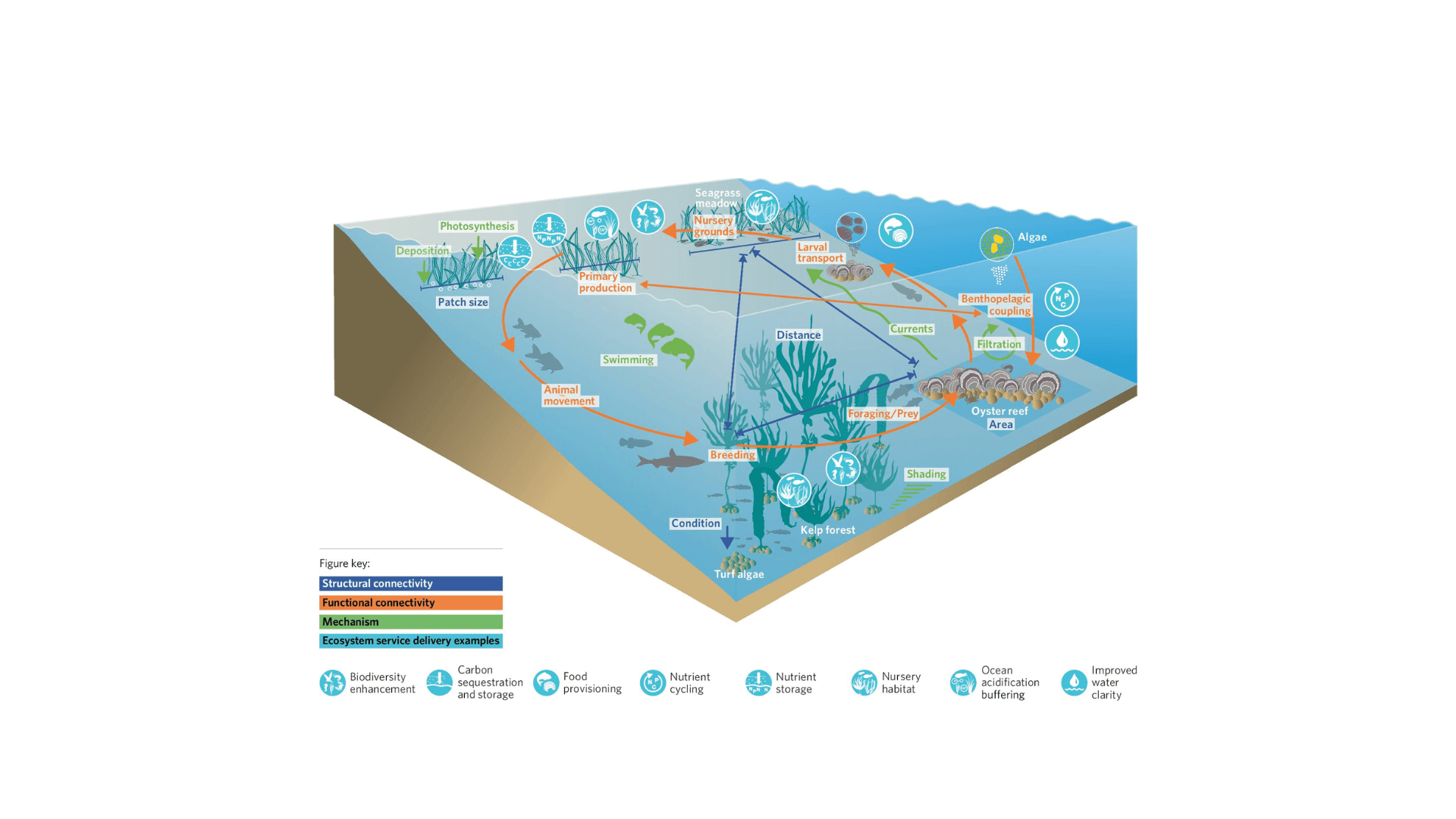
Scientists warn that the future of our oceans and climate goals depends on reconnecting the ecological threads that hold coastal habitats together. A new study, launched at the International Seascape Symposium II at ZSL (Zoological Society of London), and published to align with UN Ocean Decade Conference represents two years of work by an international team led by the University of Portsmouth, with support from ZSL and University of Edinburgh. It delivers the most comprehensive report to date on how coastal habitats in temperate regions function not in isolation, but as interconnected systems—a concept known as ecological connectivity. “Coastal habitats like oyster reefs, salt marshes, kelp forests, and seagrass meadows are often treated as separate entities in policy and restoration, but in reality, they are tightly bound together by the flows of water, life, and energy,” said lead author Professor Joanne Preston, Institute of Marine Sciences at the University of Portsmouth. “To meet our global climate and biodiversity targets, we need to restore the entire seascape.” Published in npj Ocean Sustainability to coincide with World Ocean Day and the midpoint of the UN Decade on Ecosystem Restoration, the paper makes the case that reconnecting these habitats is fundamental to repairing the damage caused by centuries of degradation, and to achieving international targets under the Kunming-Montreal Global Biodiversity Framework, Paris Agreement, and the Sustainable Development Goals. Schematic figure illustrating how structural connectivity, functional connectivity, mechanisms and ecosystem service delivery relate. Examples of structural connectivity are denoted by blue arrows and font, functional connectivity by orange arrows and font and mechanisms are indicated by green arrows and font. The light blue icons provide examples of ecosystem services delivery enhanced by the connectivity across seascape habitats. Credit: npj Ocean Sustainability (2025). DOI: 10.1038/s44183-025-00128-3 Conceptual diagram of how ecosystem services from a restored and connected seascape underpins the interrelationships between climate mitigation, biodiversity and human wellbeing. Credit npj Ocean Sustainability 2025 Dr. Philine zu Ermgassen, Changing Oceans Group, University of Edinburgh, said, “Ecological connectivity allows organisms, nutrients, sediment, and energy to move between different marine habitats. These exchanges drive crucial ecosystem services—from carbon storage to water filtration, coastal protection to fishery productivity.” The research compiles evidence from global temperate regions showing that habitat co-location consistently improves ecosystem service delivery. In California, for example, seagrasses grow more robustly when adjacent to oyster reefs. On the U.S. East Coast in the Chesapeake Bay region, oyster beds dramatically increase water clarity and nutrient removal. Additionally, in New Zealand, kelp-derived carbon boosts fish populations in fjords. “Connected habitats are more productive, more resilient, and more beneficial to people,” said co-author Alison Debney, Estuaries and Wetlands Program Lead at ZSL. “Restoring isolated patches isn’t enough. We need to think like the sea—fluid, linked, dynamic— and we need to act at scale.” In response, the authors propose a formal definition of seascape restoration: the concurrent or sequential restoration of multiple habitats to rebuild functional, resilient, and connected marine ecosystems. They call for a shift away from “feature-based” conservation approaches toward holistic, connectivity-based planning. This includes updating marine protected area (MPA) frameworks, development policies, and restoration funding criteria to account for the value of ecological links across habitats. “We are at a critical moment,” said Professor Preston. “The UN Decade on Ecosystem Restoration and the Decade of Ocean Science give us the tools and momentum. But unless we restore the seascape as a whole—the full mosaic of habitats and their connections—we risk missing the targets set by policymakers.” The study outlines clear recommendations to policymakers, including: Mainstreaming seascape connectivity into climate and biodiversity policies Integrating restoration goals across land-sea interfaces Recognizing the role of connectivity in climate mitigation and adaptation Updating environmental assessments to evaluate ecosystem service delivery at the seascape scale Illustration of the role of connectivity in modulating ecosystem service delivery across the coastal seascape. Arrows relate to icons of the same color, with the arrowhead indicating the habitat in which the ecosystem service is enhanced through connectivity with the source habitat. Credit: npj Ocean Sustainability (2025). DOI: 10.1038/s44183-025-00128-3 “We need to view coastal habitats as interconnected systems,” said co-author Rosalie Wright, Blue Marine Foundation. “Our fragmented policy and regulatory approaches must transition to holistic, seascape-scale thinking. Addressing these barriers will enable the urgently needed recovery of our coastlines.” This work directly supports Target 2 of the Global Biodiversity Framework, which calls for at least 30% of degraded coastal and marine ecosystems to be under effective restoration by 2030, specifically enhancing connectivity and ecological function. The findings come amid growing concern over the collapse of marine habitats in temperate zones. Over the past two centuries, the U.K. alone has lost up to 95% of its oyster reefs, over 90% of its seagrasses, and vast expanses of saltmarsh. These losses jeopardize not only biodiversity but also carbon storage, fish stocks, and coastal protection. Restoring at scale and in a way that mirrors the ecological realities of the coast offers a powerful nature-based solution to the interlinked crises of climate change, biodiversity loss, and pollution. As the world gathers momentum around ocean recovery, the message from the science is unequivocal: seascape-scale restoration is not optional. It is essential. More information: J. Preston et al, Seascape connectivity: evidence, knowledge gaps and implications for temperate coastal ecosystem restoration practice and policy, npj Ocean Sustainability (2025). DOI: 10.1038/s44183-025-00128-3

Read More »
Tropical Storm

How hurricanes such as Irma and Maria can devastate the Caribbean marine environment

Toa Baja, Puerto Rico. EPA-EFE Hurricane Irma – one of the strongest on record to hit the Caribbean – recently scoured the islands leaving catastrophic damage in its wake. And just as we began to piece together the devastating and potentially long–term impacts of Irma, Hurricane Maria has now left another path of destruction. Puerto Rico, the British dependency of the Turks and Caicos, and many other Caribbean islands have suffered what have been described as “apocalyptic conditions”. When the world talks of the tragic and devastating consequences of severe hurricanes, the focus tends to be on the land, and the people who live in affected communities. Indeed, nearly 30 people have been reported killed, while Puerto Rico Resident Commissioner Jenniffer Gonzalez has said that the hurricane has set the country back by “20 to 30 years”. We see images of toppled trees, torn off roofs and severe flooding. But marine environments can be also badly affected by hurricanes, with potential long-term effects. The force of hurricane winds, and the resultant tides and waves are so strong that both plants and animals are ripped from the sea floor leaving lifeless rubble and sediment behind. Hurricanes have a washing machine effect: they mix up coastal sediments with knock-on effects for marine life. Suspended matter left floating in the water column limits the amount of sunlight that reaches marine habitats and so reduces growth and recovery. Meanwhile in shallow coastal environments, debris, sewage and run-off continue to flow in to the sea long after the hurricane has passed. Human dependency on the sea The fishery for Queen Conch (Strombus gigas) is a major source of income to many around the Caribbean. The devastation of coastal environments, particularly seagrass meadows, can also result in long-term losses of the benefits that humans receive from them, such as fisheries support or coastal protection. Damage to these ecosystem services consequently impacts human well-being, because people can no longer rely on them for their livelihood and food supply. Some of the most severely affected areas of the recent hurricanes in the Caribbean – Florida, Turks and Caicos, Puerto Rico, Cuba and the British Virgin Islands – all house extensive seagrass meadows. These shallow water marine habitats support valuable lobster fisheries, as well as shrimp, conch, and finfish fisheries. Seagrass also stabilises sediments and protects the white sand beaches that attract so many tourists to the region. Previous hurricanes, cyclones, and typhoons (weather events which are essentially the same but have different names depending on where the storm happens) across the globe have shown the severe negative effects they can have on these vital seagrass meadows. The seagrass plants are ripped up or buried under sediments, leading to their suffocation. The extensive associated murky water leads to widespread loss of seagrass, as was seen in the years that followed hurricane Katrina hitting the US. Initial indications from the Everglades in Florida show that seagrass destruction in the wake of Irma is extensive, with large piles already being washed far onshore. This should ring alarm bells for Caribbean fisheries, as hurricanes Katrina and Rita led to losses in the seafood industry that reached billions of dollars. The Caribbean spiny lobster fishery business alone is worth more than US$450m, and directly employs 50,000 people. Healthy seagrass provides the best fishing grounds with the greatest revenue, and the recent hurricanes have the potential to decimate this. Environmental impact But this is not just about money. Seagrass loss also threatens marine biodiversity and the health of charismatic species. After a severe cyclone in Australia in 2011, turtles and dugong starved due to the damaged meadows. In addition, seagrass is a marine powerhouse, which stores vast amounts of carbon in meadow sediments. When the seagrass is removed, this carbon is released back into the environment. Caribbean spiny lobsters depend on clams they find in seagrass. Hurricanes have always been a part of life in tropical seas. The destruction they cause and their recovery have been observed throughout human history. What is alarming now, however, is the apparent increased frequency and intensity. The already poor state of the Caribbean marine environment restricts the ability of habitats such as seagrass meadows and coral reefs to recover from the effects of severe storms. Poor water quality and over-fishing, for example, promotes the overgrowth of algae, preventing recovery. With repeated hurricanes occurring over time periods that are insufficient for recovery to occur, this will only get worse. The severity of hurricanes Irma and Maria are a wake up call. We need a fundamental shift in how marine environments are protected to enable long-term sustainability for the food and income they provide. Many locations in the Caribbean, for example Puerto Rico, have ineffective marine protection rules and so destructive practices continue unchecked, meaning that when a disaster does occur, the environment is unable to recover. Although local actions against climate change are difficult to achieve, it is possible to manage river catchments to improve water quality, and focus on small scale immediate actions, such as implementation of marine protected areas to limit immediate and direct damage to coastal resources. Coordinated small scale actions will ultimately help enhance the resilience of the Caribbean Sea, and make sure that the environment can better recover from any future extreme events. Richard K.F. Unsworth, Research Officer (Marine Ecology), Swansea University; Benjamin L. Jones, Research Assistant at the Sustainable Places Research Institute, Cardiff University; Leanne Cullen-Unsworth, Research Fellow, Cardiff University, and Lina Mtwana Nordlund, Researcher in coastal environmental sciences, Stockholm University This article was originally published on The Conversation. Read the original article.

Read More »