Tag: solent seascape project

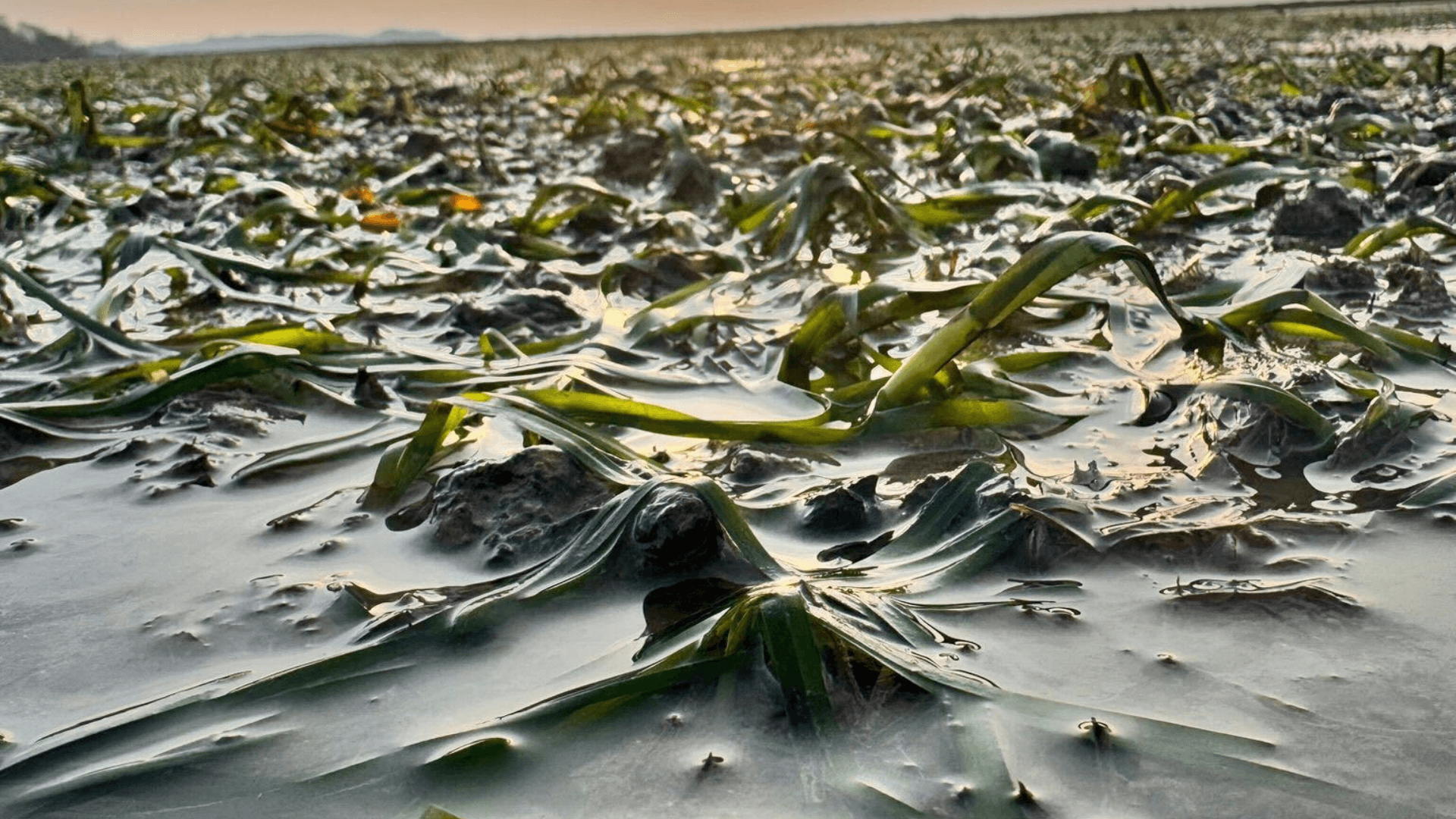
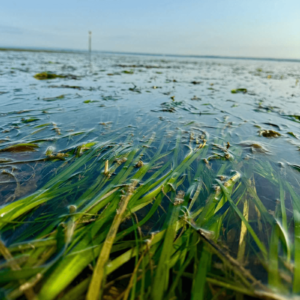
A patch of seagrass fragments planted at Priory Bay, Isle of Wight.

Fragment Walk reflections

As our Fragment Walks from the 2025/26 season come to an end Project Seagrass Intern Anya Lamparelli reflects on this year’s efforts. A seagrass fragment is a precious and vulnerable thing. Torn free by winter storms and strong swells these delicate shoots with intricate root systems still attached wash ashore

Read More »
Seagrass in Thorness

Fieldwork notes from our Solent planting

Between the 17th and 23rd March 2026, members of the Project Seagrass team were on the Isle of Wight carrying out active restoration as part of the The Solent Seascape Project, the first project of its kind in the UK to initiate seascape-scale restoration. As part of The Solent Seascape

Read More »
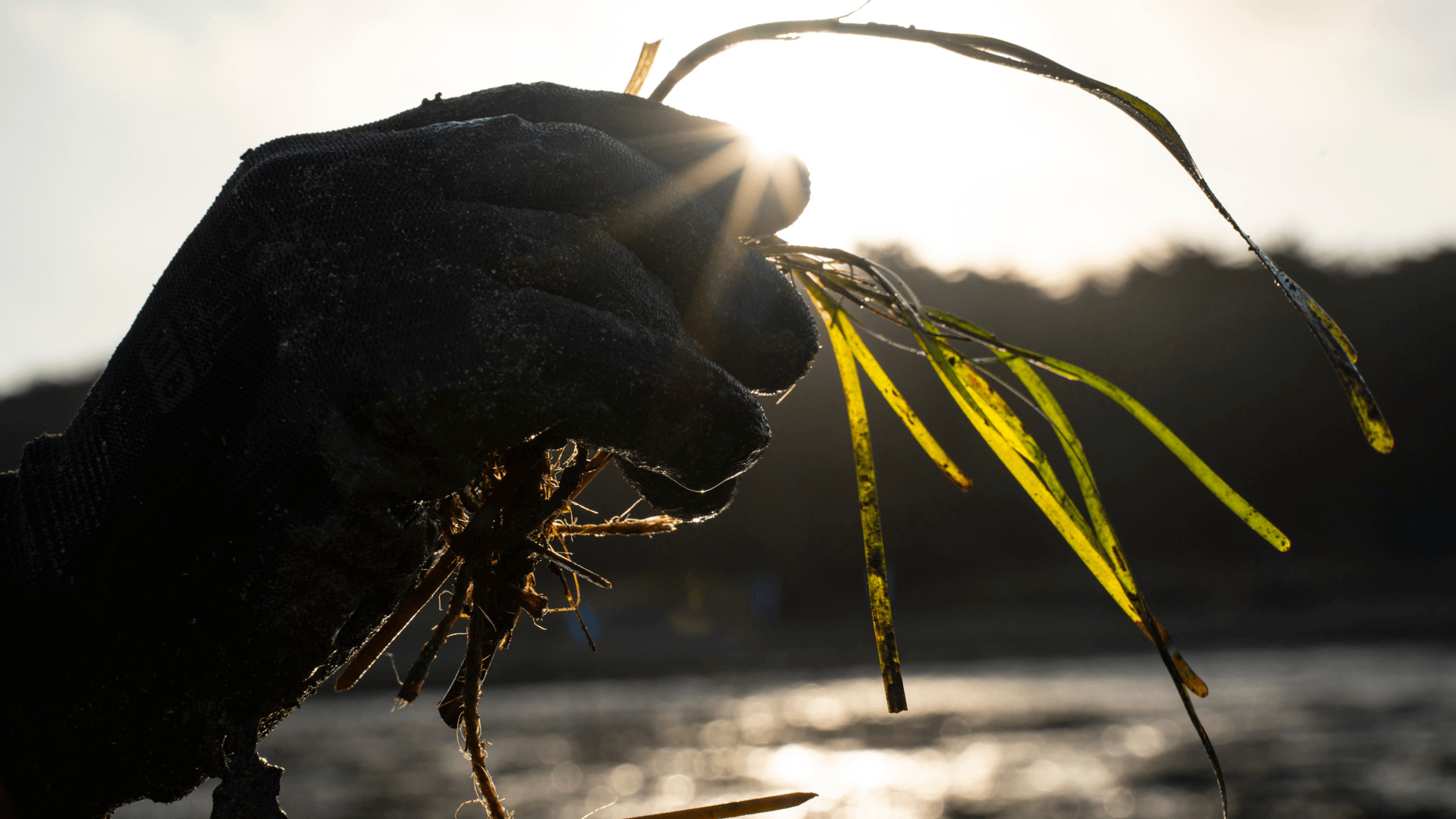
A member of the Project Seagrass team holds a seagrass transplant in a gloved hand.

Introducing the Seagrass Hug

In 2024, the Project Seagrass team introduced the Seagrass Hug to our planting methodology. The method was developed by Anouska Mendzil, Senior Science Officer at Project Seagrass and Swansea University, and aims to determine whether surrounding seeding plots with more established transplants provides protection for emerging seeds in restoration practices.

Read More »
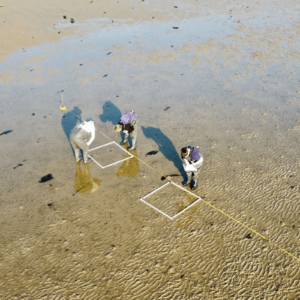
Three members of Project Seagrass staff are standing along a transect line gathering quadrat data on a beach in the Isle of Wight as part of our May fieldwork

Solent Seagrass Update – A Year in Review

Seagrass Restoration Efforts to restore seagrass marine habitat at our two restoration sites on the Isle of Wight began in March and April this year under the Solent Seascape Project.  A total of 132,000 seeds and 2,160 transplants have been planted across the two sites. There are plans to continue this

Read More »
A patch of seagrass fragments planted at Priory Bay, Isle of Wight.

Fragment Walk reflections

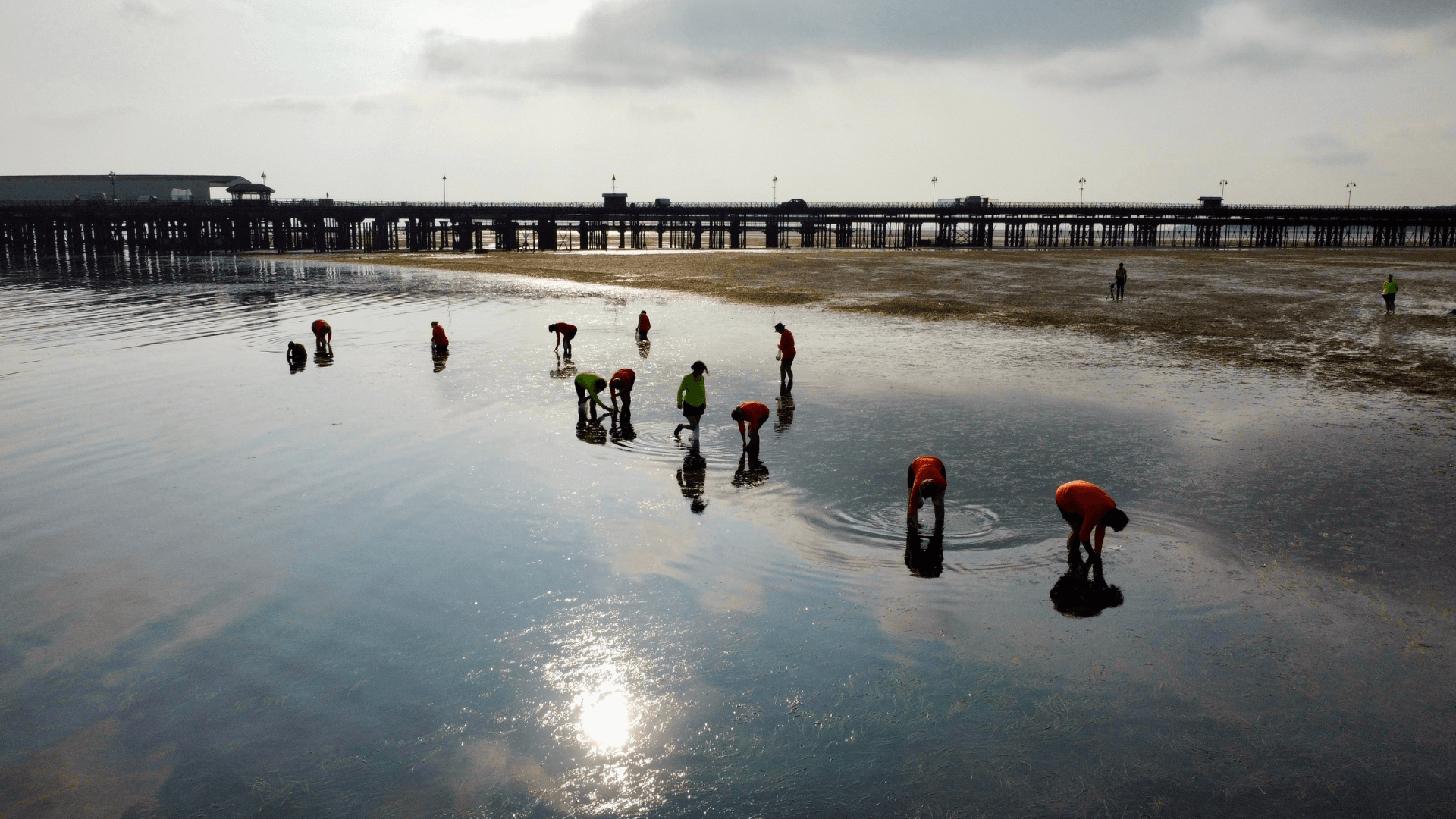
As our Fragment Walks from the 2025/26 season come to an end Project Seagrass Intern Anya Lamparelli reflects on this year’s efforts. A seagrass fragment is a precious and vulnerable thing. Torn free by winter storms and strong swells these delicate shoots with intricate root systems still attached wash ashore from subtidal seagrass meadows. If left stranded on the sand they will soon dry out, but on the Isle of Wight they are being given a second chance. Once a month at low tide, volunteers gather at Priory Bay, all eyes trained on the shoreline for a flash of green. Seagrass! Each fragment found is carefully collected and replanted into a growing community meadow. Since the initiative began three years ago 311 volunteers have joined the Project Seagrass team. Collecting 1,104 fragments over 16 fragment walks. 624 fragments have been replanted at Priory Bay, covering an area of 27 m2. Each month the volunteers revisit what they have already planted and monitor how the meadow is establishing, making field observations on what factors might be influencing its growth and survival. The remaining fragments have been replanted at the Seagrass Nursery in South West Wales; they will soon be used to support the team’s wider restoration work in the Solent. Fragment walks unfold under all conditions. Brilliant unbroken sunshine, pink sunsets, and cold grey mornings where the sky and sea blur into one. Yet the turnout remains steady, demonstrating the interest in and growing connection to seagrass meadows in the Solent. Many volunteers bring with them a deep lived knowledge of the coastline. They know how the beach shifts through the seasons, where sediment builds and erodes and when storms have reshaped the coast. This local insight has become an invaluable part of the project, helping guide where and how we replant seagrass. In turn, we can share our knowledge of ecosystem restoration and marine life. Creating a shared partnership where practitioners and locals learn from each other. Project Seagrass are working to restore 3.5 hectares of seagrass on the Isle of Wight as part of the Solent Seascape Project. Fragment walks allow us to trial new restoration methods while connecting with the local community. Thank you to every volunteer who has joined us in the Solent, we look forward to welcoming you back when the fragment walks restart in September 2026.

Read More »
Seagrass in Thorness

Fieldwork notes from our Solent planting

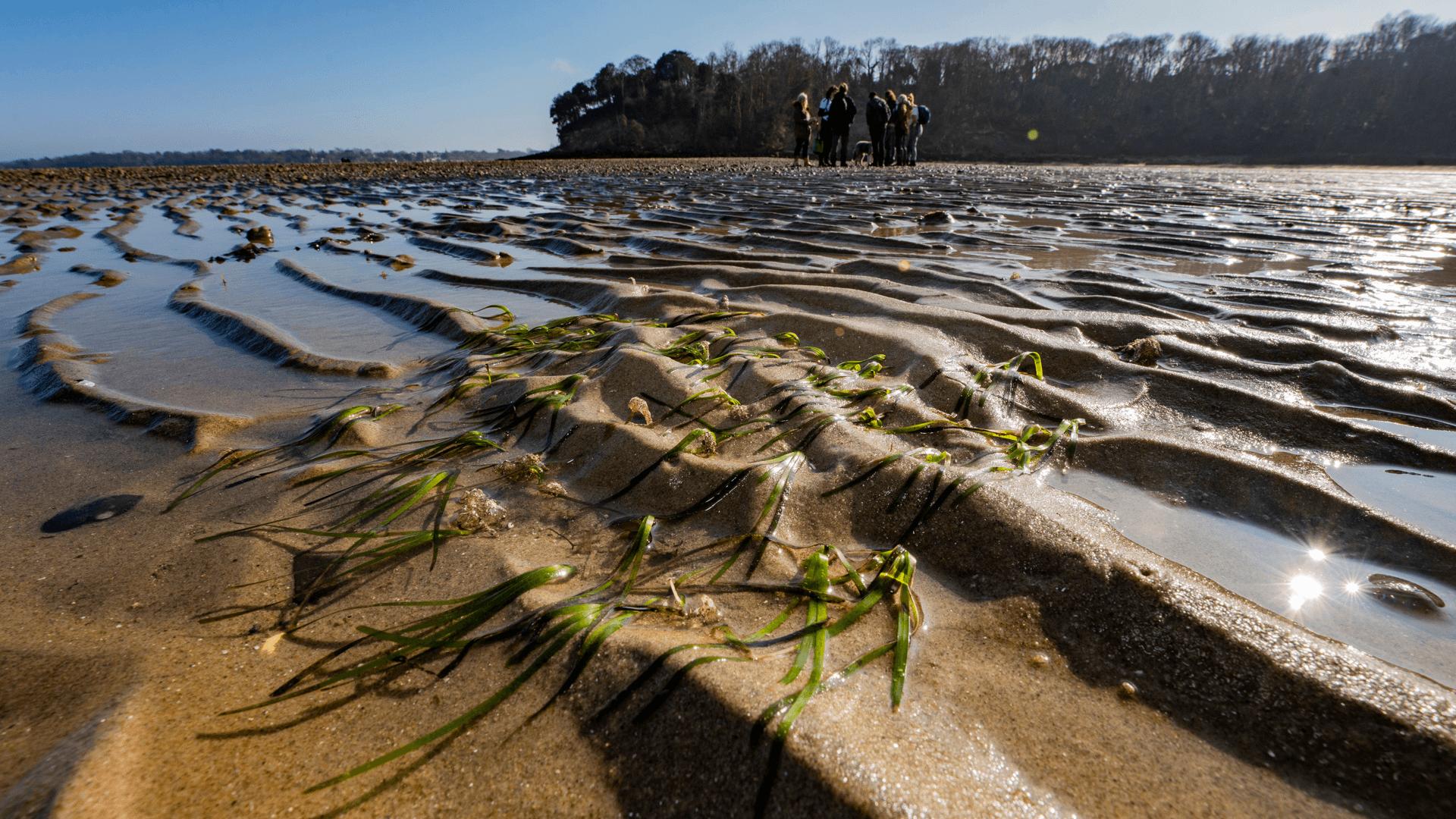
Between the 17th and 23rd March 2026, members of the Project Seagrass team were on the Isle of Wight carrying out active restoration as part of the The Solent Seascape Project, the first project of its kind in the UK to initiate seascape-scale restoration. As part of The Solent Seascape Project, Project Seagrass is working to restore 3.5 hectares of seagrass in the Solent. During this spring’s planting efforts, the team planted 175,416 seagrass seeds using the Dispenser Injection Seeding (DIS) method and 1,154 seagrass transplants from our Seagrass Nursery, planting across an area of 1.11 hectares. Find out more about the activity that took place: Fragment Walk The March fieldwork efforts commenced with a Fragment Walk at Priory Bay. Fragment Walks are a community-based seagrass restoration initiative and form one of the approaches to active restoration that Project Seagrass is undertaking on the Isle of Wight as part of The Solent Seascape Project. Seagrass meadows are sensitive habitats which can be easily uprooted. As a result of storms or other disturbances, fragments of seagrass (individual seagrass plants with the rhizome or reproductive root and node system still intact) can become dislodged, uprooted, and washed up onto beaches. Fragment Walks involve collecting and re-planting these dislodged seagrass fragments, giving them another chance to thrive. During March’s Fragment Walk, the team were joined by 11 volunteers. Together, the group walked along the beach from St Helens to Priory Bay collecting over 100 dislodged seagrass fragments which were then re-planted in a dedicated seagrass community garden at Priory Bay. Over 100 seagrass fragments were collected at Priory Bay as part of March’s Fragment Walk. These were re-planted in a Community Garden at Priory Bay. 11 volunteers supported the activity, supporting active restoration on the Island. Planting Preparation Workshop One of the methods used for active seagrass restoration on the Isle of Wight is planting seagrass transplants. This year’s Planting Preparation Workshop took place at Sea View Yacht Club where 17 volunteers helped the team to prepare 1,154 transplants from the Project Seagrass Seagrass Nursery for planting out into the field. The preparation process for the transplants involves carefully attaching bamboo pins to seagrass rhizomes which provides them with increased stability when they are planted out into the field. March’s Planting Preparation Workshop took place at Seaview Yacht Club Seagrass transplants from the Project Seagrass Seagrass Nursery are prepared for planting out into the field by attaching bamboo pins to the rhizome Seagrass Planting Project Seagrass’ planting as part of The Solent Seascape Project is located at two Isle of Wight sites: Priory Bay and Thorness. Alongside the 1,154 seagrass transplants from the Project Seagrass Seagrass Nursery, the team planted 175,416 seagrass seeds across the sites using the Dispenser Injection Seeding (DIS) method, a method developed by The Fieldwork Company. This year’s seed planting incorporated experimental work to compare the germination success of subtidal and intertidal seed populations collected from Isle of Wight seagrass meadows in Yarmouth, Ryde, and Bembridge as part of last summer’s seagrass seed collections. Baseline measurements were taken at our experimental plots including drone images, pH, salinity, and sediment samples. This provenance experiment will help to inform where seeds are collected from for future restoration activity. Over the course of the fieldwork trip the team planting across an area of 1.11 hectares, an important step in the restoration of the Solent’s important seagrass habitats. Project Seagrass Nursery Manager Emily Yates plants seagrass at Thorness using the DIS method Project Seagrass Operations Lead Eve Uncles plants seagrass transplants from the Seagrass Nursery out into the field at Thorness

Read More »
A member of the Project Seagrass team holds a seagrass transplant in a gloved hand.

Introducing the Seagrass Hug

In 2024, the Project Seagrass team introduced the Seagrass Hug to our planting methodology. The method was developed by Anouska Mendzil, Senior Science Officer at Project Seagrass and Swansea University, and aims to determine whether surrounding seeding plots with more established transplants provides protection for emerging seeds in restoration practices. Anouska said:  “In this restoration methodology trial we sought to incorporate different Zostera marina life stages by means of seeds and transplants, in a planting design aimed to minimise, and test, hydrodynamic impact on planted seagrass. By implementing multiple restoration strategies, we hope to improve seagrass restoration success and gain valuable knowledge in life-stage bottlenecks to seagrass survival and resilience, site-specific interactions, and insights for scaling-up. The Seagrass Consortium have been wonderful partners in collaborating on this cross-European wide trial, working towards furthering our understanding on seagrass meadow restoration, recovery, resilience and rehabilitation”  Members of the Project Seagrass team planting seagrass seeds at Thorness, Isle of Wight using the DIS method. Photo credit Francesca Page. Members of the Project Seagrass team planting seagrass transplants at Thorness, Isle of Wight. Photo credit Francesca Page. The Seagrass Hug Method. Graphic provided by Anouska Mendzil Initial trials of the method took place as part of spring planting efforts in the Isle of Wight, in South England, forming part of active restoration work taking place as part of the Solent Seascape Project.  The approach involves planting seagrass seeds using the Dispenser Injection Seeding (DIS) method (developed by The Fieldwork Company) and surrounding these seeding plots with more established seagrass transplants using a bare-root plant with anchoring peg. Project Seagrass’ planting trials used seagrass transplants grown from seed at our Seagrass Nursery in West Wales and local donor meadow transplants to provide the “hug” which will also be tested as part of the experiment. https://www.projectseagrass.org/wp-content/uploads/2025/11/Template-Website-Images-Landscape.mp4 The Seagrass Hug planting design has been aligned with seagrass planting being undertaken by our partners at The Seagrass Consortium and has been replicated as part of restoration efforts in the Bay of Arcachon, Etang de Berre, the Bay of Santander, Oosterschelde in the Netherlands, North Wales and the Mediterranean Sea at Mallorca. Monitoring of these experimental plots including seagrass traits and environmental parameters will enable us to assess whether this approach provides protection for the emerging seeds. Scaling the trial in collaboration with international partners helps to build our collective knowledge. Results will be published and shared on SeagrassRestorer to share the findings openly and foster further collaboration within the seagrass community. A seagrass transplant prepared for planting as part of a Seagrass Hug in the Isle of Wight. Photo credit Francesca Page Spring 2025 planting efforts using the Seagrass Hug method. Photo credit Francesca Page

Read More »
Seagrass in Ryde

Different public opinions could slow down use of natural methods to protect the UK’s coasts

Scientists have warned efforts to protect and restore marine habitats along the UK’s coastline could be hindered by a lack of public knowledge about these initiatives. In the face of climate change and rising sea levels, nature-based coastal solutions (NBCS) are emerging as a sustainable and environmentally friendly way to protect our shores. These innovative solutions—which include living shorelines, engineered reefs, and restoration of saltmarshes and dunes—offer a greener alternative to traditional hard defenses like seawalls and barriers. However, new research reveals that while NBCS are preferred by many for their environmental benefits, public understanding of their effectiveness lags behind. In a study published in the Journal of Environmental Management, researchers surveyed over 500 UK residents and found a striking divide between public preference and their perception of effectiveness. Most respondents expressed a preference for nature-based coastal solutions due to their sustainability and aesthetic appeal. Yet hard defenses, which were long-established and visibly effective, remained widely thought-of as the most reliable way to mitigate coastal risks like flooding and erosion. Spatial distribution in preferences and perceived effectives for the two active coastal management strategies considered: hard defenses and nature-based coastal solutions. Credit: Journal of Environmental Management (2024). DOI: 10.1016/j.jenvman.2024.123413 The study highlights a critical knowledge gap. Although NBCS offer significant environmental advantages- including carbon sequestration, enhanced biodiversity, and community resilience—their long-term effectiveness is not well understood by the public. This disconnect could hinder efforts to implement NBCS at scale, despite growing calls from the coastal science community to adopt these solutions as a cornerstone of sustainable coastal management. To bridge this gap, researchers emphasize the need for greater public engagement and education about nature-based initiatives. Collaborative approaches, such as systems mapping, could play an important role in involving local communities in the decision-making process. By fostering dialogue among residents, scientists, and policymakers, systems mapping can help ensure that coastal management strategies are both inclusive and effective. Dr. Scott Mahadeo, from the School of Accounting, Economics and Finance at the University of Portsmouth, explains, “Nature based coastal solutions offer a promising path toward sustainable coastal management, combining environmental benefits with resilience against climate challenges. However, our findings highlight a clear knowledge gap between the scientific community’s advocacy for these solutions and the public’s understanding of their effectiveness. Bridging this gap through meaningful dialogue and inclusive decision-making will be key to fostering widespread support and ensuring robust, long-term coastal policies.” The study highlights that coastal zones hold deep socio-cultural significance, from family heritage and community cohesion to recreation and environmental stewardship. Researchers say that any changes to these landscapes can profoundly impact the lives and identities of coastal residents and users. This is why public support and understanding are crucial for the successful adoption of NBCS and other coastal management strategies. Dr. Mahadeo adds, “As the UK and the world grapple with the challenges of climate change, balancing innovative solutions with community needs is essential. The path forward lies in building trust, sharing knowledge, and working together to safeguard our coasts for generations to come.” The University of Portsmouth is involved in several projects that use nature as a potential solution to climate-related or pollution-related issues. These include the Rapid Reduction of Nutrients in Transitional Waters (RaNTrans) project, which is exploring how nature-based approaches can improve and protect marine ecosystems. Restoration projects are also underway across the south coast of England, including the pioneering Blue Marine Foundation’s Solent Oyster Restoration Project, and the UK’s first seascape restoration project the Solent Seascape Project. Both projects are based at the University of Portsmouth’s Institute of Marine Sciences in Langstone Harbour, and aim to restore multiple habitats such as oyster reefs, seagrass meadows, saltmarsh and birds, to reconnect and revive our ailing coastal waters. This latest study was conducted by a team of interdisciplinary scientists—in coastal geomorphology, environmental economics, and human geography—and focused on public perceptions of coastal management in the UK. Using innovative survey and analysis techniques, the authors hope the research will help develop more sustainable and inclusive coastal policies. More information: This article is republished from PHYS.ORG and provided by the University of Portsmouth.
Read More »
Three members of Project Seagrass staff are standing along a transect line gathering quadrat data on a beach in the Isle of Wight as part of our May fieldwork

Solent Seagrass Update – A Year in Review

Seagrass Restoration Efforts to restore seagrass marine habitat at our two restoration sites on the Isle of Wight began in March and April this year under the Solent Seascape Project.  A total of 132,000 seeds and 2,160 transplants have been planted across the two sites. There are plans to continue this planting in spring 2025 using the same methods. Continued monitoring of the restoration sites and WWF seagrass planting trials are undertaken during fieldwork on a monthly basis. Summer Seagrass Seed Harvest During July, we collected seagrass seeds (Zostera marina) from three meadows around the Isle of Wight. We were joined by 117 volunteers and some of our funders and project partners as part of our seagrass seed harvesting wade and pick event. We collectively harvested 101, 710 seeds in total, which will contribute towards 2025’s restoration efforts. Seagrass Safe Sailor We’ve been working with the boating community on the island to explore Advanced Mooring Systems (AMS), and promote seagrass safe sailing practices. Two AMS have been designed and are in the final stages of being installed at Seaview. These AMS provide a demonstration of how AMS can work safelyin a challenging tidal environment with moving sediment and currents, whilst reducing scarring on the extensive seagrass meadow here. In 2025, we’ll be monitoring seagrass recovery at Seaview, and working with local stakeholders to map the seagrass meadow. You can explore our Seagrass Safe Sailor resources here. Fragment Walks This year we, and many volunteers have also been restoring seagrass through fragments (washed up seagrass). We have: Set up two fragment collection points at St Helen’s and Arc Biodiversity in Sandown Run eight fragment collection walks Planted 329 plants over 17m² Run two school-focused fragment collection walks Worked with over 200 volunteers. To find out more about our Fragment Walk initiative visit our blog article. Looking Back and Moving Forward: A Big Thank You to Our Volunteers! This year has been incredibly busy, and we couldn’t have succeeded without our amazing volunteers. Your dedication has been invaluable. As we plan for an exciting 2025, we’re eager to welcome familiar faces back and meet new ones. Let’s make next year even better together! Thank you for being a vital part of the seagrass community.

Read More »