Tag: conservation

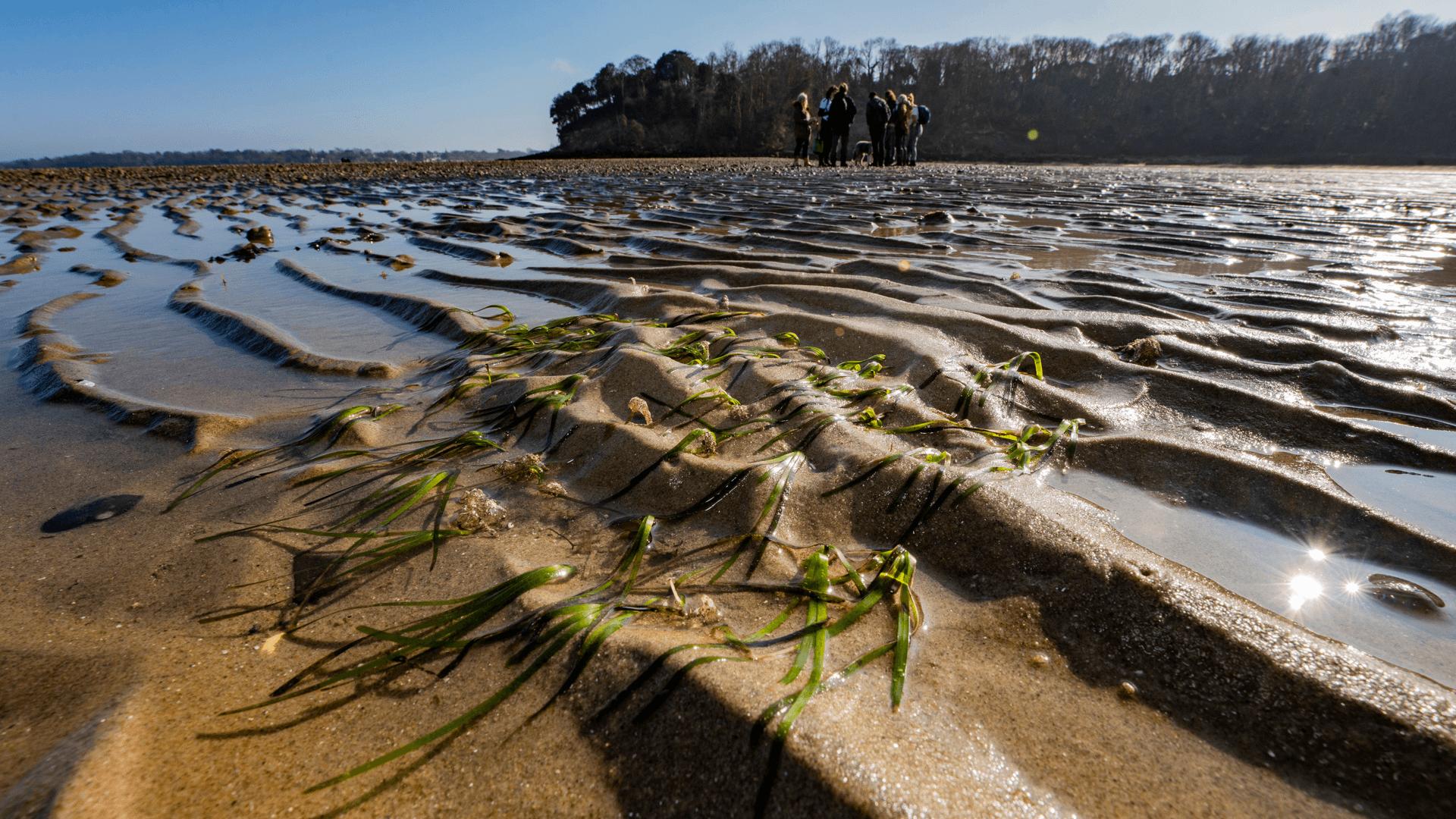
A patch of seagrass fragments planted at Priory Bay, Isle of Wight.

Fragment Walk reflections

As our Fragment Walks from the 2025/26 season come to an end Project Seagrass Intern Anya Lamparelli reflects on this year’s efforts. A seagrass fragment is a precious and vulnerable thing. Torn free by winter storms and strong swells these delicate shoots with intricate root systems still attached wash ashore

Read More »
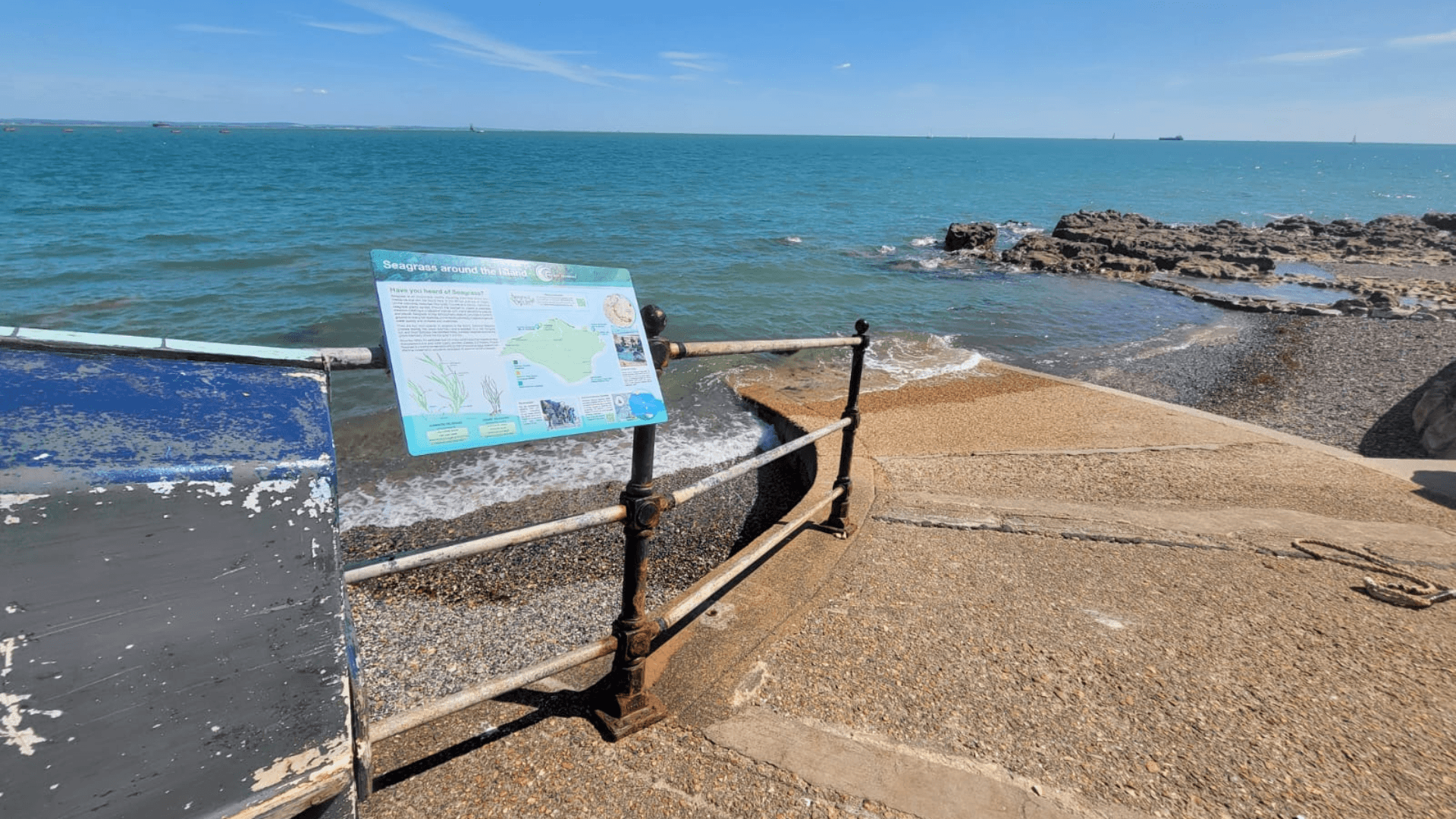
A sign with information about the Isle of Wight's seagrass meadows is attached to railings on the slipway at Seaview.

Seagrass signage installed in the Solent

Residents and visitors to the Isle of Wight can now access information about the Island’s important seagrass habitats thanks to new signage installed through support from Seacology. The signage has been installed by Project Seagrass as part of ongoing efforts to protect and restore seagrass ecosystems within the Solent. The signs

Read More »
A patch of seagrass fragments planted at Priory Bay, Isle of Wight.

Fragment Walk reflections

As our Fragment Walks from the 2025/26 season come to an end Project Seagrass Intern Anya Lamparelli reflects on this year’s efforts. A seagrass fragment is a precious and vulnerable thing. Torn free by winter storms and strong swells these delicate shoots with intricate root systems still attached wash ashore from subtidal seagrass meadows. If left stranded on the sand they will soon dry out, but on the Isle of Wight they are being given a second chance. Once a month at low tide, volunteers gather at Priory Bay, all eyes trained on the shoreline for a flash of green. Seagrass! Each fragment found is carefully collected and replanted into a growing community meadow. Since the initiative began three years ago 311 volunteers have joined the Project Seagrass team. Collecting 1,104 fragments over 16 fragment walks. 624 fragments have been replanted at Priory Bay, covering an area of 27 m2. Each month the volunteers revisit what they have already planted and monitor how the meadow is establishing, making field observations on what factors might be influencing its growth and survival. The remaining fragments have been replanted at the Seagrass Nursery in South West Wales; they will soon be used to support the team’s wider restoration work in the Solent. Fragment walks unfold under all conditions. Brilliant unbroken sunshine, pink sunsets, and cold grey mornings where the sky and sea blur into one. Yet the turnout remains steady, demonstrating the interest in and growing connection to seagrass meadows in the Solent. Many volunteers bring with them a deep lived knowledge of the coastline. They know how the beach shifts through the seasons, where sediment builds and erodes and when storms have reshaped the coast. This local insight has become an invaluable part of the project, helping guide where and how we replant seagrass. In turn, we can share our knowledge of ecosystem restoration and marine life. Creating a shared partnership where practitioners and locals learn from each other. Project Seagrass are working to restore 3.5 hectares of seagrass on the Isle of Wight as part of the Solent Seascape Project. Fragment walks allow us to trial new restoration methods while connecting with the local community. Thank you to every volunteer who has joined us in the Solent, we look forward to welcoming you back when the fragment walks restart in September 2026.

Read More »
A sign with information about the Isle of Wight's seagrass meadows is attached to railings on the slipway at Seaview.

Seagrass signage installed in the Solent

Residents and visitors to the Isle of Wight can now access information about the Island’s important seagrass habitats thanks to new signage installed through support from Seacology. The signage has been installed by Project Seagrass as part of ongoing efforts to protect and restore seagrass ecosystems within the Solent. The signs have been designed to raise awareness of seagrass meadows around the Isle of Wight in addition to highlighting ways that individuals can support these fragile ecosystems including through participation in Fragment Walks and uploading seagrass sightings to citizen science tool SeagrassSpotter. New seagrass signage installed at St Helen’s Duver Members of the Project Seagrass team installed new signage at locations on the Isle of Wight Two signs were installed in Seaview, the location of one of the Island’s extensive Zostera marina meadows and where Project Seagrass, Blue Parameters, and WarrenBoats have recently installed two Advanced Sustainable Mooring Systems (ASMS) to relieve pressure on the Island’s important seagrass habitats. A further sign has been installed at St Helens Duver, Priory Bay, the location of the start of our Fragment Walks and the site of one of our active restoration sites. Further poster versions of the signs will be installed at Ryde and other locations around the Island. Anouska Mendzil, Senior Science Officer at Project Seagrass and Swansea University said “The Isle of Wight is an UNESCO Biosphere Reserve, home to some of the most ecologically important marine and coastal habitats under threat – seagrass meadows.  Across the Isle of Wight, new information signs now share the story of seagrass restoration and conservation, an effort led by Project Seagrass and the collective power of local community action, to contribute and enhance ecosystem recovery.” Seagrass signage installed at Seaview slipway Signage installed on the Southern Water building at St Helen’s Project Seagrass is grateful for the generous support from Seacology for making the creation and installation of these seagrass signs possible. Project Seagrass is also thankful to our stakeholders for their continued support and permission to install the signage.

Read More »
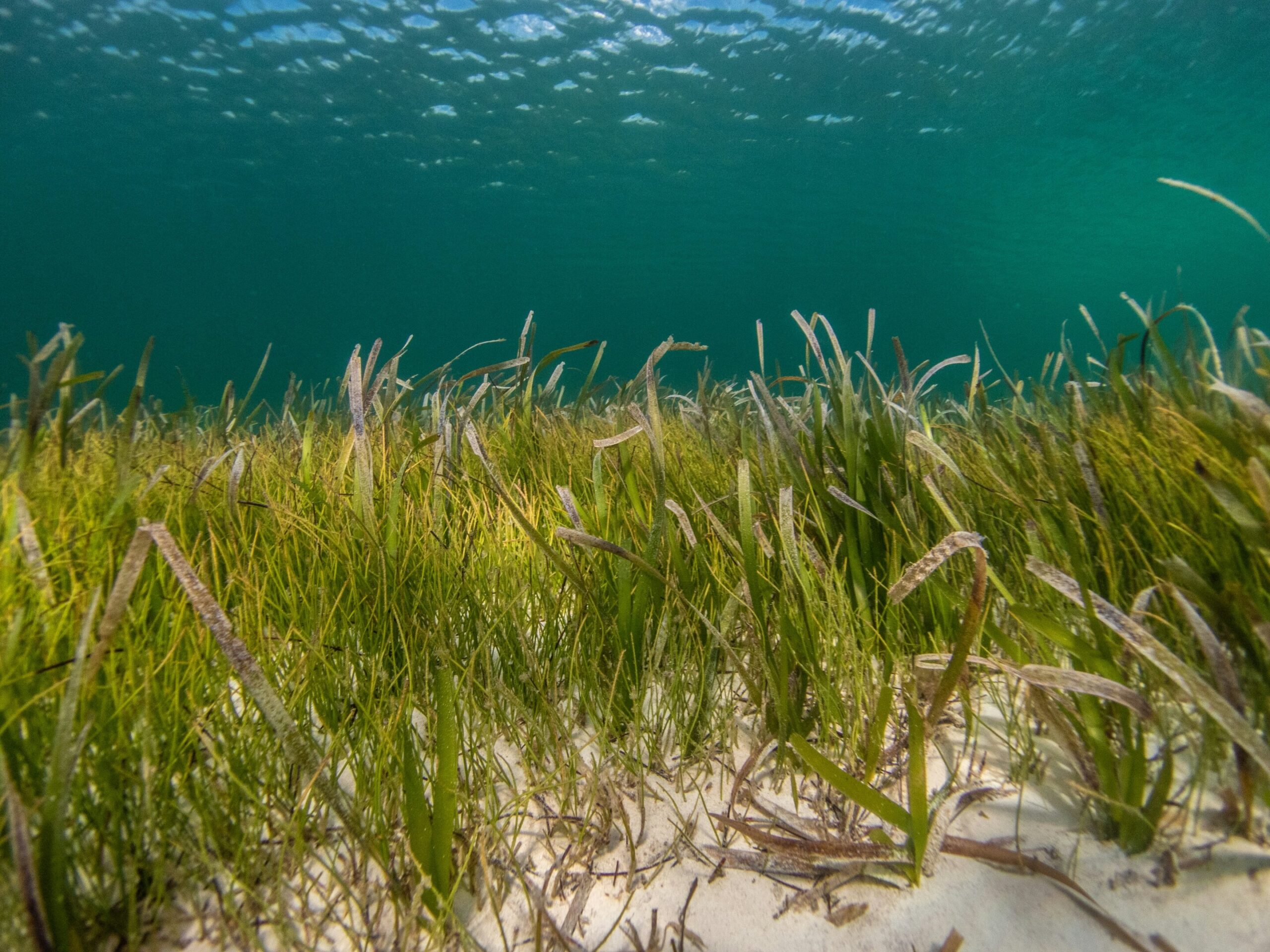
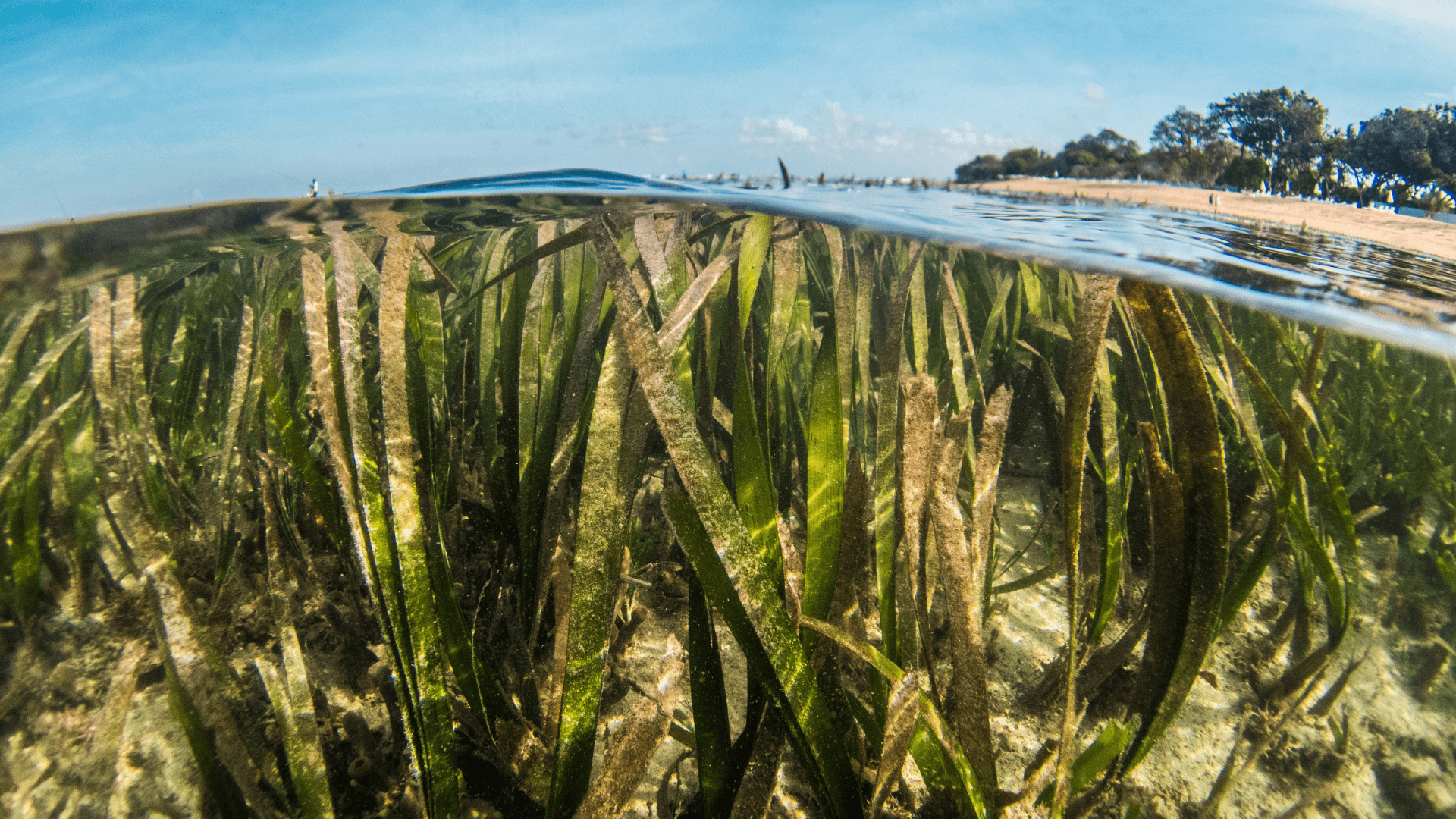
Beneath the surface a dense seagrass meadow is growing.

Six Global Challenges: One Powerful Solution. Project Seagrass launches Global Seagrass Challenge Fund to save the world’s seagrass.

Now seeking investment, the Global Seagrass Challenge Fund will unite funders, businesses, and individuals committed to securing a future for seagrass. With an ambitious target of £50 million, the Fund will support people-centred seagrass conservation for a healthier ocean and a fairer future. Project Seagrass has launched the Global Seagrass Challenge Fund, an ambitious new fund to transform seagrass conservation globally. Announced on World Seagrass Day, the Fund aims to reverse the global trajectory of seagrass meadow decline through sustained investment in people, partnerships, science, and evidence, working across scales from local meadows to global policy. Scientists have identified six global challenges facing seagrass ecosystems;  priorities that must be addressed if we are to secure their future. The Global Seagrass Challenge Fund  responds directly to these challenges by mobilising funding, technical support, and long-term capacity development for the communities, organisations, and practitioners protecting, conserving, and restoring seagrass social-ecological systems. Developed as a people-centred funding mechanism grounded in scientific evidence, the Fund seeks to close knowledge gaps, strengthen local leadership, and ensure that those closest to seagrass meadows have equitable access to the resources required to safeguard them. Project Seagrass’ Chief Conservation Officer, Dr Benjamin Jones said: “Seagrass conservation will not be transformed by isolated projects; it will be transformed by people working together across scales. Across the world, from small island communities to major research institutions, the talent, passion, and commitment to protect seagrass are everywhere. What isn’t evenly distributed is access to long-term funding and opportunity. If we are serious about reversing global decline, we must be serious about investing in people.” The Global Seagrass Challenge Fund is being established to mobilise £50 million to catalyse a step-change in global seagrass conservation by 2030 and beyond. This investment will enable a coordinated portfolio of locally led initiatives across priority regions — including the Tropical Atlantic, Western Indo-Pacific, Central Indo-Pacific, and Tropical Eastern Indo-Pacific — focused on protecting, restoring, and sustaining seagrass meadows of global significance for biodiversity, food security, and climate resilience. Coastal development damaging seagrass in Indonesia. Alex Bartlett, Project Seagrass Seagrass monitoring training guides. Project Seagrass Project Seagrass’ Senior Science Officer: International Programme, Dr Lucy Coals said: “When we brought together our partners for a recent workshop in Southeast Asia, it was striking how much expertise, innovation, and lived experience was already present in the room. What many partners shared, however, was that opportunities to access sustained funding and global platforms remain limited. The Global Seagrass Challenge Fund has been shaped directly by those conversations. It is designed to respond to what partners told us they need: long-term support, equitable collaboration, and recognition of their leadership.” The Fund builds on more than a decade of international expertise developed by Project Seagrass in understanding seagrass meadows as dynamic social-ecological systems. Drawing on its experience mobilising financial support for research and conservation globally, the organisation combines scientific excellence with education, partnership building, and the translation of theory into practice to strengthen capacity and accelerate impact. Dr Jones added: “We know the science. We understand the challenges. But conservation only succeeds when we back those already leading change on the ground. The Global Seagrass Challenge Fund is designed to recognise that expertise is globally distributed, in coastal communities, local NGOs, and Indigenous knowledge holders, yet access to sustained investment is not. By mobilising long-term funding, we are shifting power and opportunity closer to the meadows and the people who depend on them, ensuring that local leadership is matched with the financial and technical support it deserves.” The Global Seagrass Challenge Fund is now seeking investment. To be part of this global response donate today. Or contact globalchallenge@projectseagrass.org to discuss how you can shape the future of global seagrass conversation.
Read More »
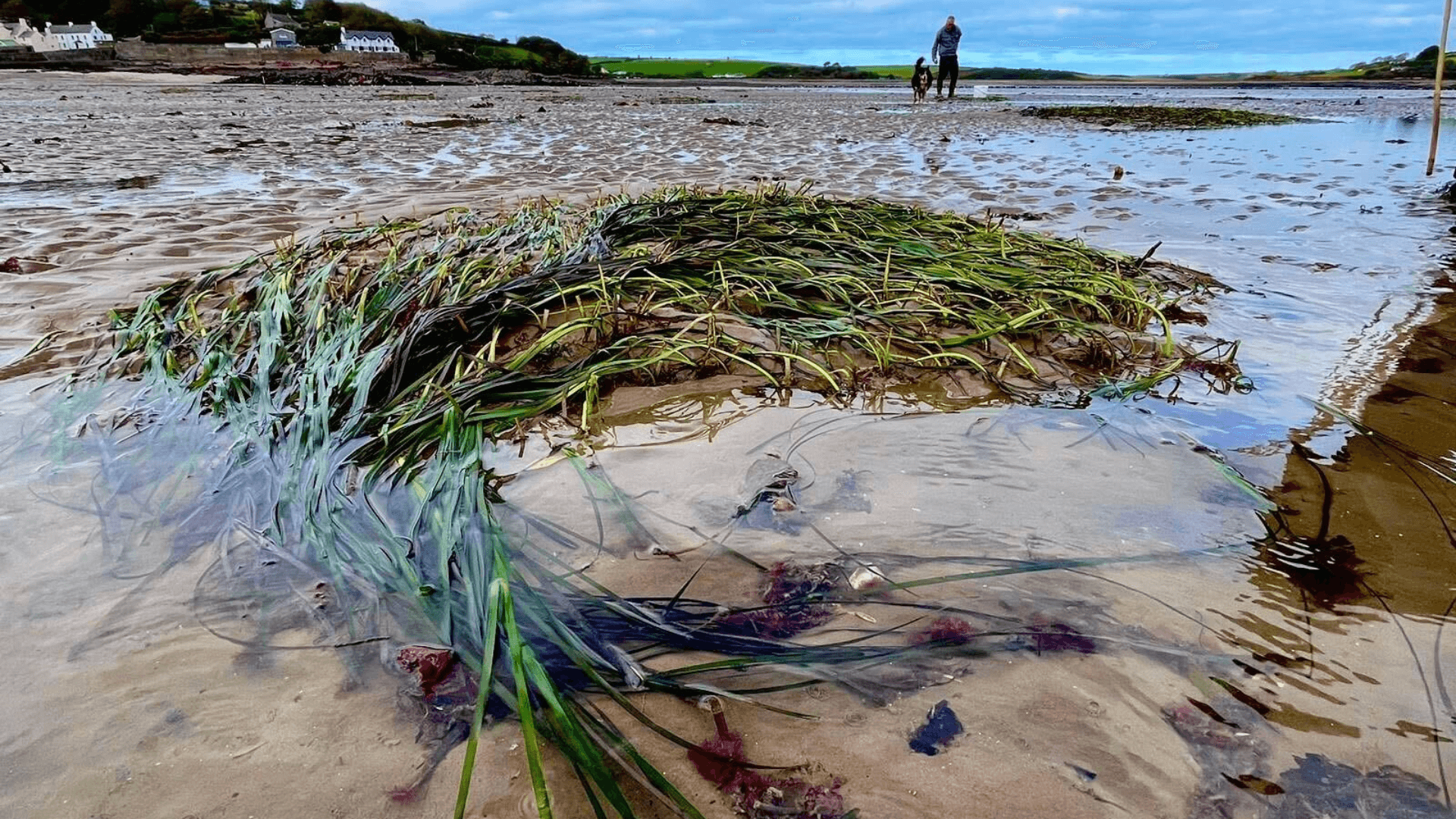
A large patch of seagrass is growing in Dale Bay.

Local fisher designs innovative shellfish pot which is helping to protect seagrass in Pembrokeshire

In Dale Bay, Pembrokeshire, a collaboration between local fishers and marine conservation charity Project Seagrass is showing positive results for both sustainable fishing and seagrass restoration. Dale Bay is the location of an ongoing seagrass restoration project, delivered by South Wales based charity Project Seagrass and overseen by the Dale Seagrass Stakeholder group (a group made up of local individuals across different sectors). The project began as a way to boost the natural seagrass meadow in the bay, trialling new techniques and raising awareness of the importance of seagrass for local biodiversity, water quality, and fish populations. Mark from Lilly May Fishing has worked with Project Seagrass from the start of the project to assist in site selection and deploying monitoring equipment. As the project has progressed, Mark noticed he was sometimes tearing up seagrass as he lifted his pots up to retrieve crab and lobster. In response to this, Mark designed a raised shellfish pot with short mesh legs to lift the gear just off the seabed. Made by local boat builders Robust Boats, the pots were deployed over the last two seasons with catch monitored over that time. Early results are positive showing that the new pot design is effective for storing crab catch, with some tweaks required for lobsters, whilst also reducing mud build-up and reducing the impact on the seagrass. Mark reported: “Overall, [it has] worked very well in seagrass – I would recommend using them as storage pots in shallow water where seagrass is as it’s very low impact on the grass with the mesh legs compared to steel bar bottoms” Project Seagrass is continuing to plant seagrass in Dale Bay alongside carrying out regular monitoring to determine  seagrass recovery and resilience. It will be interesting to see how the natural meadow responds to the reduced impact from shellfish pots over time. Seagrass caught in pots (credit Mark Gainfort) Seagrass growing in Dale Bay, Pembrokeshire. Beyond Dale Across South & West Wales, fishers, anglers, spearfishers, aquaculture workers, and seafood gatherers have been taking part in a survey to share their local knowledge about seagrass and fishing areas. This information is helping identify the best sites for future seagrass restoration work. Full results will be released in the New Year, but early insights already show just how valuable local experience is in guiding conservation. If you’d like to take part, the survey is open until 31st January link here: https://t.ly/gxUSx What’s next? Project Seagrass will also be hosting a series of events in the New Year to celebrate sustainable local seafood and the amazing role seagrass plays in healthy seas. This work is made possible thanks to funding from the Nature Networks Programme which is being delivered by the National Lottery Heritage Fund on behalf of Welsh Government, and Rebel Restoration.

Read More »