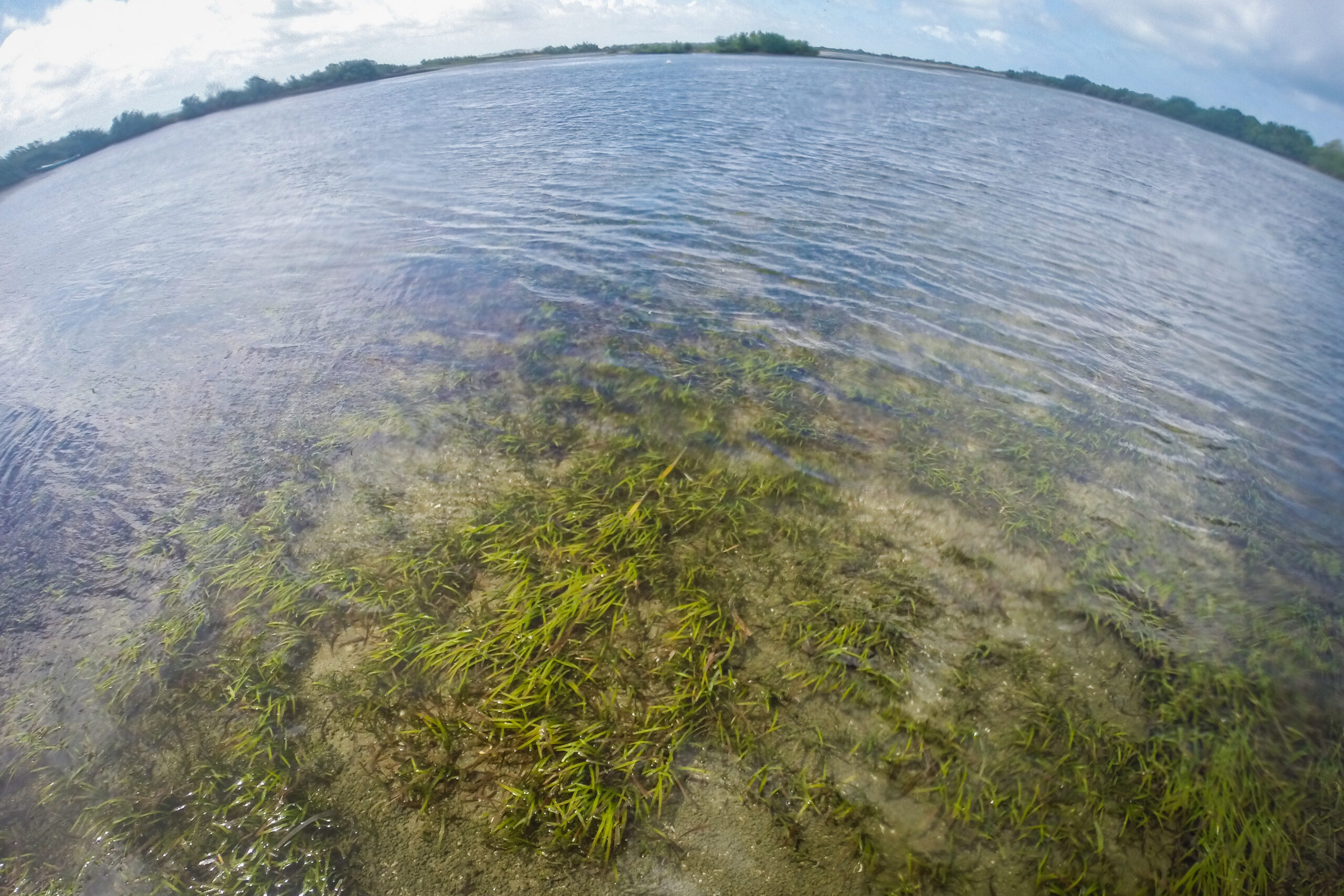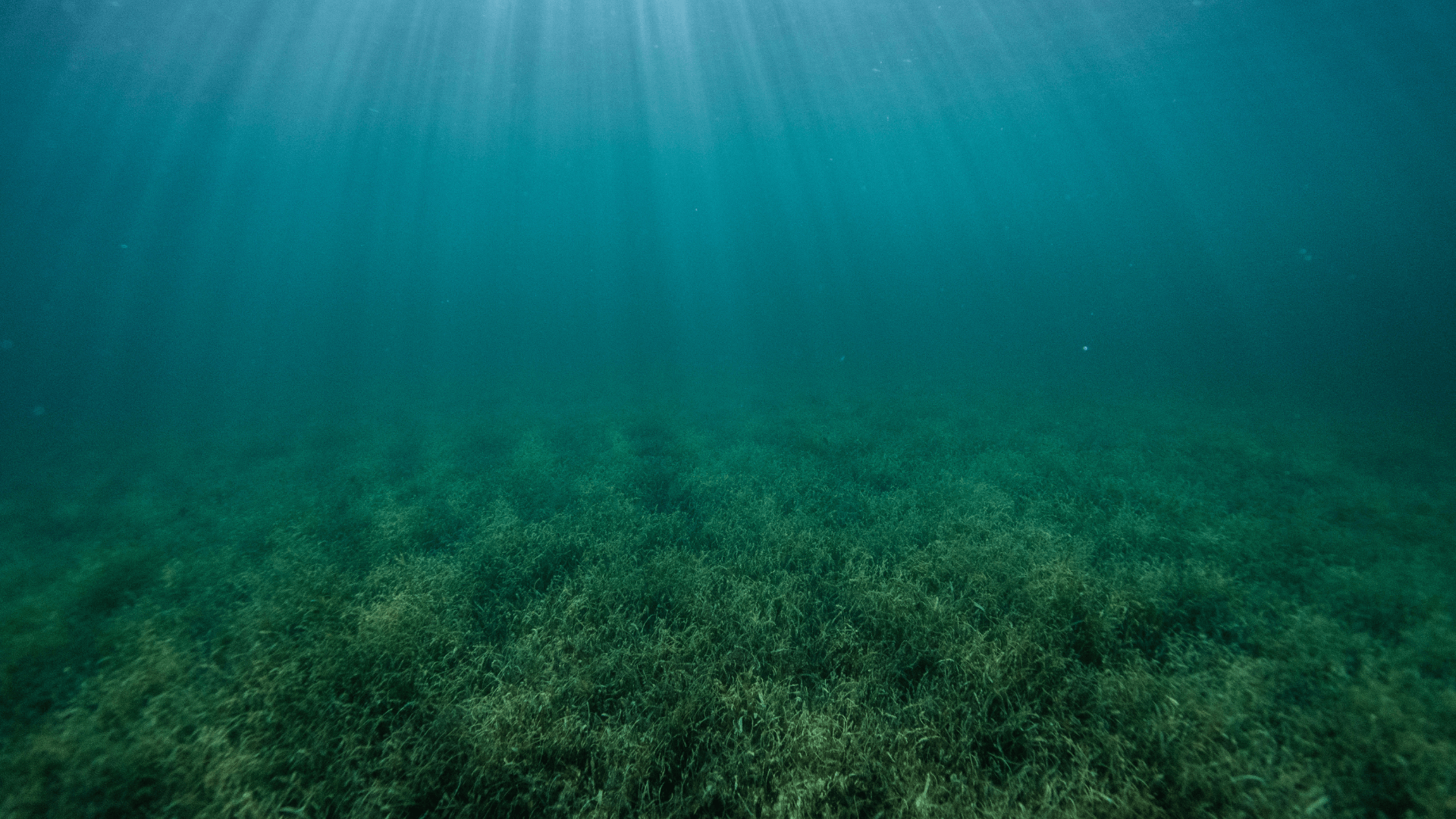


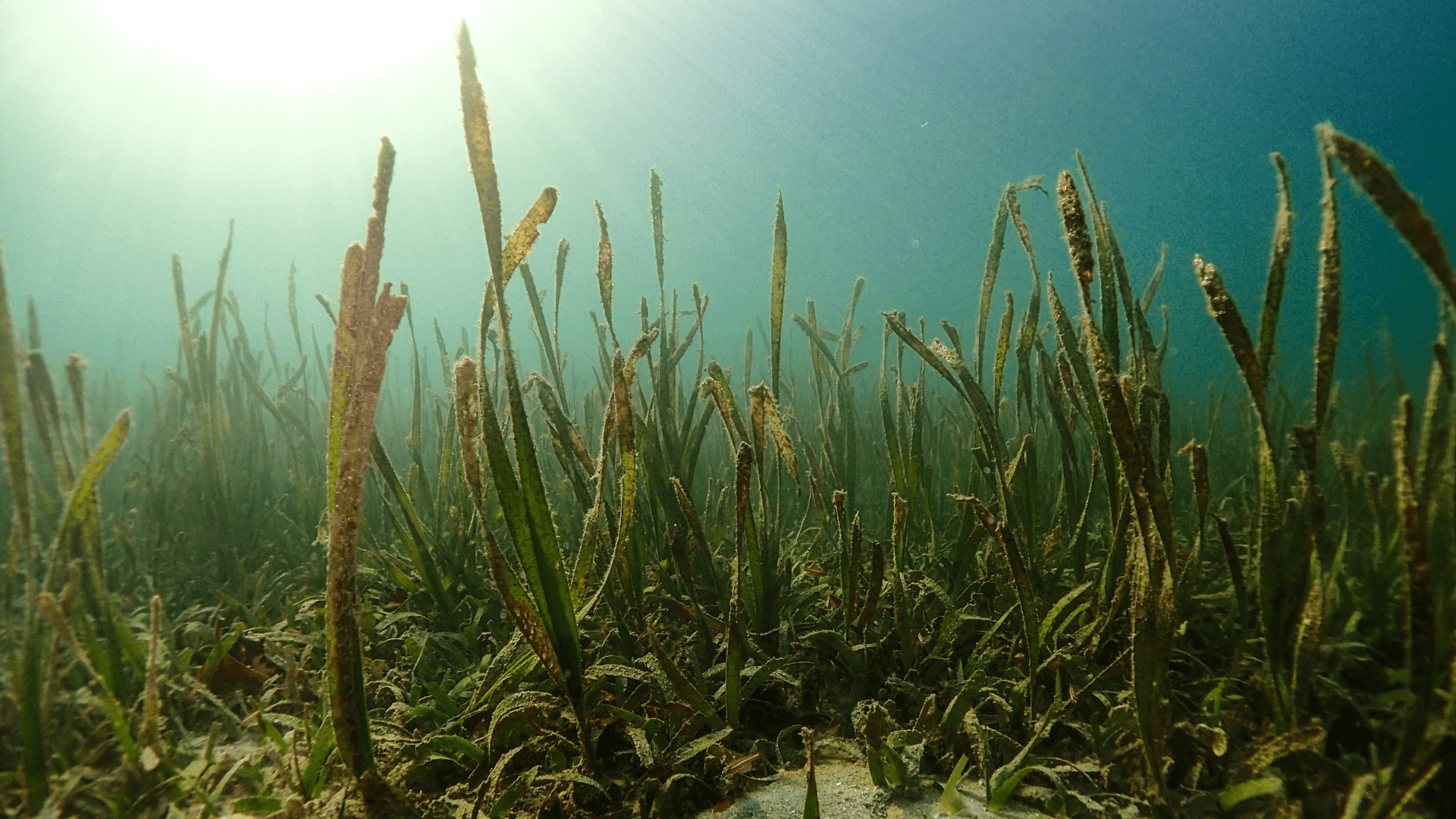
Not all of Indonesia’s seagrass meadows are faring alike. A study has revealed substantial spatial differences in the condition of 21 seagrass meadows across central and eastern Indonesia, providing a clearer picture of where ecosystems are thriving (hotspots), under stress (coldspots) or undergoing ecological change (outliers).
But why does this matter? Indonesia, a global seagrass hotspot, is home to more than 660,000 hectares (1.6 million acres) of seagrass meadows that provide habitat for marine life, support fisheries, store carbon and protect coastlines. However, these ecosystems face growing pressures from human activities and environmental change, while their ecological condition can vary considerably across the country’s diverse coastal regions. Assessing these differences remains challenging, particularly where long-term monitoring data are limited.
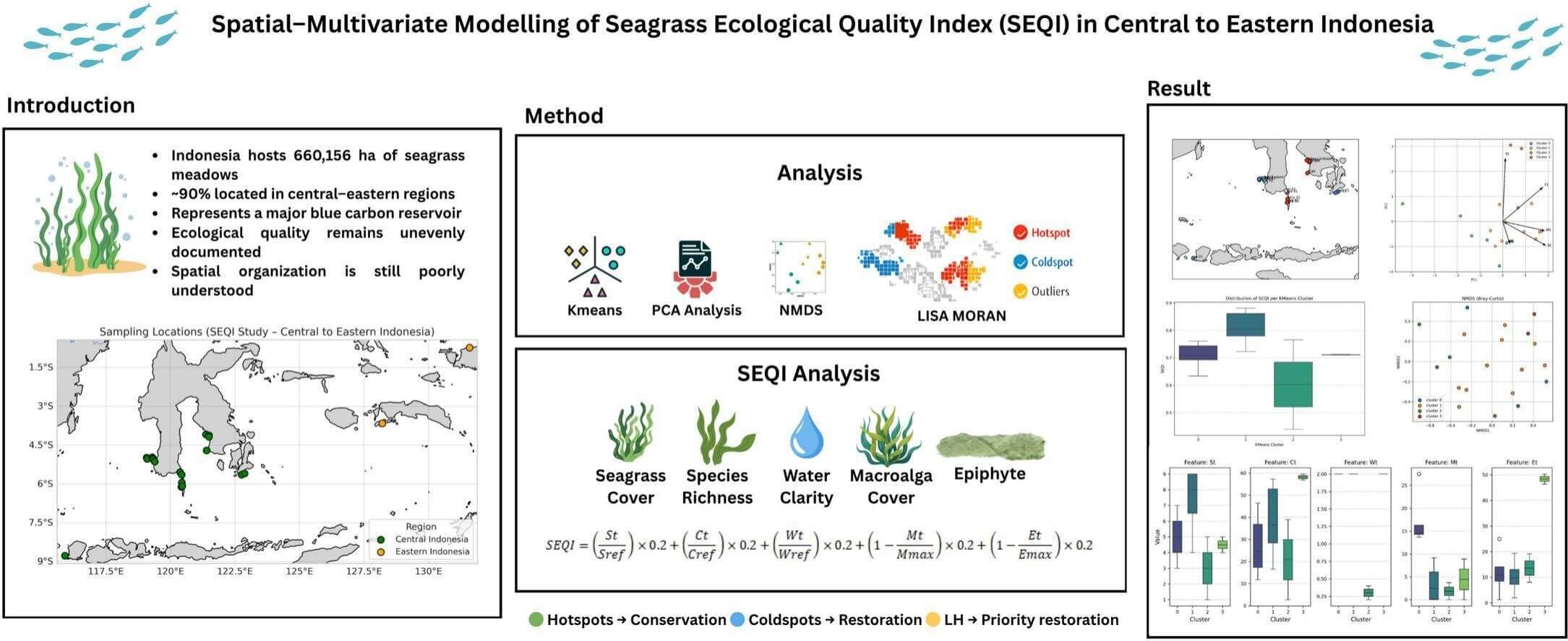
To address this shortcoming, a team of researchers from several Indonesian institutions, led by Rohani Ambo-Rappe, a professor in the Department of Marine Science at Hasanuddin University, quantified the Seagrass Ecological Quality Index (SEQI).
The framework integrates key biophysical and environmental indicators to provide a detailed spatial assessment of seagrass ecological quality across central and eastern Indonesia, helping identify areas where conservation or restoration efforts could be prioritized.
Their work was published in Science of The Total Environment.
Building a spatial quality index
“We developed the SEQI framework using five ecological indicators, including seagrass species richness, seagrass cover, water clarity, macroalgae cover, and epiphyte cover,” Ambo-Rappe said. “We combined the index with spatial and multivariate analyses to understand how ecological conditions varied among sites.”
The assessment revealed substantial variation in seagrass condition, with SEQI values ranging from 0.39 to 0.88. Some of the highest values were recorded at Pasi-Gusung, Parak and Maharayya, where seagrass meadows had high species richness, relatively extensive cover and clear water. In contrast, Lae-Lae recorded the lowest SEQI value, reflecting very low seagrass cover and species richness, alongside reduced water clarity.
The researchers found that these differences were not randomly distributed. In central Indonesia, seagrass ecological quality formed a spatial mosaic of hotspots, coldspots and ecological outliers.
Hotspots, coldspots and refuges
High-quality “hotspots” were identified at sites including Pasi-Gusung, Liukangloe, Maharayya and Parak, where healthy conditions were reinforced by similarly healthy surrounding areas. Such locations can benefit from conservation to maintain existing ecological resilience.
In contrast, several locations identified as “coldspots” were characterized by degraded ecosystems. These areas included Sekotong, Lanjukang, Badi-Alami, Badi-Restorasi, Waboela and Lapandewa, where restoration or measures to reduce environmental pressures may be particularly important.
The analysis also revealed sites with contrasting conditions relative to their surroundings, identified as spatial “outliers.” Areas such as Bone Batang and Barrang Lompo contained relatively healthy ecosystems within less healthy surroundings, potentially making them vulnerable ecological refugia requiring protection.
Meanwhile, Lae-Lae and Bonto Bahari represented degraded sites embedded within healthier seagrass systems, suggesting opportunities for targeted restoration.
Guiding protection and restoration
Seagrass conservation policies cannot rely on a one-size-fits-all approach. This unique ecological mosaic of seagrass meadows in Indonesia, a patchwork of ecological conditions, highlights the importance of considering spatial context when managing seagrass ecosystems.
Rather than treating each meadow in isolation, identifying ecological clusters and outliers can help conservation practitioners pinpoint where protection, restoration or targeted interventions could have the greatest impact.
By identifying healthy seagrass ecosystems that can be prioritized for conservation and degraded areas where targeted restoration may be needed, the research can help inform efforts to protect marine biodiversity and strengthen the role of seagrass meadows as blue carbon reservoirs. These findings also advance the United Nations Sustainable Development Goals (SDGs), particularly SDG 13 (Climate Action) and SDG 14 (Life Below Water).
Collectively, the findings offer a practical basis for prioritizing conservation and restoration efforts. “Our study provides a spatially informed framework to identify areas to protect, restore or buffer. It can guide actionable conservation priorities before further degradation makes recovery more difficult,” Ambo-Rappe said.
Publication Details
Rohani Ambo-Rappe et al, Spatial–multivariate modelling of seagrass ecological quality index (SEQI) in Central to Eastern Indonesia, Science of The Total Environment (2026). DOI: 10.1016/j.scitotenv.2026.181904
More information: This article is republished from Phys.org and was provided by Hasanuddin University.