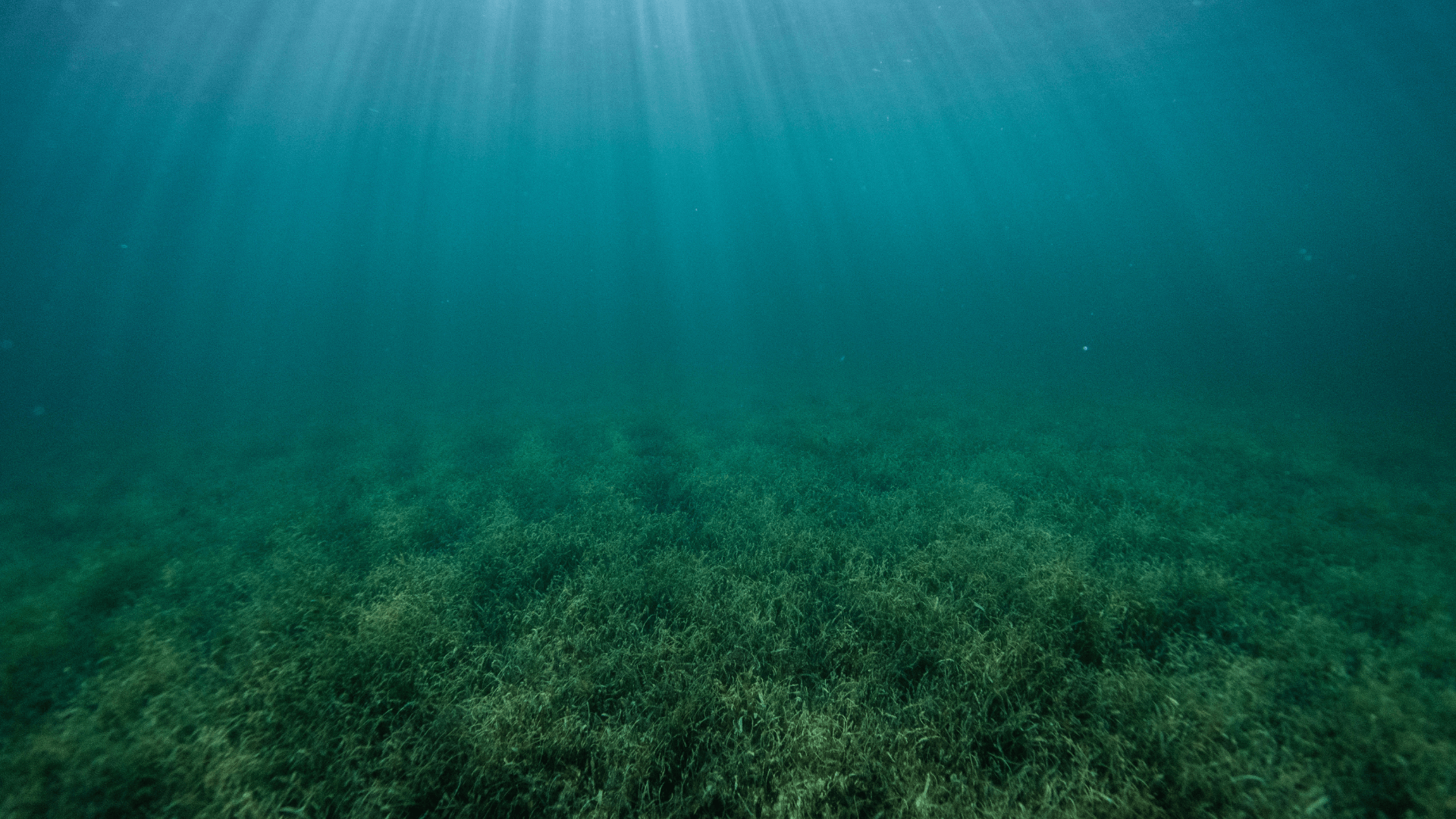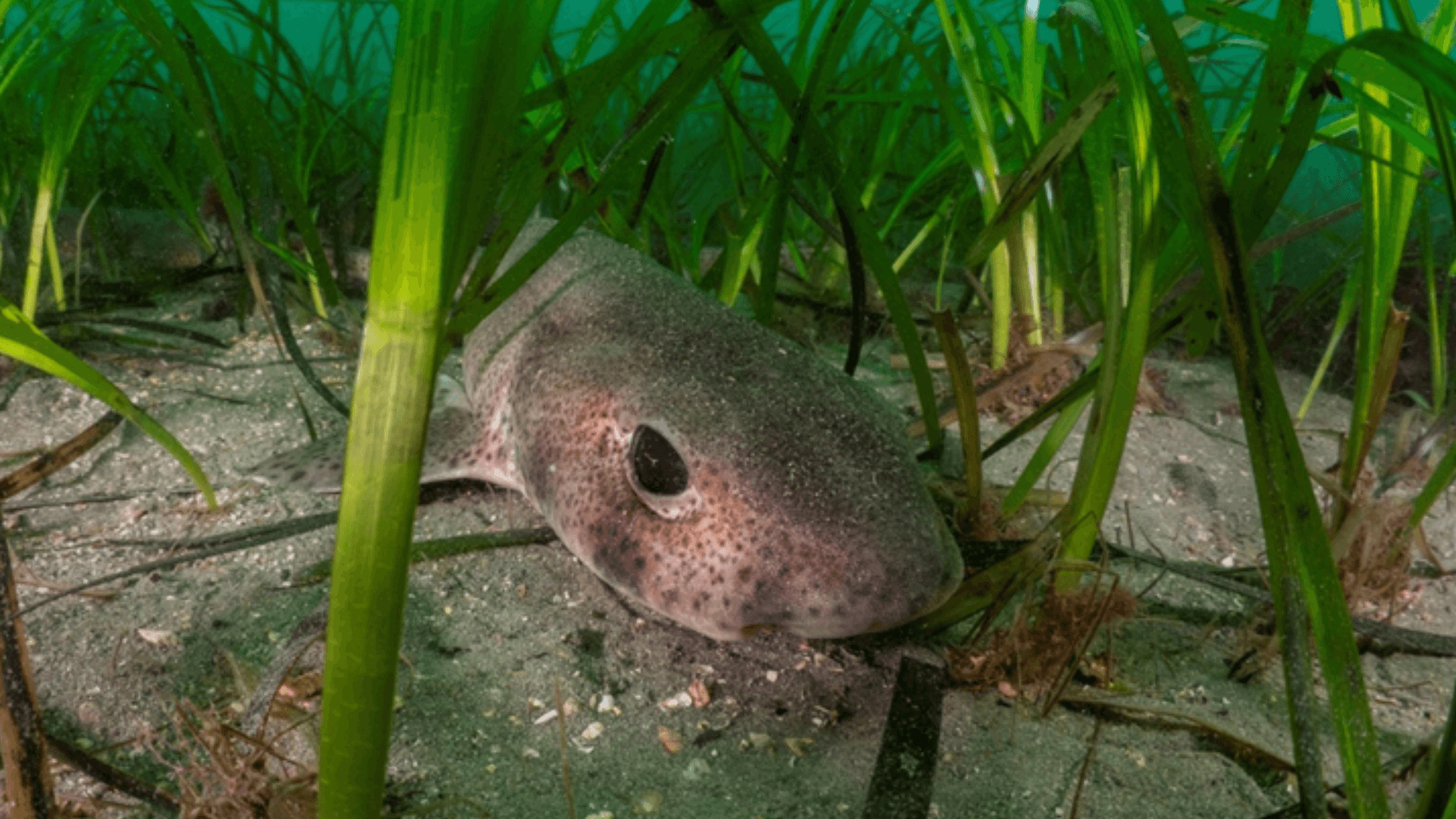


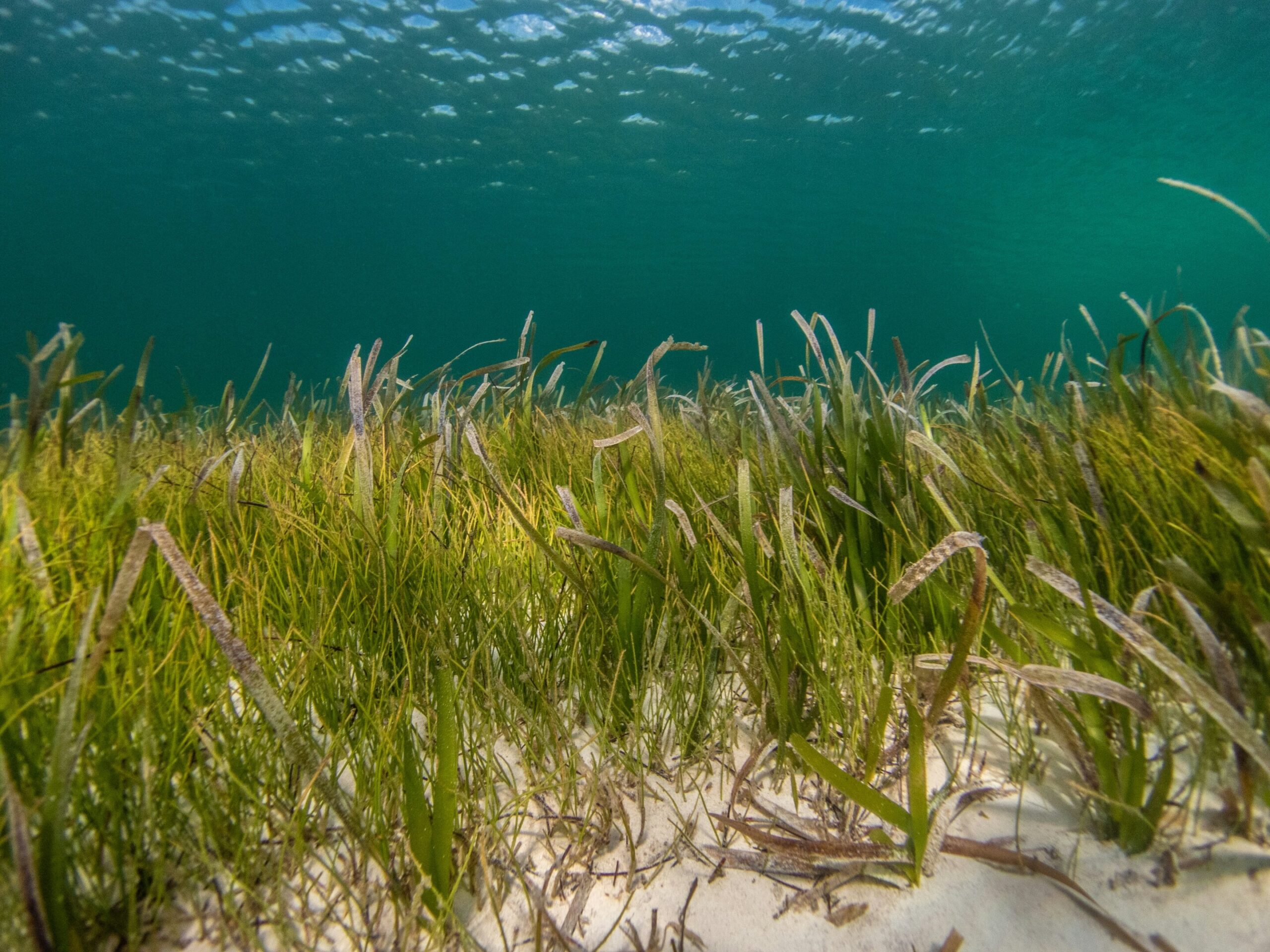
On the western side of Lake Macquarie in New South Wales, Australia, sits Myuna Bay – a quiet bay with meadows of seagrass waving beneath the water.
The most common marine plant species you find there is Zostera muelleri. It has long ribbon-like leaves that grow from stems (called rhizomes) buried beneath the sediment and provides important shelter for small fish, shrimp and crabs.
Although Myuna Bay looks quite normal, it is actually a bit unusual. For decades, the nearby Eraring power station released warm water into the lake that was used to cool down their systems, causing water temperatures here to be consistently 1°C to 3°C higher than nearby sites.
This made the bay a rare natural laboratory for understanding what warming oceans might mean for coastal ecosystems.
In our new research, published today in the journal New Phytologist, we used this setting to investigate what happens to seagrass and the microbes living in the sediment when ocean temperatures increase in the way climate models predict they will in the future.
One of the most important coastal habitats
Seagrasses are often overlooked, but they are among the most important coastal habitats on Earth.
They are marine flowering plants that stabilize sediments, improve water clarity and provide food and shelter for many marine animals. They also store large amounts of carbon in the sediments beneath them, making them important for slowing climate change.
But seagrasses don’t function alone. Beneath the leaves, in the sediments, lives a hidden ecosystem of microbes: bacteria, fungi and other microscopic organisms that interact with the plant.
Just as plants on land depend on soil microbes, seagrasses rely on microbial communities in the sediment around their roots. These microbes carry out many important processes. Some provide nutrients that plants need to grow. Others break down organic matter or detoxify harmful compounds in the sediment.
In some ways, the relationship can be compared to the partnership between corals and the microscopic algae living inside them. Corals rely on those algae for energy, while seagrasses depend on microbes to help maintain a healthy environment around their roots.
But not all microbes are helpful. Some produce sulfide, a compound that can be toxic to seagrass roots when it accumulates in sediments. We are starting to find out that whether microbial communities help or harm the plant can depend strongly on environmental conditions, including increases in ocean temperatures due to climate change.
Simulating future ocean warming in the field
To understand how ocean warming might affect the relationship between seagrasses and microbes in the sediment under realistic future conditions, we designed a field experiment at Myuna Bay.
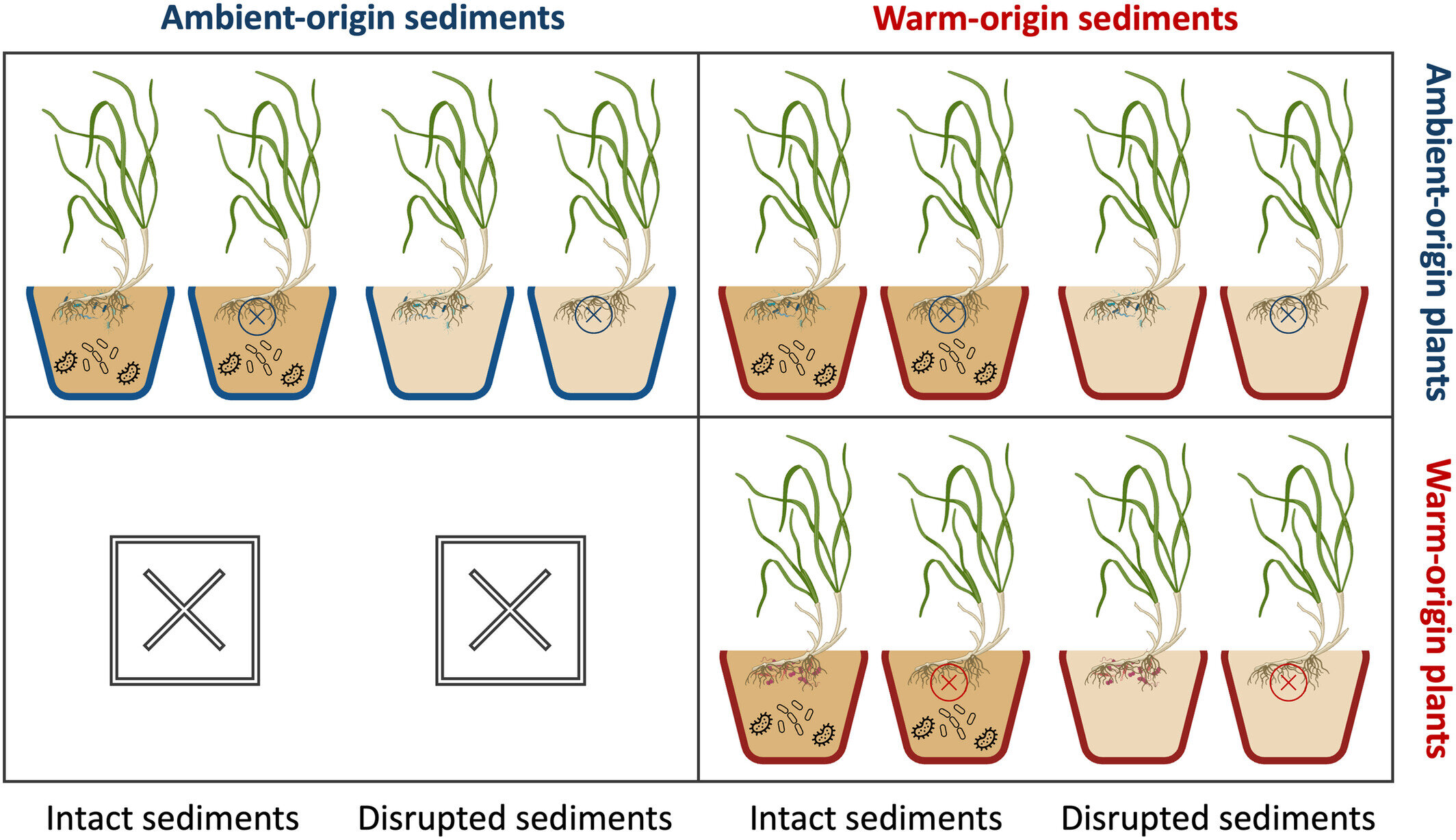
We collected seagrass plants and sediments from both warmer and “normal” temperature sites in Lake Macquarie. Some plants were grown in sediments with their microbial communities intact.
In other treatments, the sediments were heated to 121°C to disrupt the microbes; this reduces total bacterial abundance by more than 95%.
This allowed us to test how plants performed when the microbial community was intact versus when it had been disrupted. We then placed plants in pots with those different sediments and exposed the plants to warmer conditions at Myuna Bay, similar to those expected in the future.
After one month, we monitored how the plants responded. We measured how they survived, how many shoots they produced and how their biomass changed over time. At the same time, we analyzed the bacterial communities in the sediment using DNA sequencing to see how they differed between treatments.
Looking beyond plants
When plants were grown in sediments from “normal” temperature sites, seagrass performed well whether the microbes were intact or disrupted. But when plants were grown in sediments from warmer sites, the outcome changed: plants growing with intact sediment microbial communities performed worse. These sediments from the warm areas also contained different bacterial communities, which may help explain the lower plant biomass we observed.
One possible explanation involves sulfide. In seagrass sediments, certain microbes produce sulfide as part of their metabolism. At high concentrations, sulfide can be toxic for seagrasses. Warmer temperatures may stimulate microbial activity, increasing sulfide production and tipping the balance from a supportive microbial community to one that harms the plant.
Our findings highlight an important idea: the impacts of climate change on seagrasses can’t be understood by looking at the plants alone. The microbial communities living in the sediment can also influence how these plants respond to warming.
This has important implications for conservation and restoration. Around the world, seagrass meadows are declining due to coastal development, pollution and climate change.
Restoration projects often focus on planting seagrass shoots or seeds. But the condition of the surrounding sediment, including its microbial community, may also determine whether restoration succeeds.
As oceans continue to warm, the future of seagrass meadows may depend not only on the plants we see when snorkelling, but also on the microscopic microbes living in the sediment beneath them.
More information: This article is republished from Phys.org
Read the research paper here: Ocean warming indirectly affects seagrass performance through effects on sediment microbial communities – Jongen – New Phytologist – Wiley Online Library