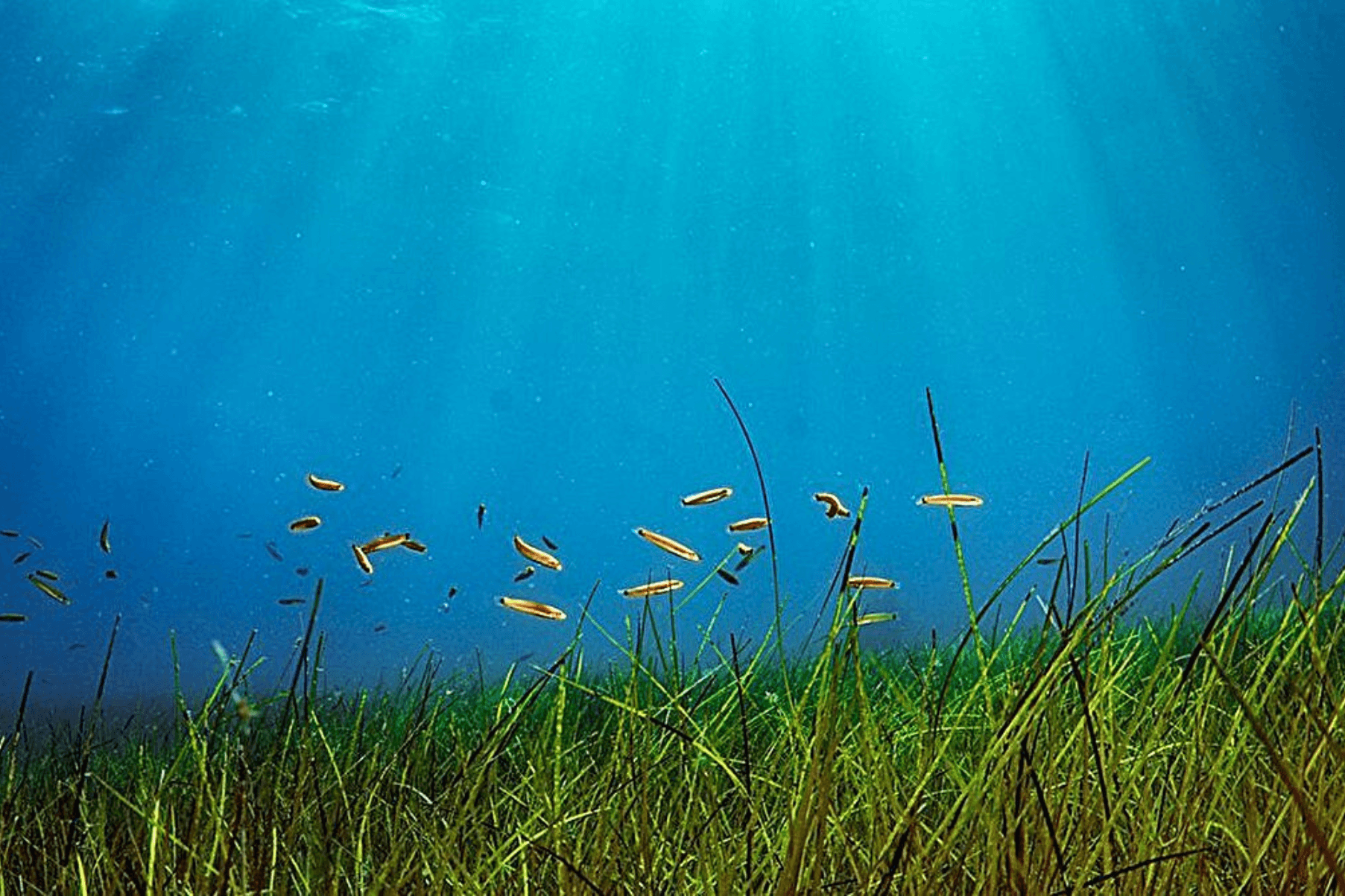
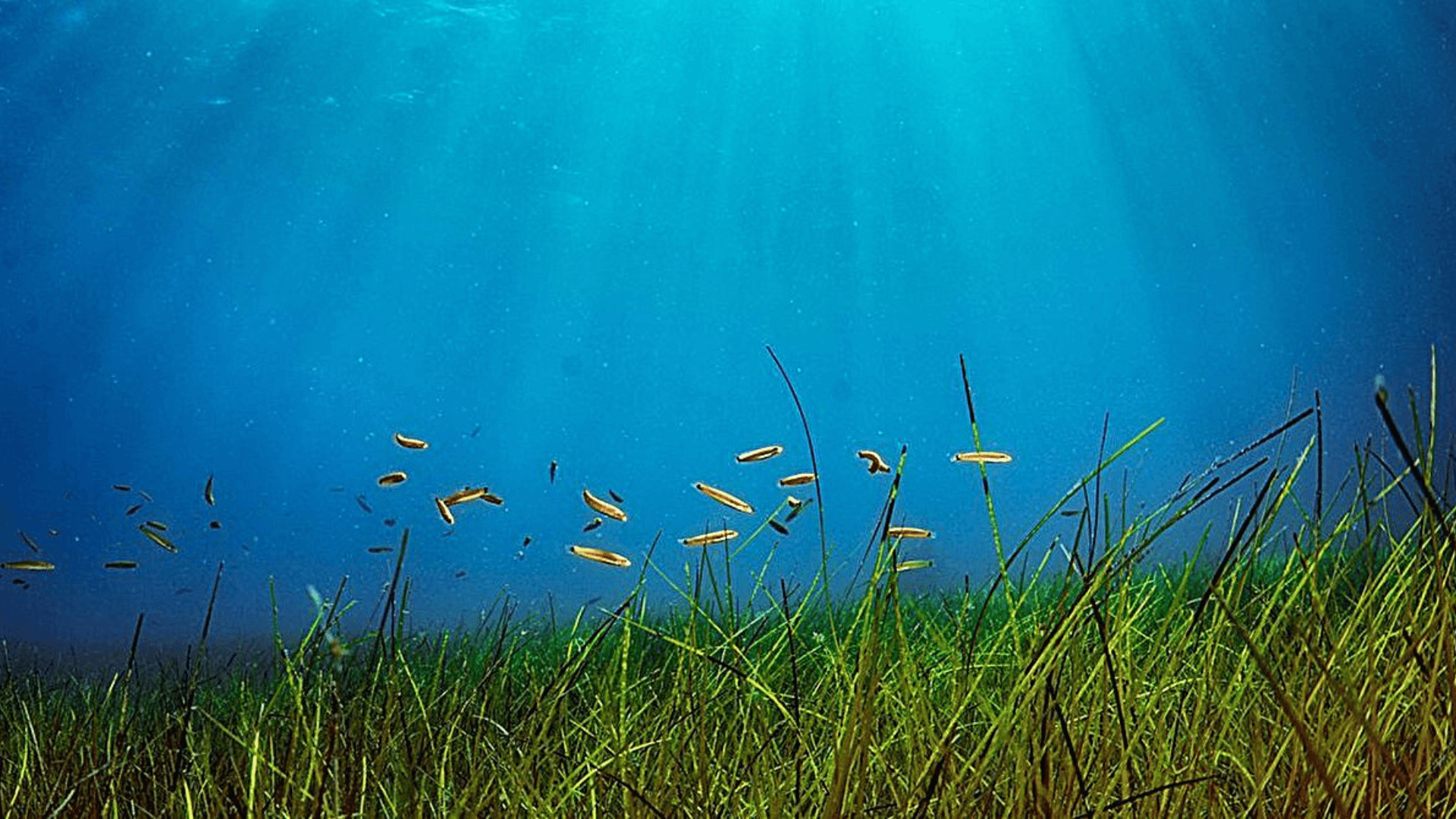
Juvenile señorita (Oxyjulis californica) utilize the protective canopy of the open-coast seagrass restoration site at Button Shell, Catalina Island.

Catalina Island study highlights open-coast seagrass restoration success

New research led by scientists at University of California’s San Diego’s Scripps Institution of Oceanography is shining a spotlight on one of the ocean’s most overlooked habitats: seagrass. Led by Scripps Oceanography Ph.D. candidate Rilee Sanders, the study documented the first successful restoration of open-coast seagrass (common eelgrass). The findings offer promising insight into the feasibility of restoring high-value coastal habitats in the future. The work is published in the journal Estuaries and Coasts.

Seagrasses act as ecosystem engineers, creating complex underwater habitats that support life along the coast. Around the world, these habitats are increasingly threatened by climate change and human impacts like coastal development, invasive species and overfishing.

While most West Coast seagrass research has focused on protected bays and estuaries, this study focused on open-coast areas off Catalina Island. Drawing on nearly a decade’s worth of surveys, the team examined everything from seagrass structure to fish communities and ocean conditions to identify where restoration might succeed.

Juvenile señorita (Oxyjulis californica) utilize the protective canopy of the open-coast seagrass restoration site at Button Shell, Catalina Island.
Juvenile señorita (Oxyjulis californica) utilize the protective canopy of the open-coast seagrass restoration site at Button Shell, Catalina Island. Credit Adam ObazaPaua Marine Research Group
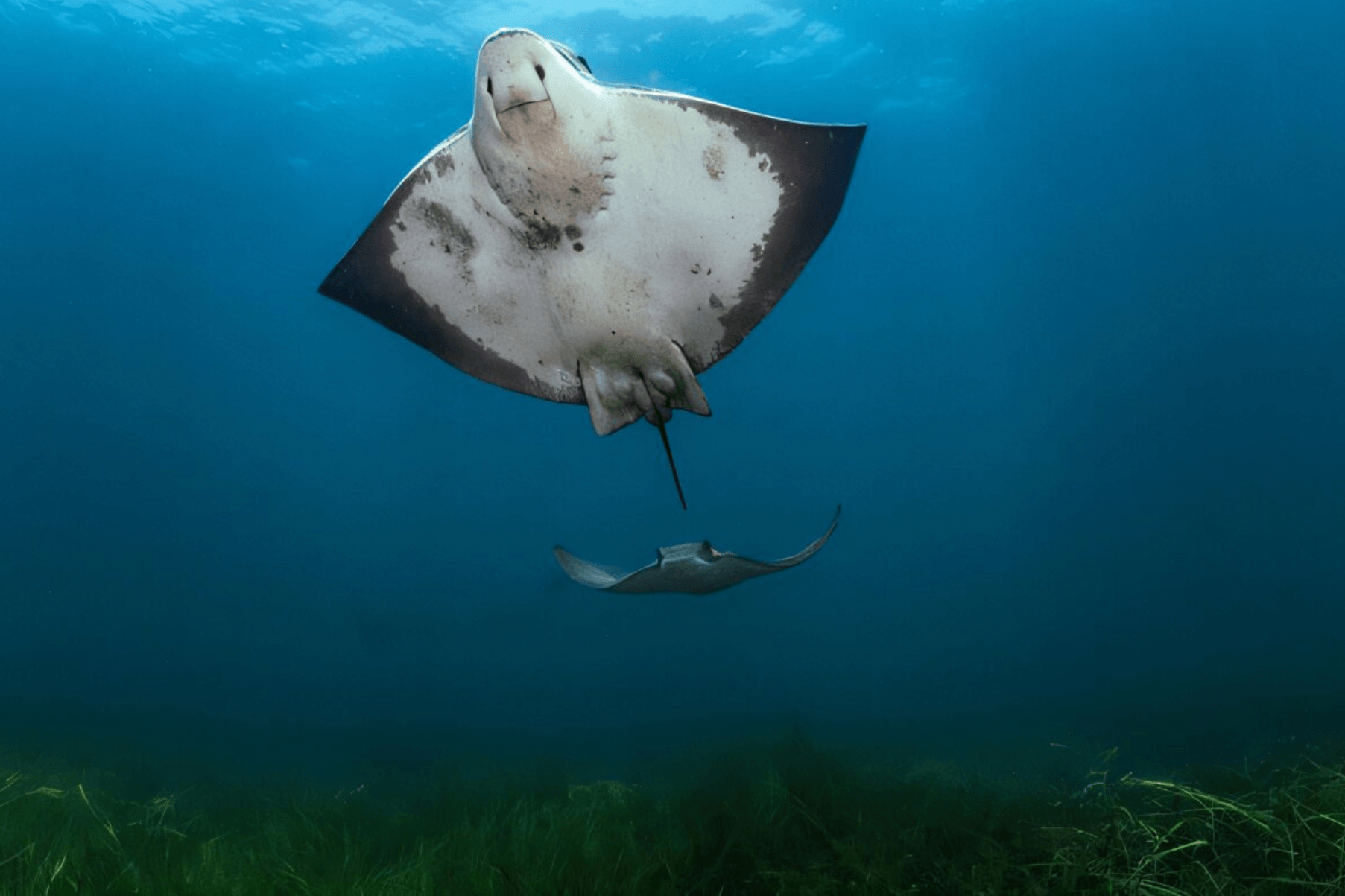
Two bat rays (Myliobatis californica) soaring over an open-coast eelgrass (Zostera marina) bed on Catalina Island.
Two bat rays (Myliobatis californica) soaring over an open-coast eelgrass (Zostera marina) bed on Catalina Island. Credit Adam ObazaPaua Marine Research Group

The results were encouraging, as the researchers completed the first transplant of open-coast common eelgrass (also known as Zostera marina). Within a year, the restored site began functioning like a natural meadow, supporting fish communities and ecosystem structure, and by year two, it was even healthier and more biodiverse than natural reference meadows.

“Seagrasses are kind of an unsung hero of nearshore ocean habitats,” said Sanders. “They provide nursery habitat for young fish, store carbon in sediments and support immense biodiversity in places that might otherwise be sandy seafloor. Being able to quickly restore that structure and function on the open coast is really exciting.”

The findings suggest that open-coast environments could become a valuable new tool for seagrass restoration and conservation in California, especially as coastal development and climate change reduce the available suitable habitat in bays and estuaries.

And sometimes restoration has surprising benefits. During monitoring, researchers even captured images of an endangered sea turtle visiting the restored meadow.

In short: if we plant seagrass, the ecosystem may follow.

More information: This article is republished from PHYS.ORG and provided by the University of California – San Diego.

Rilee D. Sanders et al, Open-Coast Eelgrass (Zostera marina) Transplant Catalyzes Rapid Mirroring of Structure and Function of Extant Eelgrasses, Estuaries and Coasts (2025). DOI: 10.1007/s12237-025-01609-x

More themes to explore