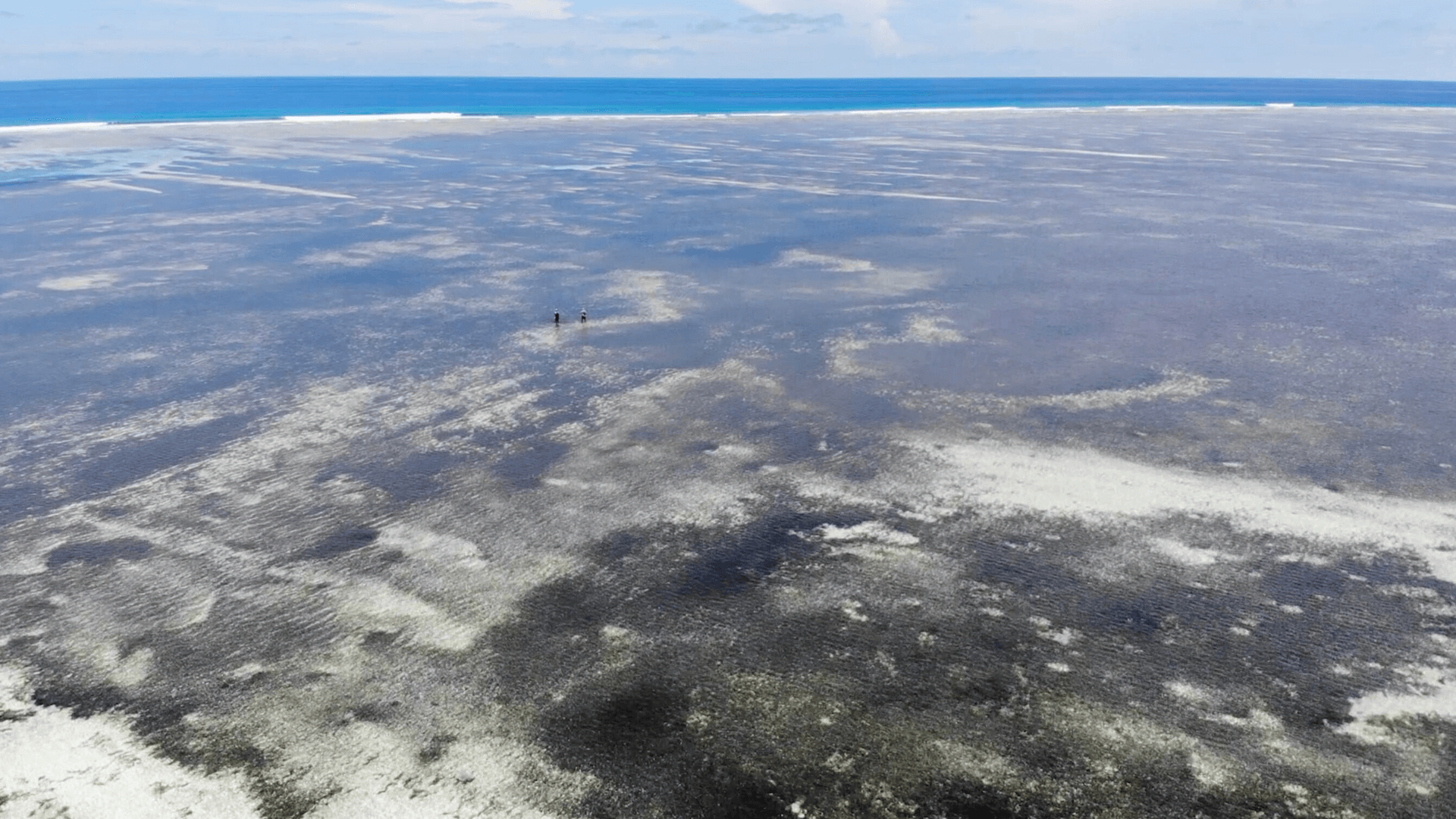

Nursery intern Iestyn Comey details how fishing in seagrass meadows can be great to improve mental health and are vital nursery grounds for key fisheries species.
Fishing is a hard thing to explain to someone who has never done it.
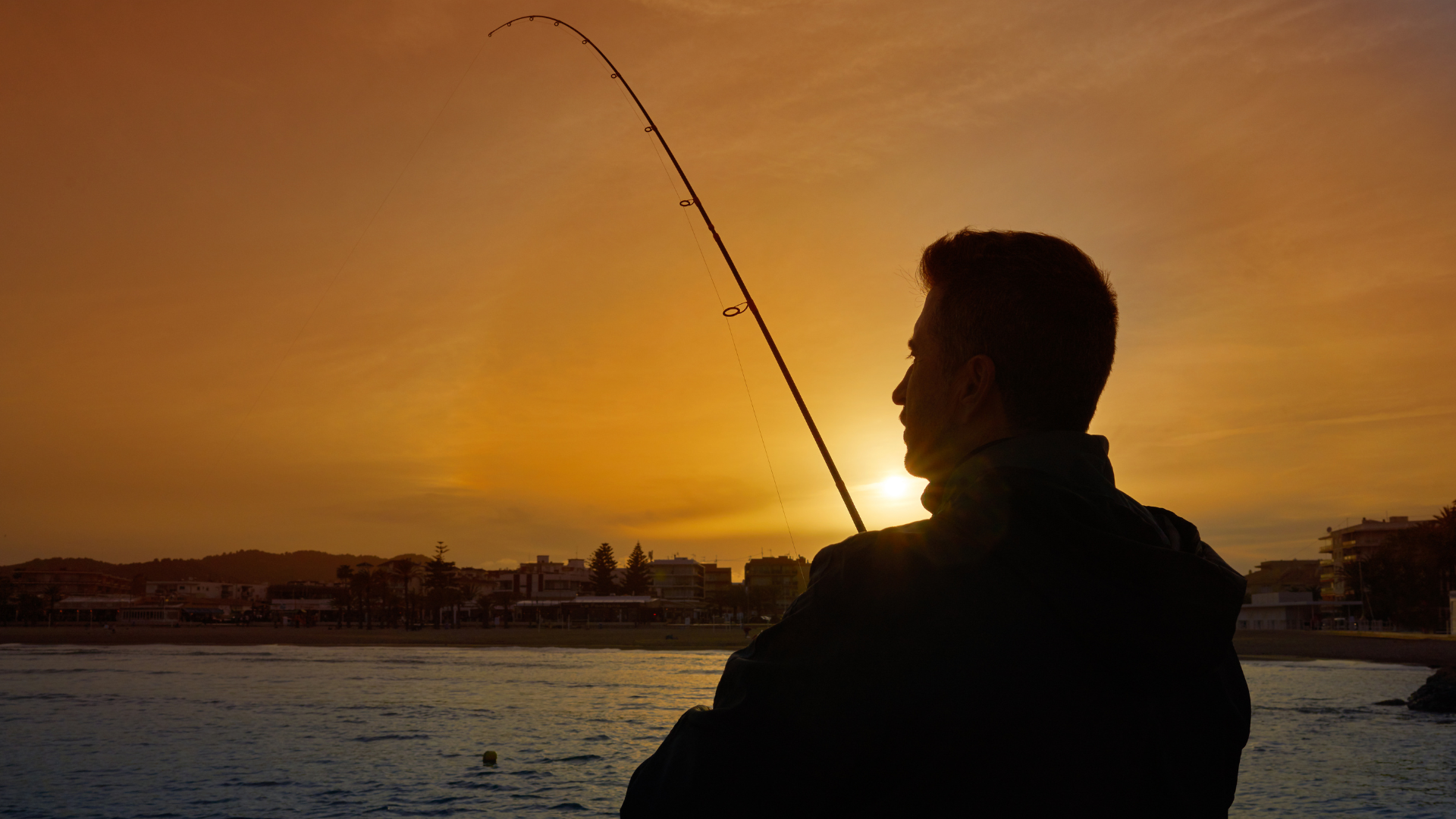
There is no better feeling than the moment the line tightens, the adrenaline kicks in, and you pull up your first fish, completely absorbed in something so simple and ancient.
Recreational fishing remains one of the most widely enjoyed outdoor pastimes. (Karpiński and Skrzypczak, 2022). But for many people, it is more than just a hobby. It’s a way to reset.
It’s one of the few moments when everything slows down and you can think completely immersed in nature. It can be social, or it can be just you and the rod. Either way, that time outdoors—surrounded by nature, waiting and focusing—has a powerful effect on mental health and wellbeing.
Science is beginning to catch up with what anglers have long known.
More than a feeling: fishing and mental health
Recent UK research involving over 1,700 recreational anglers found that people who fish regularly experience significantly better mental health outcomes than those who fish less often (Wilson et al., 2023).
Regular anglers were:
- 17% less likely to report being diagnosed with depression, schizophrenia,
- less likely to experience suicidal thoughts,
- less likely to report harmful coping behaviours.
- Nearly 9 in 10 anglers also reported that relaxation and unwinding were key reasons they go fishing.
This aligns with a growing body of evidence showing that spending time in “blue spaces”—coastlines, estuaries, rivers, and seas— is linked to improved psychological wellbeing (White et al., 2010; Gascon et al., 2017).
Blue Mind theory, introduced by Wallace J. Nichols, provides a framework for understanding this effect, suggesting that the mental health benefits of fishing largely arise from immersion in water and aquatic environments, rather than the act of fishing itself.
What makes this even more striking is that anglers, as a group, report higher than average levels of mental health challenges. In the same UK study, around 30% reported experiencing suicidal thoughts and over 23% reported having been diagnosed with depression suggesting that many people may actively turn to fishing for its mental health benefits.
Every catch has a beginning
There is another part of this story that we rarely see.
Many fish we love to catch do not begin life in open water, rocky shorelines, or deep offshore. Instead, they begin somewhere more sheltered and hidden.
In seagrass meadows.
In the UK alone, seagrass meadows provide habitat for around 50 fish species and serve as crucial nursery grounds for juveniles, including cod, pollack, whiting, plaice, herring, and sea bass (Bertelli & Unsworth, 2014). Our new paper in BioScience highlights that this nursery function directly underpins the cultural ecosystem service of recreational fishing, demonstrating that healthy seagrass habitats are integral not only to sustaining fish populations but also to supporting the human experiences and wellbeing derived from angling.
Data from Catchwise, a collaboration between Substance, Cefas, and the Angling Trust, further reinforces this connection. Many of the species most frequently caught by recreational fishers in the UK, overlap with species that depend on seagrass during early life stages, showing the practical importance of protecting and restoring these habitats.
Across the world, countless marine species rely on seagrass meadows for feeding grounds or during their earliest, most vulnerable stages of life. (James and Whitfield, 2022).
Seagrass changes that equation.
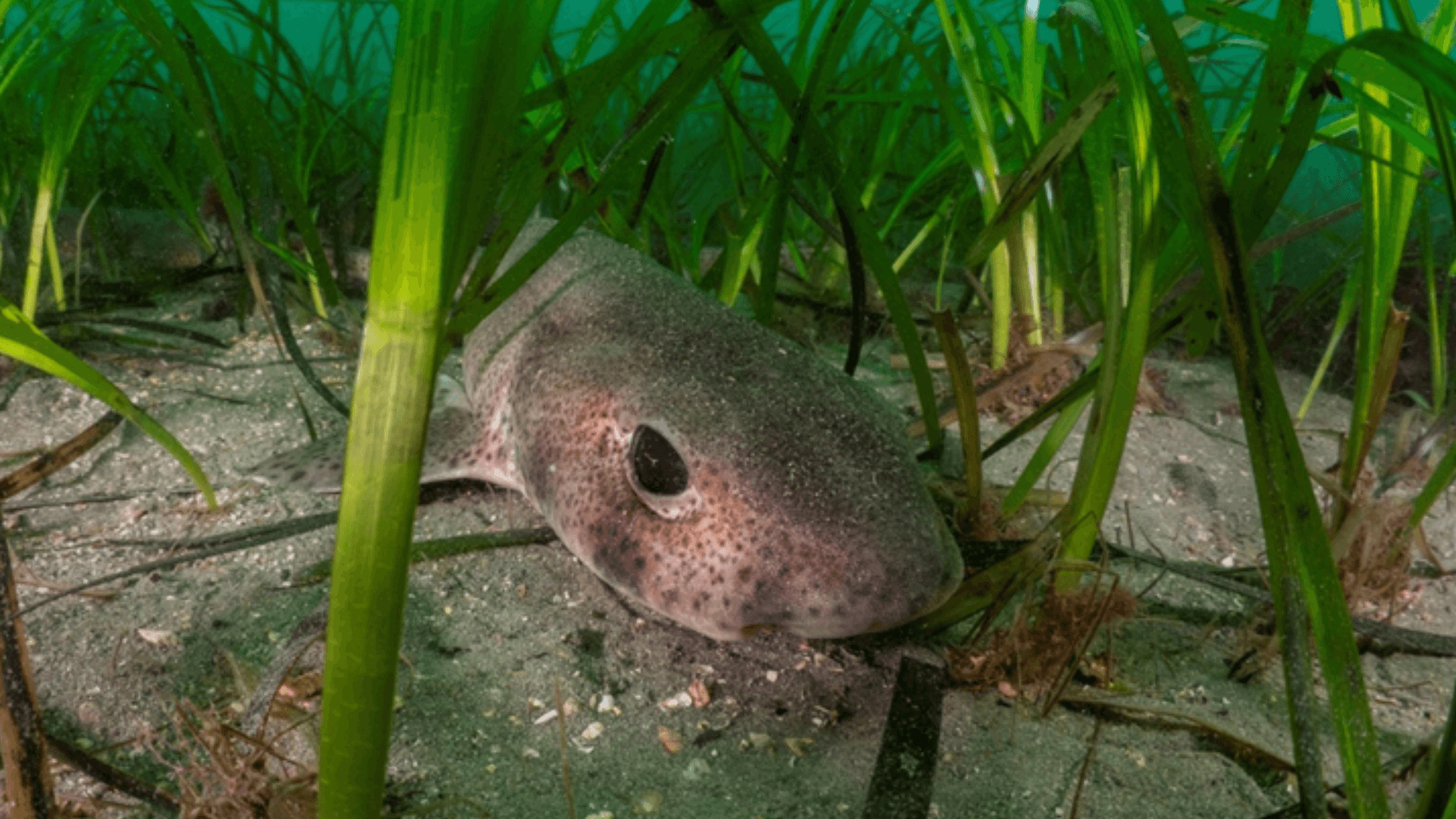
Its dense leaves slow water movement, trap nutrients, and create a three-dimensional maze that offers both shelter and rich feeding grounds. seagrass meadows support higher fish abundance, faster growth, and higher survival rates than bare sand (Whitfield, 2016).
Even if the fish we catch eventually migrate far from the coast into deeper seas, estuaries, or rivers their survival often depended on those first months spent among seagrasses.
So why am I telling you this?
The connection is simple:
- Fewer Seagrass meadows and fewer juvenile fish survive.
- Fewer fish and poorer catches.
- Poorer catches and fewer opportunities for people to access one of the most natural, affordable, and culturally accepted forms of mental wellbeing support available.
Yet seagrass meadows are declining globally, and much of this loss is driven by human activity. In the UK, declining water quality is one of the biggest drivers. Runoff from agriculture carries excess nutrients in marine ecosystems fuelling algal blooms that block sunlight and as a result prevent seagrass from photosynthesising (Lee, Park and Kim, 2007).
Physical disturbance is another key issue, particularly from commercial fishing and boating activity. Bottom trawling can tear up seagrass beds; while anchoring and mooring chains can scar and fragment them. Damage to these habitats ultimately reduces the productivity of the fisheries they support (Unsworth et al., 2017).
Protecting the places that protect our wellbeing
As recreational fishers, we are connected to seagrass whether we realise it or not.
If we want future generations to feel that same tug on the line and that same clearing of the mind, then protecting seagrass is not optional.
Supporting seagrass restoration and conservation helps protect:
- Healthy fish populations,
- The future of recreational fishing
- And our own mental wellbeing.
To get involved, visit Volunteer – Project Seagrass.
References
- Bertelli, C.M. and Unsworth, R.K.F. 2014. Protecting the hand that feeds us: Seagrass (Zostera marina) serves as commercial juvenile fish habitat. Marine Pollution Bulletin 83(2), pp. 425–429. doi: https://doi.org/10.1016/j.marpolbul.2013.08.011.
- Gascon, M., Zijlema, W., Vert, C., White, M.P. and Nieuwenhuijsen, M.J. 2017. Outdoor blue spaces, human health and well-being: A systematic review of quantitative studies. International Journal of Hygiene and Environmental Health 220(8), pp. 1207–1221. doi: https://doi.org/10.1016/j.ijheh.2017.08.004.
- James, N.C. and Whitfield, A.K. 2022. The role of macroalgae as nursery areas for fish species within coastal seascapes. Cambridge Prisms: Coastal Futures 1. doi: https://doi.org/10.1017/cft.2022.3.
- Karpiński, E.A. and Skrzypczak, A.R. 2022. The Significance of Angling in Stress Reduction during the COVID-19 Pandemic—Environmental and Socio-Economic Implications. International Journal of Environmental Research and Public Health 19(7), p. 4346. doi: https://doi.org/10.3390/ijerph19074346.
- Lee, K.-S., Park, S.R. and Kim, Y.K. 2007. Effects of irradiance, temperature, and nutrients on growth dynamics of seagrasses: A review. Journal of Experimental Marine Biology and Ecology 350(1), pp. 144–175. Available at: https://reader.elsevier.com/reader/sd/pii/S0022098107003140?token=E8EA1285E5C32429D1E554F4C4E716BAE2F662B1A9763267AEE181B31D1F674A20A295238219E027C5D98C10DB99879B.
- Richard, Comey, I. and Benjamin. 2026. Seagrass Meadows as a Foundational Concept for One Health. BioScience. Available at: https://doi.org/10.1093/biosci/biaf208.
- Substance 2005 Limited. 2023. Catchwise. Available at: https://catchwise.org/.
- Unsworth, R.K.F., Williams, B., Jones, B.L. and Cullen-Unsworth, L.C. 2017. Rocking the Boat: Damage to Eelgrass by Swinging Boat Moorings. Frontiers in Plant Science 8. doi: https://doi.org/10.3389/fpls.2017.01309.
- White, M., Smith, A., Humphryes, K., Pahl, S., Snelling, D. and Depledge, M. 2010. Blue space: The importance of water for preference, affect, and restorativeness ratings of natural and built scenes. Journal of Environmental Psychology 30(4), pp. 482–493. doi: https://doi.org/10.1016/j.jenvp.2010.04.004.
- Whitfield, A.K. 2016. The Role of Seagrass meadows, Mangrove forests, Salt Marshes and Reed Beds as Nursery Areas and Food Sources for Fishes in Estuaries. Reviews in Fish Biology and Fisheries 27(1), pp. 75–110. Available at: https://link.springer.com/article/10.1007/s11160-016-9454-x.
- Wilson, J.J. et al. 2023. Mental Health and Recreational Angling in UK Adult Males: A Cross-Sectional Study. Epidemiologia 4(3), pp. 298–308. doi: https://doi.org/10.3390/epidemiologia4030030.