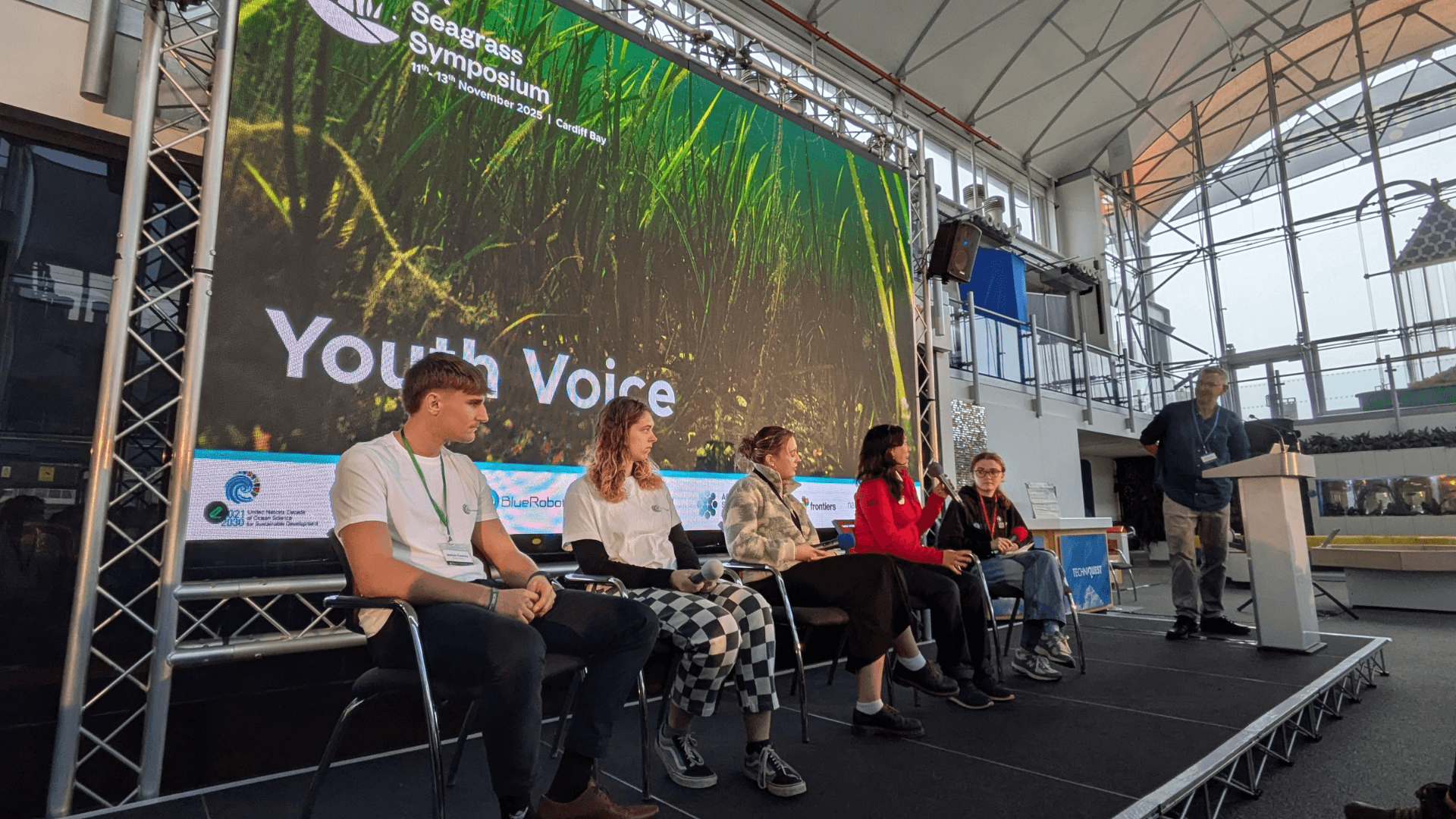
Each year, Project Seagrass welcomes a fresh cohort of students to work with the organisation as part of their placement year.
Facilitating training opportunities has been an important part of our approach for over a decade. Since Project Seagrass’ beginnings, 27 students have worked and learnt alongside the team as part of a year-in-industry or professional training year; a growing option in many university undergraduate degree programmes
Providing a meaningful experience for future graduates is central to our placement year programme. During their time with Project Seagrass, placement students have the opportunity to experience all aspects of working for a science-active conservation organisation; from honing research skills to gaining hands-on fieldwork experience, and supporting engagement with local communities to making new connections at events. Project Seagrass placement students learn and develop alongside some of the world’s leading seagrass scientists. Whilst not everyone who joins us will go on to pursue a career in seagrass science, or to that matter marine conservation, building confidence and developing a range of skills is a crucial part of our commitment to the next generation.
Earlier this year, new research led by one of Project Seagrass’ placement students marked the 11th academic publication to either have been led by or with significant contribution by one of our placement students, furthering both seagrass science and their own research skills and experience.
Since our placement programme began, research contributions from Project Seagrass interns have encompassed a broad range of topics from restoration science to seagrass mapping. You can explore some of the published research from Project Seagrass interns below:
Seagrass Meadows as a Foundational Concept for One Health | Iestyn Comey, placement student 2025/26
Fishers’ local knowledge strengthens seagrass restoration planning | Dylan Tatham, placement student 2025/26 and now Solent Fieldwork Officer at Project Seagrass
Refining the use of seed balls to support seagrass restoration | Hannah Potter, placement student 2023/24
Seagrass-Associated Biodiversity Influences Organic Carbon in a Temperate Meadow | Lowri O’Neill, placement student 2021/22
Seagrass Meadows Provide a Significant Resource in Support of Avifauna | Emma Butterworth, placement student. 2020/21 and now Field and Research Assistant at Project Seagrass
Citizen Science Driven Big Data Collection Requires Improved and Inclusive Societal Engagement | Oliver Dalby and Isadora Sinha, placement students 2018
Effectiveness of Moorings Constructed from Rope in Reducing Impacts to Seagrass | James Hope, placement student
Spatial assessment of intertidal seagrass meadows using optical imaging systems and a lightweight drone and Finding some seagrass optimism in Wales, the case of Zostera noltii | Laura Pratt, placement student 2015/2016
Demersal Fish Assemblages in NE Atlantic Seagrass and Kelp Evie Furness, placement student 2016/2017
Canopy Accumulation: Are Seagrass Meadows a Sink of Microplastics? Issy Inman, placement student