Category: PS Updates

Project Seagrass Lab Opening

Project Seagrass celebrates opening of new Lab

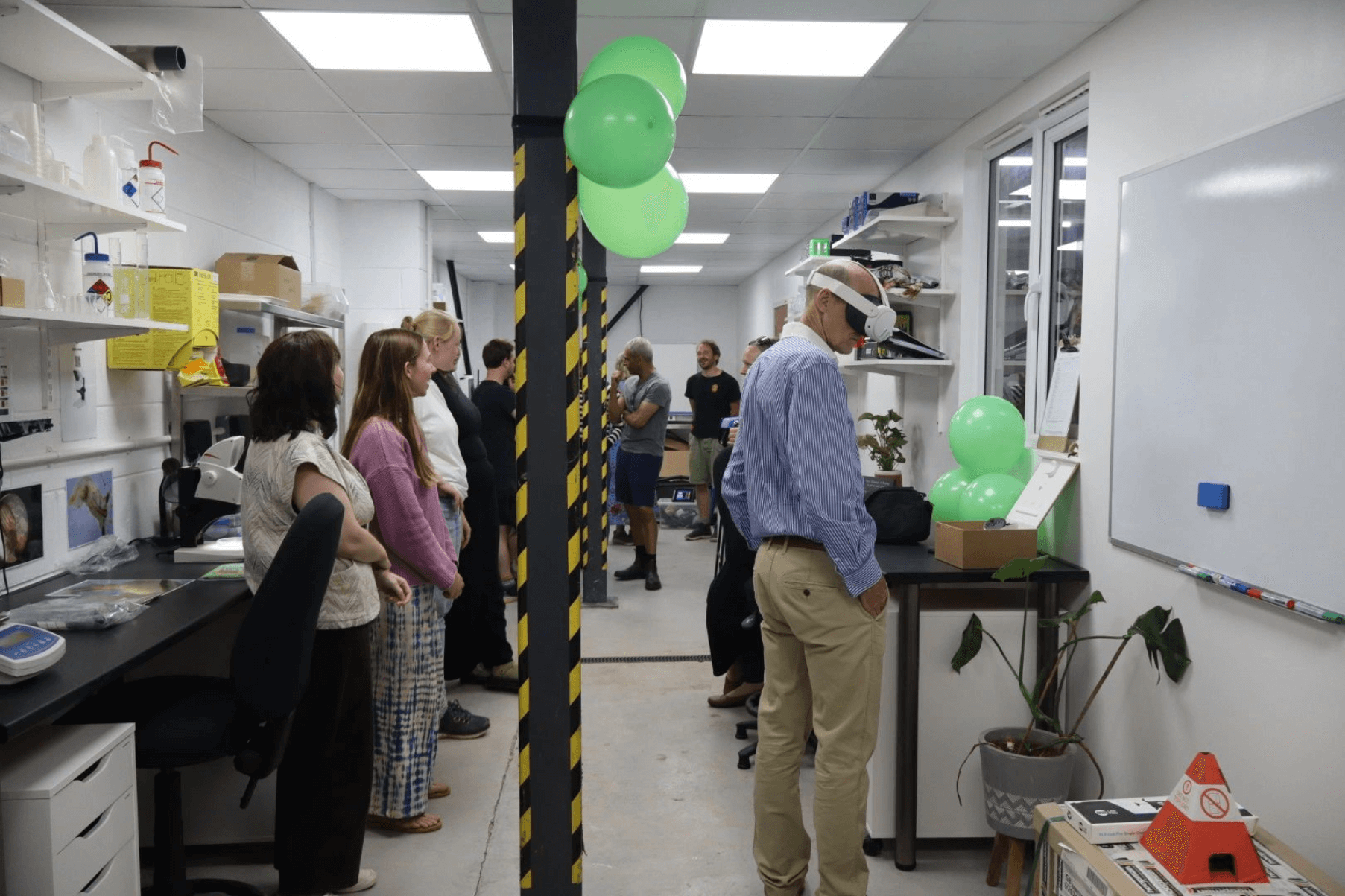
Last month marked the opening of a newly constructed laboratory facility at Project Seagrass’ headquarters in Bridgend, South Wales. Project Seagrass CEO Leanne Cullen-Unsworth said: “We’re delighted to be able to launch this fantastic new facility within our existing working space in Bridgend. Thanks to generous support from funders who

Read More »

Seagrass app inspires a rise in citizen science across the globe

Internationally renowned charity Project Seagrass is marking it’s tenth anniversary by re-launching its citizen science website and mobile app SeagrassSpotter which enables anyone and everyone to engage with the seagrass meadows on their doorstep or anywhere else in the world, whether it’s there now or it once was. SeagrassSpotter was

Read More »

Project Seagrass celebrates its 10th birthday 🎉

Reflecting on 10 years of Project Seagrass   Project Seagrass was created on the 29th July 2013 with the vision of saving the worlds seagrass. As we approach our 10th birthday, we’re looking back on the last 10 years with our founder Ben Jones and CEO Leanne Cullen-Unsworth.   Where

Read More »

Geo Enthusiast turned Seagrass Fanatic!

My name is Danny Rice, I am a 23 year-old Conservation Assistant at Project Seagrass. I began working for the charity in June 2021 due to the Government-funded Kickstart Scheme. Despite studying a Bachelor’s degree in Physical Geography and a subsequent Master’s degree in Climate Change, the COVID-19 Pandemic found

Read More »

Ambition really is still critical for seagrass

Eight years ago sat on a roof top café at Swansea University we ambitiously set up a small marine conservation organisation called Project Seagrass. Swansea has always seemed a fitting place for Project Seagrass to start. After all it was deemed the ‘lovely ugly town’ by its most famous son,

Read More »

2020 : A Year In Review

As 2020 draws to a close, we look back on a year that has been nothing short of unusual. Despite the challenges, it has been a year for reflection, growth and innovation, and we believe there’s never been more reason to work toward a brighter future. In the face of

Read More »
Project Seagrass Lab Opening

Project Seagrass celebrates opening of new Lab

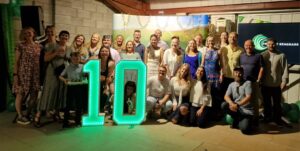
Last month marked the opening of a newly constructed laboratory facility at Project Seagrass’ headquarters in Bridgend, South Wales. Project Seagrass CEO Leanne Cullen-Unsworth said: “We’re delighted to be able to launch this fantastic new facility within our existing working space in Bridgend. Thanks to generous support from funders who share our core values, volunteers who supported the build, and a committed and passionate core team, we now have a functional in-house lab space that will contribute to advancing the science needed for scaled environmental recovery.” The creation of the facility was made possible thanks to the generosity of supporters Greenwood Place, the Hartwood Trust, and the Suggitt family who attended the official opening event hosted by the Project Seagrass team on 2nd July. Laura Suggitt said, “Seeing the Henry Suggitt Laboratory opened after years of dedicated hard work, fundraising, and commitment from the amazing team at Project Seagrass was a dream come true. It is a space that I can imagine my brother would have loved – which makes it all the more special. I know great things are going to happen here – the future of seagrass conservation and research is in safe hands!”  The multi-functional workspace will enable a range of small-scale experiments to be carried out on site, alongside species identification, seed processing, sample preparation and storage, and maintenance tasks. The Lab will play an important role in Project Seagrass’ ongoing research work which underpins the organisation’s approach to seagrass restoration and conservation efforts across the UK and internationally. It will also complement the existing facilities at Project Seagrass HQ including the organisation’s large-scale seed processing systems. The space will add further educational value to Project Seagrass’ work with university students from across the UK who will be able to utilise the space as part of project work during their year in industry with the organisation. More details on year in industry placements can be found here. Project Seagrass is extremely grateful for the generosity and shared vision of our funders which has made the construction of the Lab possible. We would also like to thank Rob & Sam Petts (RP Property Maintenance) who volunteered their time to support the build.

Read More »
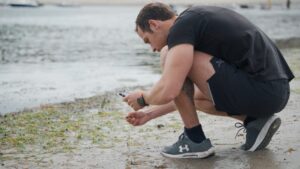
Someone crouched on the beach is taking a photo of seagrass to upload to SeagrassSpotter

Community, Connection, Conservation: latest SeagrassSpotter Updates

The Project Seagrass team have been busy working on a range of new features within SeagrassSpotter. Since our last major update in 2023, we have been working to further enhance your experience when participating in the programme and are super excited to share the latest developments. In response to your feedback, the new functionality focuses on introducing ways for you to interact with each other, as well as introducing an element of healthy competition as we seek to widen our reach, grow the community mapping the world’s seagrass, and contribute to solving global challenges for seagrass! One of the six global challenges facing seagrass conservation is obtaining and maintaining information on the status and condition of seagrass meadows around the world. SeagrassSpotter makes a vital contribution to this, providing open access seagrass data that has been used in various scientific publications, from deep learning algorithms, to accessing genetic connectivity of seagrass populations. Explore some of the new functionality below: Leaderboards Think Duolingo, but for seagrass! The new Leaderboards within SeagrassSpotter showcase users with the Most Sightings, Most Countries Visited, and highest number of Species Found. With Yearly and All Time views available, users have a range of options to explore the sightings of their fellow SeagrassSpotters. And if your competitive spirit inspires you to head out to your local beach in search of seagrass, we’d love to see your sightings! Achievements Following the latest update, you might have noticed some new badges on your profile. This forms part of a host of new Achievements that SeagrassSpotter users can work towards. Ranging from the number of sightings uploaded to more specific achievements such as taking a photo with seeds or flowers or, there are a range of different achievements to unlock. Interactivity Users now have the opportunity to interact with each other’s seagrass sightings. Alongside new Like and Comment functions, users can now Favourite a seagrass sighting, making it easily accessible to find again via the My Favourites section in My Profile.  Users can also make use of a new ‘I’ve spotted this too’ function, helping the community to confirm data points for sightings. We love to hear your feedback! SeagrassSpotter is constantly developing in response to its users. Please send any comments or feedback you have to seagrassspotter@projectseagrass.org .

Read More »

You asked, we listened. Our latest updates to SeagrassSpotter

Things have been busy at Project Seagrass with lots of development on SeagrassSpotter. Since our last major update, we have been working to enhance the ways that SeagrassSpotter works for its users. We’re excited to share that our latest update includes many of the features you have been asking for, and a few more. One of the six main global challenges to seagrass conservation is that the status of many seagrass meadows is unknown, and up-to-date information on status and condition is essential for conservation. While we’re making great strides in using drone technology and satellite imaging for seagrass mapping, new technologies still depend on “ground-truth” data, which is where SeagrassSpotter comes in. This is how individuals can make lasting contributions to seagrass conservation. With this in mind and coupled with the requests you’ve made, we’ve released a new version of SeagrassSpotter. We’ve developed a completely new exploration and filter function, allowing you to select data from certain species, countries, and more. We’ve also made it easier for you to download SeagrassSpotter data and generate reports on the things that matter most. Finally, we’ve added a completely new upload function for absence data; places where seagrass isn’t found or used to be found but now isn’t – data that will help us and other transform habitat suitability modelling. Take a look at our feature recaps below to learn about each one in depth.   Data exploration We understand the importance of being able to view the data you collect – you can see in real time how you’re contributing to the bigger picture. Data exploration is the first step of data analysis and is used to explore and visualize data to uncover insights from the start or identify areas or patterns to dig into more. Using interactive filtering, users can better understand the bigger picture and get to insights faster. You can filter data by any of the parameters that SeagrassSpotter collects (e.g., algae, fishing activity, flowering) and display this either in grid format or map format. Report generation In addition to our new explore tab, we’ve added new report generation features that allow you to download data that is filtered by any of the parameters that you select. Only want seagrass data from the Philippines? No problem! We understand the importance of being able to easily download data and have worked to remove barriers to this. All SeagrassSpotter data is free to access, and you don’t even need to sign up for an account. Open Access data will make conserving seagrass easier for everyone. Absence data It’s imperative that we know where seagrass is growing, but to advance seagrass restoration, it’s also important that we know where seagrass isn’t growing, and why. Whether it’s been lost, or simply was never found there in the past, our new absence data function allows you to add data on other habitats and substrates such as mangroves, coral, seaweeds, rocks, sand and mud. This will make habitat suitability modelling easier and more efficient, while also adding greater ground truthing needs for remote sensing. New languages We understand that for SeagrassSpotter to be a global tool, it needs to be accessible to all, no matter what language you speak. Over the past few years, we’ve slowly been adding additional languages to increase usability in many of the countries we work. Alongside this, we’re developing an app within SeagrassSpotter called SpotLang that provides a means for anybody to help curate new languages with us. As it currently stands, SeagrassSpotter is available in nine languages; English, Welsh, French, Portuguese, Swahili, Thai, Bahasa Indonesia, Bahasa Malay and Tetun. If you are interested in contributing to new languages, please get in touch.

Read More »

Seagrass app inspires a rise in citizen science across the globe

Internationally renowned charity Project Seagrass is marking it’s tenth anniversary by re-launching its citizen science website and mobile app SeagrassSpotter which enables anyone and everyone to engage with the seagrass meadows on their doorstep or anywhere else in the world, whether it’s there now or it once was. SeagrassSpotter was established in 2016 and allows people to upload point data showing the presence of seagrass with photo evidence. Since its initial launch, it has gathered over 7,000 sightings of seagrass from over 3,500 users across 105 countries and has recorded 45 species of seagrass. It’s relaunch will include new features, such as being able to record absence data to track where seagrass may have once existed but is now lost. Dr Leanne Cullen-Unsworth, CEO at Project Seagrass, said: “Over the last ten years, we have successfully raised awareness of the importance of seagrass and the role it plays in tackling the biodiversity and climate crises. Now we must accelerate efforts to protect and restore this vital habitat. Everyone can have a part to play in securing a future for seagrass and SeagrassSpotter is a great tool to engage and connect people in seagrass science and mapping all over the world.” The UK alone has lost up to 92% of its seagrass meadows, an essential ecosystem that protects our coasts, supports the fishing industry, and puts food on our tables. To monitor, identify and stop the loss of seagrass all over the world, Project Seagrass is calling for more people to engage in citizen science and not only record where seagrass meadows can be seen, but where they once were and now no longer are. Saving the world’s seagrass meadows is an essential task if we are to address both the climate and biodiversity crises, but making waves to do this requires the many, rather than the few. Seagrass has long been the unknown and forgotten oceanic plant, a plant that was once terrestrial, and is now becoming a household name as we learn more about its significance to both people and planet. For instance, seagrass supports 20% of the world’s largest commercial fisheries, therefore without it, our fish stocks will continue to drastically reduce. There are also communities all over the world who are dependent on seagrass, as their main food source, fish, derives from their local seagrass meadows. When considering nature-based solutions, seagrass meadows are high on the agenda and a hot topic for carbon sequestration and biodiversity support, however, the science required to evidence the quantities is not yet complete. We therefore have much to do in the next decade to ensure we protect the seagrass we have and put back what we have lost. To achieve this, we must all play our part, which is why citizen science is on the rise. With more people actively engaging in local projects, now is the perfect opportunity for Project Seagrass to re-launch their citizen science web platform and phone app, SeagrassSpotter. To explore the SeagrassSpotter tool visit https://seagrassspotter.org/

Read More »

Project Seagrass celebrates its 10th birthday 🎉

Reflecting on 10 years of Project Seagrass   Project Seagrass was created on the 29th July 2013 with the vision of saving the worlds seagrass. As we approach our 10th birthday, we’re looking back on the last 10 years with our founder Ben Jones and CEO Leanne Cullen-Unsworth.   Where we’ve come from  Reflecting on 10 years of Project Seagrass, Dr. Benjamin Jones, one of the organisations founders, it’s Chief Conservation Officer and the current President of the World Seagrass Association, said:  “We have all heard the story of two students bonding over their interest in seagrass meadows, both with different visions of the approach needed to conserve them and joining forces with their supervisor to, at first, create a non-profit association.  I was not always interested in seagrass. In fact, I stumbled upon it in 2011 while on holiday in Dominican Republic. At the time I was mad for coral reefs, I had bought a new underwater camera, rented all the coral reef ID guides I could from the Swansea University library, and had the intention of spending two weeks snorkelling on the reef. To get to the reef though, I had to snorkel over 500m of this green stuff. And this green stuff captivated my attention. It was full of fish, invertebrates, all different shapes, sizes and colours. There were even different types of this green stuff – some that was like normal grass and some that felt like spaghetti. I think I got to the reef twice during that holiday – twice in two weeks. Instead, every day was spent in the green stuff. I was hooked, this green stuff was my calling, and I wanted to learn everything I could about it. If only I hadn’t filled my bag with coral reef books.  Fast forward 18 months and I remember quite vividly where the name for the organisation that we are celebrating came from, and the vision that I had for what that name meant.   It was a sunny day in May, a couple of weeks before my 22nd birthday, and I was on a train on my way home from West Wales. I had this square steel frame, a quadrat, fastened to my backpack and a cooler bag full of seagrass samples around my shoulder. I remember a few people asking me what on earth it was, and what I had been doing, to which I responded rather proudly “I’ve been surveying and sampling seagrass”. Yet, I quickly realised that they had no idea what I was talking about – they didn’t know what seagrass was. It was that train from Tenby to Swansea where I thought to myself, seagrass needs a voice. People do not have a clue that this group of plants even exists, let alone what they provide. Thoughts and feelings that each one of us directors arrived at independently.” “When I first uttered the words “Project Seagrass”, I was inspired by Project Tiger, launched in the 1970’s by the Indian Government, and now the largest species conservation initiative of its kind in the world. I was also inspired by Project Purple, Apples codename for what we now know as the iPhone. When I first uttered the words Project Seagrass, it symbolised a codename for conserving the world’s seagrass meadows, whether directly, just as Project Tiger has done for tigers, or indirectly through diverse means of communication, research and innovation, just like what was needed to create the iPhone.  To all of us, Project Seagrass symbolises a much larger vision and movement, that transgresses us as individuals, as an organisation, and as a community. To me it symbolises a vision for seagrass itself, and for the people and biodiversity that depend on it – a vision for this quirkily plant that has existed for 140 million years, and seen species and civilisations rise and fall around the coastlines it has inhabited. Project Seagrass is a vision for this group of plants that needed a voice in the world.  A lot has changed in the last 10 years. RJ has had two children, Leanne and Richard have had three, and I have had four campervans, but our visions for what Project Seagrass is and represents have remained the same. Project Seagrass represents a long-term vision to secure a future for the world’s seagrass, a vision to champion the thousands of individuals working towards that future with us, a future where one day, Project Seagrass may complete. Where Project Seagrass may no longer needed.”    Acknowledging who got us here, and where we’re going   Dr. Leanne Cullen-Unsworth, Chief Executive Officer of Project Seagrass, said:  “Across the Project Seagrass team, I think we have all had our different journeys towards the realisation that seagrass is a critical habitat that supports life on our planet. For me, I connected with seagrass accidentally, back in the early 2000s researching marine resource use patterns in the Wakatobi in Indonesia for my PhD. I started that research imagining significant local dependence on coral reefs and mangrove forests, I had no idea that seagrass was so relied upon by so many people, and that it sustained life and lifestyles to such an extent. And that is a pattern that you see across the globe, everywhere there is seagrass, there are people that depend on it for food or subsistence, or cultural fulfilment. It delivers wellbeing across its range in so many different ways.  And that is why we are looking forward to a future in which seagrass thrives in harmony with people. But there is still a lot of work to do to secure this future, and for now, Project Seagrass and other organisations like us are definitely needed. And so is the incredible support that we have had behind us over the past ten years. We need to keep the momentum going, we have started something and got people’s attention, the world seems to be listening, and so now is the time for us to work even harder

Read More »

Geo Enthusiast turned Seagrass Fanatic!

My name is Danny Rice, I am a 23 year-old Conservation Assistant at Project Seagrass. I began working for the charity in June 2021 due to the Government-funded Kickstart Scheme. Despite studying a Bachelor’s degree in Physical Geography and a subsequent Master’s degree in Climate Change, the COVID-19 Pandemic found me unemployed. I was so lucky to see this job posted as a Kickstart Scheme, so I applied through my work coach and got the job. I was thrilled and so thankful! When I was 6 years-old, Boxing Day 2004, I was sat in front of the television, completely entranced with the news of the awful Tsunami that struck Indonesia and countries surrounding the Indian Ocean. A classic story my mother still tells people to this day. Ever since then I have had a profound interest in not only natural hazards, but the ocean itself and what it holds. How powerful is the ocean? How important is it for human and marine life? Is this tsunami a regular occurrence and a threat? It was not until my Master’s degree that I understood the ocean’s full potential in terms of climate change and not just hazardous tsunamis. But that knowledge was still very limited, because I still had no idea what seagrass was and how important it is for climate change and blue carbon. Although my academic background is mainly geographical, the elements that account for seagrass decline (pollution, agricultural and urban runoff, nutrient overload etc.) are not alien to me and are issues I have studied in a geographical concept. Being able to utilise my GIS and mapping techniques for seagrass meadow distribution has been both interesting and fascinating. I have not yet had the chance to get out into the field with the team, but any seagrass mapping data and drone imagery that has been taken, I project into GIS at home, and conduct my analyses and data creation of seagrass meadows mapped from the drones. The work has been enthralling and someday soon I will hold the certification to fly my own drones and hopefully get out into the field to do my own drone surveys! My work has extended to working alongside global tech company CGI in collaborating with a brand-new seagrass mapping tool, using satellite remote sensing data from the Sentinel satellite. The collaboration is part of CGI’s ambition to become Net Zero by 2026, and to promote climate change initiatives such as seagrass seed planting and mapping its potential distribution across the UK coastline for restoration and conservation efforts. I assist with the GIS work and provide ecological understanding of seagrass. This project has some direct links to my previous academic work – I did not think I would be conducting remote sensing work within the marine industry, which shows how exhilarating and interdisciplinary this job has been for me. Working with the CGI team has been very enjoyable, and a prime example of how important charity work is, especially within environmental conservation. Every day, I feel like I am using my existing knowledge, but constantly gaining experience and understanding of our marine world and its importance for climate change. I have learned so much about seagrass and marine ecosystems in just 7 months – in geographical contexts to map seagrass, by attending outreach events to talk with other conservationists and the public, but also ecologically and biologically to understand its full potential in blue carbon. Thanks Project Seagrass!   Geology rocks but seagrass is certainly nifty!  

Read More »

Ambition really is still critical for seagrass

Eight years ago sat on a roof top café at Swansea University we ambitiously set up a small marine conservation organisation called Project Seagrass. Swansea has always seemed a fitting place for Project Seagrass to start. After all it was deemed the ‘lovely ugly town’ by its most famous son, the poet Dylan Thomas. Thomas also went on to describe the place as the ‘graveyard of ambition’, a phrase that’s referred to in an artistic inscription outside the local train station by a more modern Swansea poet that states “Ambition is Critical”. The analogies to seagrass are striking, both entities with image problems and a lack of ambition. The seagrass worlds most famous son Carlos Duarte termed seagrass the Ugly duckling of marine conservation. The inception of Project Seagrass was ultimately built around wanting to turn seagrass into that Swan and not be content to remain the Ugly Duckling. Just like the City with a university of growing reputation, and a leading football club, Project Seagrass was created with ambition. But times are changing for both seagrass and Swansea. When Carlsberg and Sky TV are sponsoring seagrass restoration, seagrass is in the latest GCSE syllabus, and political parties include it in their manifestos, seagrass has hit the big time. Seagrass is now the beautiful Swan, but now more than ever ambition really is critical for seagrass. Getting seagrass on the agenda is one thing, transforming the trajectory of this habitat is another thing. People have long appreciated the value of Coral reefs and Pandas, this appreciation alone hasn’t stopped their decline. The real battles are only just beginning for seagrass. We face a climate emergency, we stare down the barrel of a nature crisis, and we walk blissfully unaware into the extreme challenges of providing food security for a growing global human population. Maintaining and improving the capacity of our oceans to help fight these challenges is an urgent need. We can no longer ignore the plight of our marine ecosystems; we need to conserve and restore habitats at scale urgently. Not in 10 years, but now. In 2016, our director Benjamin Jones published his MRes thesis showing the perilous state of the UKs seagrass, Alix Green has just followed that up with a long-term estimate of the sheer scale of seagrass loss that’s occurred throughout the UK. Seagrass in the UK is not in a pretty state, and globally the trajectory is just as bad, with the Global Wetlands project revealing in a recent paper the scale of the continued global loss of seagrass. The Ugly Ducking may well have become the Swan, but this doesn’t mean the Swan is healthy. The worlds seagrass meadows still have major problems, as does the city of Swansea. Although enormous progress is clearly being made in seagrass restoration, with places such as Sweden, the Netherlands and the US storming ahead with their successful projects, its no good planting in one location if we’re losing it faster in another. Seagrass conservation must be way more than just restoration. Building on The Global Goal for Nature, at Project Seagrass we’ve begun to discuss the concept of how we can reach a state of Zero Net Loss of Seagrass, and ultimately create a vision towards Net Positive for Seagrass and eventually Full Recovery for Seagrass. Even at the spatial scale of Wales as a nation, this is no easy conundrum to solve. Just like the poverty and social challenges of Swansea that remain deep rooted, we recognise that on our 8th birthday, problems for seagrass are also deep rooted, and ambition for seagrass is critical now more than ever.

Read More »

2020 : A Year In Review

As 2020 draws to a close, we look back on a year that has been nothing short of unusual. Despite the challenges, it has been a year for reflection, growth and innovation, and we believe there’s never been more reason to work toward a brighter future. In the face of a pandemic, like everyone, Project Seagrass has had to adapt, but we’ve tried to continue our work, planting the final seeds in the two hectares of seagrass that represents the UK’s largest restoration project to date and forming relationships with like minded causes to work collaboratively in the fight against climate change.    2020: Key Highlights for Project Seagrass    JANUARY Director, Dr Richard Lilley (aka RJ), attended the Scottish Wildlife Trusts Living Seas Parliamentary event in Edinburgh. He discussed the importance of using accessible science to engage communities, the need for restoration and the benefits of collaborative seascape conservation. We also began working with Emitwise to build a partnership, encouraging companies to make their first steps towards achieving net-zero emissions.    FEBRUARY With planting finally on the horizon, the Seagrass Ocean Rescue team at Swansea University, worked around the clock preparing sandbags, seeds and rope. Despite delays and some sand related hiccups (finding sandbags whilst Wales was at high risk of floods proved increasingly difficult), an incredible team of volunteers, staff and the local community came together to plant a whopping ~750,000 seeds, just over 1.5ha of the 2ha target. Individuals came from far and wide to battle the elements and ensure planting was a success.     MARCH March began with an exciting media follow up from the planting week, BBC, ITV and The Guardian had spoken with Dr Richard Unsworth to discuss the importance of the Dale restoration and how seagrass can be used to tackle climate change, this made a positive contrast to the emerging news of the coronavirus. In more positive news, Project Seagrass were shortlisted for a Green Heart Hero Reward, shortly after planting, Richard and Leanne attended the event in London to accept the award for outdoor innovation. As more information regarding the coronavirus came to light, our entire team worked tirelessly to ensure we were prepared for the rocky road ahead.   APRIL As the UK-wide lockdown came into place, Project Seagrass, like many others, moved to work from home. Despite the change in workstyle, and the noticeable absence of fieldwork, the team reached out to our wider community. To celebrate Earth Day, we came together to read an extract from ‘The Loves of The Plants’ by Erasmus Darwin, grandfather of Charles Darwin. This marked the beginning of Project Seagrass’ efforts to commemorate international days of environmental awareness.  Outreach technician, Evie Furness appeared on Lizzie Daly’s Youtube channel, speaking live and answering questions about seagrass. This came as part of Lizzie’s Earth Live Lessons, a series that began since the UK lockdown as a communal effort of scientists, filmmakers and conservationists. Following Evie’s lesson, Project Seagrass announced their ‘Seagrass As Art’ online exhibition, working in collaboration with Boston based seagrass artist, Nedret Andre, this was a continuation of our effort to involve the wider community whilst volunteer events and outreach were halted.   MAY The 22nd May marked the International Day for Biological Diversity, in part of our celebrations, Project Seagrass launched (Re)Store, an opportunity for donors to give their support to secure and restore seagrass meadows.    JUNE On 8th June, Team Seagrass came together to celebrate World Oceans Day with Wild Day’s. In true Project Seagrass style we put together a cheesy educational resource with the help of some sea faring friends. In addition to our celebrations, the new Project Seagrass website was launched! With updated information, the (Re)Store as well as several other new features. We also announced the winners of our ‘Seagrass As Art’ exhibition, we had entries from across the globe and winners from all age groups. All our winners were uploaded to Instagram as part of our highlight initiative! To conclude our celebrations, director Ben Jones performed his rendition of The Fresh Prince of Seagrass – this is a must see!  In a significant step for global seagrass recognition, June marked the publishing of the UNEP  ‘Out of The Blue’ report, a significant document that recognises the global importance of seagrass meadows to humanity. The incredible Frankie Morland released his song ‘The Ocean’, to raise awareness and funds for Seagrass Ocean Rescue, at Project Seagrass we appreciate the support and love we receive from our community, it’s very humbling to know how our work inspires the younger generations.  As June drew to a close, our team managed to carry out a socially distant survey of our restoration site in Dale, with some promising progress. Finally, representatives attended the ‘Rewilding The Sea’ digital conference, an overview of what can be done to protect our coastal ecosystems.   JULY In July, Project Seagrass celebrated its 7th birthday! To mark the occasion the Seagrass Ocean Rescue team returned to the Dale site to carry out surveys, by this stage there were several signs of growth.    AUGUST  As lockdowns eased, Project Seagrass successfully organised and carried out COVID friendly fieldwork in Porthdinllaen, North Wales, collecting half a million seeds. The team worked with the tides, snorkelling in the day and hand picking at night. Shortly after, we were pleased to announce our new seed picking location, a birding hotspot, the Lindisfarne National Nature Reserve in Northumberland.   SEPTEMBER  Another dive at the Dale site showed even more promising signs of growth, RJ updated our friends at Finisterre, with the first of a series of seasonal blog!  We also partnered with Wild Saint London to launch limited edition ‘Sea Tails’ lounge socks, the purchase of these socks allow us to collect, process and plant one hundred seagrass seeds covering one square meter.  Following the seed collection in August, the Seagrass Ocean Rescue team began the seed separation process, ready to plant the remaining area in Dale. Dr. Richard Unsworth and Dr. Leanne Cullen Unsworth

Read More »