Category: PS Updates

Long Lost Seagrass & Our Spring Survey Report

During April I returned to the Llyn Peninsula, along with Project Seagrass directors RJ Lilley, Ben Jones and Richard Unsworth to conduct the Spring SeagrassWatch survey, 1/4 of the yearly seagrass monitoring survey that we’ve been conducting at Porthdinllaen for the past two years. In addition, we also checking seeds from Project ReStore and

Read More »

Intern Spotlight: Lauren Clayton

As a Marine Biology student at the University of Glasgow, Scotland, I was lucky enough to be accepted on to a Maters Work Placement. This course allows a few selected students to take a year between the 3rd and 4th year of their degree to experience working for an organisation

Read More »

Project Seagrass Launch – Thank You

Yesterday evening, we hosted our official Project Seagrass launch event and its safe to say it was a blast. We were excited and thrilled to see so many faces, some old and some new – we couldn’t be sure how many of you would make it despite the RSVP! Back

Read More »

Registration for the 12th International Seagrass Biology Workshop is Now Open!

The International Seagrass Biology Workshop (ISBW) is the only international meeting specifically tailored to seagrass scientists, professionals and students. Abstract submissions are now open as are proposals for workshops. All payment is via PayPal using credit/debit cards. There is one registration fee. It covers access to all parts of the conference program, including the

Read More »

Long Lost Seagrass & Our Spring Survey Report

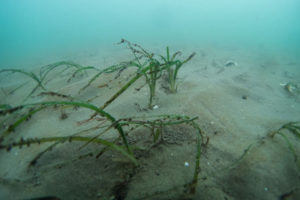
During April I returned to the Llyn Peninsula, along with Project Seagrass directors RJ Lilley, Ben Jones and Richard Unsworth to conduct the Spring SeagrassWatch survey, 1/4 of the yearly seagrass monitoring survey that we’ve been conducting at Porthdinllaen for the past two years. In addition, we also checking seeds from Project ReStore and also completed an additional survey at Abersoch. The aim of this survey was to officially record the presence of seagrass, specifically Zostera marina, in the area. I had previously found seagrass in this area whist undertaking my masters project, conducted with the support of Project Seagrass. During this project I created a spatial model that predicted seagrass distribution based upon the physical characteristics that are required for growth. It identified that this southern coast of the Llyn peninsula, particularly Abersoch, have the right conditions for seagrass growth. Map of areas where Zostera marina is predicted to grow After checking the general location on the beach via GPS we headed out on a snorkel survey of the vicinity. The visibility was surprisingly good and we soon found and photographed the meadow, we also took GPS points of the meadow. A picture of the long lost seagrass, last recorded in 1891 These photos represent the first time Z. marina has been recorded in this location since 1891 (A.H. Trow). Finding seagrass in this area shows how predictive modelling can effectively be used to complete targeted surveys and discover new meadows. The sighting is also visible on the seagrass recording platform, Seagrass Spotter and can be viewed here. The project seagrass team are hoping to do further work around Wales, checking sites that the model has shown have the right physical conditions for seagrass growth. We will keep you updated with our progress. If you want to support our efforts recording presence of seagrass in the UK check out the Seagrass Spotter app.

Read More »

Intern Spotlight: Lauren Clayton

As a Marine Biology student at the University of Glasgow, Scotland, I was lucky enough to be accepted on to a Maters Work Placement. This course allows a few selected students to take a year between the 3rd and 4th year of their degree to experience working for an organisation while also performing research. At the end of the placement I continue back into my final honours year and I will then graduate with a masters. I am currently working with Project Seagrass as an intern for my placement and will be working with them in this capacity until the summer. My current work involves conducting a meta-analysis of fish assemblages in seagrass habitats around the world. This involves searching for research papers that contain any data about fish species that have been observed in seagrass beds and then adding this data to our own database. I have been organising this database in order to make it easy to navigate and interpret and I have also been verifying the data that has already been entered. I am now onto the stage of searching for any papers that have been missed or published after the original searches were made so that we can ensure that all the possible work with the data we want have been found and collated in our database. This way when we are finished we can say that the fish species mentioned in our database are found in seagrass habitats in certain locations with absolute certainty. In addition to this, I’m also working on a project that involves analysing videos that have been filmed in Indonesian seagrass beds. Baited Remote Underwater Video systems, or BRUV’s, are camera systems that are left underwater, to attract fish with the use of bait. Analysing this footage is a tiresome task, especially with each video lasting 30 minutes. Analysis of this is done using special software which allows you to tag and count individual fish species in each frame – again very time consuming. This gives us the MaxN. The MaxN is the maximum number of one species of fish in a frame of the video at a given time. This isn’t the most exciting work and I tend to find myself daydreaming that I am scuba diving in Indonesia while watching certain stretches of video – many with very little fish. A fish investigates the bait As part of my internship I’ve also had the opportunity to conduct my own research. Once written up this will then contribute to my degree, and once complete will help secure my masters. For this project I am using the videos collected in Indonesia and analysing them in a similar way to determine if there are fish species or assemblages that show habitat specificity towards certain seagrass species, or seagrass beds cover. I am hoping to see some sort of connection with this by only time will tell. Some videos lacked any fish Back in Feburary I conducted my first SeagrassWatch exercise in Porthdinllaen, Wales – I can spell this place, but can’t pronounce it! It was a nice opportunity to get out of the office for a few days and experience some field work, even if it did mean getting up ridiculously early and getting very cold and wet. As part of the trip we also performed some educational outreach with a primary school from the area. They learnt about seagrass and its importance and they also learnt about what lives in the seagrass and had a fantastic and fun day out at the beach – sand animal building was a requirement of course! I was even trusted to have a go with the Drone, which was also great fun! Drone flying! In addition to everything else, I’m also researching Scottish seagrass during my internship, in an attempt to map out its rough distribution so that I can find some good spots in Scotland to start my own SeagrassWatch monitoring, expanding the range of Project Seagrass sites to include Scotland. We’re going to be involved with the Glasgow Science festival and will hopefully put on some events over the summer around Glasgow.

Read More »

Don’t let the UK become a fish out of water: For the sake of our seas let’s stay in the EU

Our oceans and coastal resources have never been more important or under greater threat. Marine biodiversity has rapidly declined in the last 40 years, so much so, that marine populations have almost halved during this time. The very marine habitats and biodiversity that help ensure we have food to eat and oxygen to breath are being degraded the world over. At the same time, marine litter is on the rise, and issues such as climate change place an increasing level of pressure on the ability of our oceans to remain productive. In the UK the marine environment provides enormous prosperity and jobs, this amounts to a GVA of £38.5 bn and upwards of 290k jobs. At Project Seagrass we know all too well the value of our marine environment and the threats facing seagrass meadows, not just here in the UK, but across Europe and indeed across the entire planet. We exist to communicate the importance of these productive systems, and work to protect these ecosystems so they can remain productive in perpetuity. Although there is a lot to be worried about in our oceans and coastal seas there is also a lot to be optimistic about, especially in Europe. The European Union’s marine territory is the largest in the world, covering 20 million square kilometres of water – nearly five times the size of its land area. By working together, countries in the EU are making progress that is beginning to halt and reverse the trends of marine habitat loss, marine plastics, pollution, overfishing, and biodiversity loss. There are a lot of problems and a lot left to fix but the EU is a driving force behind positive action. In 1992 the EU adopted the Habitats Directive, which aims to protect vulnerable natural habitats and species (including seagrass), together with the Birds Directive, which has been creating Special Protection Areas (SPAs) since 1979, it remains at the very core of EU nature conservation efforts. These are key examples of how the EU is helping our oceans and has resulted in an expansive range of Special Areas of Conservation (SACs) around the UK coast. Many of these SACs contain extensive seagrass meadows. We’ve also had the Water Framework Directive, the Marine Strategy Framework Directive (MSFD) and the Bathing Water Directive that have all contributed to improving the health of our coastal seas from centuries of degradation. The MSDF is now a major EU force pushing for better Marine Protected Area coverage, Good Environmental Status (GES) and spatial planning of our coastal seas. The EU is also working to increase sustainability of our fisheries and to push the international community to undertake improved governance of the World’s Oceans. Since EU policy was reformed in 2002, the health of many fish stocks has improved. Indeed, by 2011 the majority of assessed fisheries were considered to be sustainably fished. Even the infamous North Sea Atlantic Cod, long the “poster child” of overfishing in our waters, is benefiting not just from the protection of our seagrass meadows (an important juvenile habitat), but from sustainable fishing measures. Scientists are optimistic that given its current rate of recovery the stock could be certified as sustainable as soon as next year. Without this array of EU legislation the UK government would likely have done very little for our coastal seas. In fact the UK government has repeatedly stalled on action over the years and had to be prosecuted by the EU on a number of occasions in order to take the necessary action for a clean environment. Often the only action the UK government does take to help is dependent upon EU resources such as the EU life programme. When the media and politicians discuss ‘EU Red Tape’ they often refer to the very legislation that is helping to protect our environment, keep us safe and ensure people’s rights. This is not a hindrance it’s a help. We should also not underestimate the contribution that the UK academic community has made to marine conservation and management. This is a sector of the UK economy that is heavily dependent upon EU wide collaborative funding and knowledge exchange. Science doesn’t happen in the UK alone, scientific progress is based on the scientific community learning and progressing together. Such progress ultimately has benefits for how we learn to sustainably manage and exploit the resources that our oceans provide. Remaining in the UK will help push forward the science needed to conserve our oceans for future generations. The seas around the UK need to be part of Europe. The so called ‘Brexit’ would be a catastrophe for our coastal seas, and put these marine resources that are so critical for our long-term future in jeopardy. Our oceans in Europe need a united EU, with the UK as a leading partner in governing these critically important resources. At Project Seagrass we believe that continued UK membership of the EU is vital for the protection of our oceans, coastal seas and specifically our seagrass meadows into the future. At Project Seagrass we recognise that the EU isn’t perfect but we also understand that we have to be very careful what we wish for in terms of the impact leaving the EU would have on our oceans and coastal seas. It’s evident that UK politics has a tendency to be short term and we’re constantly reminded that the natural environment is seen as an impediment to economic growth. EU agreements help mitigate this by encouraging the UK government to be more long term in policy, protecting our environments not just for us, but for future generations to come. We’re voting not just for our oceans, but our children’s, and grandchildren’s oceans. At Project Seagrass we believe that voting to stay in the EU is a vote to sustain our environment, including our seas. Download this statement here.

Read More »

Reflecting on the #PeoplesProjects: We’ll continue to push for “Mission SEA”

Back in 2015 we entered the #PeoplesProjects, a competition held by the Big Lottery Fund and ITV to win up to £50,000 of National Lottery money. The Peoples Projects aimed to give organisations the chance to build upon previous projects they had completed with help from the Awards For All funding scheme. At the time we didn’t even expect to make it past the first round, but you’ve got to be in it to win it, right? We thought long and hard about how Project Seagrass could make a difference to peoples lives. Although as an organisation we’re devoted to conserving seagrass ecosystems, it’s a well known fact that we depend on our marine environment. For this reason we came up with Mission SEA, which aimed to bring the ‘coast to the classroom’ and the ‘classroom to the coast’ to engage Wales’ children with our marine natural heritage. The education scheme we proposed, which would have involved 15,000 children from the counties of Gwynedd, Ceredigion and the Isle of Anglesey, sought to teach children about the resources that our seas provide, whilst inspiring them to become future guardians of our oceans. Mission SEA is about inspiring children to protect our marine environment We were absolutely delighted to make it to the final 5, and after a tough two weeks of campaigning, we’re gutted to say that we didn’t make the top 3. The other projects we were up against were as deserving as any and we wish them all the very best for the future. Reflecting on our campaign, we’ve learnt a lot, and regardless of whether we won or not, we valued the experience, exposure and support more than anything. The support we gained for our project was overwhelming and we’d like to thank each and every one of you that voted for us. Although we didn’t receive the £50,000 we needed, our Mission SEA isn’t over yet! Seagrass meadows around our British Isles have recently been shown to be in a ‘perilous state’. Mission SEA is more than a project; it’s built on a philosophy that education is key to saving our planet. By focusing on seagrass, the importance of marine habitats can be explained using things that children understand, from the golden sand of our beaches to the range of fish in our chip shops. Seagrass is an ideal focus because it’s important for sustaining our fisheries and absorbing vast amounts of CO2, whilst also providing a home for charismatic animals like seahorses. Education is key to saving our planet – getting children outdoors to experience nature is part of this. Green space is widespread across the UK and although it’s recommended schools should be ensuring that primary age children experience visits or are engaged with nature, a recent government funded study revealed that over 10% of children in England have not set foot in a park, forest, beach or any other natural environment in the last year. There is substantial growing evidence linking the natural environment with good physical health and psychological wellbeing and the ‘Biophilia Hypothesis’ states that the desire for contact with nature is partly innate. Our wealth as a nation and our individual wellbeing depend critically upon the environment. The marine environment provides us with resources essential for life and seagrass provides the processes that purify the air and water. The Welsh coastal environment alone supports over 52,000 jobs, provides around £5 billion total income to businesses in Wales and contributes to around £1.5billion of GDP to the economy of Wales. These values are hugely significant, yet the marine environment and the services it provides us are still under appreciated. There is a great potential to further increase these values through inspiring habitat and biodiversity conservation. As both physical activity and nature can positively affect wellbeing we hope that Mission SEA has the potential to leave a legacy, stimulating the next generation to appreciate the benefit of our natural coastline, while inspiring action for marine habitat and biodiversity conservation for the communities that depend on them. To Project Seagrass, the Peoples Projects was never a competition, it was never about winning or losing. We saw it as an opportunity for us to develop as an organisation, to grow stronger, more committed to our goal! Although we didn’t win the £50,000, we didn’t lose either. We’ll continue to push for our Mission SEA, to fight for the environment with no voice, and we’d love to invite you to join us. “In the end, we will conserve only what we love, we will love only what we understand, and we will understand only what we are taught.”

Read More »

Project Seagrass Launch – Thank You

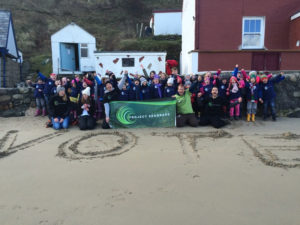
Yesterday evening, we hosted our official Project Seagrass launch event and its safe to say it was a blast. We were excited and thrilled to see so many faces, some old and some new – we couldn’t be sure how many of you would make it despite the RSVP! Back in 2012, as merely a seed (excuse the pun) in the minds of Benjamin Jones and Richard Lilley, the duo had no idea that this seed would develop into the fruiting body that is, Project Seagrass. With guidance from Richard Unsworth and later on, Leanne Cullen Unsworth, Project Seagrass embarked on a journey to develop a unique marine conservation charity, a proudly Welsh entity, with a global vision to make an impact on marine conservation. BBC’s Dr Rhys Jones officially launched the evening giving insights into where he first came across seagrass and how amazed he was by it (Photo: Josephine Wilde) The Project Seagrass journey, like seagrass itself, seems to have developed with a life of its own, slowly expanding its root system ensuring that its gone from strength to strength. The launch last night couldn’t have been possible without the partners that we’ve rooted ourselves with. Swansea University, and particularly SEACAMS, has been integral to our achievements to date, as has Cardiff Universities Sustainable Places Research Institute, whom without, last night would not have been possible. It also couldn’t have been possible without you. Without your support we would not be where we are today! We were genuinely moved to see so many of you taking an interest in Project Seagrass and caring so deeply about what we do. To those that came, we hope you enjoyed the experience, and that the crowd we managed to gather was a special mix of interesting people. We now have a chance of winning some much needed funding to continue our work and we’d be delighted to have your support once more. www.thepeoplesprojects.org.uk/projects/view/mission-sea-inspiring-children-to-protect-our-sea The Project Seagrass quiz gave people a chance to really think about some of the services thats seagrass provide, and why theyre important (Photo: Josephine Wilde) The evening was a chance to let people learn about some of our projects, like the newly released SeagrassSpotter app (Photo: Josephine Wilde) An array of resouces were available to look at, including our seagrass colouring book, a vital part of our SEA Programme (Photo: Josephine Wilde) It was a chance for people to learn (Photo: Josephine Wilde) Project Seagrass Director, Richard Unsworth, chatting to guests about our work (Photo: Josephine Wilde)

Read More »

New Year New Challenges: 2015’s highlights and what’s in store for 2016

We’d like to start 2016 by saying a big thank you to everyone that’s been with Project Seagrass for its 3rd year, which has without a doubt been our most successful yet. From urging the government to consider important UK seagrass areas to receiving charity status; from kicking off monitoring at our first long term SeagrassWatch site to starting the first ever seagrass restoration trial in Wales, its been quite a exciting year. We’re very proud to be helping the fight to protect our seagrass for the future. However, none of this would be possible without your support, our partners and sponsors, the help of a number of volunteers, and the generosity of the public. The last 3 years have seen Project Seagrass evolve from merely a seed in the mind of its founders to a full blown environmental charity. Some of the highlights of the year include: Response to the consultation process on Marina Conservation Zones (MCZs) Back in early 2015 we were proud to offer our response urging the government to protect important seagrass habitats around the UK. In the response we requested that DEFRA reconsider its exclusion of Bembridge, Norris to Ryde, Studland, and Yarmouth to Cowes from the 2nd tranche of MCZs. In our survey of seagrasses around the British Isles only two sites were found not to have been impacted by poor water quality and additional studies utilising GoogleEarth and site visits have revealed the extent of the threats imposed by the impact of inappropriate moorings throughout the UK. Examples of the degradation that current mooring practice causes can be seen at Studland Bay, Poole Harbour, Salcombe and around the Isle of Wight. Although in the round of proposed MCZs, the seagrass meadows at Nettle and Mount Bay were included, neither are extensive nor particularly threatened. Adding protection to both of these sites may help in the long-term but is unlikely to have any immediate effect on their management or conservation; effectively these sites are ‘easy wins’ for MCZ creation as neither spots have particular value for alternative uses. By contrast, seagrass meadows surrounding the North and East of the Isle of Wight and throughout the Solent are under extreme pressure, and these were not included. We’re still fighting for their protection. Charity Status One of our pivotal moments in 2015 was being re-constituted as an environmental charity. We celebrated this with the release of a brand new website and the start of a new “ForCodsSake” campaign. Receiving charity status has been a huge step forward for us helping us to deliver more effective projects, form stronger partnerships, increase public engagement and improve our impact to protect the marine environment. SeagrassWatch monitoring at Porthdinllaen 2015 saw us start long-term monitoring of seagrass condition at Porthdinllaen, using an internationally acknowledged methodology from our friends at SeagrassWatch. Monitoring started with our Spring Survey in April, followed by a Summer survey in August and an Autumn Survey in November. World Oceans Day and World Environment Day To celebrate World Environment Day, World Oceans Day, and to promote our Seagrass Education and Awareness Programme we held a number of fun activities Haven’s Hafan Y Mor Holiday Park in Pwllheli, North Wales. Although Hafan y Mor is home to one of Wales’ largest seagrass meadows, right on its doorstep, those at the campsite were unaware it was there. Children throughout the campsite contributed to painting a seagrass mural including a variety of fish and sea creatures. At low tide there was even an opportunity for the children to have a look at the seagrass meadow. We saw it as a great opportunity to educate the general public about the importance of seagrass and discuss the benefits to the wildlife, people and the planet. Restoration Trial In late 2015 we begun the first ever seagrass restoration trial in Wales with the hope of developing a novel method to restore our damaged seagrass meadows and consequently help support our declining fisheries. Interest in seagrass restoration in the UK is increasing as the value of seagrass ecosystems is recognized by scientists, managers and regulators. However, despite this interest action remains limited. The UK Biodiversity Action Plan for seagrass beds specifically details the restoration of 1000 hectares of seagrass during 1997-2010. Transplantation trials in the 1980’s, the early 1990’s and in the last two years were carried out around the south coast of England, but with little success in the long-term. No seagrass in the UK has been restored to date. During our 2015 summer SeagrassWatch survey we collected a number of Zostera marina shoots laden with seeds. Having let the seeds harden and mature within their seed pods in the aquaria at Swansea University we then sorted the seeds and placed them into hessian bags, ready for planting. During our autumn 2015 SeagrassWatch survey we buried these bags in areas of bare sediment and will check the progress during our 2016 winter, spring, summer and autumn surveys. Despite some poor survey conditions, we planted over 1,500 seeds. If this trial is successful we hope to continue and expand the restoration trial across Wales introducing seeds from other areas to create a genetic mix that allows for hardier and more resilient seagrass meadows in the face of environmental stresses, such as climate change. Acting Local to Save Global The Project Seagrass team were quite busy on the global front throughout 2015. In August I visited Puttalam Lagoon, Sri Lanka to conduct a pilot survey investigating the role of seagrass meadows in providing food security for communities living around the lagoon. The research, conducted in conjunction with the Sustainable Places Research Institute, is throwing out some interesting and alarming findings with regards to by-catch and the use of destructive fishing gear in the area. Richard also visited Sri Lanka back in October, but with a different goal, where he, along with partners from Mozambique, Vanuatu, Madagascar, Sri Lanka, Indonesia, Soloman Islands, Temor Leste, and Malaysia, attended a workshop to discuss how local partners could develop projects aimed at promoting the conservation of seagrass

Read More »

Registration for the 12th International Seagrass Biology Workshop is Now Open!

The International Seagrass Biology Workshop (ISBW) is the only international meeting specifically tailored to seagrass scientists, professionals and students. Abstract submissions are now open as are proposals for workshops. All payment is via PayPal using credit/debit cards. There is one registration fee. It covers access to all parts of the conference program, including the following: Shuttle bus from Bangor (on Sunday 16th Oct and Monday 17th Oct) and return on 21st and 22nd Oct. Welcome event Field trip (excluding option extra activities e.g. diving) Poster event Conference dinner Tea and coffee Additional local trips Onsite Wifi access Accommodation bookings will include all meals (approx. £95 pppn) and need to be paid directly to Nant Gwrtheyrn. See the Accommodation page here. For more information check out the registration page here.

Read More »