NEWS

NEWS

Keeping you up to date with Project Seagrass news and views with a mixture of field notes and commentary on seagrass and marine conservation topics.

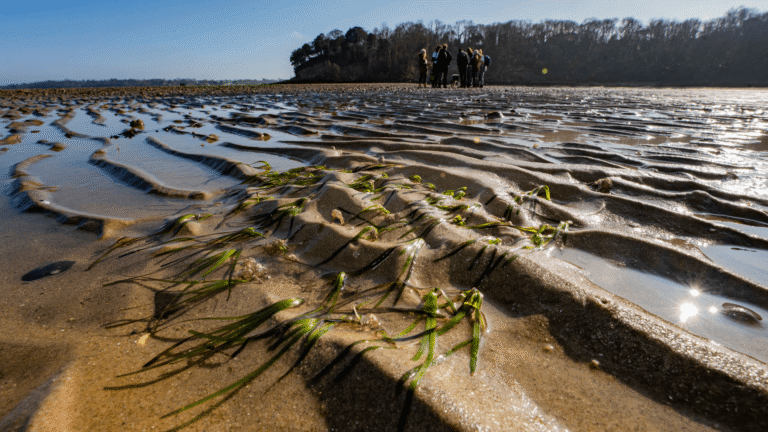
Noltii leaf - Charles Bagshaw

Accelerate Seagrass: Exploring the process of site selection

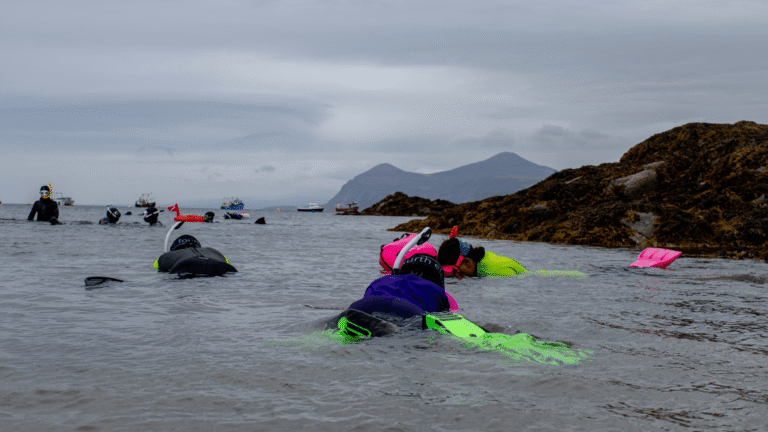
Accelerate Seagrass is a collaborative program being delivered by Climate Impact Partners, Deloitte, Project Seagrass, and the National Oceanography Centre which aims to support groundbreaking research into seagrass carbon sequestration and unlock long-term finance to save and reinstate vital seagrass meadows.   Part of this programme of work involves collaborating with community groups across Scotland to develop knowledge

Read More »
Two divers are taking seagrass cores from a seagrass meadow in Orkney as part of research into the biodiversity within these meadows.

Open Letter to Crown Estate Scotland. Scottish Seagrass Collaborative Response to: Approach to Marine Enhancement Proposals (issued November 2025)

The Scottish Seagrass Collaborative, responds to Crown Estate Scotland’s Approach to Marine Enhancement Proposals: We write as marine scientists, restoration practitioners, and organisations working across Scotland’s coasts and seas, in response to Crown Estate Scotland’s Approach to Marine Enhancement Proposals. We welcome Crown Estate Scotland’s commitment to responsible stewardship of

Read More »
REFLECTION ON COASTAL FUTURES 2026

From conversation to commitment: reflections on Coastal Futures

Two weeks ago, I joined colleagues and collaborators at the Coastal Futures Conference at the Royal Geographical Society in London. The theme this year was ‘From Ambition to Action’, a sentiment that seems to be playing on repeat across the conferencing world with, with yet and seemingly as always, not

Read More »
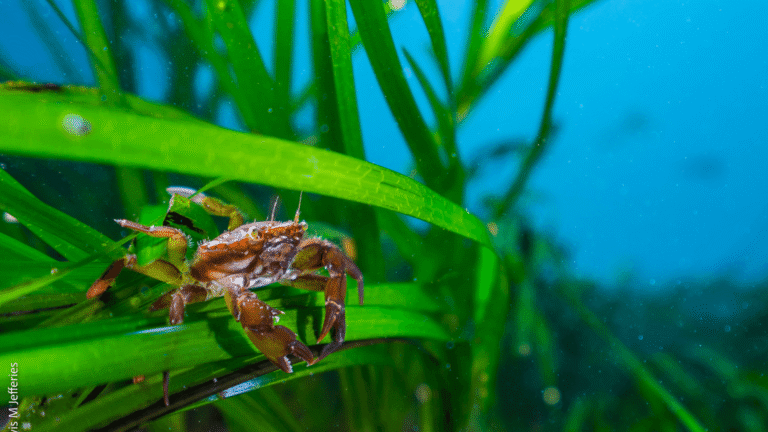
Green shore crab in seagrass

Shore crab – Creatures that call seagrass home

In this blog series, our Conservation Trainee Abi David explores some of the amazing creatures that call seagrass meadows their home. The shore crab, also known as the green crab, are contentious within the seagrass world. They have important ecological roles within their habitats, but their tendency towards destruction and

Read More »
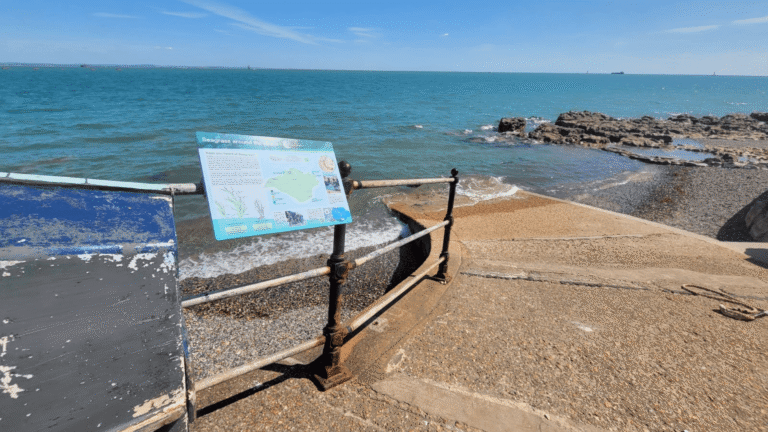
Map of the Solent. Credit Angela Harding

Songs from the Solent: New album by Richard Walters celebrates local community, culture, and the fight to restore coastal nature

Grammy-nominated singer and Solent Seascape Project collaborate with Jeremy Irons and Angela Harding to celebrate and protect the region’s coastal habitats.  The Solent Seascape Project, of which Project Seagrass is a partner, has launched Songs from the Solent, a new EP by Grammy-nominated singer and songwriter Richard Walters that uses music to spotlight the Solent’s threatened coastal habitats

Read More »
Illustration of a seagrass meadow with a seahorse and a canada goose.

The forgotten meadows of Northern Ireland

Grace Cutler, one of our 2025-26 Project Seagrass interns, reflects on Rebekah Bajkó’s research, Coastal Roots: The History of Seagrass in Northern Ireland. Northern Irish Seagrass In November 2025, I attended the UK Seagrass Symposium, an exciting conference hosted every two years to highlight the current state of seagrass research

Read More »
A screenshot of the research paper "New directions for Indigenous and local knowledge research and application in fisheries science: Lessons from a systematic review" overlain on an image of seagrass in North Wales
new science

Indigenous and Local Knowledge in Fisheries Science

Seagrass meadows play a critical role in keeping our oceans healthy and stocked with food, providing valuable nursery habitat to over 1/5th of the world’s largest 25 fisheries. Seagrass meadows are also important to small-scale fisheries, particularly as a place to find and collect a reliable source of food with some

Read More »

Coastal Communities Network Gathering 2024

Earlier this month Project Seagrass’ Senior Conservation Officer Katy Waring attended the yearly gathering for coastal communities from the Coastal Communities Network  facilitated by Fauna and Flora International. The event was held on the island of Millport at their field studies centre.   The 3-day event was inspiring; groups from around

Read More »
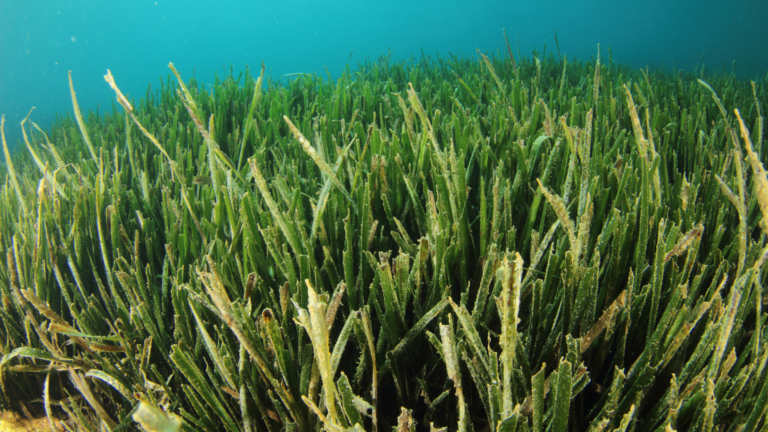
From left to right: View of the STARESO harbor entrance with Posidonia meadow islands and an accumulation of dead leaves. Close-up of litter accumulation. Experimental benthic incubation device ('bell') installed on accumulations of Posidonia dead leaves (10 m deep). Credit: G.Lepoint & W. Champenois / ULiège
new science

Dead leaves in sea break down into a compost that produces oxygen

Researchers from the University of Liège (BE) studied the fate of the material produced by Posidonia seagrass meadows. This study, carried out in the Mediterranean Sea at STARESO, shows that the dead leaves of what is commonly known as Neptune grass accumulate in shallow areas, where they break down like

Read More »
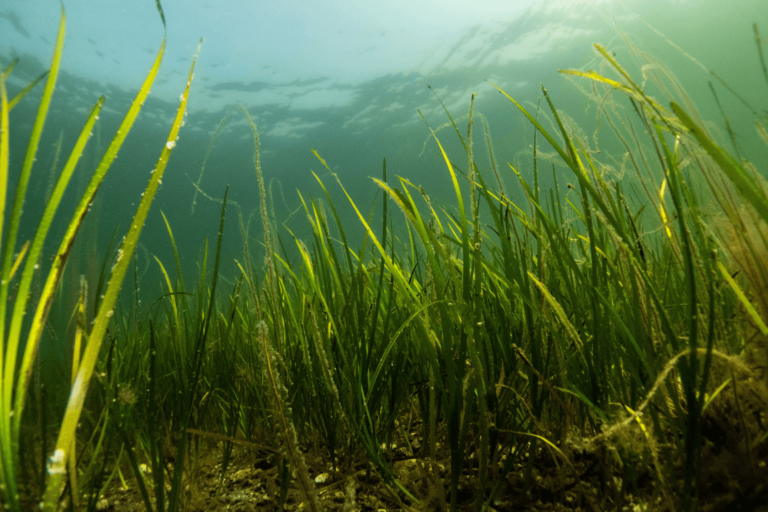
Seagrass in Orkney

Climate Impact Partners and Deloitte Join Forces to Unlock Large-Scale Seagrass Recovery Financing

Climate Impact Partners and Deloitte, in collaboration with Project Seagrass and the UK’s National Oceanography Centre, announce a groundbreaking program to fund UK seagrass recovery and unlock long-term finance to save and reinstate vital seagrass meadows. The program will fund critical research across UK seagrass meadows, mapping the ecosystems and developing methods to restore them

Read More »
Neil is standing on board Project Seagrass' boat Gwen. He is wearing a hat, sunglasses, and a red coat.
Volunteer

Seagrass Ocean Rescue Volunteer Profile: Neil

The Seagrass Ocean Rescue North Wales programme relies on the commitment and enthusiasm of local volunteers. We spoke to regular volunteer Neil about his experiences of volunteering as part of the programme. Volunteer Interview Tell us a little bit about yourself: I grew up in North Wales, then moved around

Read More »