Keeping you up to date with Project Seagrass news and views with a mixture of field notes and commentary on seagrass and marine conservation topics.

By Elise Simone de Tourtoulon-Adams


The World Seagrass Association Inc. invites expressions of interest from members and interested organisations/institutions who would like to host the 15th International Seagrass Biology Workshop (ISBW) in 2024.The International Seagrass Biology Workshop series is a meeting of research scientists, students and coastal environment managers focusing on global seagrass issues, improving

By Elise Simone de Tourtoulon-Adams We held our first Global Seagrass Nursery Network meeting at the end of Seagrass Awareness Month. If you would like to watch the seminar, click here.

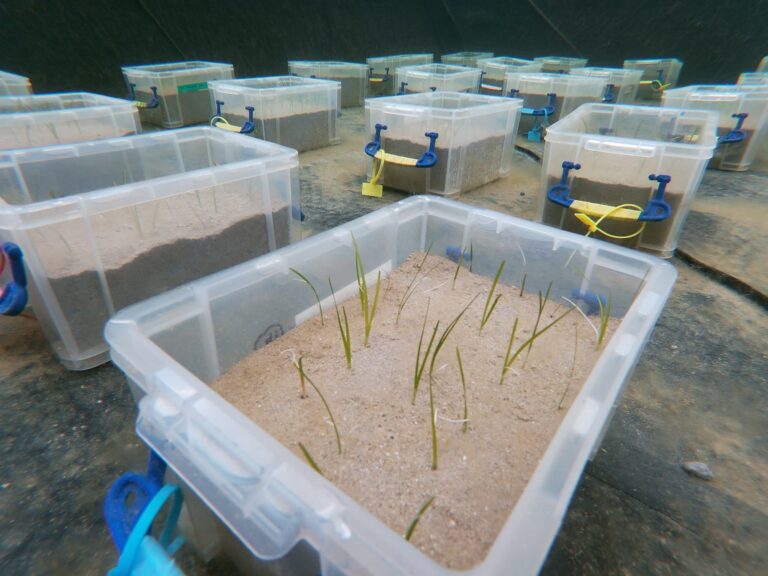
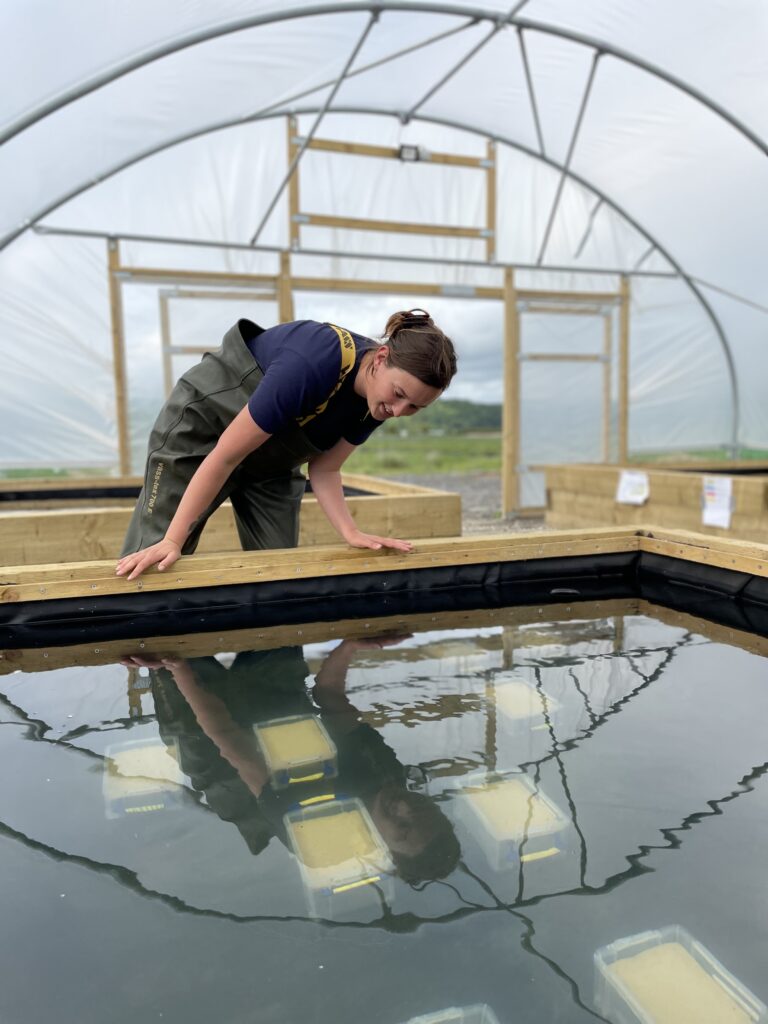
Intern Takeover – Planting trials in North Wales (February 2022) On Friday the 28th of January, a team of us started preparing for a week of fieldwork up in North Wales. A group of humans and one fluffy, four-legged companion (definitely the favourite member of Project Seagrass) helped fill 800


My name is Danny Rice, I am a 23 year-old Conservation Assistant at Project Seagrass. I began working for the charity in June 2021 due to the Government-funded Kickstart Scheme. Despite studying a Bachelor’s degree in Physical Geography and a subsequent Master’s degree in Climate Change, the COVID-19 Pandemic found

Guest blog by Lucy Wust Microplastics is a term that is worryingly on the rise in the media. They are found almost everywhere, and their polluting and damaging effects are felt heavily on marine environments. Can seagrass present a solution in our fight to tackle this widespread plastic contamination? What


In a new blog series, our Conservation Trainee Abi David explores some of the amazing creatures that call seagrass meadows their home. The Brent Goose Branta bernicla is of a similar size to a Mallard duck, making it one of the smallest goose species in the world. They are a

Our oceans and coasts are home to ecosystems that provide immense benefits to people, from food and livelihoods to carbon storage and coastal protection. In particular, seagrass meadows are archetypal social-ecological systems (SES), linking human well-being to ecosystem health. But to manage these systems effectively, we need access to both ecological

Beneath the surface of the Chesapeake Bay, a subtle but dramatic shift is taking place as eelgrass gives way to its warmer-water relative, widgeon grass. A new study from researchers at William & Mary’s Batten School & VIMS shows that this seagrass swap could have ecological impacts across the Bay’s

Seagrasses, foundational species in coastal ecosystems worldwide, are surprisingly few in documented diversity—with only about 70 species identified globally, despite their widespread distribution and ecological importance. Complicating matters, their high phenotypic plasticity within species makes precise classification challenging. Against this backdrop, a research team led by Prof. Zhou Yi from

The Project Seagrass team have had another busy summer of seagrass seed collections! This year collections took place in Yarmouth, Ryde, and Bembridge on the Isle of Wight in the Solent, and in Porthdinllaen in North Wales. Find out more about how this summer’s collections went: Solent Seed Collection |

Dr Richard Unsworth, Chief Scientific Officer at Project Seagrass, along with 35 other leading scientists from across the UK, responds to proposals from the UK government to make licensing for marine restoration more complex and costly. Dear Rt Hon Steve Reed OBE MP and team, This letter sets out our