Category: Blogs

Seagrass Provides Easter Eggcitement

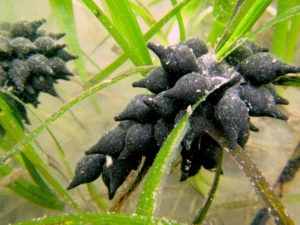
Seagrass meadows provide a suitable environment for eggstraordinary creatures to lay and secure their weird and wonderful eggs. As its Easter, we thought it would be a nice opportunity to introduce you to eggs that can be found in seagrass meadows around our coast. Cuttlefish eggs or “sea grapes” attached

Read More »

Project Seagrass Launch – Thank You

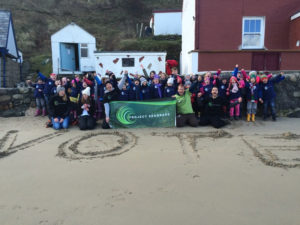
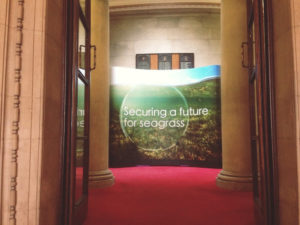
Yesterday evening, we hosted our official Project Seagrass launch event and its safe to say it was a blast. We were excited and thrilled to see so many faces, some old and some new – we couldn’t be sure how many of you would make it despite the RSVP! Back

Read More »

A Glimmer of Hope for Seagrass in the Wakatobi National Park?

Back in December 2015 I spent a couple of weeks in the Wakatobi, Indonesia, initiating phase II of the Wakatobi Seagrass Program. This seeks to build on work carried out though a previous project “Recognising the role of seagrass meadows in food security: re-prioritising the marine conservation agenda” (2011-2014), which

Read More »

Restoring our Damaged Seagrass Meadows

When you think about areas requiring bold initiatives to protect the environment, the small Welsh costal village of Porthdinllaen might not be the first place that comes to mind, and with only two dozen buildings and a miniscule population you might find it surprising that the environment there is under

Read More »

CERF 2015 – Grand Challenges in Coastal and Estuarine Science

A long-standing tradition of Coastal and Estuarine Research Federation (CERF) conferences is the friendly and collegial environment and the unwavering support for early career scientists. This #CERF2015 was no exception with a multitude of leading marine scientists inspiring the next generation with #OceanOptimism as together we tackle the Grand Challenges

Read More »

Starting the Seagrass and Dugong fightback

  The Dugong (Dugong dugon) is IUCN Red listed as Vulnerable, in many of the 46 range states that contain Dugong its status is a lot worse. Historic hunting, loss of its seagrass habitat and the impacts of by-catch have been the primary causes of its decline. Back in 2007 the

Read More »

Registration for the 12th International Seagrass Biology Workshop is Now Open!

The International Seagrass Biology Workshop (ISBW) is the only international meeting specifically tailored to seagrass scientists, professionals and students. Abstract submissions are now open as are proposals for workshops. All payment is via PayPal using credit/debit cards. There is one registration fee. It covers access to all parts of the conference program, including the

Read More »

Seagrass Provides Easter Eggcitement

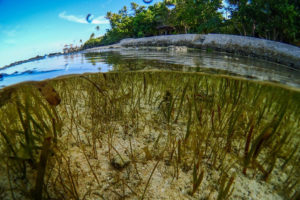
Seagrass meadows provide a suitable environment for eggstraordinary creatures to lay and secure their weird and wonderful eggs. As its Easter, we thought it would be a nice opportunity to introduce you to eggs that can be found in seagrass meadows around our coast. Cuttlefish eggs or “sea grapes” attached to blades of Zostera marina (Photo: Michiel Vos | www.anbollenessor.wordpress.com) The charismatic cuttlefish, Sepia officinalis, is a common visitor to seagrass meadows around the British Isles. Each spring, cuttlefish migrate inshore to shallow bays and estuaries to mate, where the females their eggs. The small black eggs are usually set in bunches, and because of their appearance, are generally called “sea grapes”. These eggs are all of a similar size, about 15 to 25 mm long and can be found beyond the low spring tide mark attached to seagrass blades. Once hatched, these eggstra special creatures are the size of a finger nail and can regularly be seen hiding amongst seagrass leaves during summer months. Netted dog whelk egg sacks on Zostera marina (Photo: Paul Kay) Another special type of egg found in seagrass is that of the netted dog whelk, Nassarius reticulates. These miniature egg capsules are generally vase-shaped and usually attached in rows on seagrasses leaves. The transparent capsules have up to 300 eggs each and after a month they hatch into larvae that live in the plankton for two months. Three sea hares (Aplysia punctata) whithin a Zostera marina meadow, above (Photo: Michiel Vos | www.anbollenessor.wordpress.com) and sea hare egg srings, below. Not quite the Easter bunny, but the sea hare, Aplysia punctata, is also a common sight amongs seagrass leaves. This large mollusc is typically found on the sea-bed grazing on algae, often amongst seagrass where they leave their yellowish pink egg strings during the autumn-spring breeding season. Large egg masses from shelled Ophistobranch can also be spotted on leaves. Why not try a different kind of egg hunt this Easter. Happy hunting.

Read More »

Reflecting on the #PeoplesProjects: We’ll continue to push for “Mission SEA”

Back in 2015 we entered the #PeoplesProjects, a competition held by the Big Lottery Fund and ITV to win up to £50,000 of National Lottery money. The Peoples Projects aimed to give organisations the chance to build upon previous projects they had completed with help from the Awards For All funding scheme. At the time we didn’t even expect to make it past the first round, but you’ve got to be in it to win it, right? We thought long and hard about how Project Seagrass could make a difference to peoples lives. Although as an organisation we’re devoted to conserving seagrass ecosystems, it’s a well known fact that we depend on our marine environment. For this reason we came up with Mission SEA, which aimed to bring the ‘coast to the classroom’ and the ‘classroom to the coast’ to engage Wales’ children with our marine natural heritage. The education scheme we proposed, which would have involved 15,000 children from the counties of Gwynedd, Ceredigion and the Isle of Anglesey, sought to teach children about the resources that our seas provide, whilst inspiring them to become future guardians of our oceans. Mission SEA is about inspiring children to protect our marine environment We were absolutely delighted to make it to the final 5, and after a tough two weeks of campaigning, we’re gutted to say that we didn’t make the top 3. The other projects we were up against were as deserving as any and we wish them all the very best for the future. Reflecting on our campaign, we’ve learnt a lot, and regardless of whether we won or not, we valued the experience, exposure and support more than anything. The support we gained for our project was overwhelming and we’d like to thank each and every one of you that voted for us. Although we didn’t receive the £50,000 we needed, our Mission SEA isn’t over yet! Seagrass meadows around our British Isles have recently been shown to be in a ‘perilous state’. Mission SEA is more than a project; it’s built on a philosophy that education is key to saving our planet. By focusing on seagrass, the importance of marine habitats can be explained using things that children understand, from the golden sand of our beaches to the range of fish in our chip shops. Seagrass is an ideal focus because it’s important for sustaining our fisheries and absorbing vast amounts of CO2, whilst also providing a home for charismatic animals like seahorses. Education is key to saving our planet – getting children outdoors to experience nature is part of this. Green space is widespread across the UK and although it’s recommended schools should be ensuring that primary age children experience visits or are engaged with nature, a recent government funded study revealed that over 10% of children in England have not set foot in a park, forest, beach or any other natural environment in the last year. There is substantial growing evidence linking the natural environment with good physical health and psychological wellbeing and the ‘Biophilia Hypothesis’ states that the desire for contact with nature is partly innate. Our wealth as a nation and our individual wellbeing depend critically upon the environment. The marine environment provides us with resources essential for life and seagrass provides the processes that purify the air and water. The Welsh coastal environment alone supports over 52,000 jobs, provides around £5 billion total income to businesses in Wales and contributes to around £1.5billion of GDP to the economy of Wales. These values are hugely significant, yet the marine environment and the services it provides us are still under appreciated. There is a great potential to further increase these values through inspiring habitat and biodiversity conservation. As both physical activity and nature can positively affect wellbeing we hope that Mission SEA has the potential to leave a legacy, stimulating the next generation to appreciate the benefit of our natural coastline, while inspiring action for marine habitat and biodiversity conservation for the communities that depend on them. To Project Seagrass, the Peoples Projects was never a competition, it was never about winning or losing. We saw it as an opportunity for us to develop as an organisation, to grow stronger, more committed to our goal! Although we didn’t win the £50,000, we didn’t lose either. We’ll continue to push for our Mission SEA, to fight for the environment with no voice, and we’d love to invite you to join us. “In the end, we will conserve only what we love, we will love only what we understand, and we will understand only what we are taught.”

Read More »

Project Seagrass Launch – Thank You

Yesterday evening, we hosted our official Project Seagrass launch event and its safe to say it was a blast. We were excited and thrilled to see so many faces, some old and some new – we couldn’t be sure how many of you would make it despite the RSVP! Back in 2012, as merely a seed (excuse the pun) in the minds of Benjamin Jones and Richard Lilley, the duo had no idea that this seed would develop into the fruiting body that is, Project Seagrass. With guidance from Richard Unsworth and later on, Leanne Cullen Unsworth, Project Seagrass embarked on a journey to develop a unique marine conservation charity, a proudly Welsh entity, with a global vision to make an impact on marine conservation. BBC’s Dr Rhys Jones officially launched the evening giving insights into where he first came across seagrass and how amazed he was by it (Photo: Josephine Wilde) The Project Seagrass journey, like seagrass itself, seems to have developed with a life of its own, slowly expanding its root system ensuring that its gone from strength to strength. The launch last night couldn’t have been possible without the partners that we’ve rooted ourselves with. Swansea University, and particularly SEACAMS, has been integral to our achievements to date, as has Cardiff Universities Sustainable Places Research Institute, whom without, last night would not have been possible. It also couldn’t have been possible without you. Without your support we would not be where we are today! We were genuinely moved to see so many of you taking an interest in Project Seagrass and caring so deeply about what we do. To those that came, we hope you enjoyed the experience, and that the crowd we managed to gather was a special mix of interesting people. We now have a chance of winning some much needed funding to continue our work and we’d be delighted to have your support once more. www.thepeoplesprojects.org.uk/projects/view/mission-sea-inspiring-children-to-protect-our-sea The Project Seagrass quiz gave people a chance to really think about some of the services thats seagrass provide, and why theyre important (Photo: Josephine Wilde) The evening was a chance to let people learn about some of our projects, like the newly released SeagrassSpotter app (Photo: Josephine Wilde) An array of resouces were available to look at, including our seagrass colouring book, a vital part of our SEA Programme (Photo: Josephine Wilde) It was a chance for people to learn (Photo: Josephine Wilde) Project Seagrass Director, Richard Unsworth, chatting to guests about our work (Photo: Josephine Wilde)

Read More »

International Women’s Day – “Planet 50-50 by 2030: Step It Up for Gender Equality” #pledgeforparity

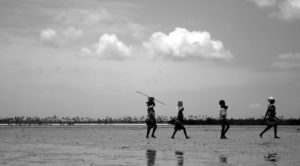
Today, the 8th March 2016, is International Women’s Day. The UN’s International Woman’s Day theme for 2016 is “Planet 50-50 by 2030: Step It Up for Gender Equality”; in addition, an independent campaign, separate from the UN, is being run by financial firm EY (with other corporate partners) which is organising events around a #PledgeForParity hashtag. Today is of course a day to celebrate the social, economic, cultural and political achievement of women. Yet it is also a day to raise awareness of the need to urgently address gender inequalities, and take action to accelerate gender parity. In 2014, the World Economic Forum predicted that it would take until 2095 to achieve global gender parity. Then one year later in 2015, they estimated that a slowdown in the already glacial pace of progress meant the gender gap wouldn’t close entirely until 2133! This is, of course, completely unacceptable. We can, and must, pledge today to take a concrete step to help achieve gender parity more quickly. For Project Seagrass it must be about helping women and girls achieve their ambitions, calling for gender-balanced leadership, and creating a culture where we respect and value differences. We must aim to develop an inclusive and flexible culture within our charity and to root out workplace bias, be it conscious or unconscious. At Project Seagrass each of us can be, and has been, a leader at different times and that is something that should be celebrated. For us, International Women’s Day is about publicly committing to take pragmatic action to accelerate gender parity within both our organisation, but also within our work. A women ventures home with fish that she has caught in coastal seagrass meadows of norther Mozambique (Photo: Benjamin Jones) We work in numerous regions across the globe and there is a common theme to all of them – a paucity of statistics available relating to the number of women involved in fisheries-related work, even though it is understood by all of us that women play critical roles in the sector. The roles that women play in the fisheries we work with often incorporate a wide range of activities, but these vary in time and place. Unfortunately, from what little research that has been done, much of the data does not capture the true multi faceted nature of work undertaken by women in fishing communities, and therefore even today few policies are formulated with the work conducted by women in mind. Indeed, it can be argued that the common thread that ties women who work in fisheries together globally is that their work is rarely seen as “productive”. Time and again it is perceived as having a low social value, often being seen as an extension to the “domestic” space and not productive work in its own right. In Northern Mozambique, Women are a key part of coatsal seagrass fisheries (Photo: Benjamin Jones) In reality, however, women contribute hugely to global fisheries; even in their marginailsied position, they often manage to perform multiple roles that straddle the home, the family, the community and the workplace. We must celebrate womens’ capacity to perform roles of both production and reproduction and create the social and cultural norms that recognize the values of these roles. Too often the production of life (reproduction) is not recognized as valuable, economic productivity and yet it is intrinsic to sustainable growth and development! We must redefine what is valuable by addressing the inequalities that exist between men and women, and it is here that we must #pledgeforparity In the spirit of celebration of International Women’s Day we would like to take this opportunity to thank both of our interns; Laura Pratt in Cardiff, and Lauren Clayton in Glasgow for all their hard work to date and for their contribution to what has been a great year of growth and development of Project Seagrass so far! We’d also like to thank our Director Leanne Cullen-Unsworth for her leadership and vision and we wish her well on her maternity leave. We’d also like to recognize both the ‘productive work’ (carrying BRUVs) and invisible emotional support of our partners in being patient with us driving the Project Seagrass agenda and making Project Seagrass what it is today. Thank you, and happy International Women’s Day to you all! Project Seagrass interns Lauren and Laura flying the UAV (Photo: Benjamin Jones) Project Seagrass Director Leanne Cullen-Unswort mapping seagrass in Wales (Photo: Richard Lilley) Sarah Jane Pope carrying monoBRUV platforms 5km across the island of Lipsi (Photo: Richard Lilley) PS – A reminder of our official launch this Wenesday the 9th March 2016

Read More »

A Glimmer of Hope for Seagrass in the Wakatobi National Park?

Back in December 2015 I spent a couple of weeks in the Wakatobi, Indonesia, initiating phase II of the Wakatobi Seagrass Program. This seeks to build on work carried out though a previous project “Recognising the role of seagrass meadows in food security: re-prioritising the marine conservation agenda” (2011-2014), which was conducted in the same location. That project evidenced the direct economic value and food security potential of seagrass meadows and prompted local government and community stakeholders to place seagrass on their conservation agendas for the first time. The Wakatobi project demonstrated how seagrass associated species provide an essential source of protein and income to the vast majority of people in the region. We provided evidence of the links between seagrass and food security and highlighted that these currently expansive ecosystems remain largely ignored within formal legal or environmental management frameworks, even within an MPA at the heart of the Coral Triangle. Seagrass meadows provide an essential source of protein and income to the vast majority of people in the region. The outputs from the first project are being used to drive forward discussions between local stakeholders to bring about change. And although their value is somewhat recognised in the Wakatobi, these expansive ecosystems are threatened by a myriad of anthropogenic activities. The host of threats at play within the Wakatobi range from mangrove destruction to overfishing and aren’t going to disappear overnight. Phase II of the Wakatobi Seagrass Program seeks to work on these threats through local, community level action, and devising strategies to work with formed the basis of my trip. Seagrass meadows across the Wakatobi are threatened by a host of factors. Overfishing has left many meadows lifeless. As communications developed with our local partner, FORKANI, it seemed clear that one of the issues they felt was dominant, was the issue of run-off. Terrestrial run-off causes huge problems for seagrass through both sedimentation and eutrophication, and as the destruction of mangroves (15% of mangrove forest has been destroyed by local community members seeking firewood and construction materials) and forest areas continues, the ability for land to absorb and store water lessens. Given this, FORKANI proposed an exciting idea to rehabilitate both mangrove and forest areas around rivers in 3 key villages, not only to reduce impact on seagrass but to improve the continually worsening problem of water storage on the island of Kaledupa. However, with so much forest now converted to palm plantations, choosing areas to rehabilitate wasn’t going to be an easy task, and choosing areas that were key was even harder. FORKANI were amazingly resourceful when it came to the practicalities of choosing locations, mapping each river in a way that made it easy to pin point areas that needed the most work. Sometimes working the old fashioned was has its perks, and the relative ease in which they categorised each river was efficient and effective. FORKANI have now chosen areas to rehabilitate and are currently working on preparing the areas and seedlings, while also beginning to monitor seagrass in front of each village to track their own progress. Conducting river mapping was efficient and effective and allowed FORKANI to choose key areas for rehabilitation Even though discussions were productive, overfishing is still the “elephant in the room” that nobody wants to talk about. Although dynamite and cyanide fishing are now almost absent across the national park, at least that’s what we’re told, the unsustainable removal of juvenile fish is still a widespread issue. Fish fences, or “sero” as they are locally called, are one of the biggest issues facing the Wakatobi National Park and tentative UNESCO World Heritage Site. These fish fences, scar’s upon the face of the park’s beauty, fish 24/7 and, as we’ve discovered, are not only restricted to seagrass meadows. Fish fences have left both reefs and seagrasses looking like barren wastelands. Fishing 24/7. The Sero are non selective and never stop fishing Tackling the overfishing problem will take time, but by tapping into the past, we can begin to improve the future of the Wakatobi’s coastal fisheries. For centuries, isolated communities across the globe have respected a delicate balance with the ocean — taking fish only from certain areas, of certain sizes and with specific methods to maintain a healthy ecosystem and supply of fish for present and future. Now, with two key fishing villages keen to work on adopting community managed no-take areas there is some serious hope for the future. This solution, which builds on and adapts successful fisheries management techniques, provides a win-win for coupled socio-ecological systems, protecting fishers wellbeing as well as the health of marine ecosystems. Systems like this, that are well-managed, result in more fish — and not just by a few. By adopting this formula, and continually managing their fishery, communities can expect to see a potential increase of up to 56 percent in fish abundance and a potential increase in yield of up to 40%. In 2006, then Indonesian President Susilo Bambang Yudhoyono made a hugely ambitious promise to conserve a “global epicentre of marine life abundance and diversity”, stating that Indonesia would preserve 10 million hectares of ocean lying in the Coral Triangle. In 2009, he doubled this commitment to 20 million hectares by 2020. The the 1.39 million hectare Wakatobi National Park contributes to the 16.6 million hectares already protected – but given the status of seagrasses and the vast overfishing problem, serious questions about the meaning ‘protected’ arise. Is the Wakatobi destined to become a site of World Heritage value or just a wasteland? The Wakatobi’s communities are centre to answering this question. Although their sense of ownership always has been present, with these proposed mitigation measures being taken a little more seriously by communities, its clear that with a little motivation the people of Kaledupa can be tremendously proactive. This gives us a glimmer of hope for seagrass in this dynamic region of the world. The future of the Wakatobi is dependent on its communities, yet the

Read More »

New Year New Challenges: 2015’s highlights and what’s in store for 2016

We’d like to start 2016 by saying a big thank you to everyone that’s been with Project Seagrass for its 3rd year, which has without a doubt been our most successful yet. From urging the government to consider important UK seagrass areas to receiving charity status; from kicking off monitoring at our first long term SeagrassWatch site to starting the first ever seagrass restoration trial in Wales, its been quite a exciting year. We’re very proud to be helping the fight to protect our seagrass for the future. However, none of this would be possible without your support, our partners and sponsors, the help of a number of volunteers, and the generosity of the public. The last 3 years have seen Project Seagrass evolve from merely a seed in the mind of its founders to a full blown environmental charity. Some of the highlights of the year include: Response to the consultation process on Marina Conservation Zones (MCZs) Back in early 2015 we were proud to offer our response urging the government to protect important seagrass habitats around the UK. In the response we requested that DEFRA reconsider its exclusion of Bembridge, Norris to Ryde, Studland, and Yarmouth to Cowes from the 2nd tranche of MCZs. In our survey of seagrasses around the British Isles only two sites were found not to have been impacted by poor water quality and additional studies utilising GoogleEarth and site visits have revealed the extent of the threats imposed by the impact of inappropriate moorings throughout the UK. Examples of the degradation that current mooring practice causes can be seen at Studland Bay, Poole Harbour, Salcombe and around the Isle of Wight. Although in the round of proposed MCZs, the seagrass meadows at Nettle and Mount Bay were included, neither are extensive nor particularly threatened. Adding protection to both of these sites may help in the long-term but is unlikely to have any immediate effect on their management or conservation; effectively these sites are ‘easy wins’ for MCZ creation as neither spots have particular value for alternative uses. By contrast, seagrass meadows surrounding the North and East of the Isle of Wight and throughout the Solent are under extreme pressure, and these were not included. We’re still fighting for their protection. Charity Status One of our pivotal moments in 2015 was being re-constituted as an environmental charity. We celebrated this with the release of a brand new website and the start of a new “ForCodsSake” campaign. Receiving charity status has been a huge step forward for us helping us to deliver more effective projects, form stronger partnerships, increase public engagement and improve our impact to protect the marine environment. SeagrassWatch monitoring at Porthdinllaen 2015 saw us start long-term monitoring of seagrass condition at Porthdinllaen, using an internationally acknowledged methodology from our friends at SeagrassWatch. Monitoring started with our Spring Survey in April, followed by a Summer survey in August and an Autumn Survey in November. World Oceans Day and World Environment Day To celebrate World Environment Day, World Oceans Day, and to promote our Seagrass Education and Awareness Programme we held a number of fun activities Haven’s Hafan Y Mor Holiday Park in Pwllheli, North Wales. Although Hafan y Mor is home to one of Wales’ largest seagrass meadows, right on its doorstep, those at the campsite were unaware it was there. Children throughout the campsite contributed to painting a seagrass mural including a variety of fish and sea creatures. At low tide there was even an opportunity for the children to have a look at the seagrass meadow. We saw it as a great opportunity to educate the general public about the importance of seagrass and discuss the benefits to the wildlife, people and the planet. Restoration Trial In late 2015 we begun the first ever seagrass restoration trial in Wales with the hope of developing a novel method to restore our damaged seagrass meadows and consequently help support our declining fisheries. Interest in seagrass restoration in the UK is increasing as the value of seagrass ecosystems is recognized by scientists, managers and regulators. However, despite this interest action remains limited. The UK Biodiversity Action Plan for seagrass beds specifically details the restoration of 1000 hectares of seagrass during 1997-2010. Transplantation trials in the 1980’s, the early 1990’s and in the last two years were carried out around the south coast of England, but with little success in the long-term. No seagrass in the UK has been restored to date. During our 2015 summer SeagrassWatch survey we collected a number of Zostera marina shoots laden with seeds. Having let the seeds harden and mature within their seed pods in the aquaria at Swansea University we then sorted the seeds and placed them into hessian bags, ready for planting. During our autumn 2015 SeagrassWatch survey we buried these bags in areas of bare sediment and will check the progress during our 2016 winter, spring, summer and autumn surveys. Despite some poor survey conditions, we planted over 1,500 seeds. If this trial is successful we hope to continue and expand the restoration trial across Wales introducing seeds from other areas to create a genetic mix that allows for hardier and more resilient seagrass meadows in the face of environmental stresses, such as climate change. Acting Local to Save Global The Project Seagrass team were quite busy on the global front throughout 2015. In August I visited Puttalam Lagoon, Sri Lanka to conduct a pilot survey investigating the role of seagrass meadows in providing food security for communities living around the lagoon. The research, conducted in conjunction with the Sustainable Places Research Institute, is throwing out some interesting and alarming findings with regards to by-catch and the use of destructive fishing gear in the area. Richard also visited Sri Lanka back in October, but with a different goal, where he, along with partners from Mozambique, Vanuatu, Madagascar, Sri Lanka, Indonesia, Soloman Islands, Temor Leste, and Malaysia, attended a workshop to discuss how local partners could develop projects aimed at promoting the conservation of seagrass

Read More »

Restoring our Damaged Seagrass Meadows

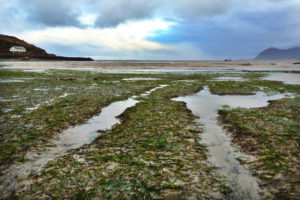
When you think about areas requiring bold initiatives to protect the environment, the small Welsh costal village of Porthdinllaen might not be the first place that comes to mind, and with only two dozen buildings and a miniscule population you might find it surprising that the environment there is under threat. Porthdinllaen is a part of a marine conservation area called Pen Llŷn a’r Sarnau Special Area of Conservation (SAC) which extends from Nefyn, on the north coast of the Llŷn, to Clarach, about a mile north of Aberystwyth. The presence of seagrass within the SAC is one of the reasons the area is so special. Due to its location, sheltered from all but north-easterly winds, Porthdinllaen is the perfect place for seagrass to grow and as such the seagrass meadow there is thought to be the largest and densest in Wales covering an area the size of 46 football pitches. However, its natural sheltered location also makes it an ideal natural harbour, and it is here where the problems lie. The sheltered harbour, the only such haven on the Llŷn Peninsula, has been used for many centuries as a place to run to for shelter in a storm offering safe anchorage. It is now a lively, but small fishing port with around 90 moorings, each of which is having a negative effect on the seagrass meadow. Damage of boat moorings within the seagrass meadow at Porthidinllaen It’s estimated that around 10% of the seagrass at Porthdinllaen has been lost due to moorings alone, but moorings aren’t the only problem. Anchoring within the seagrass meadow is also a common sight. By far the biggest concern within the extensive intertidal seagrass meadows of the site are tractors and 4×4 vehicles, which routinely cross the seagrass to retrieve the fishermen’s catch. These issues fragment the seagrass causing it to become patchy and no longer a continuous area of habitat for fish. Fragmented meadows are more vulnerable to the effects of erosion. Tractor damage to the Porthdinllaen seagrass meadow Not all doom and gloom! Its not all doom and gloom though, Project Seagrass has now begun the first ever seagrass restoration trial in Wales with the hope of developing a novel method to restore our damaged seagrass meadows and consequently help support our declining fisheries. Interest in seagrass restoration in the UK is increasing as the value of seagrass ecosystems is recognized by scientists, managers and regulators. However, despite this interest action remains limited. The UK Biodiversity Action Plan for seagrass beds specifically details the restoration of 1000 hectares of seagrass during 1997-2010. Transplantation trials in the 1980’s, the early 1990’s and in the last two years were carried out around the south coast of England, but with little success in the long-term. No seagrass in the UK has been restored to date. Seagrass seeds ready for sorting During our 2015 summer SeagrassWatch survey we collected a number of Zostera marina shoots laden with seeds. Having let the seeds harden and mature within their seed pods in the aquaria at Swansea University we then sorted the seeds and placed them into hessian bags, ready for planting. During our autumn 2015 SeagrassWatch survey we buried these bags in areas of bare sediment and will check the progress during our 2016 winter, spring, summer and autumn surveys. Despite some poor survey conditions, we planted over 1,500 seeds. If this trial is successful we hope to continue and expand the restoration trial across Wales introducing seeds from other areas to create a genetic mix that allows for hardier and more resilient seagrass meadows in the face of environmental stresses, such as climate change. Planting the hessian bags at Porthinllaen

Read More »

CERF 2015 – Grand Challenges in Coastal and Estuarine Science

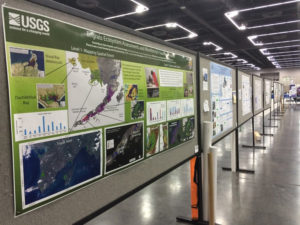
A long-standing tradition of Coastal and Estuarine Research Federation (CERF) conferences is the friendly and collegial environment and the unwavering support for early career scientists. This #CERF2015 was no exception with a multitude of leading marine scientists inspiring the next generation with #OceanOptimism as together we tackle the Grand Challenges together. This was despite a brilliant opening keynote by Berth Kerttula, Director of the National Ocean Council. ‘The Good, The Bad and The Ugly’ of marine problems! #CERF2015 was very active on social media, check out the hashtag To give you a quick history lesson, CERF conferences have been held biennially since 1971 with the aim of: ”…advancing human understanding and appreciation of the Earth’s estuaries and coasts, to the wise use and management of these environments and to making the results of their research and management actions available to their colleagues and to the public.” Such admirable ambitions are inline with our own at Project Seagrass and so CERF conferences are natural home for promoting our vision: “Our vision is that our marine ecosystems are healthy, well-managed and full of life.” At this conference a whole range of topics pertaining to seagrass meadows were discussed. Seagrass restoration techniques were presented by Per-Olav Moksnes, Louise Eriander and Eduardo Infantes of Göteborg University in Sweden, whilst Rohani Ambo-Rappe showcased us transplantation methods for seagrass restoration in the Indo-Pacific. Michael Rasheed from James Cook University, Australia was able to report on the protection of the Great Barrier Reef seagrasses. He presented work on innovative monitoring of seagrasses at high risk from coastal development. Similarly Len McKenzie (also of JCU) was able to report on the status of seagrass meadows adjacent to the highly urbanized city-state of Singapore. One of the most inspiring research projects to be discussed at CERF2015 must surely be the work of the Zostera Experimental Network (ZEN). Pamela Reynolds provided a summary of research into the biodiversity and complexity of seagrass functioning across the northern hemisphere. Such collaborative research is surely cause for #OceanOptimism!# There were some fantastic posters at the conference documenting a range of seagrass research topics. Yet it wasn’t just the established names who were doing exceptional seagrass research. There were over 700 students and early-career scientists at the conference who had produced some fantastic research and were contributing significantly to our global knowledge base. Not least Erin Voigt won best student talk ‪#CERF2015‬ for her work on the effect of structural complexity and biodiversity on seagrass ecosystem function. To all those involved in the hosting of the conference – thank you, and to all those who are conducting seagrass research – thank you! Keep up the good work and see you at ISBW2016. ‪#TeamSeagrass

Read More »

Starting the Seagrass and Dugong fightback

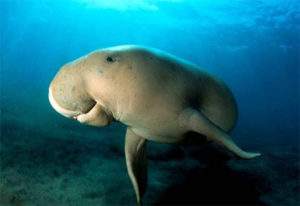
  The Dugong (Dugong dugon) is IUCN Red listed as Vulnerable, in many of the 46 range states that contain Dugong its status is a lot worse. Historic hunting, loss of its seagrass habitat and the impacts of by-catch have been the primary causes of its decline. Back in 2007 the Secretariat of the Convention on Migratory Species (to which Dugong is one) negotiated the signing of a Memorandum of Understanding on the Conservation and Management of Dugongs and their Habitats throughout their Range (Dugong MoU) between 7 of these 46 countries. The aim of which was to promote internationally coordinated actions to ensure the long-term survival of dugongs and their seagrass habitats throughout their extensive range. Since 2007, the Secretariat of the Convention on Migratory Species (CMS) has managed to persuade a total of 26 states to sign up to this MoU and hopes to expand this further with the intention of protecting this wonderful species and its important seagrass habitat. A major spin off from this MoU has been the development of a Global Environment Facility funded project that aims to support the implementation of this MoU by 8 of the 26 signatories. Over the few months I’ve been lucky enough to become part of this project, principally as a technical advisor on the ecosystem services of seagrass meadows and as a result attended the recent inception workshop in Colombo, Sri Lanka. Back in October, along with partners from Mozambique, Vanuatu, Madagascar, Sri Lanka, Indonesia, Soloman Islands, Temor Leste, and Malaysia I attended a workshop to discuss how local partners could develop projects aimed at promoting the conservation of seagrass and dugong. This workshop brought together a range of technical experts from the fields of dugong biology and conservation, seagrass monitoring and assessment, and applied conservation decision making. By enabling partners to critically consider the focus and methods of their respective projects, the aim of the workshop was to ensure that the investment of the Global Environment Facility has the greatest potential conservation impact. A nice example of this was how partners were provided with information and tools to consider (and reconsider) the most appropriate methods for mapping seagrass in their locations (see the Remote Sensing Online Tool Kit). Online toolkit for remote sensing of Seagrass It was great to discuss seagrass ecosystem services with partners from around the region, many of which are dealing with the same research questions and considerations that the work of Project Seagrass and SERG are currently investigating. In the Solomon Islands it was felt that local communities might not respond to conservation measures to protect Dugong, but that they would respond to measures aimed at protecting the habitat of the key local Rabbitfish fishery (seagrass) and indirectly help the Dugong. In Madagascar much the same issues were present, but the knowledge of the seagrass resources and their associated Dugong was at a very low level and needed to be improved. The Indo-Pacific seagrass species Halophila ovalis is a key food source for the Dugong, its soft energy rich roots and rhizomes are targeted above many alternative seagrass species. This project that is being managed through and co funded by the Mohamed bin Zayed Species Conservation Fund appears a once in a generation opportunity to start a fight back for Dugong and Seagrass in a region where ecological decline is so widespread. I sincerely hope that this project expands and becomes a wider success in order to inspire more countries to become involved and for more countries to sign the MoU.
Read More »

Registration for the 12th International Seagrass Biology Workshop is Now Open!

The International Seagrass Biology Workshop (ISBW) is the only international meeting specifically tailored to seagrass scientists, professionals and students. Abstract submissions are now open as are proposals for workshops. All payment is via PayPal using credit/debit cards. There is one registration fee. It covers access to all parts of the conference program, including the following: Shuttle bus from Bangor (on Sunday 16th Oct and Monday 17th Oct) and return on 21st and 22nd Oct. Welcome event Field trip (excluding option extra activities e.g. diving) Poster event Conference dinner Tea and coffee Additional local trips Onsite Wifi access Accommodation bookings will include all meals (approx. £95 pppn) and need to be paid directly to Nant Gwrtheyrn. See the Accommodation page here. For more information check out the registration page here.

Read More »