Category: Blogs

Project Seagrass goes to Cornwall

As masters students from both Swansea and Glasgow Universities, we’re both currently carrying out seagrass related research projects. Beth is performing her masters project, and Lauren is performing her final year honours project.  Beth is studying the impacts of chain moorings on seagrass, particularly looking at how chain width effects

Read More »

Intern Spotlight: Laura Pratt

As a third year Biology Student from Cardiff University, I’ve been lucky to get involved with Project Seagrass, which has its offices within the University. I first started working with the team last summer when I took part in an 8 week CUROP placement (Cardiff University Research Opportunities Programme) at

Read More »

Project Seagrass at the Glasgow Science Festival 2016

Launched in 2007, Glasgow Science Festival (http://www.glasgowsciencefestival.org.uk) has grown to be one of the largest science festivals in the UK. The festival takes memorable events to non-traditional venues across the City of Glasgow where researchers, charities and non-governmental organistations are able to engage with people, from all ages and backgrounds.

Read More »

Long Lost Seagrass & Our Spring Survey Report

During April I returned to the Llyn Peninsula, along with Project Seagrass directors RJ Lilley, Ben Jones and Richard Unsworth to conduct the Spring SeagrassWatch survey, 1/4 of the yearly seagrass monitoring survey that we’ve been conducting at Porthdinllaen for the past two years. In addition, we also checking seeds from Project ReStore and

Read More »

Flotsam and jetsam: The story of the fuzz ball

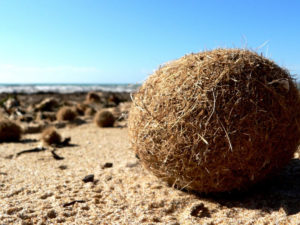
Are they aliens, are they dinosaur eggs, or are they just some ‘organic’ bath sponges that fell of the ship from China?These are the questions people might rightfully be asking when they come across numerous fuzzy round balls washed upon the beach. Well in the village of Inverallochy, North of

Read More »

A New Dawn For Scottish Seagrass

Seagrasses grow all around the coast of the UK and around our islands within the intertidal zone. Scotland plays host to the highest abundance of seagrass when compared to the rest of UK, this is due to the better water quality and also a higher number of available sheltered sites

Read More »

Intern Spotlight: Lauren Clayton

As a Marine Biology student at the University of Glasgow, Scotland, I was lucky enough to be accepted on to a Maters Work Placement. This course allows a few selected students to take a year between the 3rd and 4th year of their degree to experience working for an organisation

Read More »

Where is all the seagrass? Project Seagrass wants you to help!

Help us record the seagrass near you At Project Seagrass we created a conservation tool that could lead to new discoveries about one of the ocean’s most underappreciated habitats — seagrass. With our new phone app and website, Seagrass Spotter, ocean enthusiasts around the British Isles can become citizen scientists who

Read More »

Project Seagrass goes to Cornwall

As masters students from both Swansea and Glasgow Universities, we’re both currently carrying out seagrass related research projects. Beth is performing her masters project, and Lauren is performing her final year honours project.  Beth is studying the impacts of chain moorings on seagrass, particularly looking at how chain width effects the size seagrass scars. Beth uses a drop down camera frame and GoPro that she drops to the sea floor around moorings while snorkelling. Seagrass mooring scars in St Mary’s Bay, Isles of Scilly Lauren is studying the fish communities associated with Seagrass and non-seagrass habitats. Lauren drops baited cameras called BRUVs and leaves these for an hour, when the video is watched back the numbers and species of fish seen in the video are noted. Mono BRUVs ready to be deployed at Durgan, Helford Some of our first BRUV drops in Seagrass a couple of weeks ago resulted in us spotting a Cuttlefish, an amazing and unanticipated sighting! Last week we managed to get out on the Tigerlily, Cornwall IFCA’s research vessel to deploy some of the BRUVs in less accessible sites and also deploy some larger camera equipment. This week we have been to the Isles of Scilly to study the moorings in St Mary’s bay. We have managed to find some fantastic seagrass beds in the Helford River and Trefusis channel, and some great examples of seagrass scars too. Mono BRUVs ready to be deployed at Durgan, Helford So far the weather hasn’t been all that fantastic, but our last few days have been especially sunny, particularly the weather today in the Isles of Scilly, we’ve very much enjoyed being in the water for our research.  This has been our first time in Cornwall and it has been fantastic, it’s just a shame we’ve been too busy to actually have a look around and be tourists for the day! We’ve both said though that we’d love to come back on holiday to this beautiful part of the country in the future.

Read More »

Intern Spotlight: Laura Pratt

As a third year Biology Student from Cardiff University, I’ve been lucky to get involved with Project Seagrass, which has its offices within the University. I first started working with the team last summer when I took part in an 8 week CUROP placement (Cardiff University Research Opportunities Programme) at the Sustainable Places Research Institute. The project itself, focused on studying the role of seagrass meadows in fisheries productivity in the Philippines and mainly involved searching for research papers linked to the topic. Relevant information was then incorporated into a literature review which focused on the status, importance, threats and conservation efforts currently taking place within seagrass meadows of the Philippines. Any details on fish species found to inhabit to seagrass ecosystem specifically in the Philippines were also added to an extensive database, to track known species in the country. I then presented my findings in a poster presentation and had the opportunity to talk to other students at Cardiff University and members of the public about the importance of seagrass meadows in the Philippines. My poster, created as part of my CUROP placement  From this project, I have then gone on to study the status and distribution of another seagrass species, Zostera noltii, found closer to home, along the South Wales coastline. Z. noltii is one of the two seagrass species found in the UK and due to previous taxonomic confusion within the Zostera genus, there is a severe lack of understanding of the distribution of this species. Using historical records in the form of papers, reports and GIS layers I have been able to determine all the historical locations of Z. noltii found in Wales. This information along with details provided from Greg Brown’s (Project Seagrass Regional Ambassador) predictive mapping tool created for his MSc at Swansea University, has enabled me to generate a list of sites where Z. noltii has the potential to grow and survive. For my project, I have been visiting these specific sights and recording if Z. noltii is present or not, while also using out new Project Seagrass app, Seagrass Spotter (http://www.seagrassspotter.org). If Z. noltii is present I am then using various methods of ground truthing and aerial work using our Project Seagrass UAV, to generate accurate maps of the seagrass meadows, in hope that mapping the Z.noltii distribution will help aid its conservation in Wales. Extremely dense patches of Z. noltii observed in the Pembroke Dock Aerial image of dense seagrass meadow in Pwllcrochan, Pembrokeshire, taking on DJIGlobal Phantom 3. Drone work at Angle Bay with James Duffy, a PhD student from Exeter University. Whilst working for Project Seagrass I have also been able to get involved with some of the charity work aside from my own project, including taking part in multiple Seagrass-Watch surveys, in Porthdinllaen, North Wales. My first trip to Porthdinllaen in November 2015 was an unforgettable experience, seeing a Zostera seagrass meadow for the first time and being able to take part in Project Seagrass’s first seed restoration trial! I have also had the opportunity to participate in some of Project Seagrass’ educational outreach programs in North Wales, assisting and helping children from a local primary school understand the importance of seagrass meadows and learn more about some of the animals that live in their nearby ocean. I have thoroughly enjoyed this aspect to my placement, getting involved in other events such as Project Seagrass’ Mission Sea campaign for the People’s Project competition back in February and Project Seagrass’ official launch at Cardiff University, to help promote the charity amongst members of the general public. Furthermore, my placement year with Project Seagrass has given me the opportunity to get involved with some of the social media branding and simply helping to spread the Project Seagrass word. From writing blogs for organisations such as the Ian Somerhalder foundation to getting local volunteers and students from Cardiff university involved in seagrass sampling for my own research project. The Project Seagrass team is continuing to grow and I have loved teaching others about the great things Project Seagrass is doing to help protect this vulnerable marine ecosystem. I look forward to the rest of my placement here at Project Seagrass and hope to be just as involved next year when I return back to Cardiff University for my final year of my undergraduate degree.

Read More »

The 13th International Coral Reef Symposium – Bridging Science To Policy

The International Coral Reef Symposium (ICRS) is the primary international meeting for researchers who are focused on coral reef science and management. In fact, as a conference it has a similar ecosystem focus to the International Seagrass Biology Workshop (ISBW) that we will be hosting in Wales this coming October. The Symposium, held in Hawai’i last week brought together over 2,500 coral reef scientists, policy makers and managers from around 100 different nations in a forum to present the latest research findings, case histories and management activities, and to discuss the application of scientific knowledge to achieving coral reef sustainability. Coral reefs are one of our planets most bountiful ecosystems and they provide essential ecological, economic and cultural services to the people of tropical and subtropical islands and coastal communities worldwide. Coral reefs can be are a huge source of income to adjacent coastal communities through eco-tourist activities. Latest estimates suggest coral reefs provide close to US$30 billion each year in goods and services, so not only are do they support enormous biodiversity they are also of immense value to humankind. However, whilst scientific knowledge about coral reefs has increased exponentially over the past few decades, the state of reefs globally has declined during this period. Globally coral reef ecosystems are being degraded. Multiple stressors from the global actors of climate change, ocean acidification and overfishing to localized habitat destruction (above) are all contributing to habitat loss. To address this disconnect, the theme of the 13th ICRS was “Bridging Science to Policy”, with specific goals focusing on: Improving trust and communications among scientists, policy makers, managers and stakeholders. Developing strong partnerships between political leaders and the scientific community. Guiding efforts and strategies for effective allocation of limited financial, human and institutional resources to halt and reverse coral reef decline locally and globally. Developing a framework for quantitatively evaluating the effectiveness of coral reef protection and recovery activities and initiatives by applying the best available science. The ICRS is of course devoted to the best reef science available, with the purpose of sharing scientific findings with government agencies, resource management, and non-government organizations throughout the world. Such conferences are immensely important because they provide the international science community with a platform to: Increase global knowledge and interest in coral reefs, including sustainable use and conservation strategies; Showcase successful science, conservation and management efforts; Develop collaborations and partnerships to increase international capacity to address coral reef issues; and Increase global awareness of reef degradation and possible solutions by extensive promotion in the media. It is exactly through increasing global awareness and the developing of collaborations and partnerships that we as a global community are likely to address global challenges, and it is for this reason that so many scientists are being encouraged to take the Oceans Online. To conserve the world’s oceans we must go beyond just the production of science, but to also use it to inform policy and management, and ultimately to catalyze change. This change will only happen if we can reach out to all stakeholders, and work together with a common purpose, for many this means stepping up to the challenge of becoming public advocates for our natural environment. Many marine scientists are taking the #OceansOnline! Increasing global awareness of reef degradation whilst promoting possible solutions and #OceanOptimism. There are already many scientists who have taken this message to heart and produce a wonderful array of online media through which to inspire and engage. For example a fantastic summary of the ICRS 2016 conference can be found here and outstanding leadership from all the signatories of the conference (the 2,500 scientists at the ICRS) imploring Australia to protect the Great Barrier Reef here. So for all those involved in LIVE TWEETING from ICRS2016 – thank you! All that remains is to share and promote the ‘distilled down’ “Take-Home Messages” from the conference that are pertinent for us all to share in and acknowledge. These are: Reefs are threatened, not doomed Climate change, pollution and overfishing are the 3 drivers that ALL have to be addressed Local, pro-active interventions can help to build resilience of reefs to climate change, but reefs cannot be climate-proofed Prevention is better than cure, but recovery is possible Scientists can help by spreading the message that reefs can still be saved if we actually try harder! So let us also get to work! #TeamSeagrass

Read More »

Project Seagrass at the Glasgow Science Festival 2016

Launched in 2007, Glasgow Science Festival (http://www.glasgowsciencefestival.org.uk) has grown to be one of the largest science festivals in the UK. The festival takes memorable events to non-traditional venues across the City of Glasgow where researchers, charities and non-governmental organistations are able to engage with people, from all ages and backgrounds. This year Project Seagrass were there to help celebrate Glasgow Science Festival’s tenth birthday, as they rolled out a bumper birthday programme of events to inspire and enlighten. BRUV videos from Wales, Greece and Indonesia were shown to highlight the biodiversity of seagrass meadows across our planet. We were involved in the Science Sunday Big Birthday Bash which is their flagship family day, and so communicating the importance of seagrass to budding young scientists was going to be the aim of the game. With this is mind, we set up some laptops with some of our underwater video footage from seagrass meadows in Greece, Indonesia and Wales. Children loved the opportunity to witness life under the ocean, especially the swimming crabs of the Wakatobi National Park. Our outreach materials were made available which went down a hit with budding young scientists! Stickers, postcards and posters are always a hit with young folk too and so we made sure we had plenty of materials to hand out to Scotland’s next generation of marine biologists! Both the children and parents alike were also keen to touch and feel wetsuits, fins, and underwater camera equipment to get a ‘hands on’ insight into the equipment needed for conducting fieldwork. The festival was buzzing all day, testament to the hardwork of the GSF team in promoting the festival. However, the biggest hit with the children had to be our seagrass meadow, where kids could colour in a range of fish, crabs and other seagrass beasties to stick in our seagrass meadow. We were even able to communicate the importance of seagrass as a nursery habitat for coral reefs with our fish occasionally making the journey across the hall to the Glasgow Science Festival Coral Reef! Our seagrass meadow was producing a vast amount of marine life! Flounder? Is that you? Do I see a bit of Disney influence in our seagrass meadow? Many of our fish made the perilous journey across the room to the coral reef, I’m glad our nursery habitat was productive! To all those involved in the hosting of the festival – thank you, and to all those involved to delivering an activity – well done! Keep up the good work at Glasgow Science Festival and see you in 2017! #TeamSeagrass

Read More »

Long Lost Seagrass & Our Spring Survey Report

During April I returned to the Llyn Peninsula, along with Project Seagrass directors RJ Lilley, Ben Jones and Richard Unsworth to conduct the Spring SeagrassWatch survey, 1/4 of the yearly seagrass monitoring survey that we’ve been conducting at Porthdinllaen for the past two years. In addition, we also checking seeds from Project ReStore and also completed an additional survey at Abersoch. The aim of this survey was to officially record the presence of seagrass, specifically Zostera marina, in the area. I had previously found seagrass in this area whist undertaking my masters project, conducted with the support of Project Seagrass. During this project I created a spatial model that predicted seagrass distribution based upon the physical characteristics that are required for growth. It identified that this southern coast of the Llyn peninsula, particularly Abersoch, have the right conditions for seagrass growth. Map of areas where Zostera marina is predicted to grow After checking the general location on the beach via GPS we headed out on a snorkel survey of the vicinity. The visibility was surprisingly good and we soon found and photographed the meadow, we also took GPS points of the meadow. A picture of the long lost seagrass, last recorded in 1891 These photos represent the first time Z. marina has been recorded in this location since 1891 (A.H. Trow). Finding seagrass in this area shows how predictive modelling can effectively be used to complete targeted surveys and discover new meadows. The sighting is also visible on the seagrass recording platform, Seagrass Spotter and can be viewed here. The project seagrass team are hoping to do further work around Wales, checking sites that the model has shown have the right physical conditions for seagrass growth. We will keep you updated with our progress. If you want to support our efforts recording presence of seagrass in the UK check out the Seagrass Spotter app.

Read More »

Flotsam and jetsam: The story of the fuzz ball

Are they aliens, are they dinosaur eggs, or are they just some ‘organic’ bath sponges that fell of the ship from China?These are the questions people might rightfully be asking when they come across numerous fuzzy round balls washed upon the beach. Well in the village of Inverallochy, North of Aberdeen, these questions have been the subject of such discussion (minus the dinosaurs and aliens). On the sandy beach at Inverallochy, numerous fuzzy balls have been washing up, with school students, teachers, local and pub goers all discussing what these things actually are. Some suspected that climate change was bring these fuzzy structures from warmer climbs. But villagers reached a conclusion – lets ask a marine biologist. Fuzzy fibre balls are very common in the Mediterranean (Photo: Martino Sabia) With help from Project Seagrass and some intrigued scientists at Swansea University we found the answer. Fuzzy Balls like the one that Morag Buchan and her school students found on their beach are very common in the Mediterranean where very small tidal surges slowly weave strands of fibres from the seagrass Posidonia oceanica into tight balls. But we don’t have such a species of seagrass in the UK and our seagrass (Zostera marina) is much less fibrous. The answer comes from a plant more commonly seen in our estuaries, lagoons and sea lochs. A species of aquatic plant called Ruppia martima is likeley the cause of these fibre balls (Photo: Marilee Lovit) In the UK and Northern Europe we have an aquatic plant called Ruppia maritima that lives in semi marine environments such as estuaries and sea lochs (some people call it a seagrass), and has been known in other places in the Atlantic to form these balls. So Scotland and Northern Europe (inc the Baltic) are the ideal places to help form such a structure and Ruppia is known to be abundant. So sadly, no aliens, no dinosaurs and no bath sponges, just good old plant material. For more info on the fuzzy balls please take a look here.

Read More »

A New Dawn For Scottish Seagrass

Seagrasses grow all around the coast of the UK and around our islands within the intertidal zone. Scotland plays host to the highest abundance of seagrass when compared to the rest of UK, this is due to the better water quality and also a higher number of available sheltered sites around the coast of Scotland. Two species of Zostera can be found around our coastline: Zostera marina and Zostera noltii. Before the 1930’s both species thrived and were abundant, however a wasting disease outbreak in the 1930’s decimated the populations of much of Scottish Zostera and the population is still recovering today. The maps below shows the recorded abundance and distribution of Zostera around Scotland, the green boxes indicate records of seagrass (distribution maps obtained from NBN). The first map shows the extent of protected areas (both terrestrial and marine) around Scotland, the second the recorded abundance and distribution of Zostera species. The green boxes indicate records of seagrass (distribution maps obtained from NBN). The seagrass meadows of Scotland play a very important role in the biological diversity of Scottish coasts. Zostera meadows are very important for providing a habitat to juvenile and adult fish some of which are key fisheries species, as well as providing essential grazing for Brent and Canada geese and Mute and Whooper Swans. Seagrass is especially important for over-wintering grazers who need easy access to forage. For these reasons it is essential that certain (if not all areas) of seagrass be protected and so we are encouraging the government to extend current protection and provide additional protection to seagrass areas around the UK. The most common locations for abundant seagrass around Scotland are: on the East Coast; the Firth of Forth, Tay estuary and the Moray Firth, on the West coast; in a number of lochs in the Highland region, the Sound of Mull, around the Isle of Arran, Argyll and Bute and Dumfries and Galloway. Some unrecorded seagrass has been found within Gruinard Bay, Gairloch in the North West Highlands only a couple weeks ago. It has been estimated that Scotland plays host to around 20% of Zostera in North-western Europe and for all we know there is so much more still to be discovered around the Scottish coastline! Due to the topographical nature of the Scottish West coast we are convinced there should be a lot more seagrass than is currently recorded, and this is where YOU, the public can play your part. You can help by Project Seagrass by recording any sightings of seagrass to Seagrass Spotter our online database and app (app available from Google Store) so we can build up a map of the distribution of seagrass. We’re hoping that we can get the Scottish public involved in Seagrass Spotter and in performing Seagrass-Watch surveys to discover as many areas of seagrass around our coast as possible. Try our new recording app and website Seagrass Spotter Much of the seagrass around Scotland is protected by our territorial water MPA’s. There are 16 existing protection sites that are thought to be providing adequate protection to seagrass areas, a further 32 sites could have the potential to extend this protection if they were supplemented by MPA’s. These protected areas only cover a small area of seagrass, if further MPA’s were named or extended then the protection of Scottish seagrass would be much improved, with the majority of UK seagrass being found in Scotland it is vital that our seagrass is protected. Most recently the Wester Ross Biosphere area was created which protects a large area within the North-West Highlands. Research of Seagrass has been quite limited in Scotland, with the most extensive research being carried out on mapping techniques, the Tay estuary has had quite a lot of distribution and abundance monitoring as well as the North west coast. Due to this I think it is essential that Scottish seagrass be monitored more regularly and across a wider area. My aim with Project Seagrass is to raise the awareness and understanding about Seagrass around Scotland and get the public involved in SeagrassWatch. Over the summer we will be performing some public and educational outreach in and around Glasgow by showing a presence at the Glasgow Science Festival Science on Sunday 19th June 2016, if you’re around then please come along! (Click here for more information about Glasgow Science Festival). The ideal future will involve setting up some field trips to areas around Glasgow and further afield where we believe seagrass to be present and showing people how to carry out Seagrass Watch and educating the Scottish public about the importance and threats to seagrass. Hopefully with time this will increase to lots of cities, towns and villages across Scotland in order to show the public how to carry out Seagrass Watch and increase the public knowledge and awareness about UK seagrass, as well as getting some more widespread educational outreach started. We’lll keep you up to date with our progress and news of any Scottish events and findings.

Read More »

Intern Spotlight: Lauren Clayton

As a Marine Biology student at the University of Glasgow, Scotland, I was lucky enough to be accepted on to a Maters Work Placement. This course allows a few selected students to take a year between the 3rd and 4th year of their degree to experience working for an organisation while also performing research. At the end of the placement I continue back into my final honours year and I will then graduate with a masters. I am currently working with Project Seagrass as an intern for my placement and will be working with them in this capacity until the summer. My current work involves conducting a meta-analysis of fish assemblages in seagrass habitats around the world. This involves searching for research papers that contain any data about fish species that have been observed in seagrass beds and then adding this data to our own database. I have been organising this database in order to make it easy to navigate and interpret and I have also been verifying the data that has already been entered. I am now onto the stage of searching for any papers that have been missed or published after the original searches were made so that we can ensure that all the possible work with the data we want have been found and collated in our database. This way when we are finished we can say that the fish species mentioned in our database are found in seagrass habitats in certain locations with absolute certainty. In addition to this, I’m also working on a project that involves analysing videos that have been filmed in Indonesian seagrass beds. Baited Remote Underwater Video systems, or BRUV’s, are camera systems that are left underwater, to attract fish with the use of bait. Analysing this footage is a tiresome task, especially with each video lasting 30 minutes. Analysis of this is done using special software which allows you to tag and count individual fish species in each frame – again very time consuming. This gives us the MaxN. The MaxN is the maximum number of one species of fish in a frame of the video at a given time. This isn’t the most exciting work and I tend to find myself daydreaming that I am scuba diving in Indonesia while watching certain stretches of video – many with very little fish. A fish investigates the bait As part of my internship I’ve also had the opportunity to conduct my own research. Once written up this will then contribute to my degree, and once complete will help secure my masters. For this project I am using the videos collected in Indonesia and analysing them in a similar way to determine if there are fish species or assemblages that show habitat specificity towards certain seagrass species, or seagrass beds cover. I am hoping to see some sort of connection with this by only time will tell. Some videos lacked any fish Back in Feburary I conducted my first SeagrassWatch exercise in Porthdinllaen, Wales – I can spell this place, but can’t pronounce it! It was a nice opportunity to get out of the office for a few days and experience some field work, even if it did mean getting up ridiculously early and getting very cold and wet. As part of the trip we also performed some educational outreach with a primary school from the area. They learnt about seagrass and its importance and they also learnt about what lives in the seagrass and had a fantastic and fun day out at the beach – sand animal building was a requirement of course! I was even trusted to have a go with the Drone, which was also great fun! Drone flying! In addition to everything else, I’m also researching Scottish seagrass during my internship, in an attempt to map out its rough distribution so that I can find some good spots in Scotland to start my own SeagrassWatch monitoring, expanding the range of Project Seagrass sites to include Scotland. We’re going to be involved with the Glasgow Science festival and will hopefully put on some events over the summer around Glasgow.

Read More »

Don’t let the UK become a fish out of water: For the sake of our seas let’s stay in the EU

Our oceans and coastal resources have never been more important or under greater threat. Marine biodiversity has rapidly declined in the last 40 years, so much so, that marine populations have almost halved during this time. The very marine habitats and biodiversity that help ensure we have food to eat and oxygen to breath are being degraded the world over. At the same time, marine litter is on the rise, and issues such as climate change place an increasing level of pressure on the ability of our oceans to remain productive. In the UK the marine environment provides enormous prosperity and jobs, this amounts to a GVA of £38.5 bn and upwards of 290k jobs. At Project Seagrass we know all too well the value of our marine environment and the threats facing seagrass meadows, not just here in the UK, but across Europe and indeed across the entire planet. We exist to communicate the importance of these productive systems, and work to protect these ecosystems so they can remain productive in perpetuity. Although there is a lot to be worried about in our oceans and coastal seas there is also a lot to be optimistic about, especially in Europe. The European Union’s marine territory is the largest in the world, covering 20 million square kilometres of water – nearly five times the size of its land area. By working together, countries in the EU are making progress that is beginning to halt and reverse the trends of marine habitat loss, marine plastics, pollution, overfishing, and biodiversity loss. There are a lot of problems and a lot left to fix but the EU is a driving force behind positive action. In 1992 the EU adopted the Habitats Directive, which aims to protect vulnerable natural habitats and species (including seagrass), together with the Birds Directive, which has been creating Special Protection Areas (SPAs) since 1979, it remains at the very core of EU nature conservation efforts. These are key examples of how the EU is helping our oceans and has resulted in an expansive range of Special Areas of Conservation (SACs) around the UK coast. Many of these SACs contain extensive seagrass meadows. We’ve also had the Water Framework Directive, the Marine Strategy Framework Directive (MSFD) and the Bathing Water Directive that have all contributed to improving the health of our coastal seas from centuries of degradation. The MSDF is now a major EU force pushing for better Marine Protected Area coverage, Good Environmental Status (GES) and spatial planning of our coastal seas. The EU is also working to increase sustainability of our fisheries and to push the international community to undertake improved governance of the World’s Oceans. Since EU policy was reformed in 2002, the health of many fish stocks has improved. Indeed, by 2011 the majority of assessed fisheries were considered to be sustainably fished. Even the infamous North Sea Atlantic Cod, long the “poster child” of overfishing in our waters, is benefiting not just from the protection of our seagrass meadows (an important juvenile habitat), but from sustainable fishing measures. Scientists are optimistic that given its current rate of recovery the stock could be certified as sustainable as soon as next year. Without this array of EU legislation the UK government would likely have done very little for our coastal seas. In fact the UK government has repeatedly stalled on action over the years and had to be prosecuted by the EU on a number of occasions in order to take the necessary action for a clean environment. Often the only action the UK government does take to help is dependent upon EU resources such as the EU life programme. When the media and politicians discuss ‘EU Red Tape’ they often refer to the very legislation that is helping to protect our environment, keep us safe and ensure people’s rights. This is not a hindrance it’s a help. We should also not underestimate the contribution that the UK academic community has made to marine conservation and management. This is a sector of the UK economy that is heavily dependent upon EU wide collaborative funding and knowledge exchange. Science doesn’t happen in the UK alone, scientific progress is based on the scientific community learning and progressing together. Such progress ultimately has benefits for how we learn to sustainably manage and exploit the resources that our oceans provide. Remaining in the UK will help push forward the science needed to conserve our oceans for future generations. The seas around the UK need to be part of Europe. The so called ‘Brexit’ would be a catastrophe for our coastal seas, and put these marine resources that are so critical for our long-term future in jeopardy. Our oceans in Europe need a united EU, with the UK as a leading partner in governing these critically important resources. At Project Seagrass we believe that continued UK membership of the EU is vital for the protection of our oceans, coastal seas and specifically our seagrass meadows into the future. At Project Seagrass we recognise that the EU isn’t perfect but we also understand that we have to be very careful what we wish for in terms of the impact leaving the EU would have on our oceans and coastal seas. It’s evident that UK politics has a tendency to be short term and we’re constantly reminded that the natural environment is seen as an impediment to economic growth. EU agreements help mitigate this by encouraging the UK government to be more long term in policy, protecting our environments not just for us, but for future generations to come. We’re voting not just for our oceans, but our children’s, and grandchildren’s oceans. At Project Seagrass we believe that voting to stay in the EU is a vote to sustain our environment, including our seas. Download this statement here.

Read More »

Where is all the seagrass? Project Seagrass wants you to help!

Help us record the seagrass near you At Project Seagrass we created a conservation tool that could lead to new discoveries about one of the ocean’s most underappreciated habitats — seagrass. With our new phone app and website, Seagrass Spotter, ocean enthusiasts around the British Isles can become citizen scientists who contribute to marine conservation, with just a few taps of their phone. We’ve made important scientific breakthroughs with seagrass in recent years, but they remain incredibly threatened and are still underappreciated in our British Isles. Seagrass remains threatened and under appreaciated in our British Isles The Problem Seagrass meadows in the British Isles have recently been highlighted for their value as fish nurseries for commercially important species (e.g. Pollack, Herring Atlantic Cod, Plaice), this adds to our existing knowledge of their high ecosystem service value throughout Europe. Despite their importance seagrass meadows are in a degraded and perilous state in the British Isles having experienced significant losses over time. Estimates suggest that between 25% and 80% of UK seagrass has been lost since the 1930s with minimal signs of recovery. Significant threats in the British Isles include direct physical damage (e.g. from boating or trampling), increased sedimentation and poor water quality. Confounding the problem is a lack of public awareness of the existence and value of seagrass meadows. Seagrass Spotter With Seagrass Spotter, we want to map and record more of the seagrass here in the British Isles to be able to help protect it for future generations. Seagrass Spotter seeks to expand the number of people studying seagrass from a handful of scientists to hundreds and potentially thousands of ‘citizen scientists.’ As part of efforts to build a sustainable monitoring network, and by leveraging the enthusiasm of everyone from fishers to SCUBA divers and from wildlife enthusiasts to tourists, we’ll create a more comprehensive picture of seagrass meadows around our British Isles. To protect our critically important seagrass meadows we need to first know where they are, understand their importance, and know the things that might damage them. Whilst the British Isles has a proud history of biological recording, seagrasses have rarely figured in that data collection. We want to change that. When we don’t know where seagrasses are, then these habitats that provide so many important functions to our coastal seas can disappear without anyone even noticing. Studying seagrass is challenging. It requires time, energy, funding and experts willing to conduct research. Governments, Universities, NGO’s all try and do this vital mapping work but it’s too expensive and time consuming, especially in an era of austerity. Relying on data only gathered by experts leaves a huge deficit in our information and this is where citizen scientists come in; observations made by members of the public can help bridge the gap in our knowledge, as in many areas of the British Isles basic distribution information is still badly needed. The idea is simple and we’re inviting the public to upload photos of seagrass from known locations around the British Isles using either the phone app or directly on the website. Together with submitting photos we’re also asking contributors to answer some simple questions about the seagrass at the site. However, we don’t expect contributors to have prior knowledge of marine biology and the website and app will provide all the information you may need. The phone app is available from Google Play (iPhone version to be released early May) and the website is accessible through any format. Please take a look at www.seagrassspotter.org for more details or to download the app search ‘Seagrass Spotter’ in Google Play or follow this link here. This application is currently only applicable for use in the geographic area of the British Isles but we’re currently looking to find sponsorship to turn this tool into a global resource.

Read More »