Category: Blogs

Transforming Education at bett 2017

In a previously life I was a Secondary School Science Teacher, and I was privileged to work at a fantastic school (alongside some of the most innovative and enthusiastic teachers the UK has to offer). I know these teachers took their pedagogy seriously, and I was reminded of this dedication when I

Read More »

Twenty Sixteen: A year in review…

With every year that passes we’re given a unique opportunity to look back and reflect on what we’ve achieved. I’ll be honest, every year since our inception in 2013 we’ve been immensely shocked at just how much we’ve achieved given that we’re on a shoestring budget. 2016 was certainly no

Read More »

News, views and press releases…

As I sit at my desk looking back at 2016 it occurs to me that one of the biggest challenges we faced as an organisation was “getting the word out” about ISBW12. It’s one thing getting the global seagrass community on board (and transported to a VERY SMALL village in north

Read More »

Reflecting on ISBW12: “Securing a future for seagrass”

It’s already been one month since the 12th International Seagrass Biology Workshop began at Nant Gwrtheyrn in Wales. This time last month the world’s foremost seagrass scientists were descending on the Llŷn Peninsula and the Project Seagrass team were in the midst of the final preparations for hosting the largest International Seagrass Biology Workshop

Read More »

ISBW12 – A first conference blog!

First off, the stereotype of a conference in my head is hushed voices, fancy clothes and everything deadly serious, but throw into the mix that it’s a conference based around seagrass and I was completely at a loss as to what to expect. Having packed for all possibilities (would the

Read More »

Transforming Education at bett 2017

In a previously life I was a Secondary School Science Teacher, and I was privileged to work at a fantastic school (alongside some of the most innovative and enthusiastic teachers the UK has to offer). I know these teachers took their pedagogy seriously, and I was reminded of this dedication when I saw a few familiar faces at ‘the bett show’ this week. Bett is the former British Educational Training and Technology Show and showcases the use of information technology in education. Founded in 1985, it is held annually at the ExCeL centre in London, England. The mission statement of bett is ‘to bring together people, ideas, practices and technologies so that educators and learners can fulfil their potential’. Transforming Education – The mission statement of the bett show Each year I attend bett, but I do so these days whilst looking through a different pedagogical lens. I attend with the explicit aim of learning about how advances in information technology could be harnessed by science communicators to help enhance marine education. In this case, our Project Seagrass – Seagrass Education and Awareness (SEA) program. There are numerous small exhibitors offering a suite of novel technologies To give you a flavour of the innovators that attend bett we should perhaps focus on a recent success story. One of the stand-out exhibitors of the past few years has been Raspberry Pi. The Raspberry Pi is a series of credit-card sized, single-board computers manufactured in Wales by the Raspberry Pi Foundation. Their mission statement is to promote the teaching of basic computer science in schools and in developing countries. Just this week Google has announced it is planning to bring artificial intelligence and machine learning tools to the Raspberry Pi… don’t panic though, there are still plenty of other options for complete beginners! So was there anything could be useful for marine education at bett this year? Well yes, quite a lot actually. Immersive interactive were demonstrating their immersive classrooms for primary, secondary and special education needs education. Their stand demonstrated how a combination of high-end graphics, sound effects and animations could transport a child from the classroom into an ‘atmospheric panorama’ of the chosen place; be that an ancient Egyptian tomb, a humid Rainforest, or in my head, a Seagrass Meadow bustling with life!  “‘It’s ‘not a teleport’, but at the moment it’s the ‘next best thing!’” Another take on creating a virtual reality though technology is ClassVR, which manufacture virtual reality headsets designed specifically for use in schools. Whilst wearing this headset I was able to take a dive into the open ocean with a Great White Shark, a friendly fella who swam right out of the blue to come and check me out. Virtual Reality in the Classroom One of the interesting developments for me personally was Kudlian’s new service; they now offer Civil Aviation Authority licensed lessons to use drones in schools. At Project Seagrass we have used drones for mapping coastal habitats and the scope for scientific advancement using this newly accessible technology seems limitless at the moment! In primary and secondary schools Kudlian propose using drones for; • Literacy – creative writing using aerial video and photographs; writing control manuals • Math – estimating and measuring heights, speed, distance travelled, time taken, angles, bearings • Computing – drones can be programmed using mobile devices • Geography – GPS logging, map reading, course planning • Media Studies – aerial footage in videos and media work • Physical Education – film matches and plays from different angles, • PSHE – debate the ethics of using drones and, of course, Science! The final exhibitor that struck a chord with me this week was AIPTEK. Whilst not specifically targeting pedagogy, AIPTEK definitely strive to make mobile teaching easier by developing a number of ‘mobile projection’ products. I was particularly impressed with the Boombox Projector P800 (a HD Projector with 360° Sound-System). For those of us who spend time at Science Festivals, or on the road travelling to give talks (in sometimes small and remote places) this is an all-in-one portable system that projects a clear picture whilst offering a crisp sound. Perfect! On a personal note, it was great to see ‘Hwb’ at bett this year! Hwb is a website and collection of online tools provided to all schools in Wales by the Welsh governement. It was created in response to the ‘Find it, Make it, Use it, Share it’ report into Digital Learning in Wales. The main site contains over 88,000 bilingual resources. In addition teachers and learners with accounts can sign in and access a range of other online tools and resources. Included in this is a school specific Learning Platform (Hwb+) It was great to see a Welsh presence at bett 2017 At we believe that education is the best approach to generate both awareness and understanding of both seagrass and the marine environment. Please support us in delivering our work by sponsoring SJ on her Three Before Thirty martahon challenge! Thanks and best fishes! RJ

Read More »

Twenty Sixteen: A year in review…

With every year that passes we’re given a unique opportunity to look back and reflect on what we’ve achieved. I’ll be honest, every year since our inception in 2013 we’ve been immensely shocked at just how much we’ve achieved given that we’re on a shoestring budget. 2016 was certainly no different. January We kicked off 2016 with a bang as Richard and myself released our paper discussing the “The perilous state of seagrass in the British Isles”. This was subsequently picked up by the BBC and the Daily Mail amongst others. Additional to this, RJ headed to the BETT show in London to explore the potential use of IT in marine education. Every year, the BETT show sees some of the most innovative education service providers and distributors “take to the stage”, and it opened our eyes to the potential that technology has for marine conservation – a theme that would shape some of our ideas for the year to come. In January Ben and Richards paper made the headlines February Fast forward to February and we were continuing to build on the momentum be built up in January with a hugely successful Seagrass Education & Awareness (SEA) day with Ysgol Morfa Nefyn, complete with seagrass species sand monsters and even a seagrass meadow treasure hunt! We completed the first (albeit cold!) Seagrass-Watch survey of the year, and checked up on our restoration trial that we’d started back in November 2015. Unfortunately, winter storms had battered the site which we’d chosen, and after finding a few seed bags out of the sediment, we weren’t sure of the success of their placement. However, we did observe some signs of germination which gave us hope for the future. Further to this, I was invited to speak live on BBC World News on the topic of marine litter, and we saw a pivotal moment for seagrass research, with seagrass featuring on the cover of Nature. In February Ben was invited to speak live on the BBC. March When I think back to March, it almost seems as though that month alone deserves its own blog post. Back in 2015 we entered the #PeoplesProjects, a competition held by the Big Lottery Fund and ITV to win up to £50,000 of National Lottery money. The Peoples Projects aimed to give organisations the chance to build upon previous projects they had completed with help from the Awards For All funding scheme. We came up with Mission SEA, which aimed to bring the ‘coast to the classroom’ and the ‘classroom to the coast’ to engage Wales’ children with our marine natural heritage. The education scheme we proposed, which would have involved 15,000 children from the counties of Gwynedd, Ceredigion and the Isle of Anglesey, sought to teach children about the resources that our seas provide, whilst inspiring them to become future guardians of our oceans. Although we didn’t win the funding, we finished in the Top 5, and we accompanied the campaign with our hugely successful Project Seagrass Official Launch and the launch of our novel seagrass mapping application, SeagrassSpotter. March was also the month we made our views clear on the EU referendum. “Don’t let the UK become a fish out of water: For the sake of our seas let’s stay in the EU.” Finally Leanne and Richard released a publication that explains in simple terms how to improve the health of the worlds seagrass, at the same time releasing a summary video on YouTube! In March our “Mission Sea” outreach activities were a great success! April While SeagrassSpotter picked up its own pace throughout April, RJ took a lead in expanding the range of Project Seagrass to Scotland, opening a new base of operations, albeit from his living room, in Edinburgh. I spent time in Cambodia, setting up a Cardiff University research project and additional time in Myanmar taking the first detailed look at seagrass communities in the Myeik Archipelago. In April Ben had help on his hunt for seagrass in Myanmar May In May I presented some of my work at MSEAS in France at a conference focussing on understanding marine socio-ecological systems (including the human dimension in Integrated Ecosystem Assessments) and later this month Greg (our regional ambassador for the East of England) conducted some outreach at The Deep in Hull. Richard attended a Zostera Experimental Network gathering in Davis, California. In May Richard attended a Zostera Experimental Network gathering in Davis, California June In June we discovered some long lost seagrass (the first time Zostera marina has been recorded at the location since 1891!) and RJ and Lauren delivered a very successful event at Glasgow Science Festival’s Science Sunday Big Birthday Bash! The stickers, postcards and posters were a huge hit with Glasgow’s young folk so we made sure we had plenty of materials to hand out to Scotland’s next generation of marine biologists! In June the Glasgow Science Festival was a huge success! July July kicked off with a trip down south for Lauren who did some work with the Cornwall IFCA to help understand the juvenile fish value of seagrass in Cornwall. At the same time Laura was working with James Duffy (a PhD student from Exeter University), they began a summer of mapping seagrass using a variety of drones in Wales. Ben and Josie did some outreach with many of the thousands of people who enjoyed Kate Humble’s inaugural Big Day Out festival. Richard led a workshop in Makassar, Indonesia in collaboration with Hasanuddin University and Alex joined us in the field on a Work Experience placement. To round off July, Richard gave a plenary talk about seagrass and food security to The 1st Indian Seagrass Ecology Conference. In July Lauren headed south to work with the Cornish IFCA August In August we heard of our success in applying for charitable status in Scotland and RJ helped to run a workshop at IMCC4 on “Bringing fishermen to the table” using online “Bambuser” technology. A simple concept, yet one that marks a pretty important development considering a lot of commercial fishermen (from both developed and developing countries) who cannot attend conferences like IMCC4 or other such events. In August we were awarded Charitable Status in Scotland: Charity number SC046788 September In September, Evie organised the delivery of some excellent outreach at the British Science Festival and the team began assisting the Convention on Migratory Species (CMS) with the development of a seagrass and dugong e-resource kit.

Read More »

News, views and press releases…

As I sit at my desk looking back at 2016 it occurs to me that one of the biggest challenges we faced as an organisation was “getting the word out” about ISBW12. It’s one thing getting the global seagrass community on board (and transported to a VERY SMALL village in north Wales!), but it’s quite another communicating the importance of such an event to the public… Why should they care? The benefits of bringing the global seagrass community to our home patch have been numerous, and not just linked to what knoweldge and experience we have taken from the experience as a team. Intangiably we have also helped raise the profile of seagrass ecosystems in a country where traditionally they have been little discussed or even acknowledged. Part of the job of communcating this conference was therefore in marketing ISBW12 through social media and traditional media channels. Social media communication is a medium in its own right, but there is still a lot to be said for the value of a coherent press release. Whilst not all of your press releases may make the final cut and get published, it is still worth taking the time and effort to customise your press relases to suit the particular news outlet, be that for a global provider such as the BBC, a national newspaper or more local press. “Know your audience” – rural Wales will have a different appetite for news to urban Scotland. For example, below is a press relase I wrote specifically for The Scotsman newspaper (this one was never used since I was invited to write an opinion piece instead). The key here was to acknowledge the audience. The event was taking place in Wales, so why should anyone in Scotland care? In this case it was important to take the time to personalise the piece to the audience, principally how does it relate to Scotland? For example, are Scottish scientists involved? Or are Scottish scientists attending? Knowing your audience and news outlets writing style is key to getting the word out there. We recieved a lot of news coverage during the conference and a lot of that success comes down to being prepared to tell the same story but in a different way… I want to wish the best of luck to the team oraganising ISBW13! I hope this little reflection provides some insight effective science communication. What I must stress though is that there is no substitute for expertise, and so I want to publically acknowledge the contribution of science communication guru Edd Hind-Ozan in making ISBW12 such a success! Personally i’ve learnt a lot from you… So cheers buddy, it wouldn’t have been the same without ya! RJ Press Release Example: Scottish scientists support global call to protect “lungs of the sea” More than 140 scientists have signed a statement ahead of next week’s International Seagrass Biology Workshop, urging the world’s media to publicise the plight of one of the planet’s most overlooked, yet important natural environments – seagrass meadows. This includes scientists based at Scottish marine conservation charity ‘Project Seagrass’. Seagrass meadows, like those we have in Scotland, are critical habitats for marine life and are a home to many species important to the national fishing industry, such as cod and plaice. “Seagrass meadows are at least as economically and ecologically important as better known tropical rainforests or coral reefs,” said marine scientist Richard Lilley, founding director of conservation charity Project Seagrass and co- ordinator of the Scottish Seagrass Network. “Globally, seagrass meadows create an amazingly productive habitat for a plethora of fish and well-known seafood species like seabreams, lobster and shrimp”. A signatory to the statement, Lilley continued, “Destruction of seagrass meadows leads in turn to the loss of the marine animals they support. Protecting such value into the future is critical.” ‘ECONOMICALLY AND ECOLOGICALLY IMPORTANT’ The statement highlights the global importance of seagrass meadows, which are comprised of underwater flowering plants rather than the more common seaweed. These “powerhouses of the sea create life in otherwise muddy environments”. The statement describes how the ocean prairies are “key fishing grounds”, as well as “one of the most efficient oceanic stores of carbon on earth”, the latter meaning that they play a crucial role in preventing human emissions of carbon dioxide contributing to damaging climate change. The statement, organised by Project Seagrass co-director and president of the World Seagrass Association, Dr Richard Unsworth, calls on all national governments and international policy-makers to “take local, regional and global action to ensure the future survival of seagrass meadows”. The motive for the statement’s release is to bring an end to “the loss of seagrass from human induced impacts such as poor water quality, coastal development, and destructive fishing.” In Scotland, much work is already being undertaken by scientists and conservation charities to prioritise these threatened habitats. This includes the development of a new initiative called ‘Seagrass Spotter’, a ‘citizen science’ project which any member of the public can volunteer to take part in. SeagrassSpotter, downloadable as a smartphone or tablet app (www.seagrassspotter.org), encourages the general public to report sightings of seagrass around the Scottish coast. “So far, Seagrass Spotter has been embraced by a number of groups around the Scottish coast with sightings coming from the Isle of Barra to the Firth of Forth. But, we need to understand more about where our seagrasses are and their health status. By taking photos and answering simple questions about the seagrass we can begin to understand more about the status of this amazing resource.”, explained Lilley. ‘SECURING A FUTURE FOR SEAGRASS’ NERC funded PhD student Maria Potouroglou of Edinburgh Napier University has been quantifying the extent to which Scottish seagrasses are able to absorb and store carbon dioxide in the coastal sediments. “Seagrasses in Scotland have already stored around 20 Megatonnes of carbon dioxide in our coastal sediments, stored carbon that would otherwise have ended up in our atmosphere contributing to climate change”. Keen, however, to emphasise that humans are also the answer to the travails of seagrass, the marine experts raise hope through

Read More »

Three before thirty! Project Seagrass at the London, Edinburgh and Stockholm marathons in 2017.

Let me introduce ‘SJ’ (Sarah Jane Pope). SJ has been with Project Seagrass from the very start, she used to act as our secretary when we were based out of the front room of my house in Swansea; collecting post, answering the phone, and sending mail on to the relevant people… Things are a bit more formal these days! SJ has been a keen supporter of Project Seagrass since it began. SJ is a keen runner and owner of a massage company called SJ Holistics based in Edinburgh, she specializes in offering Swedish, Deep Tissue and Pregnancy Massage, but also offers general conditioning advice. Like others at Project Seagrass, SJ likes to challenge herself, and she will be blogging about her upcoming challenges on her website… which brings me to the subject of this blog post! SJ has agreed to run 3 marathons next year for Project Seagrass: The London Marathon on the 23rd April, the Edinburgh Marathon on the 28th May and then just seven days later, the Stockholm Marathon on the 4th June! The London Marathon is always well supported and a big day for charities  SJ worked as a massage therapist at last years Edinburgh Marathon so has seen what it takes  The idea behind the challenge is three-fold, first, SJ has never run a marathon and has always said she wanted to do “three before thirty” and with time running out she needed to get on the case! Second, she was keen to raise money for a good cause (so what better cause than Project Seagrass!?) and finally to use the marathons as a platform to raise awareness of seagrass internationally. Marathons can be great opportunities to get your charity seen by many people and so we hope to make the most of these three events! SJ has already been training in the Pentland Hills  We will be hoping to collect sponsorship in the weeks ahead so make sure you check back with us to see how the training is progressing! The link to SJs sponsorhip page is here: http://uk.virginmoneygiving.com/SJPopester Personally, I have completed two marathons in my life, and one of the hardest challenges (particularly for London) is the training that needs to take place through the winter months. For SJ this marathon will be even harder than mine since she will be training through a Scottish winter! Training throughout the cold Scottish winter will be one of SJs biggest challenges  I’m sure you’ll join me in thanking SJ for her continued support of Project Seagrass and wishing her the very best with her training program as the nights draw in! Good luck SJ, the seagrass thanks you! #TeamSeagrass

Read More »

Reflecting on ISBW12: “Securing a future for seagrass”

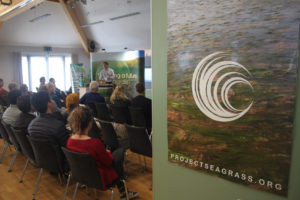
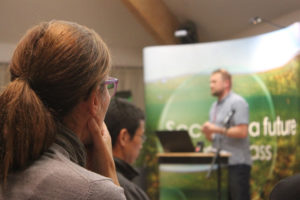
It’s already been one month since the 12th International Seagrass Biology Workshop began at Nant Gwrtheyrn in Wales. This time last month the world’s foremost seagrass scientists were descending on the Llŷn Peninsula and the Project Seagrass team were in the midst of the final preparations for hosting the largest International Seagrass Biology Workshop in recent times. Immediately prior to the conference The World Seagrass Association released a statement that had been endorsed by 122 scientists across 28 countries. The statement described how the international seagrass research and conservation community together with the World Seagrass Association called on all governments and global institutions to take local, regional and global action to ensure the future survival of seagrass meadows. This statement was instrumental in generating media coverage, and the conference was picked up by both local and national media outlets including the BBC. The conference itself kicked off with a healthy dose of #OceanOptimism which set a positive tone for the rest of the week. We learnt how seagrass science is reaching new audiences and how citizen science projects and novel educational tools are bringing seagrass meadows to the general public like never before. “Securing a future for seagrass” – Ocean Optimism was a central theme running thoughout the conference. The presentations and workshops that formed the bulk of the conference program provided numerous occasions to discuss the current key themes in contemporary seagrass science. These themes range from from ‘Blue Carbon’ and ‘Ecosystem Services’ to ‘Genetics’, ‘Physiology’ and ‘Resilience’. Critically, the conference also afforded the opportunity to discuss local management solutions to recreational boating impacts. Here the conference provided an opportunity to harness global seagrass knowledge and expertise in attempting to address a local concern. Despite the travel and costs involved, conferences really are one of the best ways of facilitating the sharing of expert knowledge amongst scientists and other concerned stakeholders. Workshops enabled delegates to draw on scientific and management expertise from across the world. Mid-way through the conference we had organised a ‘fieldwork’ afternoon where delegates would have free time available. This was either an chance for them to take time and space for themselves or to take the opportunity to visit some of the local sights and attractions. The field trips organised by the commitee included a historical trip to Caernarfon Castle, a local guided walk around Nant Gwrtheyrn and what turned out to be an extremely popular Porthdinllaen nature walk and seagrass meadow visit. Never before has our local meadow received so much attention nor have we had so much valuable input as to the state of the Porthdinllaen meadow – so thank you all for that! The seagrass meadow at Porthdinllaen has never received so much attention! After local field trips, one of the favourite elements of any conference I have attended has to be the Poster Session(s). This is an opporunity for scientists to stand by a poster of the research they have done and use it as a tool to communicate their work to other scientists and managers. I enjoy these sessions primarily because you can spend as much time as you want with the researchers and really get to understand the context and methods behind the research being conducted. Personally, I thought the quality of posters presented at ISBW12 were some of the highest I have seen at any conference anywhere and I’m sure we were all impressed with the contributions from our student (and pre-student!) researchers. So well done #TeamSeagrass! So many of the posters were truly excellent! Including this poster from Theodora and Helen Horangic. As the conference week drew to a close the Conference Dinner provided a great opportunity for colleagues to relax and celebrate what had been a fantastic week of seagrass science. It was also the opportunity to inform everyone that the next conference, the 13th International Seagrass Biology Workshop (ISBW13), which will be in Singapore in 2018. Dr Siti Maryam Yaakub SJ was able to share with us that the location of ISBW13 will be in Singapore in 2018.  As the sun set on the final night of ISBW12 I felt a strong sense that this conference was surely just a springboard to the greater recognition of seagrass meadows globally. It’s great to see so many scientists sharing their stories in the media and championing the seagrass cause in their local area. One month on it’s up to us to make sure that the “Seagrass Surge” of ISBW12 was not just a flash in the pan, but the start of a genuine global movement to put seagrass meadows alongside other marine ecosystems at the centre of marine discussion. As the sun set on ISBW12 I believe the sun is only really beginning to rise on seagrass science as a whole. A big thank you to everyone who participated in ISBW12. It was a genuine pleasure to host the seagrass community in Wales and we are very much looking forward to seeing you all again in 2 years time… Until then! Keep up the good work! #TeamSeagrass

Read More »

ISBW12 – A first conference blog!

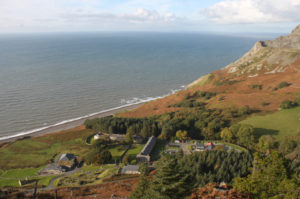
First off, the stereotype of a conference in my head is hushed voices, fancy clothes and everything deadly serious, but throw into the mix that it’s a conference based around seagrass and I was completely at a loss as to what to expect. Having packed for all possibilities (would the seagrass team transform into a posh looking bunch? Or would the usual jeans and an old tee be acceptable?) we headed up to Nant Gwrtheyrn in North Wales. The Nant is a gorgeous former quarrying village looking out past dramatic cliffs to the ocean with a seagrass bed just around the corner- I was definitely spoilt with the location of my first conference, it doesn’t get much better than having only a five-minute walk to the beach to process the constant buzz of activity. It’s probably not the normal conference experience that one of the first things I learnt was that if you sneak off last minute to pretend to be in The Lord of the Rings exploring the cliffs, then put on things that can get muddy- twice I went down, but proudly caught myself before my one pair of semi smart trousers changed colour! The path from Nant Gwrtheyrn conference centre down to the beach. To kick the week off was a plenary by Professor Carlos Duarte (King Abdullah University of Science and Technology) talking optimistically about seagrass meadows and popular culture getting everyone laughing – an easy start; maybe conferences weren’t so big and scary! It did leave one question on a conference newbies mind though, the word ‘plenary’ was not yet in my vocabulary – so any students heading to your first conference, everyone attending the conference goes to these, in other words if you talk at one then you deserve respect, you’re a big name in your field! Professor Carlos Duarte ‘Securing a Future for Seagrass’ in the weeks first plenary. So next up was my first workshop. Again the apprehension was definitely there – I’m an undergrad, what could I have to offer to all these academics? Well most of the time not a lot, but it was a perfect opportunity to question and learn, and once in a blue moon I might stumble across an idea that the top dogs had over looked. As intimidating as a professor with a tonne of published papers is, they tended to be welcoming to all ideas and helpful to gently point out that they tried that method 20 years before and it may not be the strongest approach. Timing and Triggers for seagrass flowering workshop with Nordlund LM, Creed J, Jackson E, & Nakaoka M. Despite some fascinating talks and some hot debates at workshops (seagrass scientists can get heated!) that’s not where I personally learnt the most. Sitting with new people each meal time and relaxing with them after a long day was when I found the most inspiration; it’s the time when people get excited about their work and me being fresh faced to the seagrass world meant they could just enjoy telling their seagrass stories without worrying about nitty gritty details. In those relaxed situations people were happy to chat and answer my drilling of questions. The enthusiasm of Dimosthenis Traganos, a Greek pHD student studying in Berlin, who’s eyes lit up as he was telling me about using satellite imaging to map the seagrass of his home lands and the pride as Oliver Thomas from Heriott-Watt University described the numerous different studies he’d done to complete his masters; these were the times when I found as a conference first-timer that I learnt the most. Dancing to ‘y Moniars.’ a local Welsh band. Helping the organising team I felt as though I was sat nicely on the edge of the eye of a storm- able to see the manic behind the scenes madness, but also able to join the peace of the attendees. It was a week of huge learning curves in all aspects- sharing with two Indonesian ladies meant early starts and spicy tea, that whatever culture you come from there is no end to small talk about the welsh autumnal weather and hopefully I’ve picked up one or two new seagrass facts along the way too. A huge thank you to Project Seagrass for all their hard work in helping to host the twelfth successful International Seagrass Biology Workshop and for giving me the opportunity to tag along and get involved. It was definitely a positive week for securing a future for seagrass. And in case you were wondering, the seagrass team does not magically transform into a group wearing tuxedos and ball dresses with pinkies always out when they enter a conference room, they’re still as chilled as ever.

Read More »

The British Science Festival – Swansea University, Wales.

A sunny Saturday in Swansea and Project Seagrass had a stall set up ready for the British Science Festival’s Family Fun weekend. A big seagrass mural was laid out surrounded by crayons and paints for kids to get stuck in, and immediately the crowds hit. Kids everywhere colouring all kinds of creatures which live in our seagrass meadows- never had any of Project Seagrass seen so many seahorses in one meadow! So with kids hoarding to paint their seahorse, herring or anemone, more space had to be created to accommodate the high demand and the seagrass mural was quickly filled with animals. It was fantastic to see so much marine life and so many seahorses in our meadow! As well as the kids getting covered in paint, we had many taking a ‘Seagrass Selfie’; the selfie takers got to dress up as a proper ‘seagrass scientist’ complete with fins and tape measure- some participants being so small that the mask took over their whole face! Budding seagrass scientists were able to see (and try on) our survey equipment and imagine themselves as marine biologists one day So beyond the fun and games it was a really successful weekend for spreading the seagrass message with lots of festival goers keen to learn more and get involved, especially with our “SeagrassSpotter” app (which can be found at www.seagrassspotter.org). We met some really interesting people with many seagrass stories, including memories of seagrass in the local area and lots of budding kids keen to learn more and make a splash in a real seagrass meadow. For many, it was also an opportunity to visit a beautiful parts of Wales. Whilst many have heard of Penrhyn Gŵyr (the Gower Peninsula) few people think of Swansea when a beach holiday comes to mind… Although with the recent promotional work from Visit Swansea Bay this is clearly changing! Three cliffs bay on the Gower Peninsula is a firm favourite with visitors to Swansea To be able to share our seagrass science in our hometown of Swansea was a real privilege, and a reminder of just how much Project Seagrass has grown in just three years! Thanks to everyone who came along to the festival and helped make the event such a success! Here’s to the next three years, iechyd da!

Read More »

Fàilte gu Alba – Project Seagrass and the Scottish Seagrass Network: A charity in Scotland.

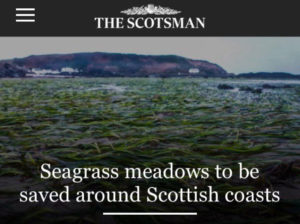
Project Seagrass moved to Scotland in April 2016 stating that this moment would herald A New Dawn For Scottish Seagrass. We spoke then of our ambition to engage with Scotland’s coastal communities and begin the much needed process of mapping Scotland’s seagrass meadows. We also discussed our ambition for conducting outreach and education events starting in June with Project Seagrass at the Glasgow Science Festival 2016. These ambitions were picked up in Scotland’s National Newspaper in July, which ran the headline ‘Seagrass meadows to be saved around Scottish coasts’ and since then we’ve had a great many more positive developments to report, not least the great news this August 17th of our success in applying for charitable status in Scotland; Charity number SC046788! Fundamentally, these early successes have placed us in a strong position to make connections with coastal communities across Scotland. Kerri Whiteside of Fauna and Flora International has been instrumental in helping in this process (so thanks Kerri!) and through her we have become aware of so many grassroots community organisation’s such as; The South Skye Seas Initiative, The Community of Arran Seabed Trust, St Abb’s and Eyemouth Voluntary Marine Reserve, The Fair Isle Marine Environment and Tourism Initiative, The Community Association of Lochs and Sounds, and Sea Change Wester Ross to name a few! The next step on the journey is to develop a Scottish Seagrass Network with these communities, and with universities, students and organisations to help map and monitor Scotland’s seagrass. The Scottish Seagrass Network has been set up as a platform for volunteers who wish to assist Project Seagrass in mapping and monitoring Scotland’s seagrass meadows. This summer RJ has been up in Fife visiting the University of St Andrews where he has been coordinating with Rufus Sullivan (the President of the School of Biology) about a series of seagrass, education and awareness activities. Rufus Sullivan is the School of Biology President at the University of St Andrews where Project Seagrass will be conducting our SEA Program. He has also been across at the University of Glasgow meeting with our current intern Lauren Clayton about the future scope for Baited Remote Underwater Video (BRUV) and Seagrass-Watch monitoring on the West Coast this autumn and into next year. These meetings have been of particular benefit since Lauren is a key member of the Glasgow University Sub Aqua Club and the club has shown an interest in assisting Project Seagrass in mapping seagrass distribution around Scotland via our SeagrassSpotter app! Lauren Clayton is an MSc student at The University of Glasgow and is core member of Glasgow University Sub Aqua Club. Beyond the academic connections it has also been important to make connections with existing educational organisations across Scotland. We are currently in the process of developing Scottish educational materials, but once these are ready we have already agreed to deliver some to the St Andrews Aquarium, and the Scottish Fisheries Museum. The Scottish Fisheries Museum in Anstruther We have sincerely enjoyed working in Scotland this summer and we are optimistic about the coming 12 months. I’ll blog again soon… So until then! Slàinte

Read More »

The 4th International Marine Conservation Congress – Making Marine Science Matter.

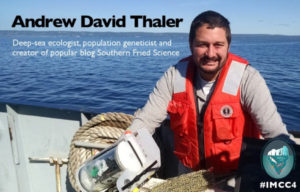
www.conbio.org The International Marine Conservation Congress (IMCC) represents one of the most important international meetings for marine conservation professionals and students. IMCC4 was recently held in St. John’s Newfoundland and Labrador between 30 July – 3 August 2016, building on from the success of Glasgow in 2014 and bringing together conservation professionals and students from across the globe. A key ambition for the conference is to develop new tools and foster collaborations that will further marine conservation science and policy. The overall theme of IMCCs is: “Making Marine Science Matter” For marine conservation to be effective, marine conservation science must genuinely matter to stakeholders, policy makers, and practitioners. To try to accomplish this, the IMCC congresses are generally organized around specific topics of interest for marine conservation, or as topics relevant to specific places. In addition to the regular conference proceedings, IMCC4 also witnessed the inauguration of “#OceansOnline”, a full day of Making Marine Science Matter through online communication and the use of other online resources. Here delegates participated in hands-on training workshops tailored to beginners, and facilitated discussion panels hosted by experts in their fields. Marine Science and Conservation Consultant Andrew Thaler was one of the plenaries – check him out at www.OceanographyforEveryone.com and at @SFriedScientist on Twitter. #OceansOnline is a first of its kind, and from a personal perspective it provided a platform for discussion on how internet tools can help marine scientists and conservation professionals with research, education and outreach. Something which is at the very heart of what we are trying to achieve with Project Seagrass and our SEA Program (Seagrass, Education, Awareness). Sessions about how and why we should talk about success in marine conservation and avoiding the pessimism trap gave us reason to pursue an outlook of #OceanOptimism. As well as ‘making waves inland’, the challenge for ocean literacy in land-locked locations – something that we should really not struggle with in the Britain, and yet we do, as we are never more than 70miles from the coast! #OceansOnline help bring together the online ocean community, facilitating new collaborations and pioneering new technologies. It was through #OceansOnline that I was directly involved, and proud to be. Inspirational colleagues from both academia and the fishing industry (see below) have made the point previously that policies about marine resource use of often decided in the absence of key stakeholders, and in particular with main fishermen feeling voiceless and ignored. This feeling is one that I can directly relate to from my work with the Lipsi Fishermen’s Association in Greece. Here I have worked with a group of fishers heavily reliant on the fisheries provision of their coastal seagrass ecosystems (Posidonia oceanica) and yet as a group they feel powerless to effect change in the regional fisheries management structure. So the idea was to run a workshop on “Bringing fishermen to the table” using online “Bambuser” technology. A simple concept, yet one that marks a pretty important development considering a lot of commercial fishermen (from both developed and developing countries) cannot attend conferences like IMCC4 or other such events. If the fishermen can’t come to the conference then the conference can come to the fishermen! As you can see from the screenshot below the Bambuser platform provides a livestream video feed and a chat function, allowing fishermen, scientists and policy makers to discuss issues around a virtual table. Whilst use of this technology is in its infancy for marine collaboration and communication, with the rapid developments in global internet speeds and connectivity, we all see online tools such as Bambuser as the future in providing essential communication channels between stakeholder groups. If the fishermen can’t come to the conference, then the conference can come to the fishermen! Whilst there may have been teething problems during the session (sound and stream quality in some locations), the general feedback we have received has been overwhelmingly positive. The feedback was overwhelmingly positive about the session. We hope the session provided an example of what can be achieved for our oceans ‘online’, and that we see more use of online technologies to bridge the gap between stakeholders and provide a platform for discussion for marine resource management. Well that’s me for now. Until the next time!

Read More »

3 YEARS TODAY – What a difference a year makes!

Sitting down to write this I really don’t know quite where to begin! What a year it has been, in fact, what a 3 years! Although for me it seems that soooooo much has happened in just the last 12 months! Before I start, on a personal note, I remember our second anniversary so clearly, as if it was yesterday. Just one year ago today I was in Greece on a trip to map the coastal seagrass meadows around the island of Lipsi in the Dodecanese, using our (then new) DJI Phantom UAV (I remember because my girlfriend bought me a Spanakopita with a candle in it!). It was also the day we announced our successful application to be a charity in England and Wales. Now today, twelve months on, I find myself in Edinburgh having applied for (but as yet unable to announce) our charitable status in Scotland! We had much success communicating the importance of seagrass both through newspapers and television. Since 29th July last year we have spent time working in both Greece and Sri Lanka. That was last August. Work then continued in the Wakatobi National Park in Indonesia last September followed by our annual #AutumnSurvey in Wales last October. The next major date in the calendar was then the presentation of our work at the CERF conference in the Portland, USA in November. CERF2015 was a fantastic event, and a great platform to share our success stories #OceanOptimism With just a few week back in the office we were soon back to Indonesia once more, taking us from early December and into January and the new year. Director Dr Richard Unsworth led a workshop in Makassar in collaboration with Hasanuddin University. In 2016, after returning from overseas, the new year got off to a flying start with our #WinterSurvey in Wales in February and then our subsequent success in the ITV peoples project. Director Benjamin Jones running SEA (seagrass education and awareness) activities with children from Ysgol Morfa Nefyn Our ‘official launch’ at Cardiff University took place in March, and we were thrilled by the turnout and support we received. April was über busy, witnessing the welsh #SpringSurvey, our expansion into Scotland and research trips to both Cambodia and Myanmar. Our ‘official launch’ took place at Cardiff University in March. Thanks for ALL your support! In May we were in California for a fabulous week of Zostera Experimental Network collaborations, and the first of our summer outreach activities began with a weekend at The Deep in Hull, England. Director Dr Richard Unsworth was also present at a Zostera Experimental Network gathering in Davis, California. These were swiftly followed by outreach activities at Glasgow Science Festival, Scotland in June and Kate Humbles ‘Big Day Out’ in Monmouthshire, Wales in July. The last activity was our #SummerSurvey at which we hosted a work experience student for the first time. We conducted outreach activities and training with local stakeholders and government organisations such as Natural Resources Wales and the National Trust We were also proud to support the growth of young marine ecologists both at school and University via our Work Experience and Internship programmes. We have been humbled by the support the public has shown us over the last 3 years, so thanks to each and every one of you who are helping us champion our cause. Together we really are making a difference, and providing a global platform for dedicated seagrass science communication. I look forward to continuing this journey with #TeamSeagrass and we look forward to both the challenges and successes that our 4th year in operation will inevitably bring! Starting with the International Seagrass Biology Workshop this October! We look forward to welcoming the international seagrass community to Nant Gwytheryn in north Wales this October. Keep up the good work everyone and you’ll hear from us again soon. Until then, best fishes!

Read More »