Nursery News Vol. 19
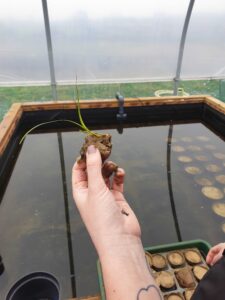
By Emily Yates To donate to our Aviva Community Funds and find out more, click the links below: Making marine conservation more accessible Saving the worlds seagrass Developing the Project Seagrass nursery


By Emily Yates To donate to our Aviva Community Funds and find out more, click the links below: Making marine conservation more accessible Saving the worlds seagrass Developing the Project Seagrass nursery
Storm Garry March 1st marked an important date in seagrass history as globally we celebrated the very first World Seagrass Day, formally recognised by the United Nations! This day will continue to annually raise awareness of the importance of healthy seagrass meadows. Seagrass is the only marine flowering plant in
Eva Rothausler On a narrow stretch along the northern-central coast of Chile, the seagrass Heterozostera nigricaulis (syn. Zostera nigricaulis, Heterozostera tasmanica) occurs in three isolated patches no more than 300 km apart. It is a common intertidal to subtidal seagrass in the Zosteracea family and is found growing in protected
The sea devours large tracts of land when storms wash sand out to sea from the coast. A new study involving a researcher from the University of Gothenburg has shown that seagrass can reduce cliff erosion by up to 70% thanks to its root mats binding the sand. Coastal erosion
By Emily Yates To donate to our Aviva Community Funds and find out more, click the links below: Making marine conservation more accessible Saving the worlds seagrass Developing the Project Seagrass nursery
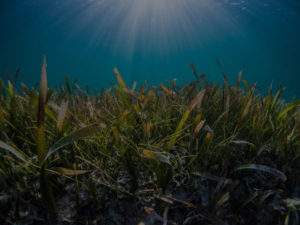
Storm Garry March 1st marked an important date in seagrass history as globally we celebrated the very first World Seagrass Day, formally recognised by the United Nations! This day will continue to annually raise awareness of the importance of healthy seagrass meadows. Seagrass is the only marine flowering plant in our ocean, creating vital marine habitats (known as seagrass meadows) within shallow, sheltered coastal areas. Seagrass meadows have many ecosystem services: they serve as a habitat, nursery ground and feeding area for thousands of marine animals. They also produce oxygen, improve water quality, buffer ocean acidification, reduce coastal erosion and lock carbon within their sediments. However, seagrasses are threatened globally and this is often due to anthropogenic threats such as industrial and agricultural pollution and coastal development. In order to protect these meadows, we must spread awareness of the ecosystem services seagrass holds. By conserving and restoring seagrass we can contribute to achieving 16 of the 17 Sustainable Development Goals, set by the United Nations. Here at Project Seagrass, we kicked off World Seagrass Day with a live international panel, where we took ‘a deep dive into the global challenges of seagrass conservation’. Within this webinar panelists discussed the challenges seagrass meadows are facing and how we can overcome them which built on our 2018 research article with the same name. Our international panel was followed by a LinkedIn Live alongside our partners at CGI UK, where we celebrated the release of a new open-source algorithm which will aid the mitigation of climate change and map biodiversity, by locating and quantifying seagrass meadows using satellite imagery. On the other side of the digital sphere, our Chief Conservation Officer (CCO) Benjamin Jones made an online appearance as President of the World Seagrass Association, speaking at a national event in Sri Lanka, hosted by the Ministry of Environment. This was hugely significant for Sri Lanka, since they set the ball rolling by tabling the resolution that led to the adoption of an official UN World Seagrass Day. Project Seagrass also participated in activities alongside our “Seagrass Ecosystem Services Project” partners Blue Ventures. The team at Blue Ventures and Husikonservasaun, celebrated with a beach clean, community events, seagrass talks and locally managed marine area (LMMA) talks in Hera, Timor Leste. Credit: Blue Ventures and Husikonservasaun The month of March is also considered Seagrass Awareness Month, the roots for which lie in Florida, USA, where organisations like the Fish and Wildlife Foundation of Florida use the month to celebrate seagrass and raise awareness about the significance of seagrass for the Florida’s waterways and wildlife. Throughout Seagrass Awareness Month, our Seagrass Ecosystem Service Project partners were busy conducting further Baited Remote Underwater Video (BRUV) and seagrass assessments. Blue Ventures, Timor Leste, Save Andaman Network, Thailand and Yapeka, Indonesia are using these assessments to identify key areas of seagrass for fisheries and monitor seagrass health. In addition, a new phase of our Seagrass Ocean Rescue project began in Wales, England and Scotland, UK, with over 300,000 seeds that we harvested last summer, leaving our seed storage unit to be planted. In Wales, this project will continue until the end of 2026, with an aim to have planted seagrass across 10 hectares of the seabed. This project builds on the support of the local community in Pen Llyn, Wales. Furthermore, we have also teamed up with WWF Cymru with a petition to call upon the Welsh Government and express the urgency to support the restoration seagrass meadows. Credit: Theo Vickers The first UN designated World Seagrass Day gave seagrass the recognition it deserves, being celebrated across the world. In recent years there have been many advancements in seagrass knowledge, however there is still a long way to go for seagrass. By continuing to raise awareness and better understanding these incredible marine plants, we can protect these vital ecosystems. Find out more about what we do our website: www.projectseagrass.org For more information on the UN’s Sustainable Development Goals: https://sdgs.un.org/goals
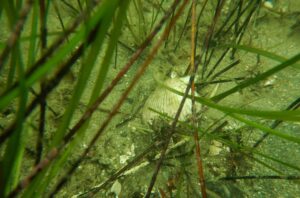
Eva Rothausler On a narrow stretch along the northern-central coast of Chile, the seagrass Heterozostera nigricaulis (syn. Zostera nigricaulis, Heterozostera tasmanica) occurs in three isolated patches no more than 300 km apart. It is a common intertidal to subtidal seagrass in the Zosteracea family and is found growing in protected and soft-bottom areas. Heterozostera nigricaulis is native to the southern coast of Australia (Coyer et al. 2013), from where it colonized Chile some 100s to 1000s years ago (Smith et al. 2018). In Australia, they form extensive meadows that produce large quantities of non-buoyant seeds and specialized vegetative rhizomes used for dispersal (Thomson et al. 2015, Smith et al. 2016, 2018). In Chile, however, H. nigricaulis was never found to flower or produce seeds. Instead, they likely grow only vegetatively, as suggested by a recent study that found the three populations to consist of only two non-flowering clones that are not mixed (Smith et al. 2018). The seagrass meadow of H. nigricaulis at Puerto Aldea is situated in the southern part of the Tongoy Bay, at a small fishing caleta. It has a continuous distribution at 1 to 6 m depth (personal observation) and is protected from onshore winds and waves by the headland Punta Lengua de Vaca, which is an important upwelling zone. The spatial extent of the meadow is about 1.2 km2 (Phillips et al. 1983) where it also grows under the jetty of the fishing caleta. Due to its remoteness and rare occurrence, H. nigricaulis is classified as endangered by the Chilean Ministry of Environment (https://clasificacionespecies.mma.gob.cl/). To date 117 different species of macroinvertebrates and 16 fish species have been reported from the seagrass meadow at Puerto Aldea (González 1990), but most likely the diversity is even higher. The meadow at Puerto Aldea is habitat to the commercially exploited species such as Argopecten purpuratus (scallop) and Romaleon setosum (crab) (Pérez-Matus et al. 2005, SUBPESCA Chile). Consequently, artisanal fishers use the meadow to extract scallops and they have recognized that it serves as an ideal nursery ground for this species, i.e. without seagrass there are no natural scallop populations. For this reason, the fishers protect their seagrass meadow (personal communication). It is estimated that about 30 artisanal fishers are associated to the fishing caleta (SUBPESCA Chile) at Puerto Aldea. As H. nigricaulis seagrass meadows are rare in Chile but provide important ecosystem services, e.g., livelihoods for fishers and efficient carbon sinks (nature-based climate change solutions), their protection must become an important priority in Chile. References Coyer JA, Hoarau G, Kuo J, et al. 2013. Phylogeny and temporal divergence of the seagrass family Zosteraceae using one nuclear and three chloroplast loci. Systematics and Biodiversity 11:271–284. González SA 1990. Heterozostera tasmanica (Martens ex Aschers.) den Hartog y comunidad asociada en el norte de Chile. Pre-graduate thesis in Spanish. Universidad Católica del Norte, Chile. Pérez-Matus A, Cifuentes M, Araya P et al. 2005. Solitary seagrass meadow in Chile supports a unique scallop garden.JMBA Global Marine Environment 2:1-4. Phillips RC, Santelices B, Bravo R, McRoy CP 1983. Heterozostera tasmanica (Martensex Aschers.) den Hartog in Chile. Aquat Bot 15:195-200. Smith TM, York PH, Broitman BR, et al. 2018. Rare long-distance dispersal of a marine angiosperm across the Pacific Ocean. Global Ecol Biogeogr 27:487-496. Smith TM, York PH, Keough MJ, et al. 2016. Spatial variation in reproductive effort of a Southern Australian seagrass. Marine and Freshwater Research 120:214-224. Thomson ACG, York PH, Smith TM, et al. 2015. Seagrass viviparous propagules as a potential long-distance dispersal mechanism. Estuaries and Coasts 38:927–940. Seagrass Project Fondecyt 1231236
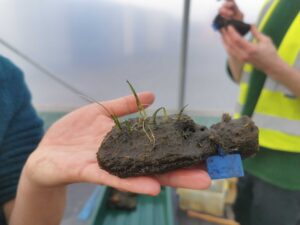
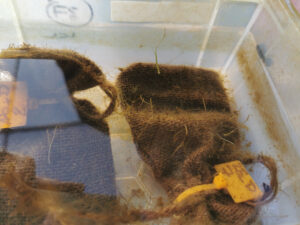
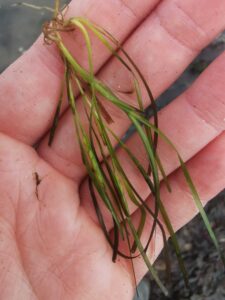
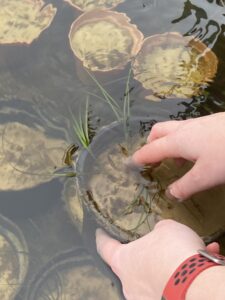
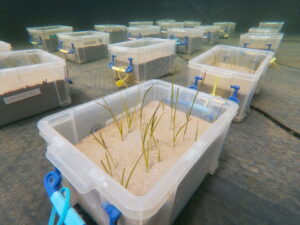
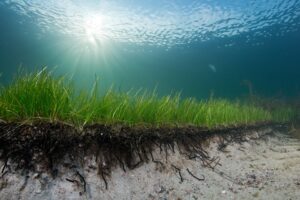
The sea devours large tracts of land when storms wash sand out to sea from the coast. A new study involving a researcher from the University of Gothenburg has shown that seagrass can reduce cliff erosion by up to 70% thanks to its root mats binding the sand. Coastal erosion is a global problem that is often combated by replenishing the coast and beaches with new sand in locations where storms wreak the greatest havoc. According to a 2016 survey conducted by the Geological Survey of Sweden, 12% of Skåne’s coastline in southern Sweden is vulnerable to increasing rates of coastal erosion. It is an even bigger issue in other countries. In the Netherlands, the coastline is protected through the construction of dikes made from stone and mud. Another solution is to utilize nature’s own defenses against coastal erosion. In this new study, researchers examined the importance of seagrass for preserving the coastline. “We have seen that seagrass meadows in the coast are valuable assets in mitigating erosion. We already know that their long canopies serve as breakwaters, but now we can show that their root mats also bind together the underwater sand dunes, effectively reinforcing them,” says Eduardo Infantes, a marine biologist at the University of Gothenburg and the lead author of the study which has been published in the journal Marine Ecology Progress Series. More powerful storms in the future Common eelgrass is a seagrass species that grows along Sweden’s coasts, and there are areas with large seagrass meadows growing on the bottom sediments, such as in Skåne. In other places, the seagrass has disappeared altogether. This not only represents an ecological loss, it can also mean that the coast becomes more vulnerable to erosion. As the climate changes, storms risk becoming more powerful, which in turn can lead to an increase in coastal erosion. Approximately 8% of the world’s population live in areas at an elevation of fewer than 10 meters above sea level. Rising sea levels may see many people affected by coastal erosion. “This is why it is even more important to preserve those seagrass meadows that still exist today and to replant seagrass in those places where it has disappeared. In our research, we have made successful attempts to restore common eelgrass meadows on the Swedish west coast, but if such replanting efforts are to succeed, there is a need for detailed studies of the current status seabed environment,” says Eduardo Infantes. In this study, the researchers took samples of sandy sediments with and without common eelgrass from a number of sites and placed them in a large tank capable of simulating waves. The experiments demonstrated that the sand is eroded far less by waves when seagrass is growing in it. The researchers also took samples from muddy seabeds but found that the effect of the seagrass there was less. However, this matters less since muddy seabeds are most commonly found in fjords and other areas that are less exposed to waves. More factors in field tests The next step will be to move out of the laboratory environment and take measurements of sand erosion on an exposed shoreline along the coast. Other factors such as currents, traffic on the water, inflows from rivers etc. can then affect the erosion. “It’s more complicated in the field, but we have created realistic storm waves in our experiments and the seagrass has clearly shown a protective effect against erosion. I think we will be able to demonstrate the similar effects in field tests,” says Eduardo Infantes. More information: E Infantes et al, Seagrass roots strongly reduce cliff erosion rates in sandy sediments, Marine Ecology Progress Series (2022). DOI: 10.3354/meps14196