


NEWS

NEWS

Keeping you up to date with Project Seagrass news and views with a mixture of field notes and commentary on seagrass and marine conservation topics.

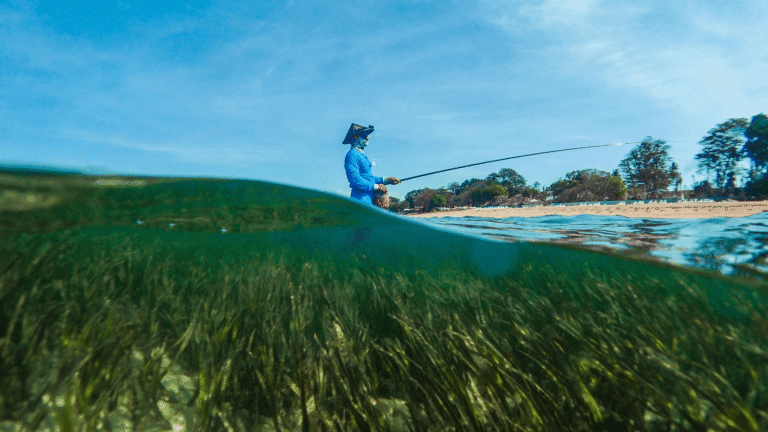
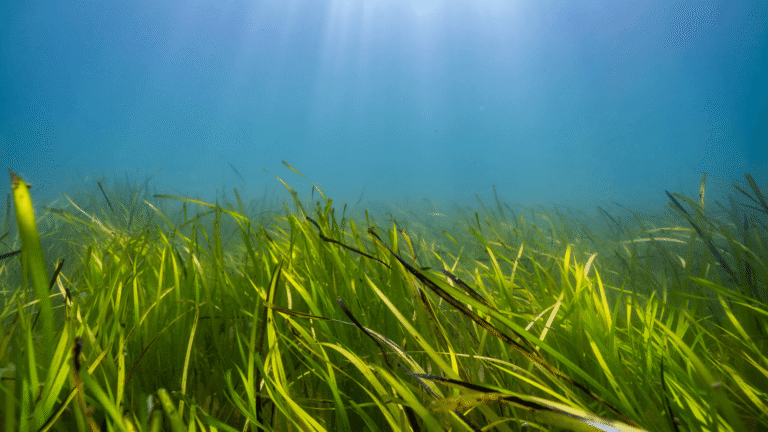
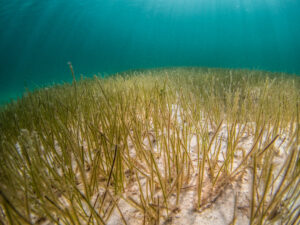
Zostera marina seagrass grows beneath the surface in Priory Bay, Isle of Wight. Above the surface, the sky is blue with white clouds. A logo with the words Seagrass Safe Silor and an image of a boat if overlain.

Protecting seagrass in Priory Bay

Priory Bay in the Isle of Wight supports important seagrass meadows that provide a home for marine life as well as supporting healthy coastlines. The bay is also of great value for boating and recreation, and a popular summer anchorage. This project is exploring ways to protect the seagrass in

Read More »
The Project Seagrass Logo is overlayed over a photo of seagrass

Embracing change: Introducing our refreshed Project Seagrass logo

In this blog, our Chief Conservation Officer, Dr Benjamin Jones, shares the thinking behind the decision to refresh the Project Seagrass logo and wider brand identity, and explains why visibility matters so much for seagrass conservation. Honouring our roots, looking to the future Back in 2013, we founded Project Seagrass

Read More »
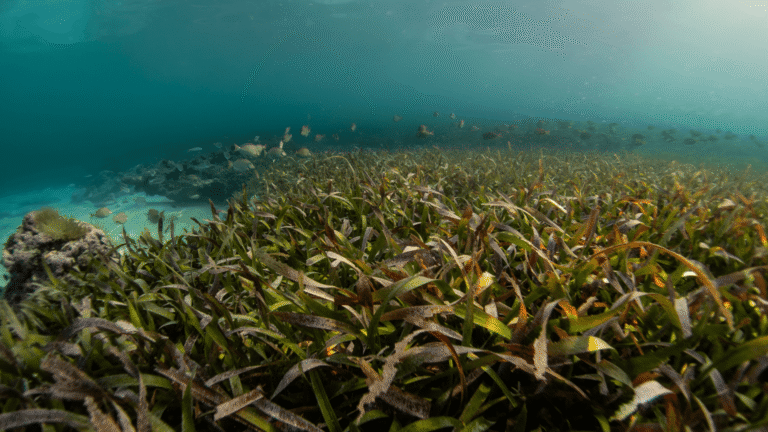
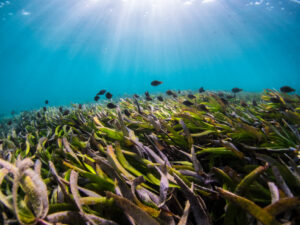
A shoal of parrotfish swim through a seagrass meadow

Seagrass meadows could help nourish millions, new study finds

New research finds that seagrass meadows support fish that can be more valuable for human nutrition than fish found on coral reefs   Seagrass meadows play a majorly overlooked role in providing nutrition for coastal communities, a new study published in Cell Reports Sustainability has uncovered. The study, led by

Read More »
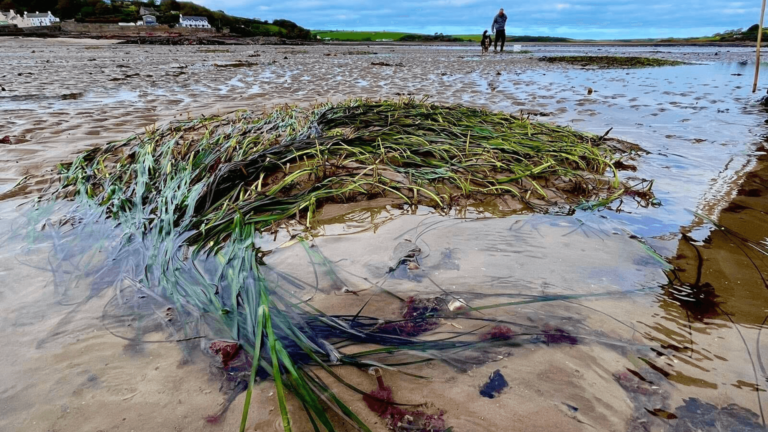
Zostera marine seagrass meadow Porthdinllaen North Wales.

London Climate Action Week: Are we forgetting that we are nature?

Project Seagrass CEO and Co-Founder, Dr Leanne Cullen-Unsworth reflects on London Climate Action Week: I left London Climate Action Week inspired, challenged, and, at times, deeply concerned. Over the course of the week I joined conversations spanning nature finance, climate resilience, biodiversity, restoration, and global leadership. The speakers were exceptional.

Read More »
SeagrassTools Logo

Introducing SeagrassTools: strengthening the link between data and decision-making

July marks the launch of SeagrassTools, a single unified suite for seagrass science, conservation, and management which will enable users to collect, download, analyse, and act on seagrass data more effectively than ever before.  The new digital suite, which integrates citizen science, ecological data, restoration experiments, and spatial analytics, will support evidence-based decision-making

Read More »
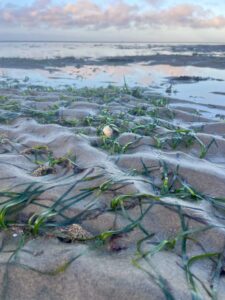
A seagrass meadow in Cardiff.

Previously undocumented seagrass meadow found in Cardiff’s Severn Estuary

Field discovery reveals a healthy and apparently expanding seagrass meadow in one of the UK’s most challenging estuarine environments  Marine conservation organisation Project Seagrass has found a previously undocumented intertidal seagrass meadow in Cardiff, within the Severn Estuary. The newly discovered meadow, which was found by Project Seagrass’ Chief Conservation Officer Dr Benjamin Jones, does

Read More »
biodiversity

Green sea turtles have traveled to the same seagrass to eat for 3,000 years

For approximately 3,000 years, generations of green sea turtles have returned to the same seagrass meadows to eat. This was discovered by Willemien de Kock, a historical ecologist at the University of Groningen, by combining modern data with archaeological findings. Sea turtles migrate between specific breeding places and eating places

Read More »
new science

What causes decline of tropical seagrass meadows?

Seagrass, a group of aquatic angiosperms, grows in shallow waters in the coastal sea and contributes most of the primary production while participating in many important ecological processes. Heat stress threatens the survival of seagrass, but its damage mechanisms are unclear. Recently, a research team led by Prof. Liu Jianguo

Read More »
biodiversity

Fauna return rapidly in planted seagrass meadows, study shows

A study of eelgrass meadows planted by researchers from the University of Gothenburg shows that fauna return rapidly once the eelgrass has started to grow. Already after the second summer, the biodiversity in the planted meadow was almost the same as in old established eelgrass meadows. Eelgrass meadows have declined

Read More »