NEWS

NEWS

Keeping you up to date with Project Seagrass news and views with a mixture of field notes and commentary on seagrass and marine conservation topics.

Cuttlefish.

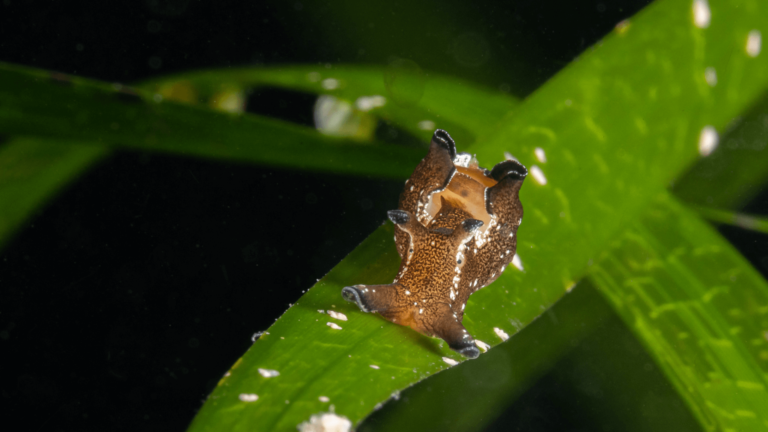
The Cuttlefish: Creatures that call seagrass home

In a new blog series, our Conservation Trainee Abi David explores some of the amazing creatures that call seagrass meadows their home. Cuttlefish are molluscs and join squid and octopuses in the Cephalopod family. Predominantly found in temperate and tropical areas, 120 species can be found around the world. Cuttlefish

Read More »
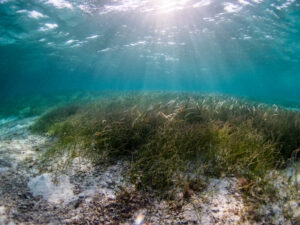
Seagrass at Saya De Malha Bank in the Indian Ocean.

Why the BBNJ Treaty Matters for Seagrass

The BBNJ (Biodiversity Beyond National Jurisdiction) Treaty is critical for protecting and enhancing seagrass. Most of the world’s seagrass is within national jurisdictions; however, in some locations, such as the Saya De Malha Bank in the Indian Ocean, seagrass is located beyond any national jurisdiction. This means it’s not legally

Read More »
Advanced Sustainable Mooring System with monitoring devices

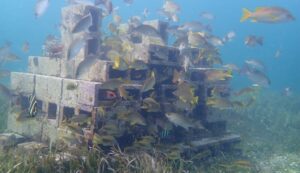
The new mooring systems supporting the Solent’s seagrass

An innovative cross-sector partnership between Project Seagrass, Blue Parameters, and WarrenBoats has enabled the installation of two Advanced Sustainable Mooring Systems (ASMS) at Seaview on the Isle of Wight, relieving pressure on the Island’s important seagrass habitats. Seagrass meadows play a critical role in keeping our oceans healthy and are

Read More »
Pollack and Cod in an Orcadian seagrass meadow

Exploring the secrets within Orkney’s seagrass meadows

Around the archipelago of Orkney, are some of the UK’s most pristine seagrass meadows.  With numerous sheltered bays, low numbers of inhabitants, and crystal-clear waters, Orkney’s shores provide the ideal conditions for seagrass. However, much remains unknown about these important ecosystems.  The Highland Park funded Sjogras Partnership was established to

Read More »
Lindsey is standing by the coast. She is wearing sunglasses and a hoodie with a turtle on it.

Volunteers’ Week: Interview with Lindsey

At Project Seagrass, we rely on the enthusiasm and commitment of our volunteers who support our work to save the world’s seagrass. We couldn’t do it without you! We spoke to Lindsey, one of our regular volunteers in the Solent about her experiences of volunteering with Project Seagrass: 1. Tell

Read More »
new science

Seagrass meadows show resilience to ‘bounce back’ after die-offs

In Florida alone, thousands of acres of marine seagrass beds have died. Major seagrass die-offs also are occurring around the world. Stressors such as high temperature, hypersalinity and hypoxia or lack of oxygen affect seagrasses’ ability to resist and recover from these stressor-related mortality events or when disturbances lead to

Read More »
seagrass nursery

Nursery News Vol. 19

By Emily Yates To donate to our Aviva Community Funds and find out more, click the links below: Making marine conservation more accessible Saving the worlds seagrass Developing the Project Seagrass nursery

Read More »
updates

World Seagrass Day and Seagrass Awareness Month at Project Seagrass

Storm Garry March 1st marked an important date in seagrass history as globally we celebrated the very first World Seagrass Day, formally recognised by the United Nations! This day will continue to annually raise awareness of the importance of healthy seagrass meadows. Seagrass is the only marine flowering plant in

Read More »

Visiting one of the worlds most remote seagrass meadows

Eva Rothausler On a narrow stretch along the northern-central coast of Chile, the seagrass Heterozostera nigricaulis (syn. Zostera nigricaulis, Heterozostera tasmanica) occurs in three isolated patches no more than 300 km apart. It is a common intertidal to subtidal seagrass in the Zosteracea family and is found growing in protected

Read More »