NEWS

NEWS

Keeping you up to date with Project Seagrass news and views with a mixture of field notes and commentary on seagrass and marine conservation topics.

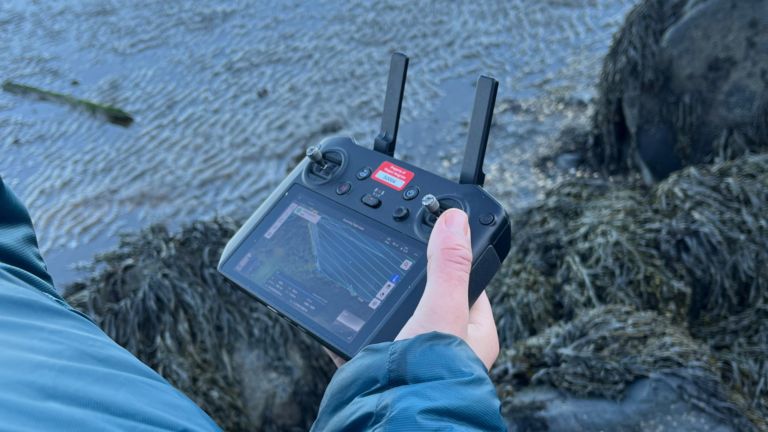
Drone controller being used next to kelp bed

Accelerate Seagrass Drone Survey

Accelerate Seagrass is a collaborative program being delivered by Climate Impact Partners, Deloitte, Project Seagrass, and the National Oceanography Centre which aims to support groundbreaking research into seagrass carbon sequestration and unlock long-term finance to save and reinstate vital seagrass meadows.   Part of this programme of work includes mapping to record the presence and extent of

Read More »
Seagrass Fish Fence

The Use of Seagrass in Flood Defences and Reducing Beach Erosion

Ewan Garvey, one of Project Seagrass’ Interns for the 2025-26 academic year, explores how seagrass can provide protection for coastal communities. As the seasons transition from autumn into winter, storms often become a pressing concern for coastal communities. In recent years, the growing impacts of climate change have become increasingly

Read More »
Seagrass in Thorness

End of year reflections from our 2025-26 interns

In September 2025, Project Segrass welcomed Anya, Dylan, Will, Grace, Iestyn, Jasper, and Ewan as our interns for the 2025-26 academic year. In this Q&A our interns share their experiences and highlights from their first three months as interns with Project Seagrass. What have been the highlights from your internship

Read More »
Sea snail

Sea snails – Creatures that call seagrass home

In a new blog series, our Conservation Trainee Abi David explores some of the amazing creatures that call seagrass meadows their home. Sea snails are a hugely diverse group of marine gastropod found in all over the world. There is such a vast range of different colours, sizes, diets and

Read More »
A member of the Project Seagrass team holds a seagrass transplant in a gloved hand.

Introducing the Seagrass Hug

In 2024, the Project Seagrass team introduced the Seagrass Hug to our planting methodology. The method was developed by Anouska Mendzil, Senior Science Officer at Project Seagrass and Swansea University, and aims to determine whether surrounding seeding plots with more established transplants provides protection for emerging seeds in restoration practices.

Read More »
UK Seagrass Symposium Logo

UN endorsed Seagrass Symposium hosted in Welsh capital

The UK Seagrass Symposium 2025 took place in Cardiff last week, bringing together scientists, conservation professionals, practitioners, and community groups from across the UK. Hosted by Project Seagrass, the event was the first in the UK Seagrass Symposium (UKSS) series to receive endorsement as an official Ocean Decade Activity as

Read More »
new science

Seagrass meadows show resilience to ‘bounce back’ after die-offs

In Florida alone, thousands of acres of marine seagrass beds have died. Major seagrass die-offs also are occurring around the world. Stressors such as high temperature, hypersalinity and hypoxia or lack of oxygen affect seagrasses’ ability to resist and recover from these stressor-related mortality events or when disturbances lead to

Read More »
seagrass nursery

Nursery News Vol. 19

By Emily Yates To donate to our Aviva Community Funds and find out more, click the links below: Making marine conservation more accessible Saving the worlds seagrass Developing the Project Seagrass nursery

Read More »
updates

World Seagrass Day and Seagrass Awareness Month at Project Seagrass

Storm Garry March 1st marked an important date in seagrass history as globally we celebrated the very first World Seagrass Day, formally recognised by the United Nations! This day will continue to annually raise awareness of the importance of healthy seagrass meadows. Seagrass is the only marine flowering plant in

Read More »

Visiting one of the worlds most remote seagrass meadows

Eva Rothausler On a narrow stretch along the northern-central coast of Chile, the seagrass Heterozostera nigricaulis (syn. Zostera nigricaulis, Heterozostera tasmanica) occurs in three isolated patches no more than 300 km apart. It is a common intertidal to subtidal seagrass in the Zosteracea family and is found growing in protected

Read More »