NEWS

NEWS

Keeping you up to date with Project Seagrass news and views with a mixture of field notes and commentary on seagrass and marine conservation topics.

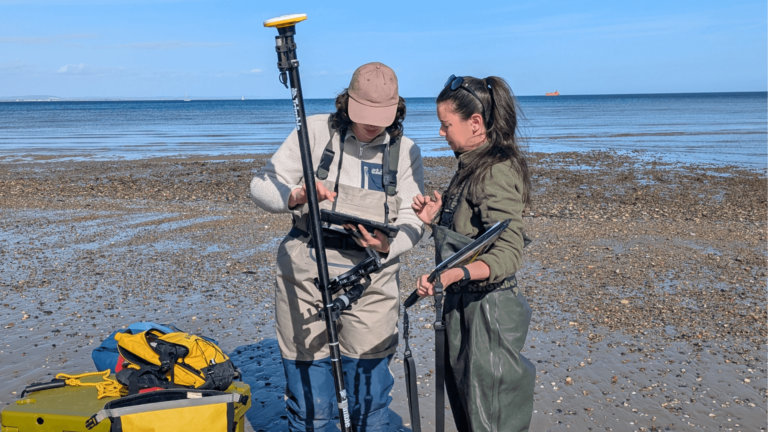
Emma Butterworth and Anouska Mendzil preparing the GDPS on the beach at Priory Bay

Internship Spotlight: Where are they now?

During the 2020-21 academic year Project Seagrass welcomed Emma Butterworth to undertake an internship. In our Q&A, Emma shares her experiences of her internship with Project Seagrass and discusses what she has gone on to do next. Who/What inspired you to apply for an internship at Project Seagrass? It all

Read More »
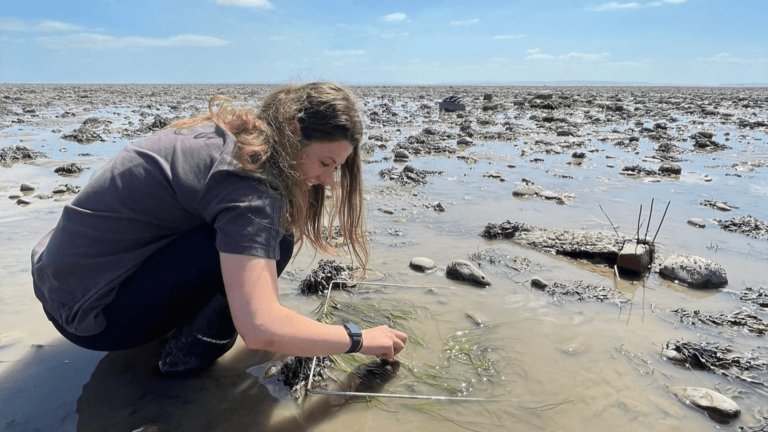
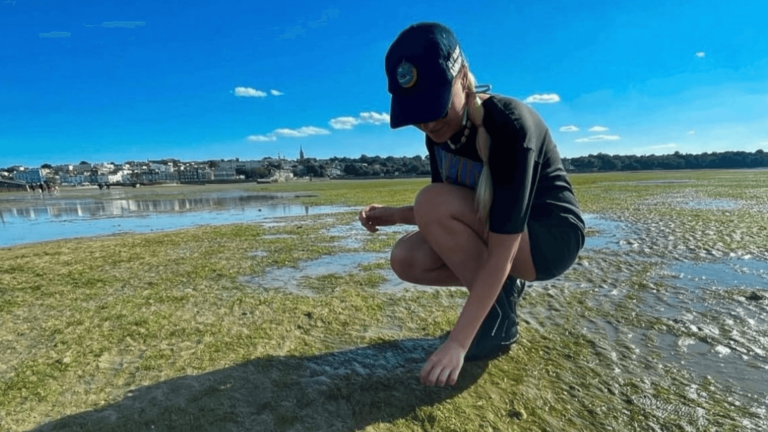
Ellie is crouching on the beach. She is crouching beside a quadrat which is placed around a patch of seagrass. It is a clear day and Ellie is wearing a grey t-shirt.

Internship Spotlight: Where are they now?

During the 2021-22 academic year Project Seagrass welcomed Ellie Postlethwaite to undertake an internship. In our Q&A, Ellie shares her experiences of her internship with Project Seagrass and discusses what she has gone on to do next. Who/What inspired you to apply for an internship at Project Seagrass? As a

Read More »
Lowri is crouching in a seagrass meadow. It is a clear sunny day.

Internship Spotlight: Where are they now?

During the 2021-22 academic year Project Seagrass welcomed Lowri O’Neill to undertake an internship. In our Q&A, Lowri shares her experiences of her internship with Project Seagrass and discusses what she has gone on to do next. Who/What inspired you to apply for an internship at Project Seagrass? My lecturer,

Read More »
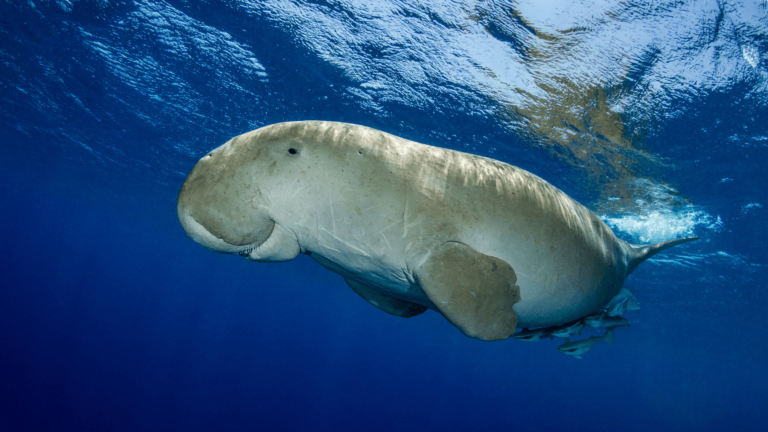
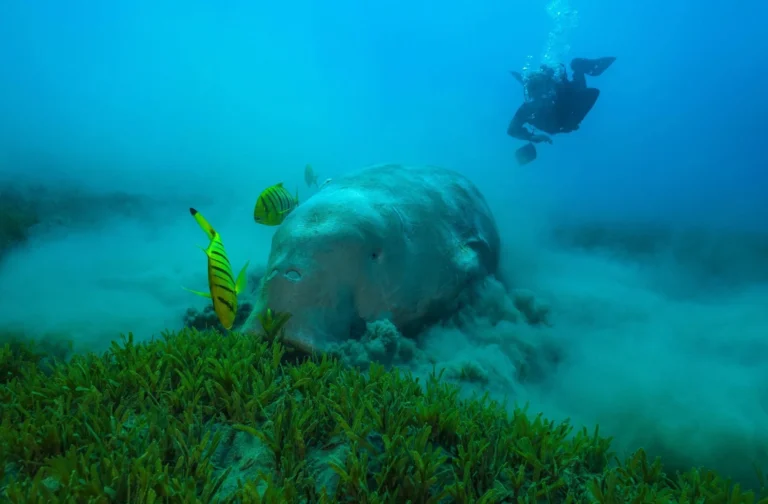
A dugong eating seagrass in the Red Sea, Egypt

Seagrass loss leaves Thailand’s dugongs struggling to survive

This article was originally published on Dialogue Earth under the Creative Commons BY NC ND licence. The author is Siripannee Supratya. Siripannee Supratya (Noina) is a Thai journalist focusing on the environment, science, laws and socio-political happenings. In addition to her journalism work, she is a creative communicator and a professional diver. She is on

Read More »
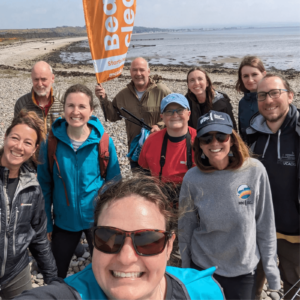
Volunteers from Moray Ocean Community and partners at the Inverness Royal Academy Citizen Science day

Interview with Moray Ocean Community

We spoke to Moray Ocean Community about their volunteering in the Moray Firth area and how they integrate the SeagrassSpotter app into their activities. Read the full interview below: Can you tell us about Moray Ocean Community and how it started? Moray Ocean Community started to come together over two

Read More »
Europe

Seagrass planting trials underway in Cardiff

Scientists from the marine conservation charity Project Seagrass are undertaking seagrass planting experiments along the South & West Wales coastline, including a new planting site in Butetown along Cardiff’s Foreshore.  Cardiff’s Foreshore is a popular place for sea-angling for species such as cod, which uses seagrass meadows as a nursery

Read More »
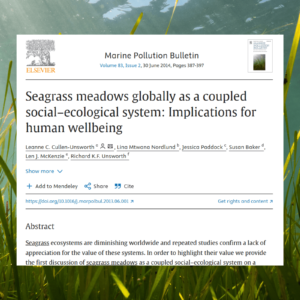
A screenshot of the research paper "Seagrass meadows globally as a coupled social–ecological system: Implications for human wellbeing" overlain on an image of seagrass in North Wales
new science

Project Seagrass Journal Club: October 2024

We have just launched a journal club for the Project Seagrass team. These monthly meetups work much like a book club, members of the team each suggest a relevant scientific paper, vote on their favourite, then read the winning paper prior to meeting. During the journal club we critically discuss

Read More »
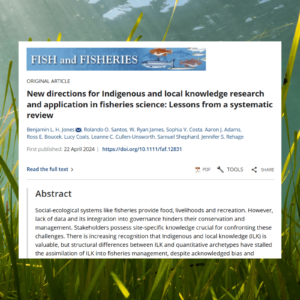
A screenshot of the research paper "New directions for Indigenous and local knowledge research and application in fisheries science: Lessons from a systematic review" overlain on an image of seagrass in North Wales
new science

Indigenous and Local Knowledge in Fisheries Science

Seagrass meadows play a critical role in keeping our oceans healthy and stocked with food, providing valuable nursery habitat to over 1/5th of the world’s largest 25 fisheries. Seagrass meadows are also important to small-scale fisheries, particularly as a place to find and collect a reliable source of food with some

Read More »

Coastal Communities Network Gathering 2024

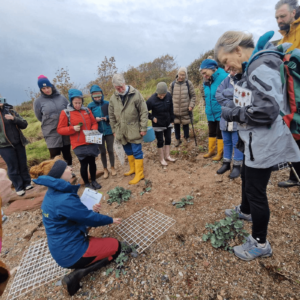
Earlier this month Project Seagrass’ Senior Conservation Officer Katy Waring attended the yearly gathering for coastal communities from the Coastal Communities Network  facilitated by Fauna and Flora International. The event was held on the island of Millport at their field studies centre.   The 3-day event was inspiring; groups from around

Read More »
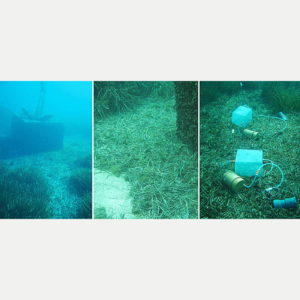
From left to right: View of the STARESO harbor entrance with Posidonia meadow islands and an accumulation of dead leaves. Close-up of litter accumulation. Experimental benthic incubation device ('bell') installed on accumulations of Posidonia dead leaves (10 m deep). Credit: G.Lepoint & W. Champenois / ULiège
new science

Dead leaves in sea break down into a compost that produces oxygen

Researchers from the University of Liège (BE) studied the fate of the material produced by Posidonia seagrass meadows. This study, carried out in the Mediterranean Sea at STARESO, shows that the dead leaves of what is commonly known as Neptune grass accumulate in shallow areas, where they break down like

Read More »