NEWS

NEWS

Keeping you up to date with Project Seagrass news and views with a mixture of field notes and commentary on seagrass and marine conservation topics.

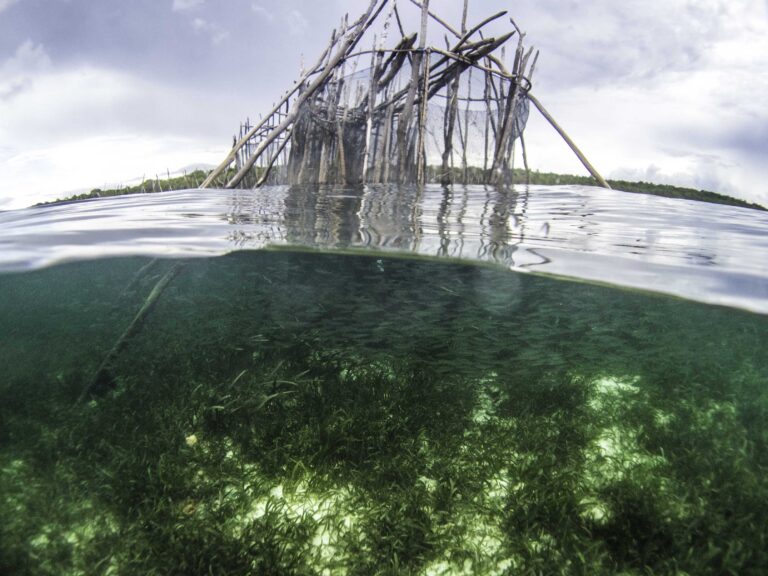
Seagrass meadows are reliable fishing grounds for food

A new study shows that seagrass fisheries provide a reliable safety-net for poor fishermen, since they perceive those habitats to maintain large fish catches over time. Surprisingly, even more so than coral reef fisheries, which people normally associate with small-scale fishery. Seagrass meadows are routinely used as a fishing habitat
Read More »

Want to host the 15th International Seagrass Biology Workshop?

The World Seagrass Association Inc. invites expressions of interest from members and interested organisations/institutions who would like to host the 15th International Seagrass Biology Workshop (ISBW) in 2024.The International Seagrass Biology Workshop series is a meeting of research scientists, students and coastal environment managers focusing on global seagrass issues, improving

Read More »

Seagrass Nursery News – Vol. 7

By Elise Simone de Tourtoulon-Adams We held our first Global Seagrass Nursery Network meeting at the end of Seagrass Awareness Month. If you would like to watch the seminar, click here.

Read More »

Intern Takeover

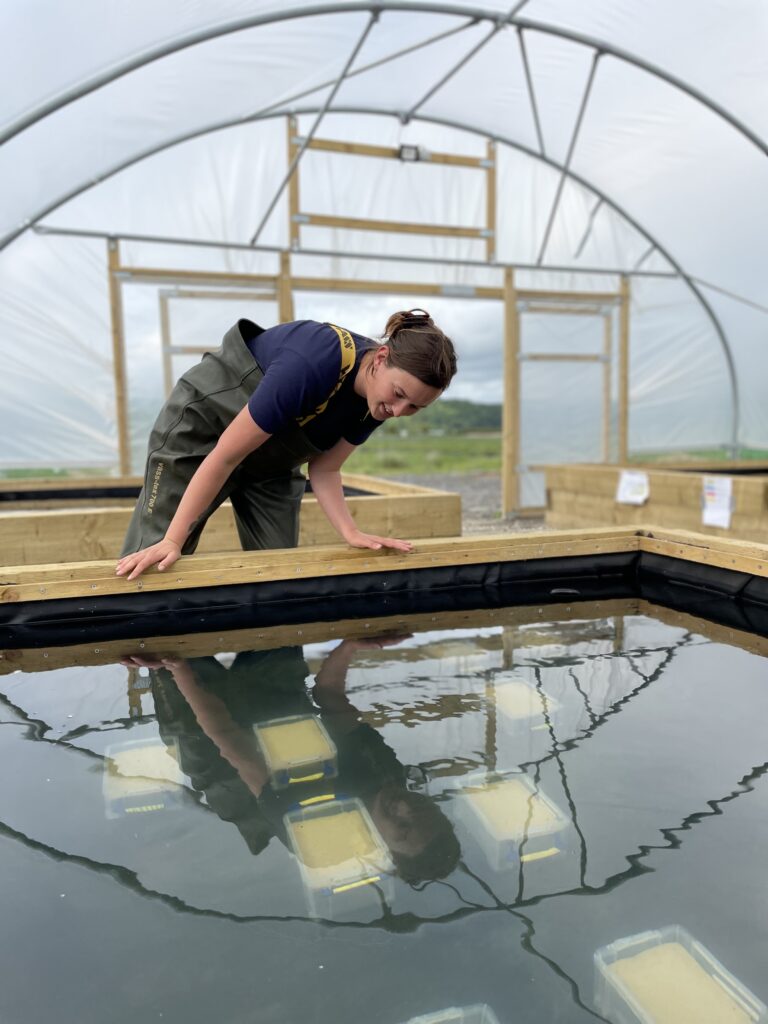
Intern Takeover – Planting trials in North Wales (February 2022) On Friday the 28th of January, a team of us started preparing for a week of fieldwork up in North Wales. A group of humans and one fluffy, four-legged companion (definitely the favourite member of Project Seagrass) helped fill 800

Read More »

Geo Enthusiast turned Seagrass Fanatic!

My name is Danny Rice, I am a 23 year-old Conservation Assistant at Project Seagrass. I began working for the charity in June 2021 due to the Government-funded Kickstart Scheme. Despite studying a Bachelor’s degree in Physical Geography and a subsequent Master’s degree in Climate Change, the COVID-19 Pandemic found

Read More »

Can seagrass help reduce microplastic pollution?

Guest blog by Lucy Wust Microplastics is a term that is worryingly on the rise in the media. They are found almost everywhere, and their polluting and damaging effects are felt heavily on marine environments. Can seagrass present a solution in our fight to tackle this widespread plastic contamination? What

Read More »
Volunteers from Moray Ocean Community and partners at the Inverness Royal Academy Citizen Science day

Interview with Moray Ocean Community

We spoke to Moray Ocean Community about their volunteering in the Moray Firth area and how they integrate the SeagrassSpotter app into their activities. Read the full interview below: Can you tell us about Moray Ocean Community and how it started? Moray Ocean Community started to come together over two

Read More »
Europe

Seagrass planting trials underway in Cardiff

Scientists from the marine conservation charity Project Seagrass are undertaking seagrass planting experiments along the South & West Wales coastline, including a new planting site in Butetown along Cardiff’s Foreshore.  Cardiff’s Foreshore is a popular place for sea-angling for species such as cod, which uses seagrass meadows as a nursery

Read More »
A screenshot of the research paper "Seagrass meadows globally as a coupled social–ecological system: Implications for human wellbeing" overlain on an image of seagrass in North Wales
new science

Project Seagrass Journal Club: October 2024

We have just launched a journal club for the Project Seagrass team. These monthly meetups work much like a book club, members of the team each suggest a relevant scientific paper, vote on their favourite, then read the winning paper prior to meeting. During the journal club we critically discuss

Read More »
A screenshot of the research paper "New directions for Indigenous and local knowledge research and application in fisheries science: Lessons from a systematic review" overlain on an image of seagrass in North Wales
new science

Indigenous and Local Knowledge in Fisheries Science

Seagrass meadows play a critical role in keeping our oceans healthy and stocked with food, providing valuable nursery habitat to over 1/5th of the world’s largest 25 fisheries. Seagrass meadows are also important to small-scale fisheries, particularly as a place to find and collect a reliable source of food with some

Read More »

Coastal Communities Network Gathering 2024

Earlier this month Project Seagrass’ Senior Conservation Officer Katy Waring attended the yearly gathering for coastal communities from the Coastal Communities Network  facilitated by Fauna and Flora International. The event was held on the island of Millport at their field studies centre.   The 3-day event was inspiring; groups from around

Read More »
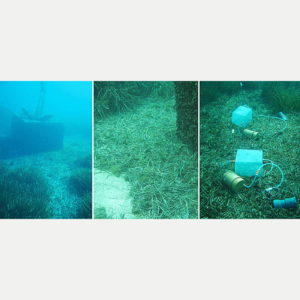
From left to right: View of the STARESO harbor entrance with Posidonia meadow islands and an accumulation of dead leaves. Close-up of litter accumulation. Experimental benthic incubation device ('bell') installed on accumulations of Posidonia dead leaves (10 m deep). Credit: G.Lepoint & W. Champenois / ULiège
new science

Dead leaves in sea break down into a compost that produces oxygen

Researchers from the University of Liège (BE) studied the fate of the material produced by Posidonia seagrass meadows. This study, carried out in the Mediterranean Sea at STARESO, shows that the dead leaves of what is commonly known as Neptune grass accumulate in shallow areas, where they break down like

Read More »