Local fisher designs innovative shellfish pot which is helping to protect seagrass in Pembrokeshire
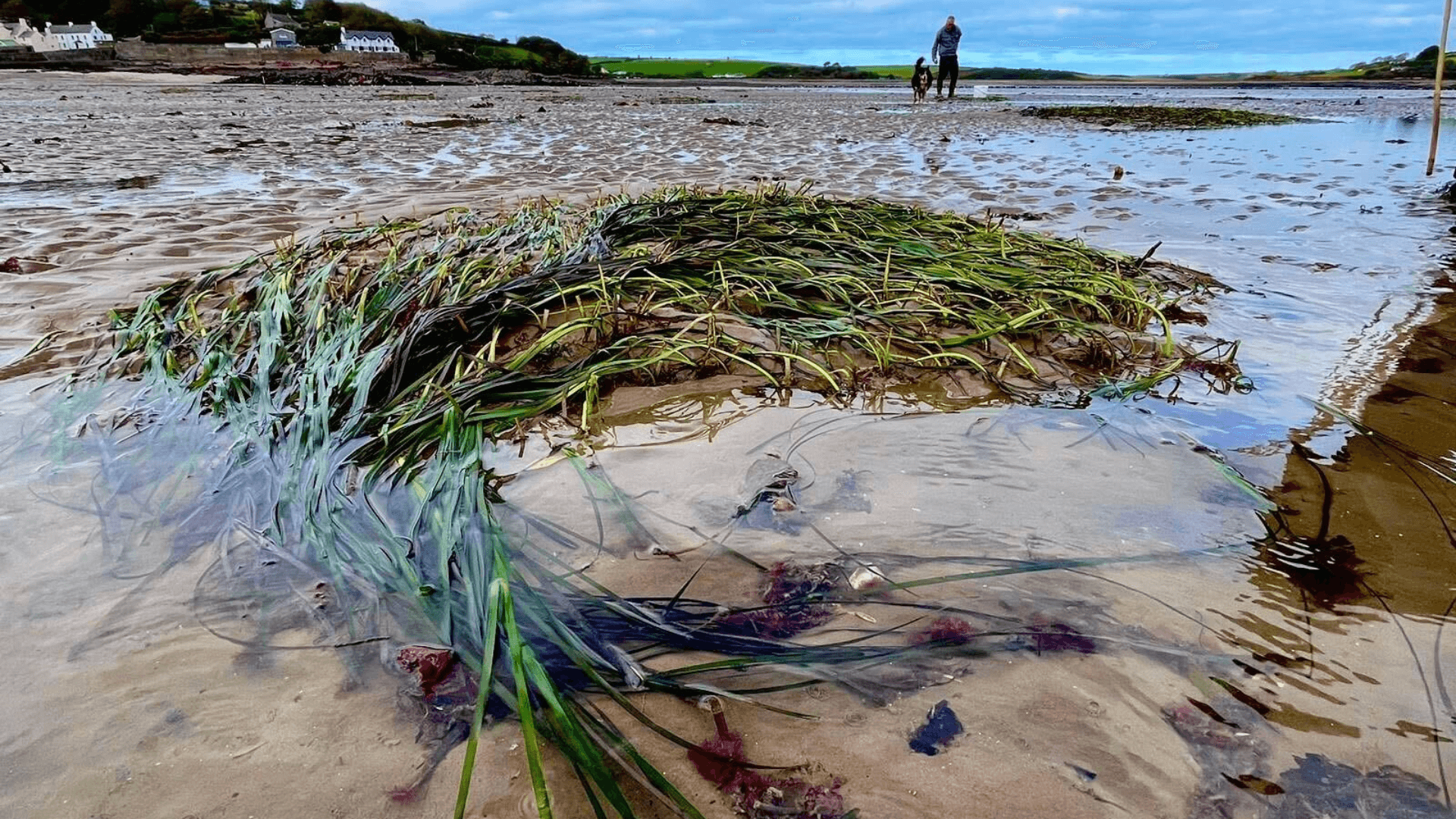
In Dale Bay, Pembrokeshire, a collaboration between local fishers and marine conservation charity Project Seagrass is showing positive results for both sustainable fishing and seagrass restoration. Dale Bay is the location of an ongoing seagrass restoration project, delivered by South Wales based charity Project Seagrass and overseen by the Dale Seagrass Stakeholder group (a group made up of local individuals across different sectors). The project began as a way to boost the natural seagrass meadow in the bay, trialling new techniques and raising awareness of the importance of seagrass for local biodiversity, water quality, and fish populations. Mark from Lilly May Fishing has worked with Project Seagrass from the start of the project to assist in site selection and deploying monitoring equipment. As the project has progressed, Mark noticed he was sometimes tearing up seagrass as he lifted his pots up to retrieve crab and lobster. In response to this, Mark designed a raised shellfish pot with short mesh legs to lift the gear just off the seabed. Made by local boat builders Robust Boats, the pots were deployed over the last two seasons with catch monitored over that time. Early results are positive showing that the new pot design is effective for storing crab catch, with some tweaks required for lobsters, whilst also reducing mud build-up and reducing the impact on the seagrass. Mark reported: “Overall, [it has] worked very well in seagrass – I would recommend using them as storage pots in shallow water where seagrass is as it’s very low impact on the grass with the mesh legs compared to steel bar bottoms” Project Seagrass is continuing to plant seagrass in Dale Bay alongside carrying out regular monitoring to determine seagrass recovery and resilience. It will be interesting to see how the natural meadow responds to the reduced impact from shellfish pots over time. Seagrass caught in pots (credit Mark Gainfort) Seagrass growing in Dale Bay, Pembrokeshire. Beyond Dale Across South & West Wales, fishers, anglers, spearfishers, aquaculture workers, and seafood gatherers have been taking part in a survey to share their local knowledge about seagrass and fishing areas. This information is helping identify the best sites for future seagrass restoration work. Full results will be released in the New Year, but early insights already show just how valuable local experience is in guiding conservation. If you’d like to take part, the survey is open until 31st January link here: https://t.ly/gxUSx What’s next? Project Seagrass will also be hosting a series of events in the New Year to celebrate sustainable local seafood and the amazing role seagrass plays in healthy seas. This work is made possible thanks to funding from the Nature Networks Programme which is being delivered by the National Lottery Heritage Fund on behalf of Welsh Government, and Rebel Restoration.
Songs from the Solent: New album by Richard Walters celebrates local community, culture, and the fight to restore coastal nature
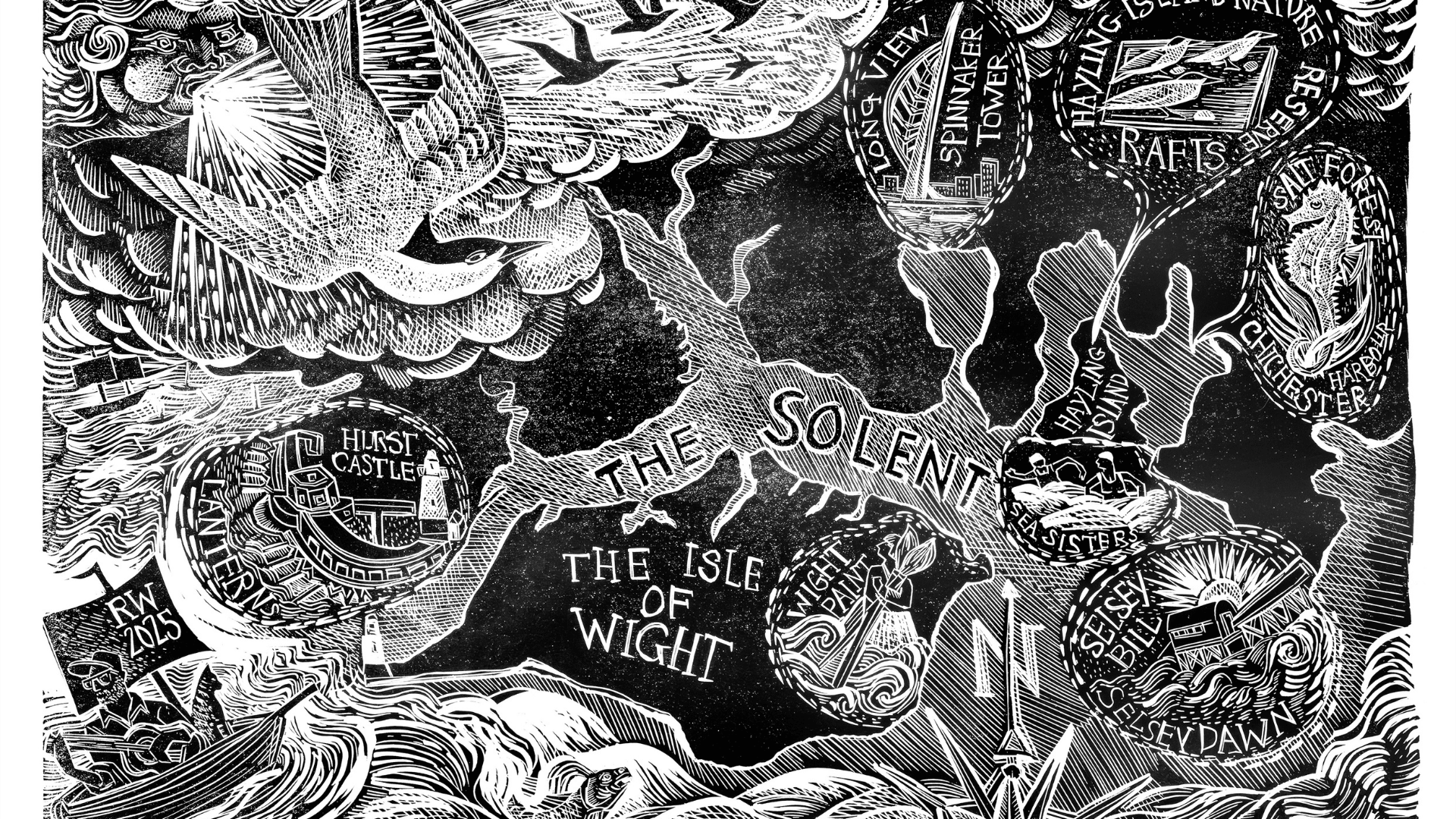
Grammy-nominated singer and Solent Seascape Project collaborate with Jeremy Irons and Angela Harding to celebrate and protect the region’s coastal habitats. The Solent Seascape Project, of which Project Seagrass is a partner, has launched Songs from the Solent, a new EP by Grammy-nominated singer and songwriter Richard Walters that uses music to spotlight the Solent’s threatened coastal habitats and the communities connected to them. Created during Richard’s Artist Residency with the project, the album is inspired by the Solent’s local community as well as the saltmarshes, seagrass meadows, oyster reefs, and seabird sites the project is working to restore and protect – habitats that lock away carbon, protect shorelines, and underpin marine life. Available to stream and download now, the album features eight original songs influenced by the sounds of the seascape and voices of the Solent, with proceeds helping towards vital restoration of these threatened habitats. “I hope the songs I’ve written shine a light on parts of the coastline it’s easy to overlook, I hope they make people think about this seascape and why we must give it our care and attention, and I really hope it inspires people to spend time exploring the area,” Richard said. Local stories, international voices The album brings together a rich tapestry of local Solent talent, including painters, choirs, and musicians, alongside internationally acclaimed contributors. Oscar-winning actor Jeremy Irons, who was born on the shores of the Solent at Cowes on the Isle of Wight, lends his distinctive voice to Lanterns Part 1; Isle of Wight artist Trudie Wilson lists the paints made of natural pigments she uses in the song Wight Paint; and members of Big Notes Choir from Chichester sing on Salt Forests, inspired by the tiny wonders of saltmarsh worlds. Richard said, “To be awarded this residency has been a real gift, an excuse to get out there and dig a little deeper, to meet the people that play their part in Solent communities, to tell their stories and give voice to the silent elements in need of our support. The work the Solent Seascape Project does is remarkable and I’m very happy to play a small part in amplifying their message.” To gain inspiration for the songs, Richard met with local groups and communities to find out what makes the Solent and its habitats special to them. It saw him chatting with sea swimmers at Hayling Island and heading to the top of Spinnaker Tower in Portsmouth. Their responses have been woven together with field recordings gathered at sites the project is working to restore. Adding a visual dimension to the release, renowned linocut artist Angela Harding has created a bespoke map of the Solent. The map highlights the locations that inspired each song and features on the Solent Seascape Project’s website, allowing listeners to connect the music directly with the places that shaped it. “It has been a great delight to work on this special map of the Solent Seascape Project for Richard Walters. It is loosely based on an old sea chart — with wild winds pushing the terns to their rafts, and Richard sailing out to sea in a small boat, cat and guitar, dodging sea monsters as he goes. I hope it is a map to be enjoyed and raise awareness of the important conservation work being done by the Solent Seascape Project,” said Angela. A seascape in recovery The Solent Seascape Project is a five year, multi-million-pound partnership of 10 organisations led by Blue Marine Foundation, working to protect, restore, and reconnect key habitats – saltmarsh, seagrass, seabird nesting sites and native oyster reefs – across the Solent. Through music, Songs from the Solent aims to raise awareness of the environmental challenges facing these habitats while building a deeper, emotional bond between people and place. Solent Project Manager, Louise MacCallum said, “The Songs from the Solent have given me the opportunity to look at this beautiful seascape we are working to restore through such a wonderful new artistic lens. I feel excited for new members of the Solent community to discover the work we are doing through the power of music.” The songs area available to download and stream on Spotify, Apple Music, Amazon Music and Bandcamp, with a live performance taking place at the Square Tower in Portsmouth on 11 February. Tickets for the performance will be free and are available from Friday (16 Jan). The Solent Seascape Project is supported by East Head Impact and the Endangered Landscapes & Seascapes Programme (ELSP), managed by the Cambridge Conservation Initiative and funded by Arcadia. Find out more about the Solent Seascape Project at www.solentseascape.com
The forgotten meadows of Northern Ireland
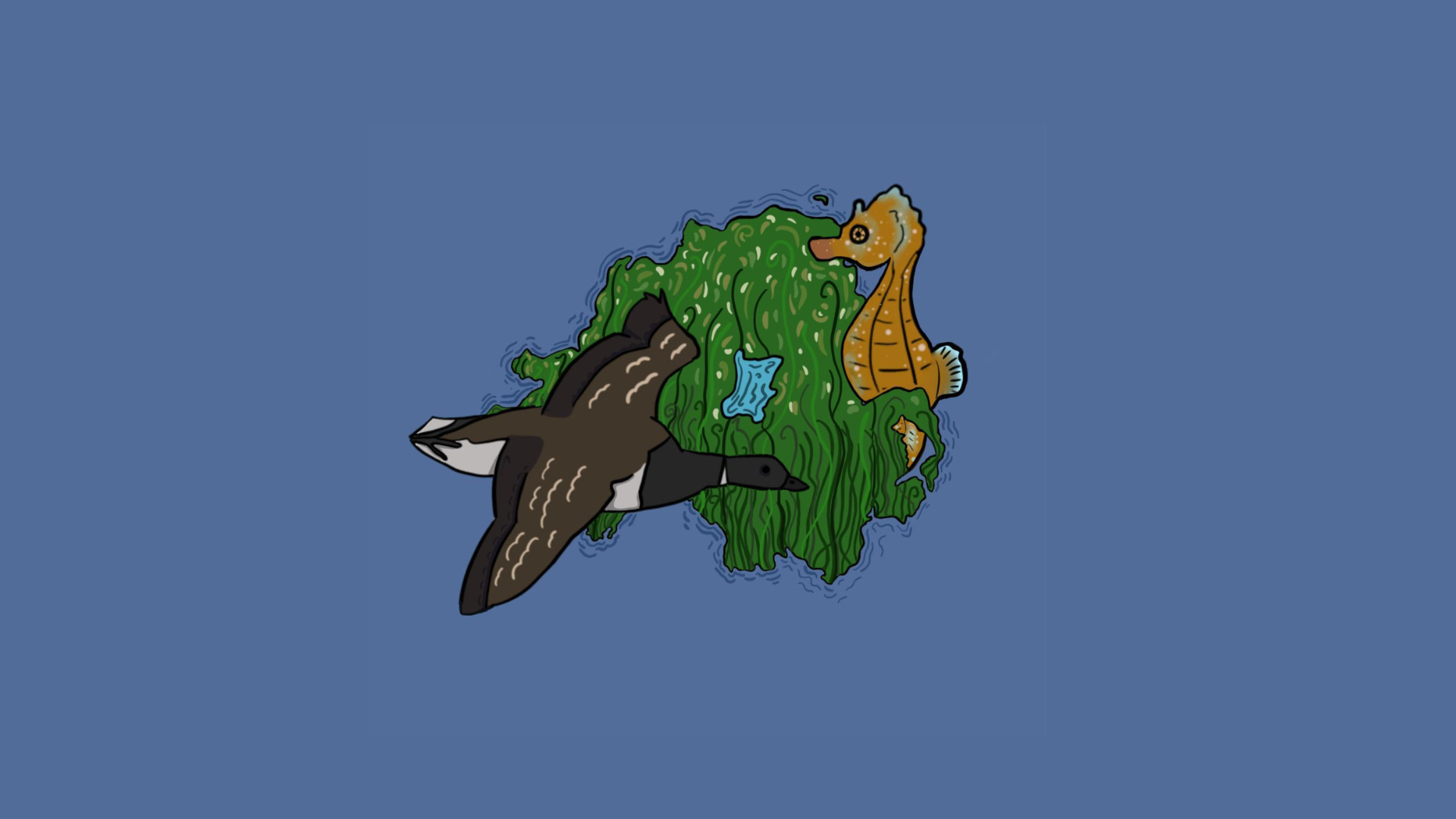
Grace Cutler, one of our 2025-26 Project Seagrass interns, reflects on Rebekah Bajkó’s research, Coastal Roots: The History of Seagrass in Northern Ireland. Northern Irish Seagrass In November 2025, I attended the UK Seagrass Symposium, an exciting conference hosted every two years to highlight the current state of seagrass research within the UK. It was an incredible event that inspired hope and determination, alongside furthering my own caffeine addiction. However, there was one talk in particular, delivered on the first day, that stuck with me for the remainder of the conference, delivered by the researcher Rebekah Bajkó. It was during the ‘Anthropogenic pressure and Environmental drivers of seagrass decline’ segment where Bajkó explored the history of seagrass in Northern Ireland. Here, they highlighted a critical issue that had been wriggling at the back of my mind since my journey into seagrass research began. Where is all the Northern Irish Seagrass? A History of Seagrass It turns out, seagrass has been on our doorstep for a long time. The first record of the common eelgrass (Zostera marina) date back to the 18th century where it grew in such abundance, beaches were described as having a ‘greenish tinge’, carpeting the likes of Belfast Lough with grassy gold. And it’s not just seagrass researchers that view it this way. A letter from a man known as A. MacDougall wrote to the Chief Secretary, William lamb, in 1829, inquiring after a patent for the manufacturing of Seagrass (who intended to use it as mattress stuffing). It wasn’t just humans that sort after these meadows. Brent geese (Branta bernicla), which are known for travelling to Strangford Lough, would feed on the eelgrass across the country. The coastlines also used to contain small populations of Hippocampus hippocampus, the short-snouted seahorse, which still remains as a symbol of Belfast on the city’s crest (Belfast City Hall, n.c). Their appearance in our waters coincide with the period of time when seagrass meadows were at their healthiest. There comes a sense of pride with having such interesting species and habitats next to our homes. Much to my own surprise, my home village (Dundrum, Co. Down) was the first-time dwarf eelgrass (Zostera Noltii) was discovered in Northern Ireland, in 1914. Dundrum, Northern Ireland, Photo taken by Grace Cutler Yet, despite their abundance and importance for life in Northern Ireland, in the late 19th century, seagrasses began to decline. Much like the rest of the UK, it is believed with increasing anthropogenic stressors, such as land-use change and nutrient input, seagrass became less resilient. This left it open to the seagrass wasting disease. The lack of seagrass in Northern Ireland has since been felt by those living on coastlines since its initial decline. Particularly, in Belfast, without the wave attenuation seagrass provided, waves break on beaches causing rapid degradations of its shorelines. Furthermore, the loss of seagrass has been felt by birders, who noticed a decline in avian species, and called for an investigation during the early stage of seagrass decline. What is Left? Since the 1940s, there has been a small recovery seen in seagrass species. Although seagrass has completely disappeared from Belfast Lough it remains in Strangford Lough and is dotted throughout the country. Records of seagrass (1794-1994) layered with the extent of seagrass in 2023 across the Northern Irish coast. Map lines show study areas and not necessarily national boundaries (Bajkó, R., Millar, R., & Smyth, D., 2025) So why is there so little seagrass along Northern Irish coastlines? Currently, there are no active restoration programmes aiming to restore seagrass in Northern Ireland. Belfast Lough has not seen seagrass for over 60 years and is unlikely to in its current state. Strangford Lough on the other hand has great potential for recovery and has already experienced natural recovery of Zostera marina and has the largest extent of Zostera noltii across the whole island. Seagrass researchers like Rebekah Bajkó and Heidi McIlvenny (a PhD student who focuses on assessing the sediment organic stocks in Northern Irish seagrass meadows) are beginning this conversation. If you are interested in any of the information mentioned here, I highly recommend reading Bajkó’s, original paper which goes into much greater detail on this subject. Yet, more attention needs to be brought to Northern Ireland so we can see substantial increases in seagrass meadows. Until then, they may forever remain our forgotten meadows. References Bajkó, R., Millar, R., & Smyth, D. (2025). “Coastal roots: the history of seagrass in Northern Ireland.” Journal of the Marine Biological Association of the United Kingdom, 105, Article e63. https://doi.org/10.1017/S0025315425100106. Belfast City Hall (no date). “History of Belfast city hall.” Available at: https://www.belfastcity.gov.uk/things-to-do/city-hall/history-of-belfast-city-hall. (Accessed: 8 January 2026)
How the Seagrass Essential Ocean Variable can support more effective monitoring and management
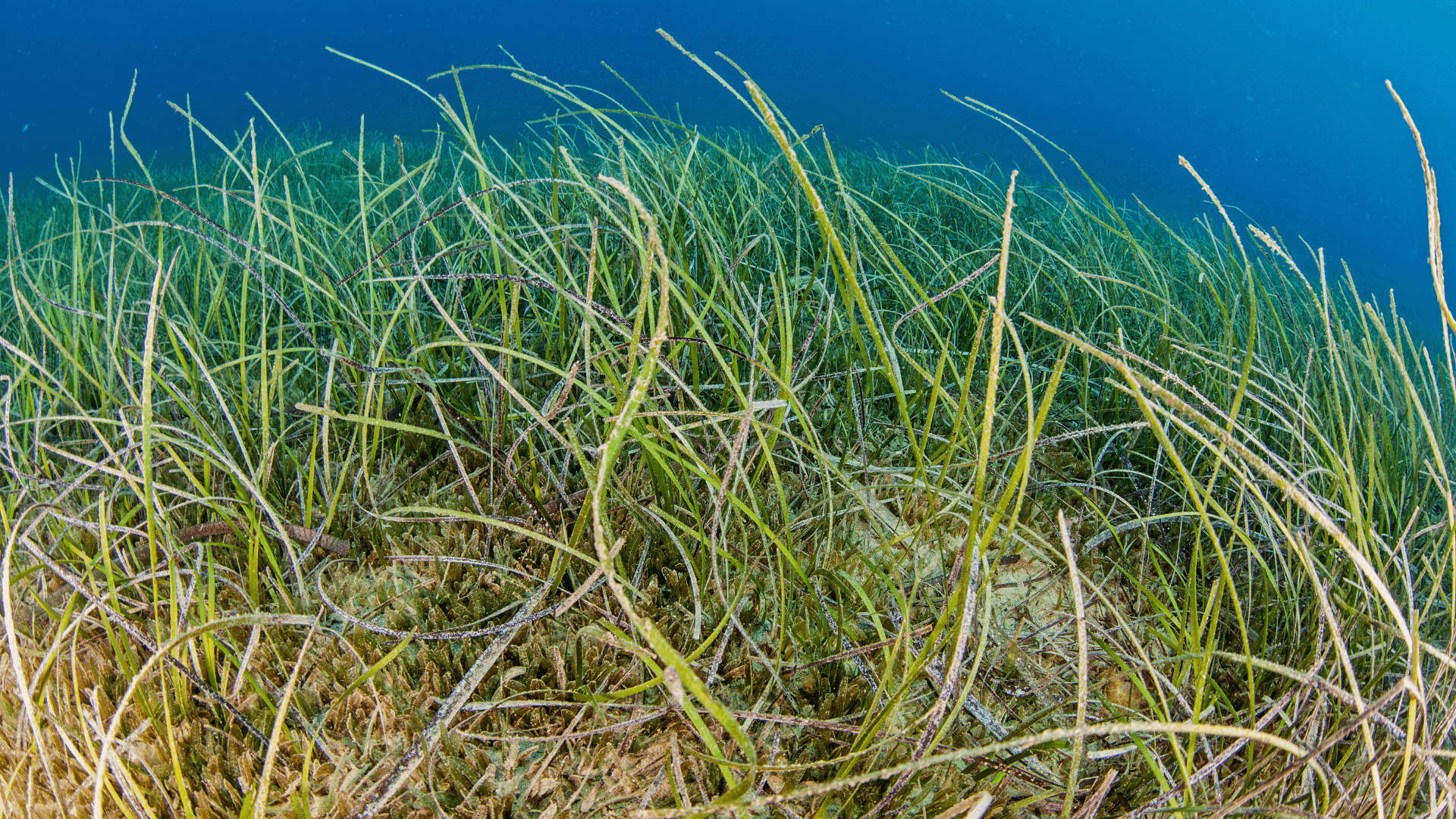
Current estimates of the global extent of seagrass range from between 160,000-266,000km. Such a high degree of uncertainty presents challenges for researchers and managers and their ability to make informed decisions which account for the changing status of seagrass ecosystems. Key to improving our understanding of seagrass presence and absence, identified as one of the six Global Challenges facing effective seagrass conservation, is the collection and integration of interoperable data on seagrass extent. A new paper published in Bioscience from members of the Coordinated Global Research Assessment of Seagrass Systems working group outlines how the Seagrass Essential Ocean Variable can help us to address this challenge. This paper was co-written by members of our Project Seagrass team. Achieving our goals for seagrass conservation requires reliable information on the status and trends of seagrasses and the organisms that associate with them, yet seagrass variables measured and the methods for doing so vary widely across projects and organisations, presenting challenges for comparisons across studies. This new paper provides a global framework for seagrass monitoring as an Essential Ocean Variable of the Global Ocean Observing System, key to aligning seagrass researchers and managers around a common approach to seagrass monitoring. Implementing these guidelines will support the collection of more comparable, compatible, and combinable seagrass data. The Seagrass Essential Ocean Variable contains three priority measurements to maximise compatibility across data sets: Seagrass percentage cover Seagrass species composition (the identify and relative abundances of seagrass species in an area) Seagrass areal extent (the horizontal extent of seagrass at the meadow of seascape scale These three priority measurements collectively have been identified to provide the most useful assessment of seagrass status and change at landscape scales, addressing most scientific, management, and policy needs and targets. The Essential Ocean Variable also includes further supporting variables relating to biological and environment factors. Seagrass monitoring using SeagrassSpotter At Project Seagrass we’re well placed to contribute to this global process with our OpenAccess SeagrassSpotter.org platform collecting georeferenced data on seagrass percentage cover and species composition. In 2026 we will also be launching a complementary app called SeagrassTracker which will help scientists report, share, and archive data on seagrass spatial extent. These platforms are all linked to the Global Ocean Observing System. Key to the Seagrass Essential Ocean Variable is a commitment to collaborate. If utilised across widely, the EOV will support the creation of a growing resource of seagrass data that is maximally compatible and supports more reliable local research and better-informed management.
Reflections from the IUCN World Conservation Congress: From Knowledge Exchange to Implementation
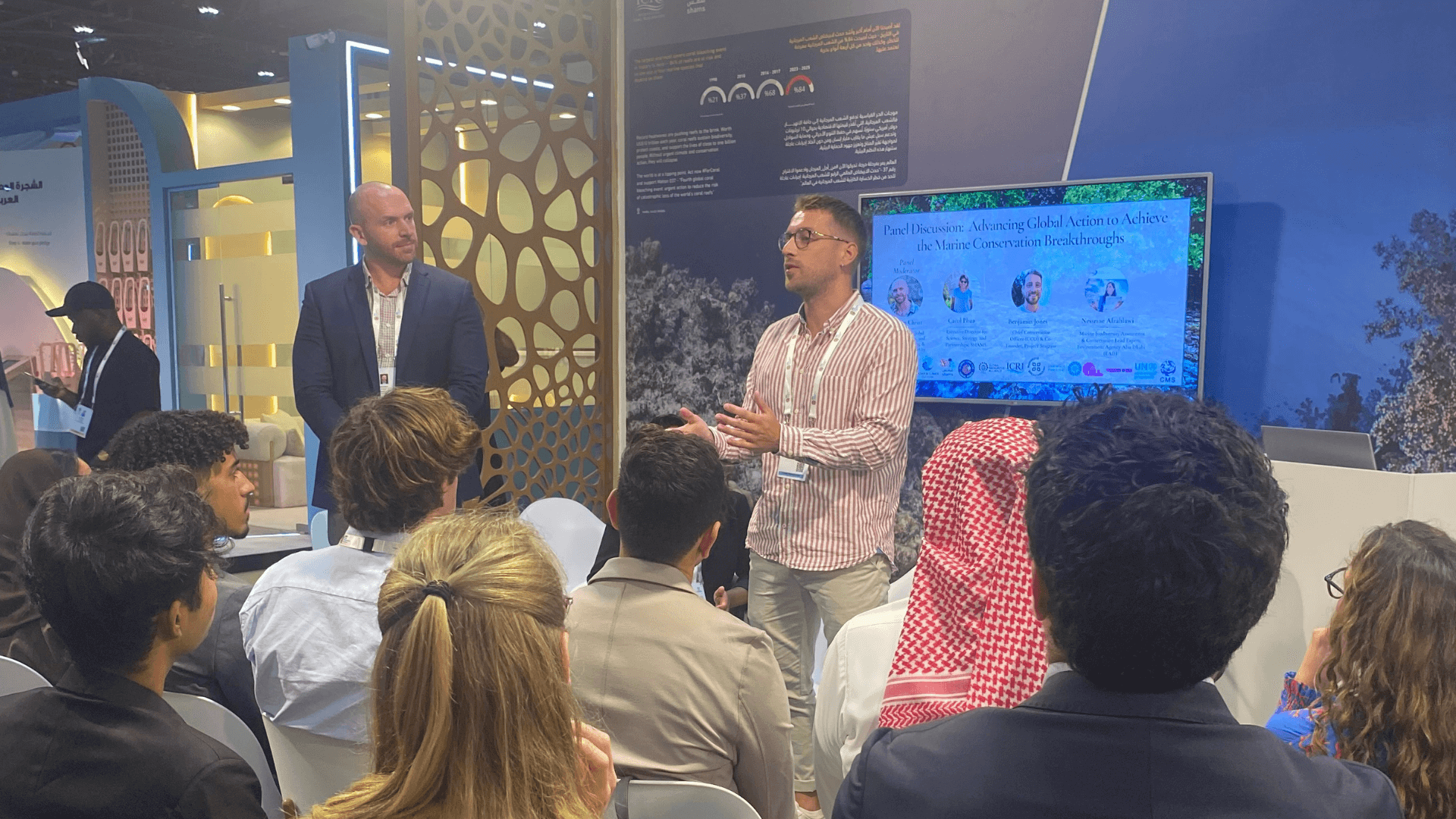
Chief Conservation Officer Dr Benjamin Jones reflects on the IUCN World Conservation Congress: The IUCN World Conservation Congress is, at its core, about knowledge exchange. Experiencing it first-hand made clear just how ambitious and wide-ranging that exchange has become. Across the week, the Congress unfolded through a programme of workshops, panel discussions, films, exhibitions, demonstrations, and informal conversations. The scale was remarkable. At any given moment, the real challenge was not finding relevant sessions, but choosing which ones to miss. The number of talks alone was extraordinary. Major thematic sessions were held in plenary across five large halls, complemented by collaboratoriums designed for deeper discussion. Alongside this, the exhibition hall functioned as a Congress within a Congress. Around 30 pavilions, each focused on a particular theme, geography or sector, ran their own mini-conferences, often for 20 to 30 people at a time. These spaces created opportunities for focused dialogue with practitioners, policymakers, Indigenous leaders, researchers, and businesses. These pavilions reflected the breadth of the global conservation movement. There were dedicated spaces for the Americas, Indigenous Peoples, youth, business, and regional IUCN hubs including Arabia, Mongolia and Japan. IUCN also hosted a parallel virtual programme, with many sessions broadcast online so participants could engage without travelling to Abu Dhabi. This level of accessibility and exchange was impressive, if also slightly overwhelming, as I often found myself wanting to attend several sessions simultaneously. Learning Beyond the Marine Space One of the most valuable aspects of the Congress for me was the opportunity to learn from beyond the marine conservation space. I spend much of my time at ocean-focused conferences, surrounded by familiar narratives and challenges. At IUCN, the strong presence of terrestrial conservation organisations offered a different perspective, and a useful reminder that many of the issues we face are shared. Despite differences in ecosystem and context, the challenges are strikingly similar. Organisations across land and sea are grappling with long-term financing, governance complexity, equity and justice, and the difficulty of translating global commitments into local action. Seeing how these issues are addressed in terrestrial conservation reinforced the value of cross-ecosystem learning and collaboration. People of the Oceans: Centring Communities in Ocean Action A highlight of the Congress was the People of the Oceans Breakthrough session. The session brought together Indigenous Peoples, local communities, governments and supporting organisations from around the world to collectively shape a path forward for ocean and climate action. The discussion was held in an interactive fishbowl format and marked an important step towards defining a People of the Oceans Breakthrough. The aim is to ensure that Indigenous and local coastal peoples’ knowledge, rights and leadership sit at the centre of the global ocean agenda. The session opened with a powerful performance by Kevin Chang of Kuaʻāina Ulu ʻAuamo from Hawai‘i. His song, celebrating the deep connection between people, culture and the ocean, set a tone grounded in relationship and reciprocity. In their opening remarks, Thomas Sberna and Vatosoa Rakotondrazafy of IUCN called for a coordinated ocean and climate community that moves from commitment to implementation, with People of the Ocean at its heart. They emphasised that local stakeholders are best placed to drive this agenda forward. As Vatosoa Rakotondrazafy noted, while the Ocean, Mangrove and emerging Seagrass Breakthroughs are critical, none can succeed without the leadership of local and Indigenous communities. This is the foundation on which the People of the Oceans Breakthrough has been built. Advancing Marine Conservation Breakthroughs My own contributions to the Congress focused on advancing marine conservation from ambition to delivery. I was invited as a panel speaker for the session “Advancing the Marine Conservation Breakthrough: Connecting Global Action to Scale Marine Nature-Based Solutions.” The session placed Marine Nature-Based Solutions firmly at the centre of efforts to deliver on both climate and biodiversity goals. The discussion brought together governments, finance institutions, private sector actors and expert practitioners to highlight concrete opportunities to protect and restore coastal marine ecosystems at scale. My contribution focused on the practical realities of implementation, including how initiatives such as the Seagrass Breakthrough can bridge global commitments with locally led action. The session also provided updates on progress across the Ocean Breakthroughs campaign, including the Seagrass Breakthrough. I also delivered formal remarks during the session on Mobilising the Ocean Breakthroughs for Ecosystem Conservation in the MENA Region. This closed-door, high-level dialogue formed the culmination of the MENA Oceans Summit 2025 and brought together board members, policymakers, partners and regional stakeholders. My remarks focused on the Seagrass Breakthrough and its relevance to the region, highlighting opportunities for regional leadership, innovation and scalable conservation. The session showcased transformative projects linked to the Mangrove, Seagrass and Coral Breakthroughs, while identifying synergies and shared priorities across the region. From Congress to Consequence What stood out most from the IUCN World Conservation Congress was the clear shift towards delivery. Across ecosystems, sectors and regions, there was a shared recognition that ambition now needs to translate into action. The Congress demonstrated that the knowledge, networks and frameworks are already in place. The task ahead is to ensure that implementation is inclusive, locally led and grounded in the realities of the people most closely connected to nature.
Passive vs Active Marine Restoration: Why Both Are Crucial for Ocean Health
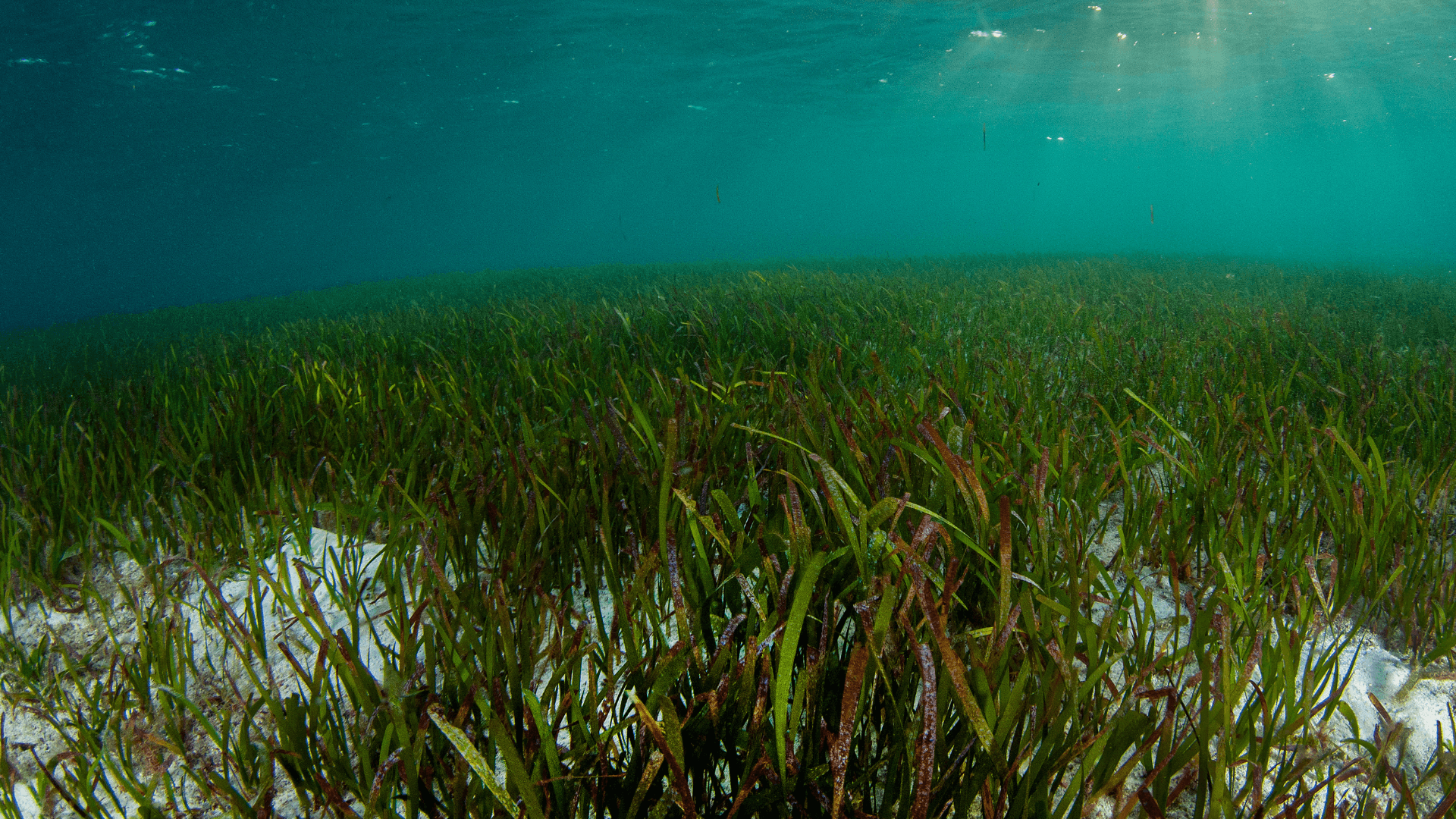
Jasper Brown, one of Project Seagrass’ Interns for the 2025-26 academic year and 3rd Year Student in BSc Zoology with Marine Zoology at Bangor University, explores the need for both active and passive restoration to secure a future for our important seagrass habitats. Marine ecosystems worldwide are under threat. Rising temperatures, ocean acidification, and water pollution are just a few of the key drivers in the decreasing quality of our marine ecosystems. Researchers have found that many aquatic species are shifting poleward at an average rate of 70 kilometres every decade (Melbourne-Thomas et al., 2021) – a vast response to changing conditions. Species such as the American Lobster, Cushion Star, and Humboldt Squid have nearly doubled their latitude range, showing the clear extent of this poleward shift in marine species (Pinsky et al., 2020). Why are they moving? One crucial reason is habitat loss. Seagrass meadows, coral reefs, and kelp forests are disappearing worldwide, reducing opportunities for biodiversity and removing essential nursery habitats for marine life. The solution is clear: we must conserve and restore. Across the globe, charities and organisations are embracing active restoration – direct interventions to rebuild habitats. The work consists of planting seagrass, reforesting mangroves, and coral Gardening. All of which provide crucial environmental benefits: large carbon sinks, coastal protection, and providing nursery habitats. Seagrass planting involves transplanting seeds and rhizomes near existing meadows (do Amaral Camara Lima et al., 2023). Coral gardening uses nurseries to grow coral fragments, which are later transplanted to reefs that support approximately 25% of all marine species (Rinkevich, 2014; Gallagher, 2025; Pacific Coastal and Marine Science Center, 2022). Mangrove reforestation involves planting seedlings along suitable coastlines (Zahra Farshid et al., 2022; Bimrah et al., 2022). These methods are being implemented worldwide, from the Persian Gulf in western Asia to the Firth of Forth in Scotland. Yet, challenges persist. Active restoration projects are costly, often relying on charitable donations and grants (Paling et al., 2009). Despite these hurdles, active restoration works, a recent review by Danovaro (2025), found an average success rate of 64% across 764 projects. Is active restoration enough? However, success depends on environmental conditions; water clarity, for example, is critical for seagrass survival due to photosynthesis requiring sufficient light. Declining clarity, driven by pollution, bottom trawling, and dredging, increases turbidity, which limits restoration efforts (Paling et al., 2009). This is where passive restoration comes in Passive strategies focus on removing environmental pressures and creating conditions for ecosystems to heal naturally. Examples include implementing policies to regulate fertilizer use and reduce nutrient runoff, as well as enforcing Marine Protected Areas (MPAs). These acts will reduce eutrophication in our waterways and lead to a more stable marine environment, leading to the eventual reduction in coral bleaching and seagrass meadow reduction. MPAs have been shown to restore ecosystem functions such as predation (Cheng et al., 2019), highlighting their critical role in maintaining biodiversity. Conclusion While MPAs are just one example, they perfectly highlight the value of passive restoration in its entirety. The greatest benefits come from integrating passive and active approaches. By enforcing regulations and establishing strict no-trawl zones, we can reduce nutrient loads and sedimentation. Through these efforts, our marine ecosystems will one day thrive again, meaning we get to see the animals and plants we so dearly care about. References Bimrah, K., Dasgupta, R., Hashimoto, S., Saizen, I., & Dhyani, S. (2022). Ecosystem Services of Mangroves: A Systematic Review and Synthesis of Contemporary Scientific Literature. Sustainability, 14(19), 12051. https://doi.org/10.3390/su141912051 Bulmer, R. H., Townsend, M., Drylie, T., & Lohrer, A. M. (2018). Elevated Turbidity and the Nutrient Removal Capacity of Seagrass. Frontiers in Marine Science, 5. https://doi.org/10.3389/fmars.2018.00462 Cheng, B. S., Altieri, A. H., Torchin, M. E., & Ruiz, G. M. (2019). Can marine reserves restore lost ecosystem functioning? A global synthesis. Ecology, 100(4), e02617. https://doi.org/10.1002/ecy.2617 Danovaro, R., Aronson, J., Bianchelli, S., Boström, C., Chen, W., Cimino, R., Corinaldesi, C., Cortina-Segarra, J., D’Ambrosio, P., Gambi, C., Garrabou, J., Giorgetti, A., Grehan, A., Hannachi, A., Mangialajo, L., Morato, T., Orfanidis, S., Papadopoulou, N., Ramirez-Llodra, E., & Smith, C. J. (2025). Assessing the success of marine ecosystem restoration using meta-analysis. Nature Communications, 16(1). https://doi.org/10.1038/s41467-025-57254-2 do Amaral Camara Lima, M., Bergamo, T. F., Ward, R. D., & Joyce, C. B. (2023). A Review of Seagrass Ecosystem services: Providing nature-based Solutions for a Changing World. Hydrobiologia, 850(12-13), 2655–2670. https://doi.org/10.1007/s10750-023-05244-0 Gallagher, M. (2025, August 24). What Ecosystem Services Do Coral Reefs Provide? – Green Packs. GreenPacks. https://greenpacks.org/what-ecosystem-services-do-coral-reefs-provide/ Melbourne-Thomas, J., Audzijonyte, A., Brasier, M. J., Cresswell, K. A., Fogarty, H. E., Haward, M., Hobday, A. J., Hunt, H. L., Ling, S. D., McCormack, P. C., Mustonen, T., Mustonen, K., Nye, J. A., Oellermann, M., Trebilco, R., van Putten, I., Villanueva, C., Watson, R. A., & Pecl, G. T. (2021). Poleward bound: adapting to climate-driven species redistribution. Reviews in Fish Biology and Fisheries. https://doi.org/10.1007/s11160-021-09641-3 Pacific Coastal and Marine Science Center. (2022, June 27). Role of Reefs in Coastal Protection | U.S. Geological Survey. Www.usgs.gov. https://www.usgs.gov/centers/pcmsc/science/role-reefs-coastal-protection Paling, Fonseca, M., Katwijk, M., & Keulen, van. (2009). Seagrass restoration. In Coastal wetlands: an integrated ecosystems approach. (pp. 687–713). Rinkevich, B. (2014). Rebuilding coral reefs: does active reef restoration lead to sustainable reefs? Current Opinion in Environmental Sustainability, 7, 28–36. https://doi.org/10.1016/j.cosust.2013.11.018 Zahra Farshid, Reshad Moradi Balef, Tuba Zendehboudi, Dehghan, N., Mohajer, F., Siavash Kalbi, Hashemi, A., Afshar, A., Tabandeh Heidari Bafghi, Hanieh Baneshi, & Amin Tamadon. (2022). Reforestation of grey mangroves (Avicennia marina) along the northern coasts of the Persian Gulf. Wetlands Ecology and Management, 31(1), 115–128. https://doi.org/10.1007/s11273-022-09904-1
End of year reflections from our 2025-26 interns
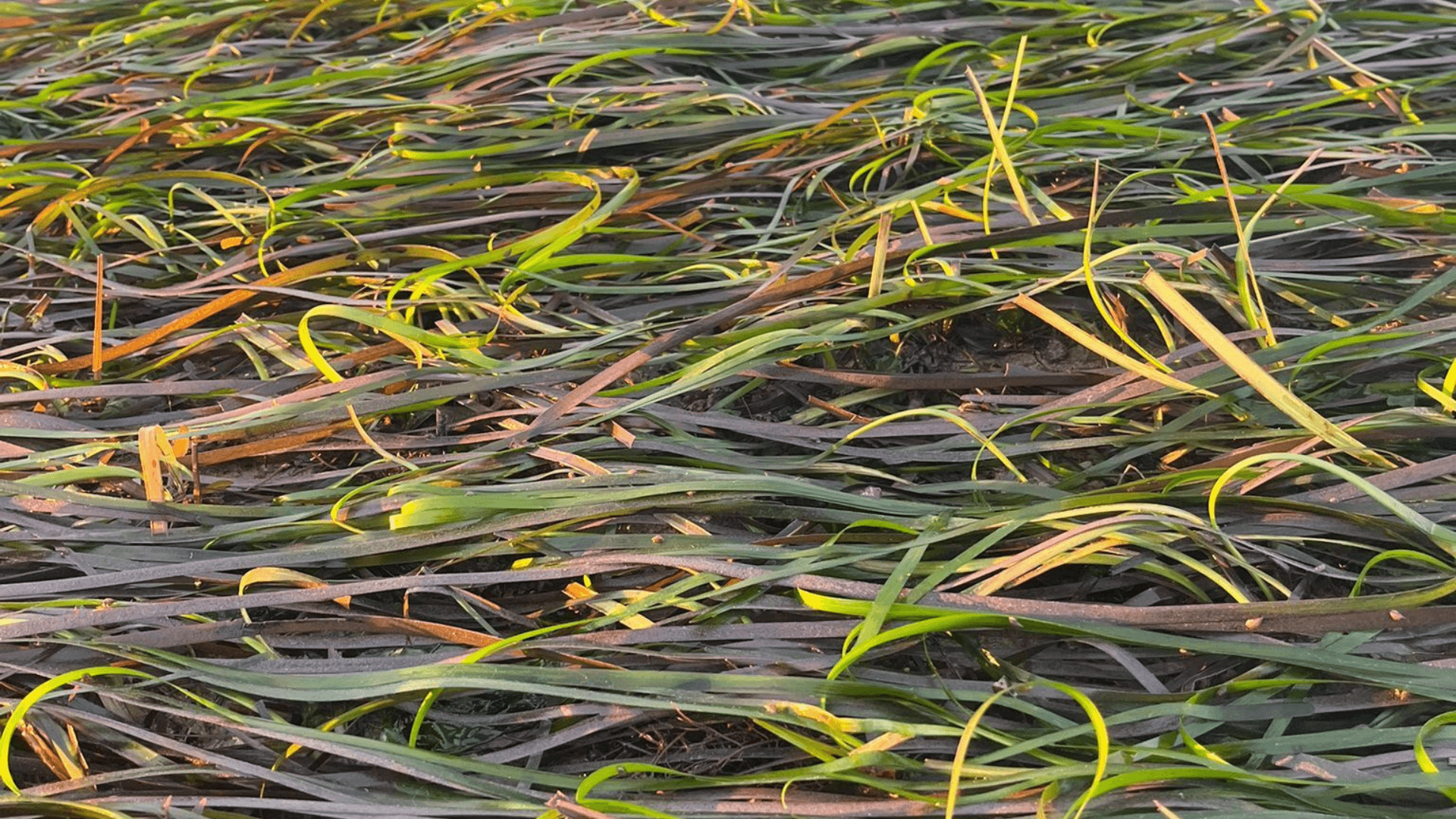
In September 2025, Project Segrass welcomed Anya, Dylan, Will, Grace, Iestyn, Jasper, and Ewan as our interns for the 2025-26 academic year. In this Q&A our interns share their experiences and highlights from their first three months as interns with Project Seagrass. What have been the highlights from your internship so far? Anya: Fieldwork has been the highlight of my internship so far. I have monitored thriving seagrass meadows on the Isle of Wight, documenting the successes and challenges of previous planting trials. It’s great to see the team so excited about their hard work last year paying off. All this has happened whilst being visited by the Island’s coastal wildlife – seals, catsharks and the infamous White-tailed Eagles have come to check out our monitoring techniques. I particularly enjoyed blue boat monitoring in North Wales – which may be linked to the fact we could only work on calm, sunny, beautiful days. Although fieldwork is mostly cold, wet, and muddy I have found it the most rewarding part of my internship so far. Will: Although there are too many things that I could list, one of the biggest highlights has to be being able to help at the UK Seagrass Symposium this year. It was an amazing experience being able to meet and talk to people who have put so much time and effort in seagrass restoration with so many great talks surrounding many different topics. It was also a great way to bond with other members of the team I don’t see as often, like the Scotland team. Outside of the symposium, I’ve always enjoyed being able to help with fieldwork be that in Anglesey or the Isle of Wight doing a variety of things like monitoring seagrass or placing hobo loggers out. I also came along to help at the Swansea Science Festival and the launch of Project Seagrass’s VR project with major success, and I felt lucky to be a part of the launch of the project, hopefully with many more outreach events to come in 2026 to showcase this further. Grace: A standout moment from my internship this year has to be participating in the ‘Meadow of Hope’. I was able to combine both my love for art and science to make something meaningful and will hopefully have a lasting impact on the people involved and Project Seagrass. The meadow was part of an amazing experience I had at the UKSS, which was my first ever science conference and had the opportunity to meet others in my field. Fieldwork is another aspect of this placement that has been eye-opening. Not only has it helped improve my skills as a scientist but has led me to be more connected to nature than ever before. I even had the chance to find my first ever fossil! Seagrass monitoring in the Solent Seagrass monitoring in North Wales Jasper: So far, my internship has been amazing! One of my favorite bits has been the amount of fieldwork we have done. Being in the Scotland office I have a slightly different schedule to the HQ interns and to have done so much fieldwork has been a pleasant surprise. Additionally, the opportunities I’ve been given so far have been thoroughly beneficial. Through the internship directly, I’ve had multiple networking opportunities: UKSS, Forth20 Conference, Sea Scotland Hustings, where I got to meet key scientists, policy makers and other important people within the Scotland conservation network. Additionally, through the advice of my colleagues, I’ve been able to join the Young Sea Changers Community, based in Scotland, working towards giving young conservationists the education and ability to speak and contribute towards Marine policy, which has been thoroughly beneficial. The annual leave has come in quite handy for me as well, allowing me to participate in a week-long work experience with the aquarist team of an aquarium, allowing me to get hands-on with some animals. Ewan: A highlight has been the large portion of fieldwork I have been able to be a part of in the first few months. I have been to several different sites around Edinburgh as well as traveling to Inverness for some surveying work. Another notable highlight are the events and conferences I have been able to take part in which have allowed me to begin making connections with industry professionals. In particular the UK Seagrass Symposium where I was able to also meet the wider Project Seagrass team. Dylan: Since September I’d say my highlight has been visiting as many of the seagrass sites as possible. My favourite so far is probably Penrhyn, but Llanelli is for sure the most fun to go to with how muddy it is. Penrhyn just beats it because of the super cool animals we saw while on fieldwork, the coolest being a sea mouse and a long-spined sea scorpion fish. It has also been really rewarding to feel part of the team so quickly, and hearing everyone’s stories from previous fieldwork is always great. Additionally, being allowed access to so much different scientific equipment is really exciting and the data collection feels much more impactful than any university fieldwork I have been on. Iestyn: A real standout moment for me this year was attending and speaking at the UKSS. It was inspiring to be part of a space where researchers and conservationists come together to work towards a shared goal and present their work was very interesting. Fieldwork has also been a major highlight, especially the Solent seagrass monitoring trip. Being out on the coast and seeing the seagrass meadows up close helped me connect everything I’ve been learning to the practical realities of restoration. Restoration Forth monitoring fieldwork UK Seagrass Symposium Youth Voice session What are you looking forward to in 2026? Anya: I am looking forward to the shift in our work as the season’s change. With next year comes planting, more monitoring, and eventually seed picking. I enjoy the diverse and dynamic nature of this role -where each month brings new
Dr. Benjamin Jones Wins Inaugural Bonefish and Tarpon Trust Davidson Science Award
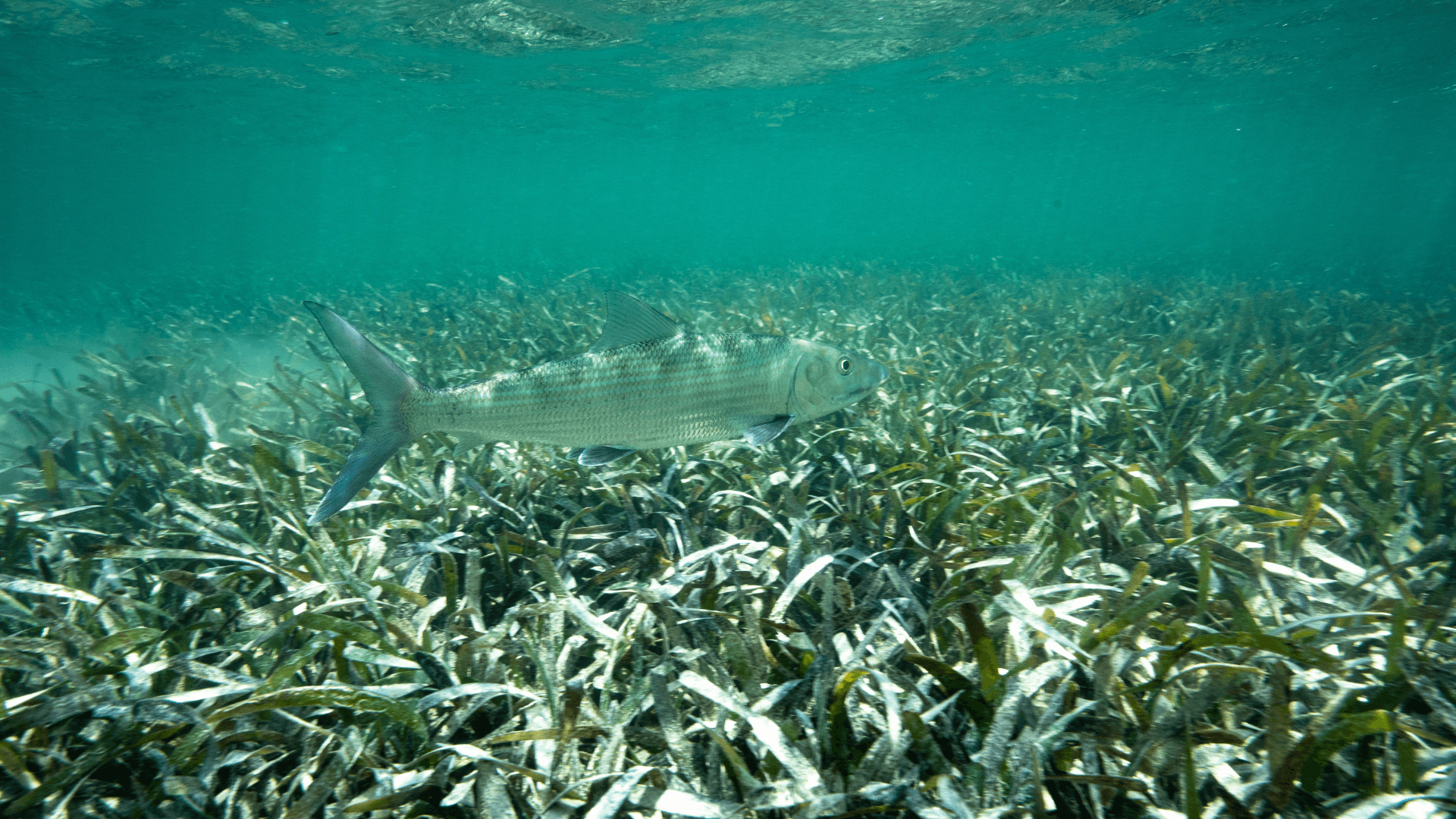
Bonefish & Tarpon Trust have selected Project Seagrass’ Chief Conservation Officer and Co-Founder Dr. Benjamin Jones as the recipient of the inaugural Davidson Science Award. The award has been established to recognize transformative scientific contributions to flats conservation, coastal inshore waters utilized by anglers which are dominated by seagrass meadows. The award is named in tribute to Tom Davidson, Sr., Bonefish & Tarpon Trust’s Founding Chairman and an influential leader in business and conservation. For the past two years, Ben has been collaborating with the Bonefish & Tarpon Trust and scientists from Florida International University on an alternative fishery assessment project that was designed to address long-standing challenges in managing data-poor fisheries. Upon receiving the award, Ben said: “I’m deeply honoured to receive the inaugural Davidson Science Award. This work began as an idea to bridge science and lived experiences, and its success shows what’s possible when we rethink how fisheries can be assessed and more strongly bring fishers on that journey with us. With this support, we can scale this work across the region and help secure a more resilient future for bonefish, tarpon, permit, and the coastal communities that rely on them. Bonefish fishery, South Florida. Credit Ian Wilson Dr Benjamin Jones receiving the Bonefish and Tarpon Trust’s inaugural Davidson Science Award Recognizing that traditional stock assessments are often impractical for data-poor fisheries, Ben worked closely with fishing guides in South Florida who are highly dependent on seagrass meadows to devise new ways to understand and manage an important seagrass associated catch-and-release recreational fishery. In the initial phase of this project, Ben led an extensive literature review across multiple fields on the use and optimization of Indigenous and Local Knowledge (ILK). Of the c.400 studies reviewed, results highlighted the primarily qualitative nature of the studies, the lack of replicability, and underutilization in seagrass fisheries, all of which presented opportunities for quantitative studies to feed into ongoing fisheries management and conservation. Utilizing the concept of the Wisdom of Crowds, the project subsequently tested whether estimates of fishing quality from diverse groups (in this case, multiple ages and years of fishing experience) were more accurate than estimates provided by homogenous groups. Results showed that estimates from small diverse crowds (multiple ages and years of experience) outperformed most estimates from larger homogenous crowds with responses aligning with the empirical data available. Through this work, an innovative method, now termed a Best Catch Assessment (BECAA), was developed utilizing local knowledge to determine historic trends and current fishery status. The method builds upon the work Dr. Andrea Sáenz-Arroyo, a researcher working with coastal communities in Mexico, by asking two key questions surrounding best catch in the past and current best catch. A BECAA has already been successfully applied to assess the bonefish fishery in South Florida, demonstrating its effectiveness and promise for broader conservation efforts. With $50,000 in support from the Davidson Science Award, Ben will lead new assessments for other seagrass-associated species and initiate the process of applying the method in additional locations across the region. “Dr. Jones’ work on alternative methods to assess fisheries reflects a pioneering approach that will have a positive influence on how we manage not only the flats fishery, but data poor fisheries globally,” said Dr. Aaron Adams, Bonefish & Tarpon Trust Director of Science and Conservation. The work has the potential to be utilized in further seagrass contexts. “This is also an opportunity to bring this to even more places globally, in places where people depend on coastal habitats for food and livelihoods for example and ensure that conservation decisions are informed by the people who will be affected by them” said Ben. A bonefish swims through a seagrass meadow in South Florida. Credit Ian Wilson Bonefish in seagrass. Credit Ian Wilson About Bonefish & Tarpon Trust Bonefish & Tarpon Trust’s mission is to conserve bonefish, tarpon, and permit—the species, their habitats and the larger fisheries they comprise. BTT pursues this mission through science-based conservation, education, and advocacy across Florida, The Bahamas, Belize and Mexico, as well as in coastal states from Texas to Virginia. Learn more at: www.BTT.org. About the Davidson Science Award The Davidson Science Award honors the legacy of Tom Davidson, Sr., whose leadership has shaped both the corporate and conservation landscapes. As Founding Chairman of Bonefish & Tarpon Trust, Davidson helped establish BTT’s enduring mission to conserve the flats fishery through science, education, and advocacy. He also served on the Florida Keys Marine Sanctuary Advisory Board and as V.P. Director of Sanctuary Friends of the Florida Keys, and was a director of the Everglades Foundation. With the decline of the bonefish fishery in the Florida Keys the talk of the fishing community in the 1990s, Tom Davidson took decisive action. With a core founding group, Tom created Bonefish & Tarpon Unlimited. BTU (now BTT) was unique in multiple ways: it was the first organization to focus on conservation of the flats fishery; BTT engages the fishing community as a core tenet; and Tom’s vision was for BTT to be a science-based organization that conducts collaborative science to address real conservation needs. This innovative combination of vision, collaboration, and action has enabled BTT to be far more influential in regional flats and coastal conservation than anyone imagined. This award is aimed at continuing that legacy by supporting innovative science that contributes to transformative conservation.
Introducing the Seagrass Hug
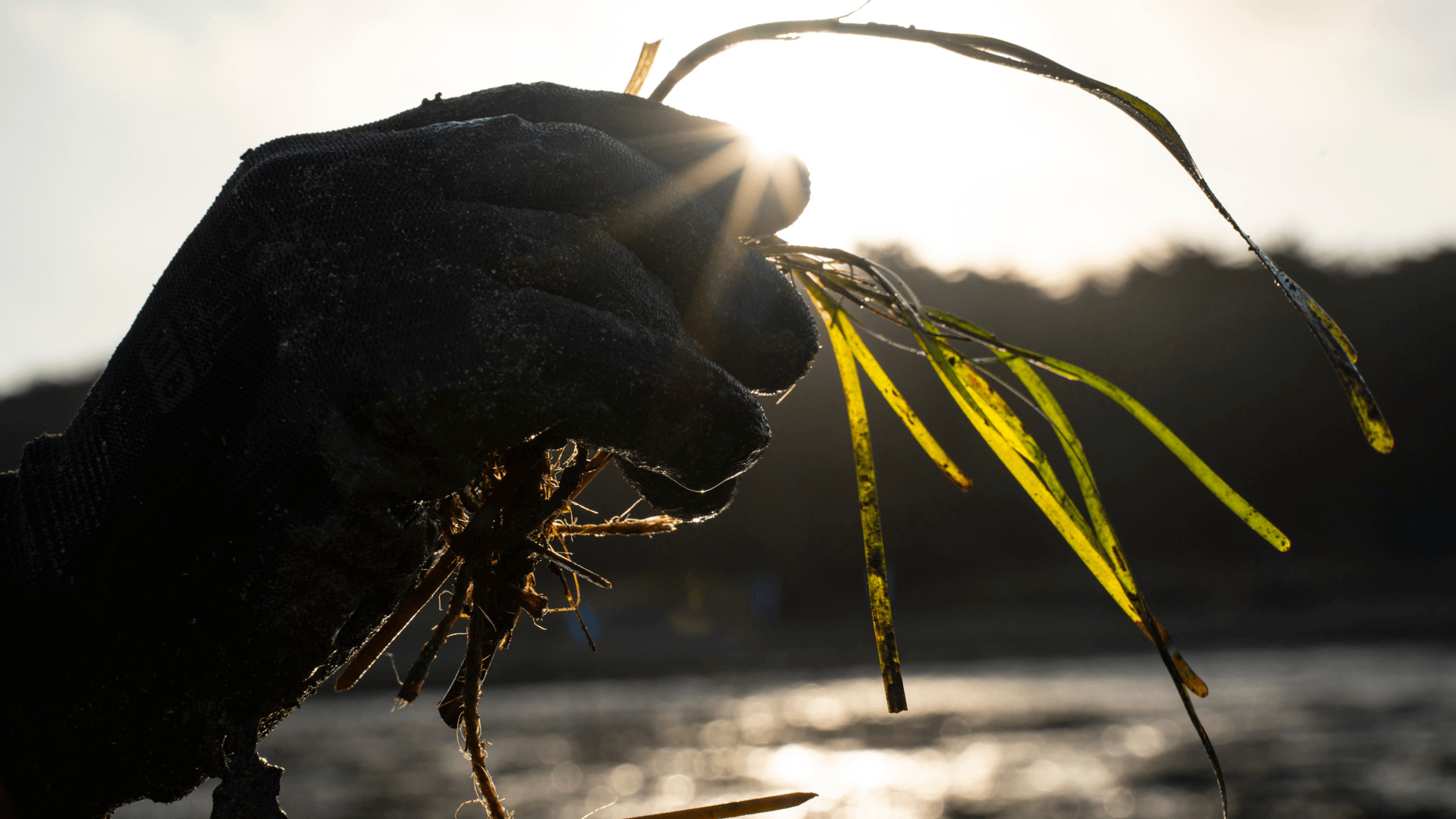
In 2024, the Project Seagrass team introduced the Seagrass Hug to our planting methodology. The method was developed by Anouska Mendzil, Senior Science Officer at Project Seagrass and Swansea University, and aims to determine whether surrounding seeding plots with more established transplants provides protection for emerging seeds in restoration practices. Anouska said: “In this restoration methodology trial we sought to incorporate different Zostera marina life stages by means of seeds and transplants, in a planting design aimed to minimise, and test, hydrodynamic impact on planted seagrass. By implementing multiple restoration strategies, we hope to improve seagrass restoration success and gain valuable knowledge in life-stage bottlenecks to seagrass survival and resilience, site-specific interactions, and insights for scaling-up. The Seagrass Consortium have been wonderful partners in collaborating on this cross-European wide trial, working towards furthering our understanding on seagrass meadow restoration, recovery, resilience and rehabilitation” Members of the Project Seagrass team planting seagrass seeds at Thorness, Isle of Wight using the DIS method. Photo credit Francesca Page. Members of the Project Seagrass team planting seagrass transplants at Thorness, Isle of Wight. Photo credit Francesca Page. The Seagrass Hug Method. Graphic provided by Anouska Mendzil Initial trials of the method took place as part of spring planting efforts in the Isle of Wight, in South England, forming part of active restoration work taking place as part of the Solent Seascape Project. The approach involves planting seagrass seeds using the Dispenser Injection Seeding (DIS) method (developed by The Fieldwork Company) and surrounding these seeding plots with more established seagrass transplants using a bare-root plant with anchoring peg. Project Seagrass’ planting trials used seagrass transplants grown from seed at our Seagrass Nursery in West Wales and local donor meadow transplants to provide the “hug” which will also be tested as part of the experiment. https://www.projectseagrass.org/wp-content/uploads/2025/11/Template-Website-Images-Landscape.mp4 The Seagrass Hug planting design has been aligned with seagrass planting being undertaken by our partners at The Seagrass Consortium and has been replicated as part of restoration efforts in the Bay of Arcachon, Etang de Berre, the Bay of Santander, Oosterschelde in the Netherlands, North Wales and the Mediterranean Sea at Mallorca. Monitoring of these experimental plots including seagrass traits and environmental parameters will enable us to assess whether this approach provides protection for the emerging seeds. Scaling the trial in collaboration with international partners helps to build our collective knowledge. Results will be published and shared on SeagrassRestorer to share the findings openly and foster further collaboration within the seagrass community. A seagrass transplant prepared for planting as part of a Seagrass Hug in the Isle of Wight. Photo credit Francesca Page Spring 2025 planting efforts using the Seagrass Hug method. Photo credit Francesca Page
Cynhaliwyd Symposiwm Morwellt, a gymeradwywyd gan y CU, ym mhrifddinas Cymru

Cynhaliwyd Symposiwm Morwellt 2025 y DU yng Nghaerdydd yr wythnos ddiwethaf, gan ddod â gwyddonwyr, gweithwyr cadwraeth proffesiynol, ymarferwyr, a grwpiau cymunedol ynghyd o bob rhan o’r DU. Wedi’i gynnal gan Brosiect Morwellt, y digwyddiad oedd y cyntaf yng nghyfres Symposiwm Morwellt y DU (UKSS) i dderbyn cymeradwyaeth fel Gweithgaredd Degawd Cefnfor swyddogol fel rhan o Ddegawd Cefnfor y Cenhedloedd Unedig. Dywedodd Huw Irranca-Davies, Dirprwy Brif Weinidog ac Ysgrifennydd Cabinet dros Newid Hinsawdd a Materion Gwledig, wrth draddodi’r araith agoriadol: “Mae adfer cynefinoedd corsydd hallt a morwellt yng Nghymru yn allweddol ar gyfer mynd i’r afael â’r argyfyngau hinsawdd a byd natur yr ydym yn eu hwynebu. Rwy’n hynod falch o’r hyn mae Rhwydwaith Morwellt Cymru yn ei gyflawni a datblygiad Cynllun Gweithredu Morwellt Cenedlaethol Cymru.” “Bydd dull Prosiect Morwellt o ganolbwyntio ar y gymuned yn darparu glasbrint ar gyfer gweithredu cenedlaethol, gan gefnogi swyddi gwyrdd cynaliadwy ledled Cymru nawr ac yn y dyfodol.” Roedd cael Symposiwm Morwellt y DU yng Nghymru yn addas wedi i Lywodraeth Cymru gymeradwyo’r Cynllun Gweithredu Morwellt Cenedlaethol i Gymru yn gynharach eleni, yr ymrwymiad cyntaf o’i fath yn fyd-eang. Cynhaliwyd y digwyddiad yn Techniquest ym Mae Caerdydd, a daeth dros 200 o gynrychiolwyr i arwain trafodaethau a gweithredoedd i amddiffyn ac adfer morwellt y DU. Dywedodd Dr Leanne Cullen-Unsworth, Prif Weithredwr Prosiect Morwellt a Chadeirydd cyntaf Rhwydwaith Morwellt Cymru: “Rwyf wrth fy modd o fod wedi dod ag ail Symposiwm Morwellt y DU i Gymru. Mae’r digwyddiad wedi bod yn llwyddiant ysgubol – mae wedi cryfhau’r cydweithio rhwng gwyddonwyr, ymarferwyr, a gwneuthurwyr polisi o bob rhan o’r DU, ac wedi amlygu bod y Cynllun Gweithredu Morwellt Cenedlaethol i Gymru bellach yn darparu glasbrint i wledydd eraill. Ochr yn ochr â chynghrair ryngwladol o ymarferwyr morwellt, rydym yn arwain y ffordd, yn symud o weledigaeth i weithredu, gan adfer dolydd, llywio polisi ac amddiffyn ein treftadaeth forol.” Mae’r cydweithredu a’r cydweithio a fabwysiadwyd gan Symposiwm Morwellt y DU yn allweddol i fynd i’r afael â’r heriau sy’n wynebu morwellt y DU ar hyn o bryd. Noddwyd y Symposiwm gan Llywodraeth Cymru, Ystâd y Goron, Grid Cenedlaethol y DU,, ACT Sustainably, Rhwydweithiau Trydan yr Alban a’r De, Blue Robotics, a Frontiers. Cefnogwyr Y digwyddiad oedd y cyntaf yng nghyfres Symposiwm Morwellt y DU (UKSS) i dderbyn cymeradwyaeth fel Gweithgaredd Degawd Cefnfor swyddogol fel rhan o Ddegawd Cefnfor y Cenhedloedd Unedig.