Seagrass Nursery News – Vol. 11
By Elise Simone de Tourtoulon-Adams
Why saving the world’s seagrass is part of the most important to-do list in the history of humankind
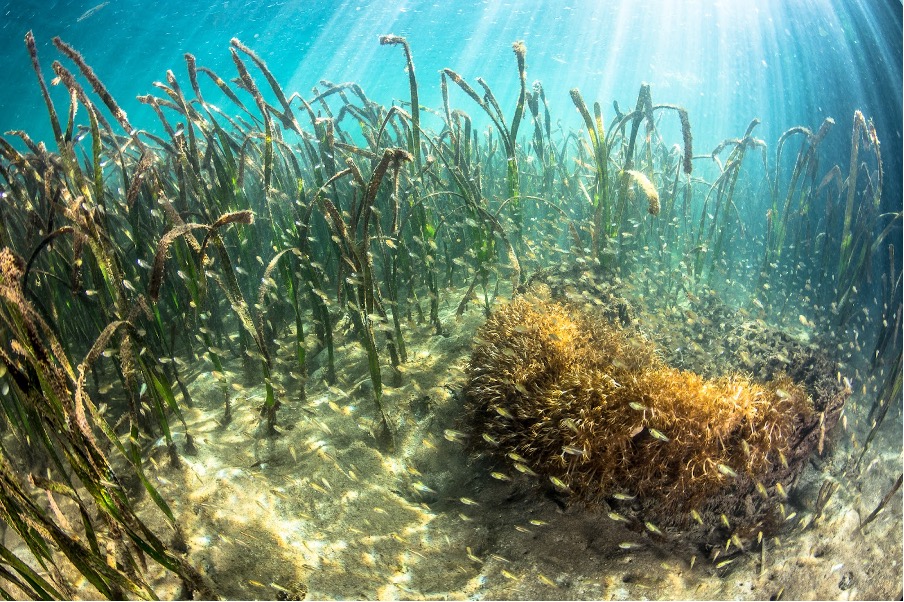
“The downward trajectory of the world’s seagrass meadows must be reversed if we are to fight the planetary crisis” say leading seagrass scientists. The United Nations Sustainable Development Goals have recently been described as “the most important to-do list in the history of humankind”. Scientists from Project Seagrass and Swansea University have this week published a unique review that demonstrates how this “To-Do List” of Sustainable Development Goals provides a blueprint for achieving the net recovery of seagrass ecosystems. Conserving and restoring seagrass meadows contributes to achieving 16 out of the 17 Sustainable Development Goals. Recognising this wide role of seagrass meadows in helping achieve humanity’s ‘to-do list’ and thinking beyond their value in carbon sequestration and storage is critical to achieving the recovery of these degraded ecosystems. The call for urgent action comes after a review into the status of seagrass ecosystems and the major ecological role that they play in the coastal environment published in the leading academic journal Science and written by experts at the marine conservation charity Project Seagrass and Swansea University. Seagrass meadows are being increasingly looked to as a climate solution. However, seagrass ecosystems are sensitive to stressors and remain threatened across the globe. These degraded seagrass ecosystems are less effective at supporting biodiversity and tackling climate change. The authors state “Society needs to create meaningful pathways to net gain at local to global scales. Bold steps are needed through improved legal instruments to halt damaging factors such as bottom trawling, prevent use of damaging boating activities and to apportion responsibility for poor water quality that is causing the slow death of seagrass globally”. By recognising that seagrass meadows contribute to finding solutions to global problems such as food insecurity, water quality, wellbeing and gender equality, as well as the more well known issue such as biodiversity loss and climate change there becomes a more holistic view as to the benefits of taking large cumulative levels of action at local, regional and global scales. We need local and regional authorities to create a baseline of where seagrasses are now, where they used to be and where in the future they could be allowed to recover and be restored to get seagrass on the path to recovery. This needs to occur within the next decade if we are to fight climate change, to fight the biodiversity crisis, protect our coastlines and maintain global food security. Richard Unsworth (lead author) said “The world needs to rethink the management of our coastal environment that includes realistic compensation and mitigation schemes that not only prevent damage, but also drive the restoration, enhancement and creation of seagrass habitat. We also need a major shift in how we perceive the status of our marine environment by examining historical information, not just recent ecological baselines”. Ben Jones, a fellow author of the study added, “It is vital to work collaboratively as it is only through utilising scientific environmental studies and working as cogs in a global partnership for seagrass that meaningful change can happen”. Seagrass conservation faces substantial ecological, social and regulatory barriers and requires strong cross-sectoral partnerships to be put on the path to recovery. Identifying the solutions to seagrass conservation and restoration has never been more urgent and is critical to fight the planetary emergency. This can be achieved by using the Sustainable Development Goals as a blueprint towards recovery. Read the paper here.
Seagrass Nursery News – Vol. 10
By Elise Simone de Tourtoulon-Adams
Learning through nature with YAPEKA

[vc_row type=”in_container” full_screen_row_position=”middle” scene_position=”center” text_color=”dark” text_align=”left” overlay_strength=”0.3″ shape_divider_position=”bottom” bg_image_animation=”none”][vc_column column_padding=”no-extra-padding” column_padding_position=”all” background_color_opacity=”1″ background_hover_color_opacity=”1″ column_link_target=”_self” column_shadow=”none” column_border_radius=”none” width=”1/1″ tablet_width_inherit=”default” tablet_text_alignment=”default” phone_text_alignment=”default” column_border_width=”none” column_border_style=”solid” bg_image_animation=”none”][vc_column_text] The Seagrass Ecosystem Services Project is funded by the International Climate Initiative (IKI) and runs in partnership with the climate action Paris agreement 2015. The Federal Ministry for the Environment, Nature Conservation and Nuclear Safety (BMU) supports this initiative on the basis of a decision adopted by the German Bundestag. The project aims to conserve biodiversity, seagrass ecosystems and their services across 5 Indo-Pacific countries (Malaysia, Philippines, Indonesia, Timor-Leste and Thailand). National partners (often NGOs) work closely with coastal communities and technical experts to run community-led seagrass conservation work. The first of our national partners involved in ‘The Seagrass Ecosystem Services Project’ that we would like to spotlight is YAPEKA, a non-profit organisation that aims to establish community-based conservation efforts across Indonesia through the concept of ‘Learning through nature’. This involves concentrating on building community awareness and developing education programmes to help communities sustainably manage their natural resources. The main areas of focus for YAPEKA are rural areas and key biodiversity sites such as MPAs and national parks. Establishing Locally Managed Marine Areas (LMMAs) are of high importance in rural areas that are dominated by fisheries communities, allowing them to develop their own unique coastal natural resource management. Since 2013 they have been working with local communities in North Sulawesi to raise awareness on the importance of seagrass in preserving the health and sustainability of the region’s coastal ecosystems. In 2016, they introduced dugongs as flagship species for their conservation efforts. They are using Baited Remote Underwater Video Systems (BRUVS) to record fish assemblages within seagrass meadows without being invasive. These cameras can help show what fish species thrive in seagrass meadows and thus help show the importance of these ecosystems. YAPEKA has many success stories: In the early 2000’s, the Bahoi community set up a LMMA. Twenty years later, there is now bigger fish to catch and more biodiversity. In 2019, YAPEKA won ‘best environmental civil society organisation’ in Indonesia. Also, their solid waste management project in the Gili Islands was listed in the top 20 ‘innovative ways to transform waste’ by UN-Habitat. In January 2020, the Bulutui community decided to close their traditional octopus fisheries, only opening it once every 3 months for a 7-day window to reduce pressure on the population One of our team is currently out in the Indo-Pacific, providing in person support to YAPEKA. We can’t wait to hear how their projects are going and we will provide updates where we can on here and across our social media.
Seagrass Nursery News – Special Planting Edition!
By Elise Simone de Tourtoulon-Adams
Seagrass Nursery News – Vol. 8
By Elise Simone de Tourtoulon-Adams
Want to host the 15th International Seagrass Biology Workshop?
The World Seagrass Association Inc. invites expressions of interest from members and interested organisations/institutions who would like to host the 15th International Seagrass Biology Workshop (ISBW) in 2024.The International Seagrass Biology Workshop series is a meeting of research scientists, students and coastal environment managers focusing on global seagrass issues, improving seagrass knowledge, developing networks and advocating for seagrass protection/conservation.ISBWs are often 2-3 day workshops with an additional day for a field trip. Participants are generally limited to 100 however this is highly dependent on the venue. The timing for ISBWs has mostly been late September, although the timing is dependent on the most suitable for the hosting country (e.g. tides, holidays, etc). After the first ISBW in 1993, it was decided that meetings were to be held at two year intervals, swapping between developed and developing nation locations if possible. ISBW14 was originally scheduled to be held in 2020, but has been postponed to 2022 in light of the global COVID-19 pandemic. The 2022 meeting (ISBW14) will be held in Annapolis (Maryland, USA) from 7 – 12 August 2022, in conjunction with the World Seagrass Conference (WSC2022) (https://isbw14.org/). Past ISBW venues included: ISBW1 (1993) Japan – KominatoISBW2 (1996) Australia – Rottnest IslandISBW3 (1998) The Phillippines – Quezon City and BolinaoISBW4 (2000) France – Corsica!SBW5 (2002) Mexico – EnsenadaISBW6 (+Conference) (2004) Australia –Townsville and Magnetic islandISBW7 (2006) Africa – ZanzibarISBW8 (2008) Canada – Bamfield, Vancouver islandISBW9 (+Conference) (2010) Thailand – Phuket and Trang ProvinceISBW10 (2012) Brazil – BuziosISBW11 (2014) China – Sanya, Hainan ProvinceISBW12 (2016) United Kingdom – Nant Gwrtheyrn, WalesISBW13 (+Conference) (2018) Singapore To read about the history of the ISBW series, see Coles, R., Short, F., Fortes, M. and Kuo, J (2014) Twenty years of seagrass networking and advancing seagrass science: The International Seagrass Biology Workshop Series. Pacific Conservation Biology 20(1): 8–16. (http://www.publish.csiro.au/nid/302/paper/PC140008.htm), and Hind-Ozan, E.J., Jones, B.L., 2017. Seagrass science is growing: A report on the 12th International Seagrass Biology Workshop. Marine Pollution Bulletin. http://dx.doi.org/10.1016/j.marpolbul.2017.08.017The International Seagrass Biology Workshop (ISBW) is an official activity of the World Seagrass Association Inc., and WSA Inc. plays a guiding role, and assists the Convener/Organising Committee when requested. Members or organisations/institutions who are interested in submitting an expression of interest to host the 15th International Seagrass Biology Workshop (ISBW15) in 2024 should send a letter by email to Len McKenzie, Secretary, World Seagrass Association Inc., at wsa.secretary@gmail.com no later than May 31, 2022. Please include the name and complete contact information including address, phone and fax numbers, and email address of the member or organisations/institutions expressing interest. Letter should clearly state the country location and supporting organisation. Dot points covering the information required are acceptable. The WSA may require more detailed information in future before a final decision. If you require additional information or any enquiries, please email wsa.secretary@gmail.com
Seagrass Nursery News – Vol. 7
By Elise Simone de Tourtoulon-Adams We held our first Global Seagrass Nursery Network meeting at the end of Seagrass Awareness Month. If you would like to watch the seminar, click here.
Intern Takeover
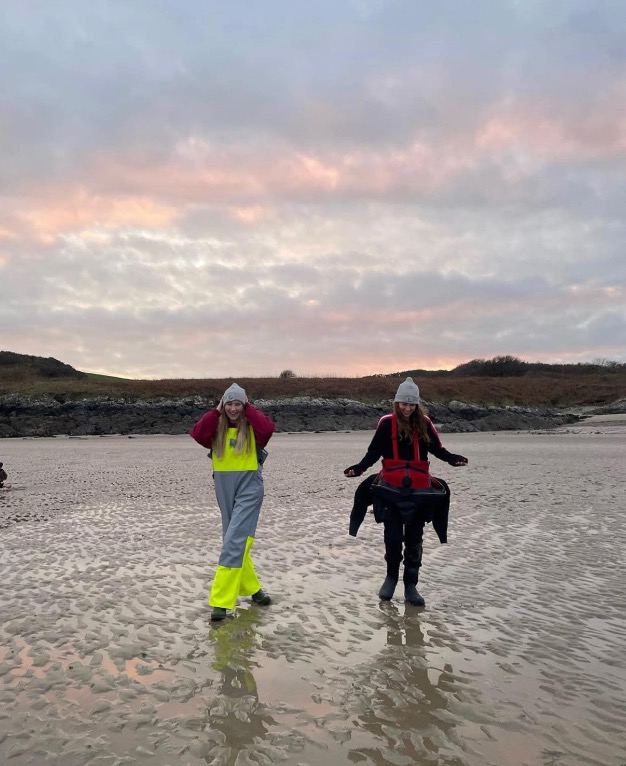
Intern Takeover – Planting trials in North Wales (February 2022) On Friday the 28th of January, a team of us started preparing for a week of fieldwork up in North Wales. A group of humans and one fluffy, four-legged companion (definitely the favourite member of Project Seagrass) helped fill 800 hessian bags and 200 coconut pots with sand and seagrass seeds. These were to be used in the experiments which lay ahead! Bertie looking very proud of himself after assisting the team with their very busy morning ensuring all of the seeds were prepped and ready for North Wales. The aim of this week was to help Lucy Coals with her PhD research project (a collaborative PhD with Deakin University, Swansea University and Project Seagrass), which is assessing how different site conditions and planting methods affect the success of seagrass germination and growth – how interesting, right?! This work is essential to help us better understand the conditions that seagrass prefers to grow in, including light and sedimentation preferences. Seagrass is very particular about its needs and is a very sensitive plant, so understanding the optimum conditions in which seagrass grows is SO important when considering things like site suitability for large-scale restoration efforts. After a very scenic 4-hour drive, filled with the most beautiful welsh landscapes and two of our incredible national parks – Brecon Beacons and Snowdonia, 9 of our team arrived at the Llŷn Peninsula in sunny but cold (nothing new there…) North Wales. Once we arrived and settled in, we tucked into some yummy pasta and headed to bed, making sure we were well rested to start our busy week of field work! Day 1: After a morning full of briefing, organising equipment and kit, we made the hour-long trip to Traeth Bychan in Anglesey to reach the mid-afternoon low tide. An accidental wrong turn led us to the longest named train station in the world “Llanfairpwllgwyngyllgogerychwyrndrobwllllantysiliogogogoch” – a mistake that we were NOT complaining about. Finally, we arrived and kitted up in waders and warm clothes, then headed down to the beach. Lucy demonstrated her 3 different planting methods – planting using hessian bags, coconut pots (which were slightly more exposed) and DIS (dispenser injection seeding) which mixes seeds with mud and is injected directly into the sediment. We then got started with the planting experiments and took sediment samples to assess the organic content and pollution of this site. After a busy first day we headed back to our accommodation, tired but in high spirits. There’s nothing quite like the feeling of completing the first day of fieldwork successfully after lots of stressful planning to ensure everything runs perfectly! Lucy demonstrating how she wanted her experiments, in what order the different planting methods were to be used and the specific way they were to be planted… as the rest of us listened veryyyyy well (check out all of the concentrating faces!) The longest train station in the world “Llanfairpwllgwyngyllgogerychwyrndrobwllllantysiliogogogoch” … go on… try and pronounce it, you know you want to! Day 2: We woke up feeling energised on Tuesday, with half the team deciding to head down to the local beach (Abersoch beach) for a cold-water morning dip. It was freezing and fantastic at the same time but what truly made it was the welcome that we received from the Abersoch dunkers group, who were not only the friendliest people on Earth but were also really interested in the work we were doing locally! Our completely crazy, bonkers team having a wonderful cold morning dip at Abersoch beach – surprisingly, we all felt AMAZING after this dip… maybe there’s a reason why cold water swims are hyped up so much… After another busy morning full of team briefings and preparing equipment and planting materials, we headed back up to gorgeous Anglesey. We split into two teams with half of us heading to Porth y Môr and the other half to Traeth Lligwy. Just like the day before we kitted up, walked to our site, set up the planting trials and took sediment samples when low tide hit – and that’s it! Another experiment set up and in full swing! Two sites down, another 2 to go! Due to the nature of the afternoon low tide, we experienced an amazing purpley pink sunset across the beach, lifting team spirit and moral – as the week went on, we were fortunate enough to keep being awarded with these mesmerising, colourful sunsets. The most beautiful sunset over Traeth Lligwy filled with purple and pink hues. It’s times like these that you take a few moments to appreciate the beauty of our stunning planet. GOOSEBUMPS! Day 3: We started the day with a quick GPS refresher from Lucy, after a quickfire of ‘what does this button do?’ we were put into teams to search for nearby GPS points – a lot of fun and a little bit trickier than it may sound… needless to say we all learnt a lot and are definitely a little more confident when using a GPS. Today we were heading to Penychain, where we spotted our first seagrass of the week – as you can imagine, the team of SEAGRASS ENTHUSIASTS were ecstatic with this discovery! A beautiful patch of Zostera marina on Penychain beach… I mean… does anything compare to the vivid green leaves of a seagrass plant?? I think not. Ben in his element. We also added these sightings to Seagrass Spotter – remember to add yours too if you come across a patch of seagrass!! When low tide hit, we got started on the experiments as normal but also did a site assessment – looking at the features of the beach like how much oxygen is in the sediment, what type of sediment was at the site (e.g muddy, sandy, gravelly), any signs of pollution (e.g runoff) and more general assessments like what organisms were present to be able to get a feel of whether this site may be
Seagrass Nursery News – Vol. 6
By Elise Simone de Tourtoulon-Adams