Tag: new science

Seagrass meadows are reliable fishing grounds for food

A new study shows that seagrass fisheries provide a reliable safety-net for poor fishermen, since they perceive those habitats to maintain large fish catches over time. Surprisingly, even more so than coral reef fisheries, which people normally associate with small-scale fishery. Seagrass meadows are routinely used as a fishing habitat

Read More »

Why saving the world’s seagrass is part of the most important to-do list in the history of humankind

“The downward trajectory of the world’s seagrass meadows must be reversed if we are to fight the planetary crisis” say leading seagrass scientists. The United Nations Sustainable Development Goals have recently been described as “the most important to-do list in the history of humankind”. Scientists from Project Seagrass and Swansea University have this week published a unique review that demonstrates how this “To-Do List” of Sustainable Development Goals provides a blueprint for achieving the net recovery of seagrass ecosystems. Conserving and restoring seagrass meadows contributes to achieving 16 out of the 17 Sustainable Development Goals. Recognising this wide role of seagrass meadows in helping achieve humanity’s ‘to-do list’ and thinking beyond their value in carbon sequestration and storage is critical to achieving the recovery of these degraded ecosystems. The call for urgent action comes after a review into the status of seagrass ecosystems and the major ecological role that they play in the coastal environment published in the leading academic journal Science and written by experts at the marine conservation charity Project Seagrass and Swansea University. Seagrass meadows are being increasingly looked to as a climate solution. However, seagrass ecosystems are sensitive to stressors and remain threatened across the globe. These degraded seagrass ecosystems are less effective at supporting biodiversity and tackling climate change. The authors state “Society needs to create meaningful pathways to net gain at local to global scales. Bold steps are needed through improved legal instruments to halt damaging factors such as bottom trawling, prevent use of damaging boating activities and to apportion responsibility for poor water quality that is causing the slow death of seagrass globally”. By recognising that seagrass meadows contribute to finding solutions to global problems such as food insecurity, water quality, wellbeing and gender equality, as well as the more well known issue such as biodiversity loss and climate change there becomes a more holistic view as to the benefits of taking large cumulative levels of action at local, regional and global scales. We need local and regional authorities to create a baseline of where seagrasses are now, where they used to be and where in the future they could be allowed to recover and be restored to get seagrass on the path to recovery. This needs to occur within the next decade if we are to fight climate change, to fight the biodiversity crisis, protect our coastlines and maintain global food security. Richard Unsworth (lead author) said “The world needs to rethink the management of our coastal environment that includes realistic compensation and mitigation schemes that not only prevent damage, but also drive the restoration, enhancement and creation of seagrass habitat. We also need a major shift in how we perceive the status of our marine environment by examining historical information, not just recent ecological baselines”. Ben Jones, a fellow author of the study added, “It is vital to work collaboratively as it is only through utilising scientific environmental studies and working as cogs in a global partnership for seagrass that meaningful change can happen”. Seagrass conservation faces substantial ecological, social and regulatory barriers and requires strong cross-sectoral partnerships to be put on the path to recovery. Identifying the solutions to seagrass conservation and restoration has never been more urgent and is critical to fight the planetary emergency. This can be achieved by using the Sustainable Development Goals as a blueprint towards recovery. Read the paper here.

Read More »

Legacy of ancient ice ages shapes how seagrasses respond to environmental threats today

Deep evolution casts a longer shadow than previously thought, scientists report in a new paper published the week of Aug. 1 in the Proceedings of the National Academy of Sciences. Smithsonian scientists and colleagues looked at eelgrass communities—the foundation of many coastal marine food webs along the north Atlantic and Pacific coasts—and discovered their ancient genetic history can play a stronger role than the present-day environment in determining their size, structure and who lives in them. And this could have implications for how well eelgrasses adapt to threats like climate change. About a half-million years ago, when the world was warmer, some eelgrass plants made the difficult journey from their homes in the Pacific to the Atlantic. Not all the plants were hardy enough to make the journey across the Arctic. For those that succeeded, a series of ice ages during the Pleistocene Epoch further affected how far they could spread. Those millennia-old struggles left lasting signatures in their DNA: Even today, eelgrass populations in the Atlantic are far less genetically diverse than those in the Pacific. Still, in the classic “nature versus nurture” debate, scientists were stunned to discover that genetic legacy sometimes does more to shape modern eelgrass communities than the current environment. “We already knew that there was big genetic separation between the oceans, but I don’t think any of us ever dreamed that that would be more important than environmental conditions,” said Emmett Duffy, marine biologist with the Smithsonian Environmental Research Center and lead author of the report. “That was a big surprise to everybody.” Eelgrasses in hot water Eelgrass is among the most widespread shallow-water plants in the world. Its range spans from semi-tropical regions like Baja California all the way to Alaska and the Arctic. Besides providing food and habitat for many undersea animals, eelgrass offers a plethora of services to humans. It protects coastlines from storms, soaks up carbon and can even reduce harmful bacteria in the water. But in most places where it grows, eelgrass is the dominant—or only—seagrass species present. That makes its survival critical to the people and animals that live there. And the lower genetic diversity in the Atlantic could make it hard for some populations to adapt to sudden changes. “Diversity is like having different tools in your tool belt,” said Jay Stachowicz, a co-author and ecologist with the University of California, Davis. “And if all you’ve got is a hammer, you can put in nails, but that’s about it. But if you have a full complement of tools, each tool can be used to do different jobs more efficiently.” Ecologists have already seen eelgrass disappearing from some regions as the waters heat up. In Portugal, its southernmost spot in Europe, eelgrass has begun pulling back and moving farther north, into cooler waters. “I don’t think that we’re going to lose [eelgrass] in the sense of an extinction,” said co-author Jeanine Olsen, an emeritus professor at the University of Groningen in the Netherlands. “It’s not going to be like that. It’s got lots of tricks up its sleeve.” But local extinctions, she pointed out, are going to occur in some places. That could leave regions that depend on their local eelgrass in trouble. Reaching a more ZEN worldview Realizing the urgent need to understand—and conserve—eelgrass worldwide, Duffy and his colleagues banded together to form a global network called ZEN, which Project Seagrass was a partner of. The name stands for Zostera Experimental Network, a nod to eelgrass’s scientific name, Zostera marina. The idea was to unite seagrass scientists all over the world, doing the same experiments and surveys, to get a coordinated global picture of seagrass health. For the new study, the team studied eelgrass communities at 50 sites in the Atlantic and Pacific. With 20 plots sampled per site, the team came away with data from 1,000 eelgrass plots. First they collected basic eelgrass data: size, shape, total biomass and the different animals and algae living on and around them. Then they collected genetic data on all the eelgrass populations. They also measured several environmental variables at each site: temperature, the water’s saltiness and nutrient availability, to name just a few. Ultimately, they hoped to discover what shaped eelgrass communities more: the environment or the genetics? After running a series of models, they discovered a host of differences between the Atlantic and Pacific eelgrass ecosystems—differences that closely aligned with the genetic divergence from the Pleistocene migration and subsequent ice ages. While Pacific eelgrasses often grew in “forests” that regularly surpassed 3 feet tall and sometimes reached more than twice that high, the Atlantic hosted more diminutive “meadows” that rarely came close to that height. The genetic differences also aligned with the total biomass of eelgrass. In the Atlantic, evolutionary genetics and the present-day environment played equally strong roles in eelgrass biomass. In the Pacific, genetics had the upper hand. These impacts flowed up to other parts of the ecosystem as well. When it came to small animals that lived in the eelgrass, like invertebrates, the genetic signature from the Pleistocene again played a stronger role than the environment in the Pacific—while the two played equally strong roles in the Atlantic. “The ancient legacy of this Pleistocene migration and bottleneck of eelgrass into the Atlantic has had consequences for the structure of the ecosystem 10,000 years later,” Duffy said. “Probably more than 10,000.” Conserving the future That ancient genetics can play such a strong role—sometimes stronger than the environment—has some ecologists concerned about whether eelgrass can adapt to more rapid changes. “Climate warming—by itself—is probably not the primary threat for eelgrass,” Olsen said. Pollution from cities and farms, which can cloud the water and lead to harmful algal blooms, also endangers seagrasses. That said, the vast array of environments eelgrass can survive in testifies to its hardiness. “I’m hopeful because our results illustrate long-term resiliency to repeated, major changes in thermal tolerances and the wide range of eelgrass habitats over about half the Northern Hemisphere,” Olsen said.


Read More »

Seagrass meadows are reliable fishing grounds for food

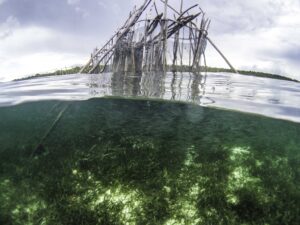
A new study shows that seagrass fisheries provide a reliable safety-net for poor fishermen, since they perceive those habitats to maintain large fish catches over time. Surprisingly, even more so than coral reef fisheries, which people normally associate with small-scale fishery. Seagrass meadows are routinely used as a fishing habitat across the Indo-Pacific region to sustain millions of households by providing fish and other animals for food and income from fishing. A new study in Ocean and Coastal Management investigated how and why households use seagrass meadows across Cambodia, Tanzania, Sri Lanka and Indonesia in the Indo-Pacific region by conducting interviews that asked what habitats they used and which they preferred. Benjamin Jones, director of Project Seagrass and PhD student at the Department of Ecology Environment and Plant Sciences, Stockholm University, says: “Seagrass was the most common habitat used for fishing. Nearly half of all households we talked to preferred fishing in seagrass over other habitats such as coral, mangroves, open ocean, mud and rock for example. This was surprising because most people think of reef fisheries as the key tropical small-scale fishery, but we show that its actually engagement in seagrass fisheries that are much more characteristic of households.” When the researchers asked the fishermen why they preferred seagrass, they expressed a general feeling of reliability: seagrass meadows always provide large catches and fish and invertebrates are always found there. This is likely due to the ecological role that seagrass meadows play for fish. They provide valuable nursery habitats with lots of places for fish to hide and grow which means that there is often a high abundance of fish present. The study also revealed that 3 in 20 people across the region were reliant on seagrass meadows as their fishing ground and did not fish anywhere else. The research from households in 147 villages also revealed that reliance on seagrass meadows was strongly influenced by household income: “Household income had two different effects. On one hand, poorer households were less likely to own motorboats. These were reliant on seagrass as they were unable to fish elsewhere, seagrass is close to shore and easy to access without a motor. On the other hand, wealthier households were more likely to own certain types of fishing gear that incentivized them to use seagrass due to high rewards and low effort requirements. These were static fishing fences that don’t require a fisherman to be present” says Benjamin Jones. Study co-author and fellow Project Seagrass director Leanne Cullen-Unsworth, says “Our results highlight the need for empirical household scale data for management of seagrass meadows. People use and value seagrass for many different reasons so safeguarding seagrass is vital to ensure that all people, all of the time, have equitable and equal access to the resources seagrass provides.” The study was a collaboration between scientists from Stockholm University, Project Seagrass, Swansea University, Uppsala University, Hasanuddin University, among others. Open Access paper: Jones, B.L.H.; Unsworth, R.K.F.; Nordlund, L.M.; Eklöf, J.S.; Ambo-Rappe, R.; Carly, F.; Jiddawi, N.S.; La Nafie, Y.A.; Udagedara, S.; Cullen-Unsworth, L.C. Dependence on seagrass fisheries governed by household income and adaptive capacity. Ocean & Coastal Management 2022, 225, doi:10.1016/j.ocecoaman.2022.106247.    

Read More »