Tag: monitoring

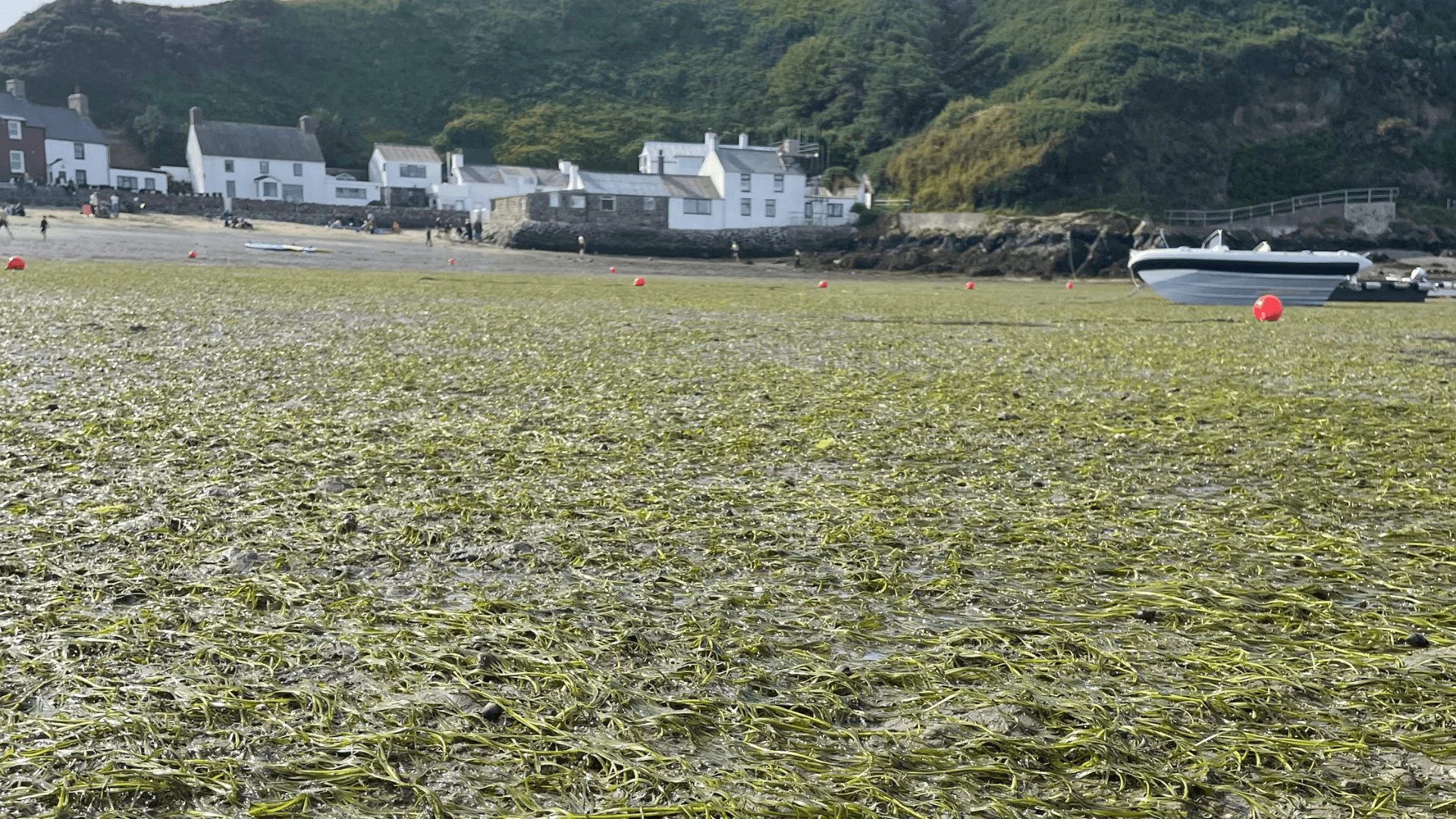
Seagrass meadow at Porthdinllaen meadow exposed at low tide,

Seagrass Watch & Restoration Update – North Wales

Earlier this year, Project Seagrass welcomed Rhys Bowen to the team to support our work in North Wales as part of the Seagrass Ocean Rescue North Wales programme. This follows on from Rhys’ involvement in the programme during 2024 where we worked as one of the Marine Futures Interns at

Read More »
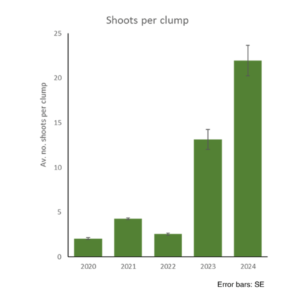
Graph showing shoots per clump from recent monitoring in Dale

Dale Seagrass Update

Following scientific trials in 2019, in 2020 many seagrass seeds were planted in Dale, supported by the community, school children and local organisations. Since planting, the seagrass area has been reseeded several times to infill gaps and support it as it develops. Despite some setbacks, the restoration area is now

Read More »
A subtidal Neptune grass meadow grows of the coast of Greece

How the Seagrass Essential Ocean Variable can support more effective monitoring and management

Current estimates of the global extent of seagrass range from between 160,000-266,000km. Such a high degree of uncertainty presents challenges for researchers and managers and their ability to make informed decisions which account for the changing status of seagrass ecosystems. Key to improving our understanding of seagrass presence and absence, identified as one of the six Global Challenges facing effective seagrass conservation, is the collection and integration of interoperable data on seagrass extent.  A new paper published in Bioscience from members of the Coordinated Global Research Assessment of Seagrass Systems working group outlines how the Seagrass Essential Ocean Variable can help us to address this challenge. This paper was co-written by members of our Project Seagrass team.  Achieving our goals for seagrass conservation requires reliable information on the status and trends of seagrasses and the organisms that associate with them, yet seagrass variables measured and the methods for doing so vary widely across projects and organisations, presenting challenges for comparisons across studies. This new paper provides a global framework for seagrass monitoring as an Essential Ocean Variable of the Global Ocean Observing System, key to aligning seagrass researchers and managers around a common approach to seagrass monitoring. Implementing these guidelines will support the collection of more comparable, compatible, and combinable seagrass data.  The Seagrass Essential Ocean Variable contains three priority measurements to maximise compatibility across data sets:  Seagrass percentage cover   Seagrass species composition (the identify and relative abundances of seagrass species in an area)  Seagrass areal extent (the horizontal extent of seagrass at the meadow of seascape scale  These three priority measurements collectively have been identified to provide the most useful assessment of seagrass status and change at landscape scales, addressing most scientific, management, and policy needs and targets. The Essential Ocean Variable also includes further supporting variables relating to biological and environment factors.   Seagrass monitoring using SeagrassSpotter At Project Seagrass we’re well placed to contribute to this global process with our OpenAccess SeagrassSpotter.org platform collecting georeferenced data on seagrass percentage cover and species composition. In 2026 we will also be launching a complementary app called SeagrassTracker which will help scientists report, share, and archive data on seagrass spatial extent. These platforms are all linked to the Global Ocean Observing System.  Key to the Seagrass Essential Ocean Variable is a commitment to collaborate. If utilised across widely, the EOV will support the creation of a growing resource of seagrass data that is maximally compatible and supports more reliable local research and better-informed management. 

Read More »
Seagrass meadow at Porthdinllaen meadow exposed at low tide,

Seagrass Watch & Restoration Update – North Wales

Earlier this year, Project Seagrass welcomed Rhys Bowen to the team to support our work in North Wales as part of the Seagrass Ocean Rescue North Wales programme. This follows on from Rhys’ involvement in the programme during 2024 where we worked as one of the Marine Futures Interns at our Seagrass Ocean Rescue partner, the North Wales Wildlife Trust. Rhys splits his time between Project Seagrass and North Wales Wildlife Trust. In this blog article Rhys reflects on recent seagrass monitoring he has been involved with in North Wales: Over the past few months, I’ve had the privilege of monitoring several key seagrass meadows and restoration sites across North Wales. These meadows, both old and new, play a vital role in our national marine conservation efforts. Seagrass Watch at Porthdinllaen, Llyn Peninsula In May, with the help of Dylan and Reece from North Wales Wildlife Trust, I conducted monitoring at our longstanding seed donor site in Porthdinllaen. We used the internationally recognised Seagrass Watch protocol which has been implemented at this meadow since 2015 and follows a rigorous, standardised approach. Using 50 cm² quadrats along three fixed transects, I collected data every 5 meters on: Seagrass cover. Epiphyte and algal presence. Average leaf lengths. This consistent monitoring at the same locations allows us to track changes in seagrass health over time and helps inform both conservation and restoration strategies. Seagrass meadow at Porthdinllaen. Photo Credit Rhys Bowen Project Seagrass Seagrass Watch monitoring at Porthdinllaen. Photo Credit Rhys Bowen Project Seagrass Restoration Efforts on Ynys Môn (Anglesey) As the Seagrass Ocean Rescue programme entered its fourth year, we continue to strive towards our goal to plant Zostera marina over an area of ten hectares across North Wales between 2022 and 2026. This year, at Penrhos and Penrhyn on Anglesey, we planted nearly 1 million seagrass seeds using two methods: The DIS (Dispenser Injection Seeding) technique. A manually powered seeding machine, developed by The Fieldwork Company designed to efficiently distribute mud-seed mixtures over large areas.   Both methods have proved effective and the machine quickly won fans among our volunteers! Of which, none of this would be possible without the incredible support from our community groups, dedicated local volunteers, and the amazing Ocean Rescue Champions at the North Wales Wildlife Trust. Massive thanks to everyone who braved the weather and mud with us! As someone who is new to restoration, it was eye-opening to be a part of this ongoing work and witness the precision and care that goes into giving these tiny seeds the best chance of developing into healthy adult plants and meadows. First Signs of Growth In late June over the spring tides, I returned to Holyhead Bay with volunteers to assess the seagrass we had planted out in spring. We used 1m² quadrats to count seagrass shoots and measure leaf length and epiphyte coverage withing our planting plots. Following this period of monitoring I’m thrilled to report: Seagrass is growing across nearly all our planted plots. Shoots from both planting methods (DIS and Seeding machine) have emerged. Some leaves have already reached lengths of 12 cm and appear healthy.   Monitoring will continue throughout the year alongside collection of environmental data. This will continue to inform and support our restoration work. The Seagrass Ocean Rescue team would like to thank the partners and volunteers for their continued support. Keep an eye out for more opportunities to get involved by signing up to our newsletter! Seagrass Watch Monitoring in Porthdinllaen

Read More »
Graph showing shoots per clump from recent monitoring in Dale

Dale Seagrass Update

Following scientific trials in 2019, in 2020 many seagrass seeds were planted in Dale, supported by the community, school children and local organisations. Since planting, the seagrass area has been reseeded several times to infill gaps and support it as it develops. Despite some setbacks, the restoration area is now doing well, with a great increase in growth this year seen in recent monitoring. The natural patch of seagrass closer to the shore (Frenchman’s Bay area) is also doing well, likely due to seagrass seeds being transported to this area from the restoration area, and natural growth. Scuba divers went out in autumn 2024 and covered 3,000 m² of the restoration area, surveying in ten distinct lines. The results show that the average number of shoots within each seagrass clump has greatly increased since 2023. This means that the clumps of seagrass are larger, with the potential to patch together with more growth to form a meadow. The seagrass in the restoration is looking healthy and growing well!  The average number of shoots across the whole restoration area has also increased since 2023, and recovered since a trawling and storm incidentthat impacted the seagrass from 2021 to 2022. Leaf length of the seagrass has remained stable from 2023 to 2024, suggesting that the seagrass is reaching it’s maximum length for the environmental conditions. We’ve also been co-delivering many seagrass related activities with local businesses – including seagrass paddleboard and snorkel safaris, art activities, seine netting, community meetings and more. We have our first Sensitive Ecosystem Responsible Fisher (SERF) and are trialling seagrass friendly lobster pots. We also continue to support the visitor moorings located outside of the restoration area – with donations encouraged for use. We couldn’t have achieved what has been without the ongoing support of Dale Seagrass Stakeholder Group, who continue to provide oversight to the project.

Read More »