NEWS

NEWS

Keeping you up to date with Project Seagrass news and views with a mixture of field notes and commentary on seagrass and marine conservation topics.

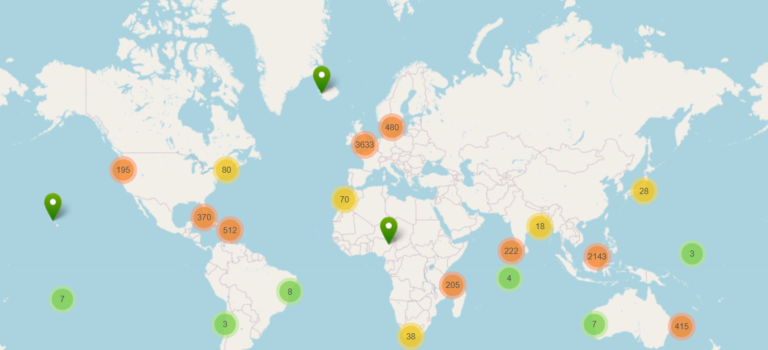
A map of the world showing where seagrass has been spotted using SeagrassSpotter

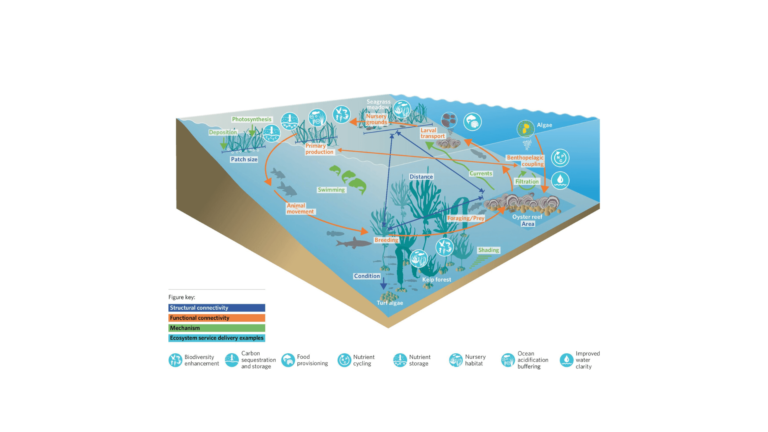
Harnessing open data to understand coastal social-ecological systems

Our oceans and coasts are home to ecosystems that provide immense benefits to people, from food and livelihoods to carbon storage and coastal protection. In particular, seagrass meadows are archetypal social-ecological systems (SES), linking human well-being to ecosystem health. But to manage these systems effectively, we need access to both ecological
Read More »
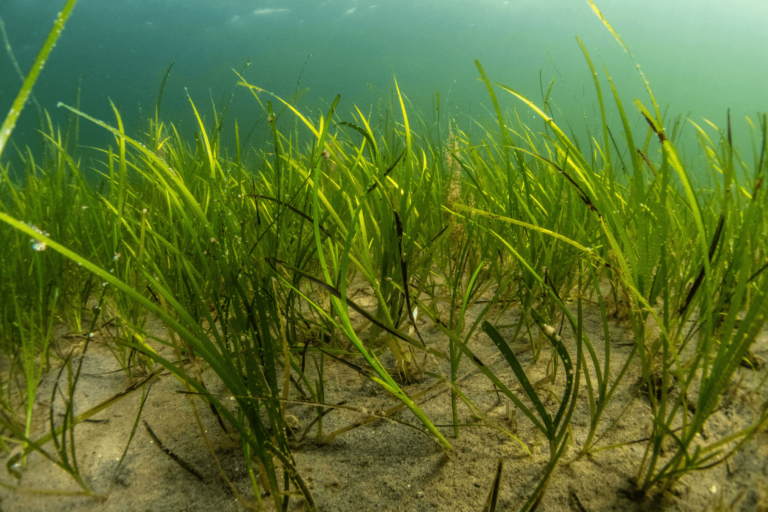
Zostera marina seagrass meadow. Credit Ben Jones

Seagrass swap could reshape Chesapeake Bay food web

Beneath the surface of the Chesapeake Bay, a subtle but dramatic shift is taking place as eelgrass gives way to its warmer-water relative, widgeon grass. A new study from researchers at William & Mary’s Batten School & VIMS shows that this seagrass swap could have ecological impacts across the Bay’s

Read More »
SeagrassSpotter Nanozostera japonica

Researchers uncover hidden seagrass species in northwest Pacific

Seagrasses, foundational species in coastal ecosystems worldwide, are surprisingly few in documented diversity—with only about 70 species identified globally, despite their widespread distribution and ecological importance. Complicating matters, their high phenotypic plasticity within species makes precise classification challenging. Against this backdrop, a research team led by Prof. Zhou Yi from

Read More »
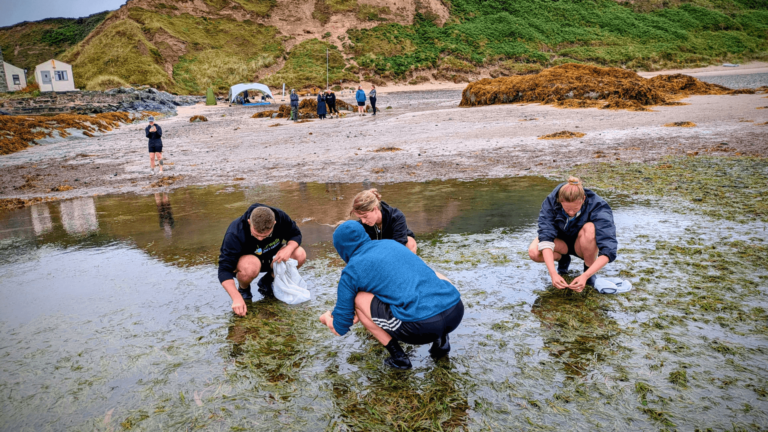
Volunteers crouch in the seagrass meadow at Porthdinllaen collecting seagrass seeds

Fieldwork notes from our summer seagrass seed collections

The Project Seagrass team have had another busy summer of seagrass seed collections!  This year collections took place in Yarmouth, Ryde, and Bembridge on the Isle of Wight in the Solent, and in Porthdinllaen in North Wales. Find out more about how this summer’s collections went:  Solent Seed Collection |

Read More »
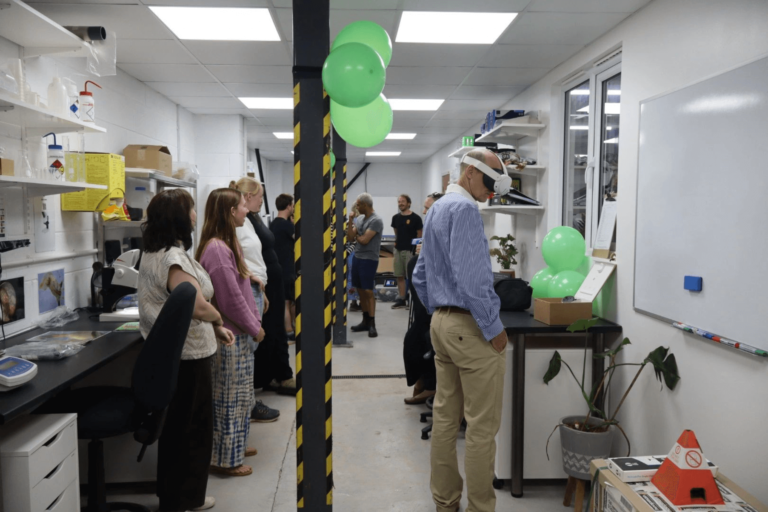
Project Seagrass Lab Opening

Project Seagrass celebrates opening of new Lab

Last month marked the opening of a newly constructed laboratory facility at Project Seagrass’ headquarters in Bridgend, South Wales. Project Seagrass CEO Leanne Cullen-Unsworth said: “We’re delighted to be able to launch this fantastic new facility within our existing working space in Bridgend. Thanks to generous support from funders who

Read More »
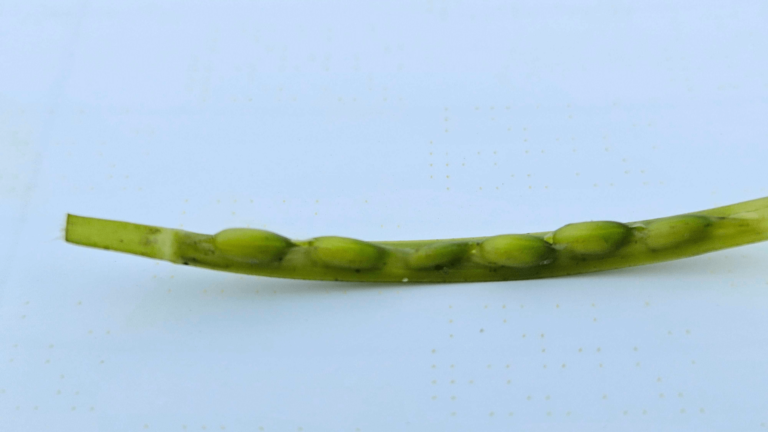
Close up of a spathe with seagrass seeds

Seagrass Nursery News

July 2025 Emily Yates, Seagrass Nursery Lead Introduction It’s that time of year when the sun is shining and seagrass meadows around the UK are filled with flowering shoots, laden with maturing seeds. Much of July has been dominated by seagrass seed collection fieldwork and preparing for the seeds to

Read More »
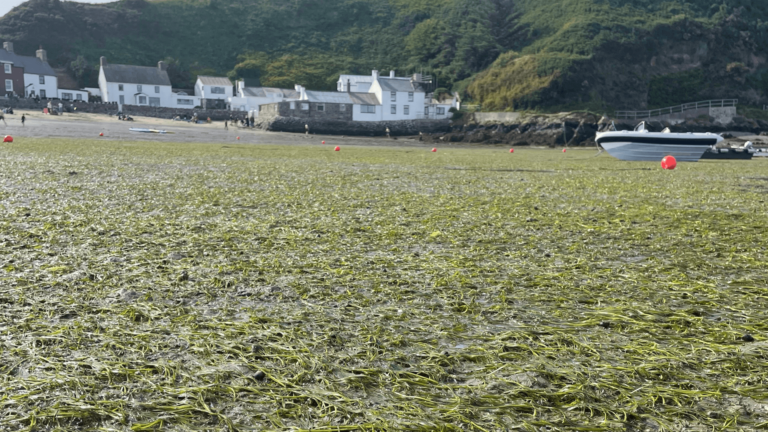
Seagrass meadow at Porthdinllaen meadow exposed at low tide,

Seagrass-Watch & Restoration Update – North Wales

Earlier this year, Project Seagrass welcomed Rhys Bowen to the team to support our work in North Wales as part of the Seagrass Ocean Rescue North Wales programme. This follows on from Rhys’ involvement in the programme during 2024 where we worked as one of the Marine Futures Interns at

Read More »
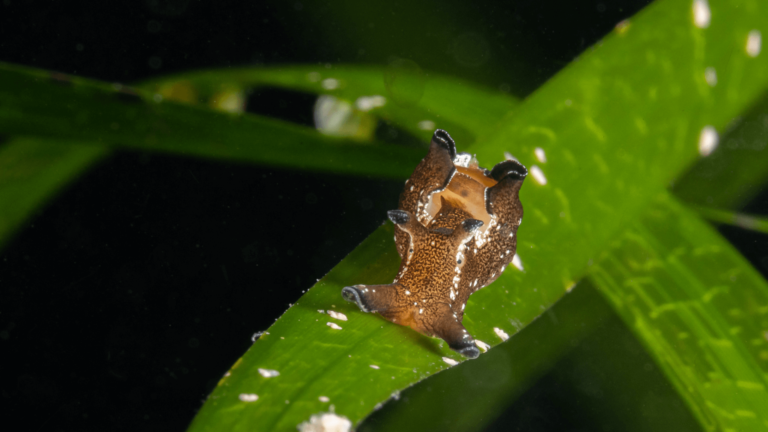
A Sea Hare sitting on a blade of seagrass in an Orcadian seagrass meadow.

The Sea Hare: Creatures that call seagrass home

In a new blog series, our Conservation Trainee Abi David explores some of the amazing creatures that call seagrass meadows their home. Sea hares are odd looking creatures. They are mostly soft bodied but have a small internal shell, which separates them from their close relatives – sea slugs. The

Read More »

The role of seagrass meadows in promoting Ocean Literacy

Ocean Literacy is defined as ‘an understanding of the ocean’s influence on us and our influence on the ocean.’ There are Seven Principles of Ocean Literacy: The Earth has one big ocean with many features. The ocean and the life in the ocean shape the features of Earth. The ocean is a major influence

Read More »

Lindisfarne National Nature Reserve

Holy Island. A place with a rich history of monks, Vikings and saints. Nowadays Holy Island, also known as Lindisfarne, is a hotspot for tourists wishing to learn about British heritage or walk along the beautiful coastline. I only learnt just a few days prior to travelling up to Lindisfarne

Read More »

A fortnight in North Wales

My name is Emma and I am a marine biology undergraduate student at Swansea University. This summer I started a year long internship placement with Project Seagrass as part of my degree scheme and boy did I jump in at the deep end! My first experience was to be joining

Read More »

Communities are central to conservation

Earlier this week saw the release of the Edinburgh Declaration on post-2020 global biodiversity framework, a bold call to action urging Parties to the Convention on Biological Diversity to work more closely with communities in order to meet 20 biodiversity goals set out in the Aichi accord, signed 10 years

Read More »
nutrients

It’s an ill bird that fouls its own nest

Nearly 30,000 tonnes of sewage containing human waste is to enter the UK despite potential problems for human health. Yet, what stinks for me is that sewage and livestock waste are driving seagrass loss across the UK – we already have a problem, and we don’t need to exacerbate this.

Read More »

Who knew saving the planet could be so peaceful?

Like many of you, WWF staff have been working from spare rooms, kitchen tables and the occasional garden patio for the past few months. When a call came to join our partners at Project Seagrass and Swansea University on a seagrass seed collection trip to North Wales, it was a

Read More »