NEWS

NEWS

Keeping you up to date with Project Seagrass news and views with a mixture of field notes and commentary on seagrass and marine conservation topics.

One marathon down… Two to go! Next stop Edinburgh!

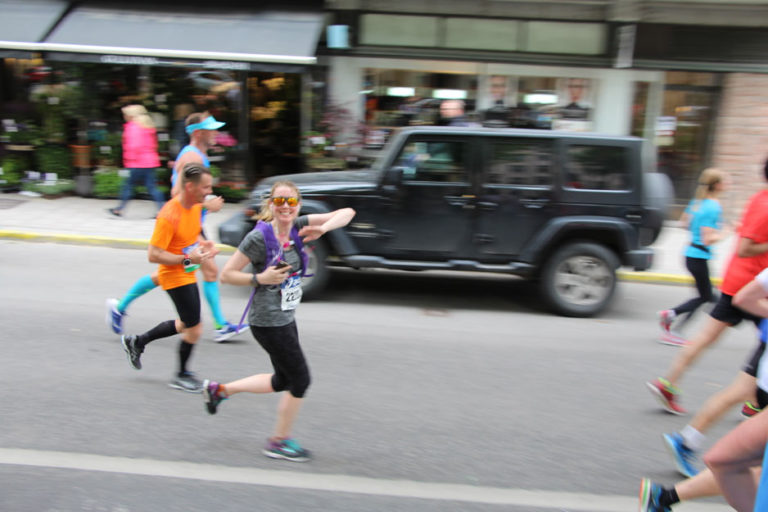
  Well, Sunday 23rd April came and went and…   I DID IT!  All those long runs, early mornings and late evenings were worth it. All that snow, rain and sleet…All in the name of Project Seagrass – my #ReasonToRun! There was a good buzz about the London Marathon. I completed

Read More »

The Edinburgh International Science Festival

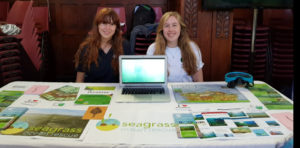
  Edinburgh Science Festival Bubbles and enthusiasm took over for Project Seagrass as we set up our stall at Edinburgh International Science Festival last week. The festival has taken over the city for two weeks every year since 1989, and was the world’s first public celebration of science, definitely something that we’re

Read More »

Ocean Optimism – What is YOUR #ReasonToRun?

Over ONE MILLION participants have had a #ReasonToRun since the first London Marathon in 1981. The training and sacrifices involved with running a marathon are enormous, not least the amount of time it takes just to put the miles in day in day out, and the weekends that are geared all around

Read More »

Guest Blog: Jessica McGarty on Egyptian Seagrasses

I was recently ‘nudged’ to do something by a fellow seagrass enthusiast who shall remain nameless for the time being! I must admit that I have been distracted by life and other ‘things’ for several months and desperately needed that ‘nudge’ to get going again. So, with March being Seagrass Awareness

Read More »

March – Seagrass Awareness Month

It’s only… SEAGRASS AWARENESS MONTH! ‘Seagrass Awareness Month’ has been designated as March ever since I started learning about these underappreciated ecosystems 6 years ago. However, the state-wide habitat engagement initiative appears to have been limited so far to just Florida in the USA. Why haven’t we made more of

Read More »

Fulsnygg! Loving The Ugly Duckling

For nearly 10 years I have been teaching, writing, tweeting, speaking, blogging, presenting and workshopping pretty much around the clock, in my role as a science teacher, a diving instructor, and now presently as a Science Communicator here at Project Seagrass. I’ve learnt to use all the communication tools I

Read More »

Transforming Education at bett 2017

In a previously life I was a Secondary School Science Teacher, and I was privileged to work at a fantastic school (alongside some of the most innovative and enthusiastic teachers the UK has to offer). I know these teachers took their pedagogy seriously, and I was reminded of this dedication when I

Read More »
biodiversity

Global fisheries threatened by loss of seagrass

Seafood consumption is both a love and a necessity for hundreds of millions of people all across the world. And the supply of seafood is a key part of maintaining food security for the whole planet. But as demand for seafood is increasing, stocks of wild fish and invertebrates (such

Read More »

2020 Biodiversity agenda: Can we make a difference?

Hello Team Seagrass! My name is Laura and I am an ambassador for Project Seagrass. I completed my professional training year with the conservation charity from 2015-2016. Last week I was privileged to attend the Cambridge Conservation Initiative’s Panel Discussion on Setting a new post-2020 biodiversity agenda. The 2-hour lecture/interactive

Read More »
biodiversity

Waste Not, Want Not. Discards that could feed those in poverty

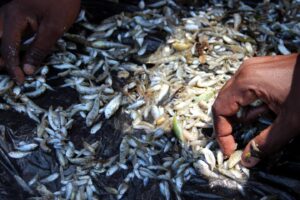
  At least 7.3m tons of fish (usually dead or dying) are thought to be discarded each year from marine fisheries around the world. But these estimates come mostly from observations of large-scale industrial fisheries. Limited attention has been paid to small-scale fisheries, which are assumed to have low discard rates –

Read More »
Europe

Sewage and livestock waste is killing Britain’s seagrass meadows

Britain’s seagrass is a refuge for numerous species of fish, stabilises sandy beaches, and helps to lock away the carbon which humans produce. The meadows that surround the country’s coast have been called the “canaries of the sea”, due to their sensitivity to a changing environment. And like a canary

Read More »