

NEWS

NEWS

Keeping you up to date with Project Seagrass news and views with a mixture of field notes and commentary on seagrass and marine conservation topics.

Dear Santa

Dear Santa, We have tried to be responsible people all year. We are really hoping that this year we get the thing we have always wanted – healthy and productive oceans. We know that people haven’t looked after the oceans from the first time they were given to us, and

Read More »

Isadora Sinha on her Project Seagrass Experience

To give you a bit of an introduction, I am a Cardiff University Genetics (BSc) student going into my final year of my degree and have joined Project Seagrass for a Cardiff University Research Opportunities Programme (CUROP) summer research placement, at their offices in the Sustainable Places Research Institute. I

Read More »

Global fisheries threatened by loss of seagrass

Seafood consumption is both a love and a necessity for hundreds of millions of people all across the world. And the supply of seafood is a key part of maintaining food security for the whole planet. But as demand for seafood is increasing, stocks of wild fish and invertebrates (such

Read More »

2020 Biodiversity agenda: Can we make a difference?

Hello Team Seagrass! My name is Laura and I am an ambassador for Project Seagrass. I completed my professional training year with the conservation charity from 2015-2016. Last week I was privileged to attend the Cambridge Conservation Initiative’s Panel Discussion on Setting a new post-2020 biodiversity agenda. The 2-hour lecture/interactive

Read More »

Waste Not, Want Not. Discards that could feed those in poverty

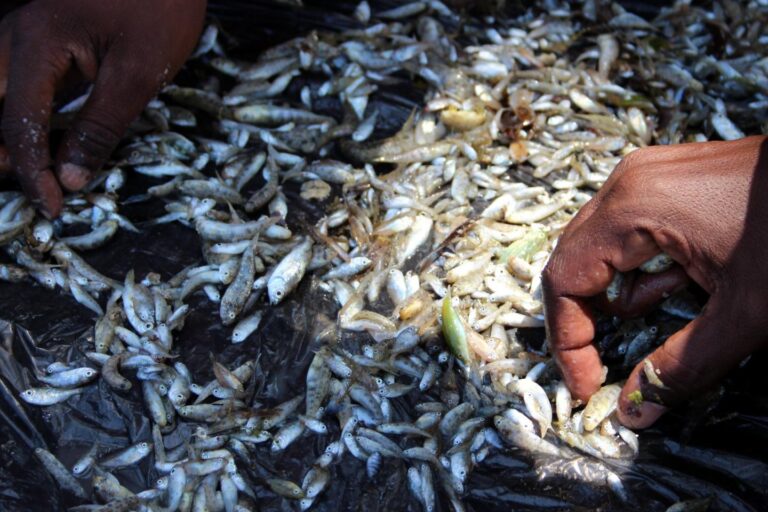
  At least 7.3m tons of fish (usually dead or dying) are thought to be discarded each year from marine fisheries around the world. But these estimates come mostly from observations of large-scale industrial fisheries. Limited attention has been paid to small-scale fisheries, which are assumed to have low discard rates –

Read More »

A Symphony For Scottish Seagrass

Hello Team Seagrass! I am Rufus, a volunteer with Project Seagrass and a marine biology graduate from the University of St Andrews. Since graduating in June 2017, I have begun working for the Scottish Chamber Orchestra’s Connect team and the University of St Andrews’ Music Centre. In this split position, I get to enjoy

Read More »

2018 – From Wales to the World.

Happy New Year Team Seagrass! I can’t believe it’s 2018 already, and I’m sure that is a sentiment we all share! 2017 was an unbelievable year for all kinds of reasons, yet despite the crazy world we now seem to live in, for a few of us it has been

Read More »
new science

Seagrass meadows show resilience to ‘bounce back’ after die-offs

In Florida alone, thousands of acres of marine seagrass beds have died. Major seagrass die-offs also are occurring around the world. Stressors such as high temperature, hypersalinity and hypoxia or lack of oxygen affect seagrasses’ ability to resist and recover from these stressor-related mortality events or when disturbances lead to

Read More »
seagrass nursery

Nursery News Vol. 19

By Emily Yates To donate to our Aviva Community Funds and find out more, click the links below: Making marine conservation more accessible Saving the worlds seagrass Developing the Project Seagrass nursery

Read More »
updates

World Seagrass Day and Seagrass Awareness Month at Project Seagrass

Storm Garry March 1st marked an important date in seagrass history as globally we celebrated the very first World Seagrass Day, formally recognised by the United Nations! This day will continue to annually raise awareness of the importance of healthy seagrass meadows. Seagrass is the only marine flowering plant in

Read More »

Visiting one of the worlds most remote seagrass meadows

Eva Rothausler On a narrow stretch along the northern-central coast of Chile, the seagrass Heterozostera nigricaulis (syn. Zostera nigricaulis, Heterozostera tasmanica) occurs in three isolated patches no more than 300 km apart. It is a common intertidal to subtidal seagrass in the Zosteracea family and is found growing in protected

Read More »