
NEWS

NEWS

Keeping you up to date with Project Seagrass news and views with a mixture of field notes and commentary on seagrass and marine conservation topics.

What causes decline of tropical seagrass meadows?

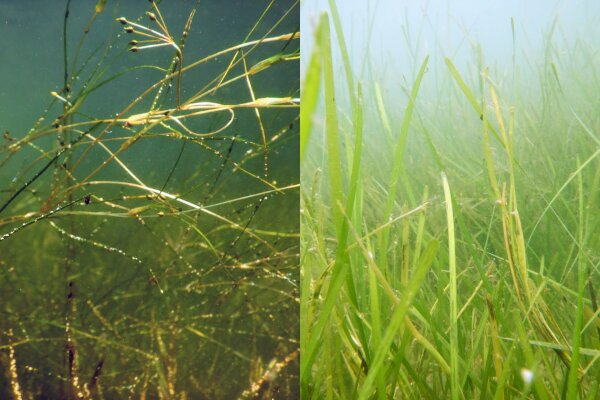
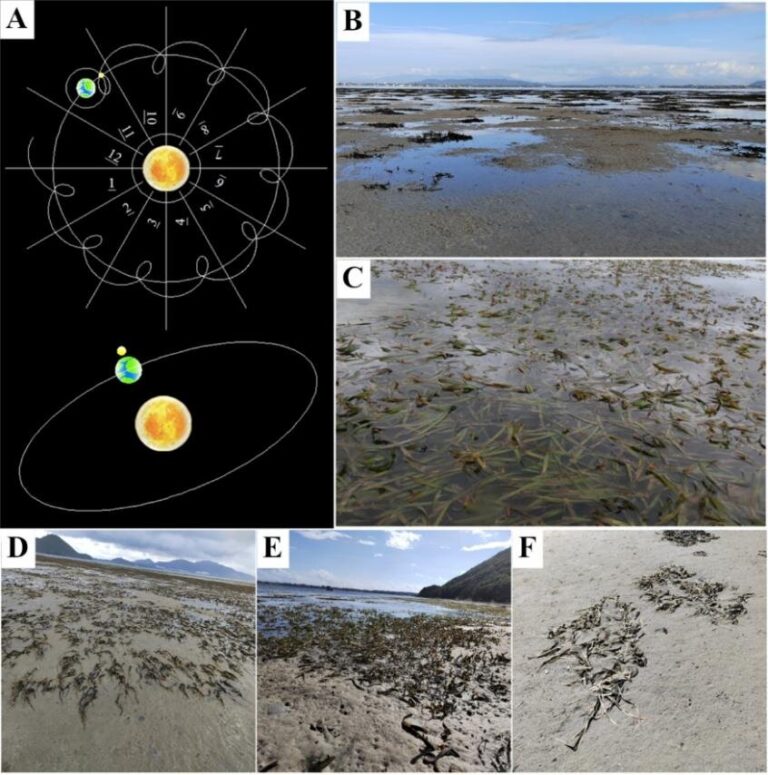
Seagrass, a group of aquatic angiosperms, grows in shallow waters in the coastal sea and contributes most of the primary production while participating in many important ecological processes. Heat stress threatens the survival of seagrass, but its damage mechanisms are unclear. Recently, a research team led by Prof. Liu Jianguo

Read More »

Fauna return rapidly in planted seagrass meadows, study shows

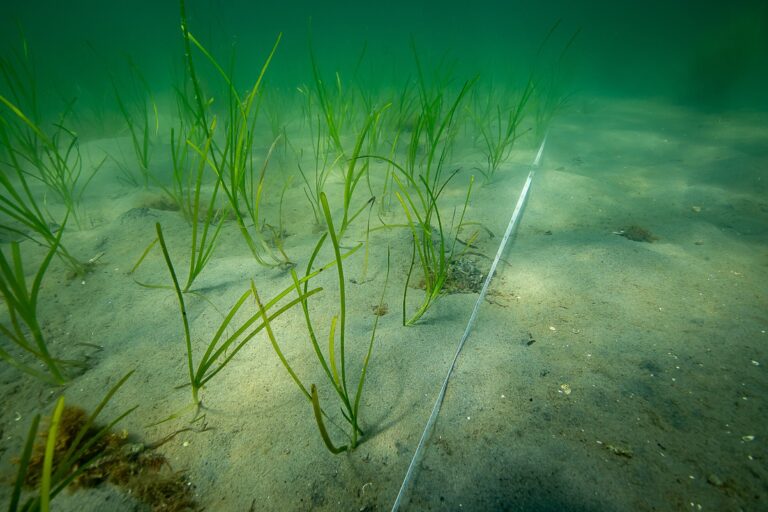
A study of eelgrass meadows planted by researchers from the University of Gothenburg shows that fauna return rapidly once the eelgrass has started to grow. Already after the second summer, the biodiversity in the planted meadow was almost the same as in old established eelgrass meadows. Eelgrass meadows have declined

Read More »

Seagrass meadows show resilience to ‘bounce back’ after die-offs

In Florida alone, thousands of acres of marine seagrass beds have died. Major seagrass die-offs also are occurring around the world. Stressors such as high temperature, hypersalinity and hypoxia or lack of oxygen affect seagrasses’ ability to resist and recover from these stressor-related mortality events or when disturbances lead to

Read More »

Nursery News Vol. 19

By Emily Yates To donate to our Aviva Community Funds and find out more, click the links below: Making marine conservation more accessible Saving the worlds seagrass Developing the Project Seagrass nursery

Read More »

Visiting one of the worlds most remote seagrass meadows

Eva Rothausler On a narrow stretch along the northern-central coast of Chile, the seagrass Heterozostera nigricaulis (syn. Zostera nigricaulis, Heterozostera tasmanica) occurs in three isolated patches no more than 300 km apart. It is a common intertidal to subtidal seagrass in the Zosteracea family and is found growing in protected

Read More »

The British Science Festival – Swansea University, Wales.

A sunny Saturday in Swansea and Project Seagrass had a stall set up ready for the British Science Festival’s Family Fun weekend. A big seagrass mural was laid out surrounded by crayons and paints for kids to get stuck in, and immediately the crowds hit. Kids everywhere colouring all kinds of

Read More »

3 YEARS TODAY – What a difference a year makes!

Sitting down to write this I really don’t know quite where to begin! What a year it has been, in fact, what a 3 years! Although for me it seems that soooooo much has happened in just the last 12 months! Before I start, on a personal note, I remember

Read More »

Project Seagrass goes to Cornwall

As masters students from both Swansea and Glasgow Universities, we’re both currently carrying out seagrass related research projects. Beth is performing her masters project, and Lauren is performing her final year honours project.  Beth is studying the impacts of chain moorings on seagrass, particularly looking at how chain width effects

Read More »

Intern Spotlight: Laura Pratt

As a third year Biology Student from Cardiff University, I’ve been lucky to get involved with Project Seagrass, which has its offices within the University. I first started working with the team last summer when I took part in an 8 week CUROP placement (Cardiff University Research Opportunities Programme) at

Read More »