NEWS

NEWS

Keeping you up to date with Project Seagrass news and views with a mixture of field notes and commentary on seagrass and marine conservation topics.

What causes decline of tropical seagrass meadows?

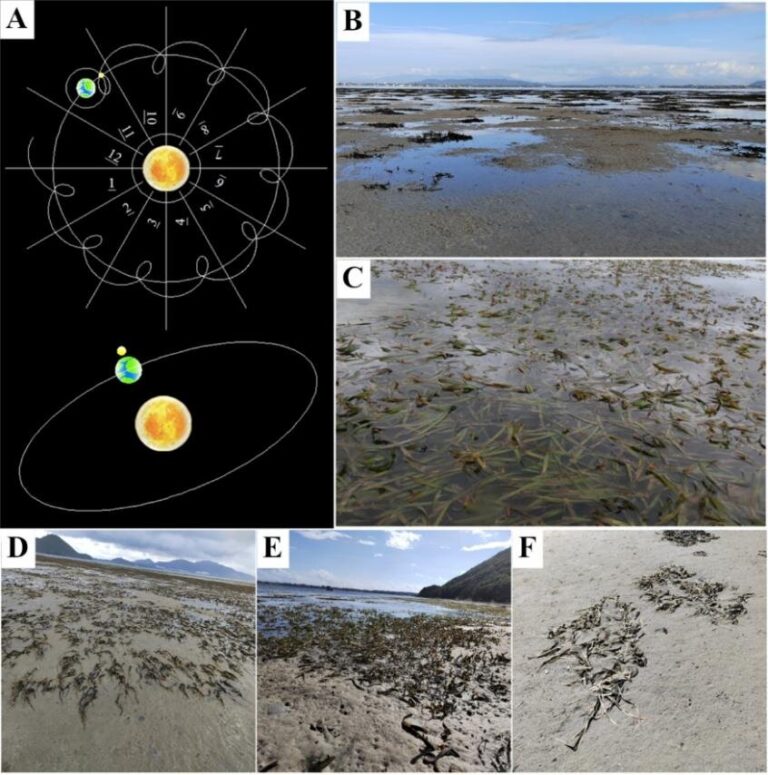
Seagrass, a group of aquatic angiosperms, grows in shallow waters in the coastal sea and contributes most of the primary production while participating in many important ecological processes. Heat stress threatens the survival of seagrass, but its damage mechanisms are unclear. Recently, a research team led by Prof. Liu Jianguo

Read More »

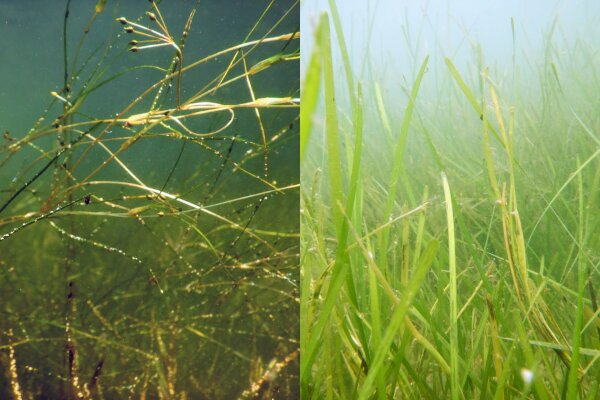
Fauna return rapidly in planted seagrass meadows, study shows

A study of eelgrass meadows planted by researchers from the University of Gothenburg shows that fauna return rapidly once the eelgrass has started to grow. Already after the second summer, the biodiversity in the planted meadow was almost the same as in old established eelgrass meadows. Eelgrass meadows have declined

Read More »

Seagrass meadows show resilience to ‘bounce back’ after die-offs

In Florida alone, thousands of acres of marine seagrass beds have died. Major seagrass die-offs also are occurring around the world. Stressors such as high temperature, hypersalinity and hypoxia or lack of oxygen affect seagrasses’ ability to resist and recover from these stressor-related mortality events or when disturbances lead to

Read More »

Nursery News Vol. 19

By Emily Yates To donate to our Aviva Community Funds and find out more, click the links below: Making marine conservation more accessible Saving the worlds seagrass Developing the Project Seagrass nursery

Read More »

Visiting one of the worlds most remote seagrass meadows

Eva Rothausler On a narrow stretch along the northern-central coast of Chile, the seagrass Heterozostera nigricaulis (syn. Zostera nigricaulis, Heterozostera tasmanica) occurs in three isolated patches no more than 300 km apart. It is a common intertidal to subtidal seagrass in the Zosteracea family and is found growing in protected

Read More »
PhD student Teigan who is undertaking a PhD exploring the influence of water quality on greenhouse gas emissions. Teigan is seated with a bookshelf behind her. She is wearing a grey jumper and has long dark hair.
greenhouse gas

Greenhouse gas emissions from seagrass: Q&A with Teigan

In autumn 2024, Teigan joined the teams at Project Seagrass and Swansea University to undertake a PhD exploring the influence of water quality on greenhouse gas emissions from seagrass. Teigan’s PhD forms part of Accelerate Seagrass, a collaborative program with Climate Impact Partners, Deloitte, and the National Oceanography Centre to

Read More »
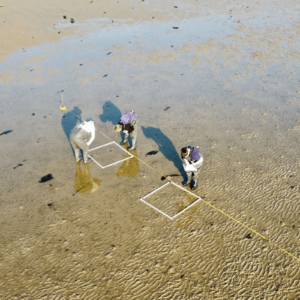
Three members of Project Seagrass staff are standing along a transect line gathering quadrat data on a beach in the Isle of Wight as part of our May fieldwork
seagrass restoration

Solent Seagrass Update – A Year in Review

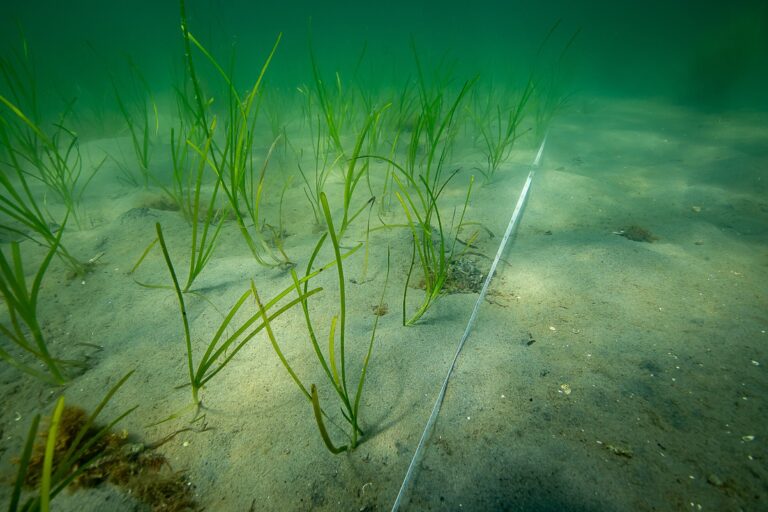
Seagrass Restoration Efforts to restore seagrass marine habitat at our two restoration sites on the Isle of Wight began in March and April this year under the Solent Seascape Project.  A total of 132,000 seeds and 2,160 transplants have been planted across the two sites. There are plans to continue this

Read More »