NEWS

NEWS

Keeping you up to date with Project Seagrass news and views with a mixture of field notes and commentary on seagrass and marine conservation topics.

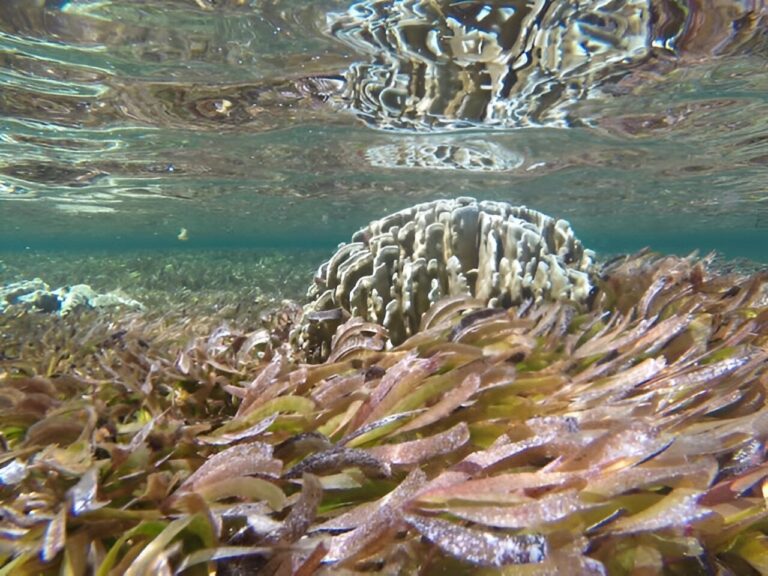
What causes decline of tropical seagrass meadows?

Seagrass, a group of aquatic angiosperms, grows in shallow waters in the coastal sea and contributes most of the primary production while participating in many important ecological processes. Heat stress threatens the survival of seagrass, but its damage mechanisms are unclear. Recently, a research team led by Prof. Liu Jianguo

Read More »

Fauna return rapidly in planted seagrass meadows, study shows

A study of eelgrass meadows planted by researchers from the University of Gothenburg shows that fauna return rapidly once the eelgrass has started to grow. Already after the second summer, the biodiversity in the planted meadow was almost the same as in old established eelgrass meadows. Eelgrass meadows have declined

Read More »

Seagrass meadows show resilience to ‘bounce back’ after die-offs

In Florida alone, thousands of acres of marine seagrass beds have died. Major seagrass die-offs also are occurring around the world. Stressors such as high temperature, hypersalinity and hypoxia or lack of oxygen affect seagrasses’ ability to resist and recover from these stressor-related mortality events or when disturbances lead to

Read More »

Nursery News Vol. 19

By Emily Yates To donate to our Aviva Community Funds and find out more, click the links below: Making marine conservation more accessible Saving the worlds seagrass Developing the Project Seagrass nursery

Read More »
UK Seagrass Symposium Logo
conference

Cynhaliwyd Symposiwm Morwellt, a gymeradwywyd gan y CU, ym mhrifddinas Cymru

Cynhaliwyd Symposiwm Morwellt 2025 y DU yng Nghaerdydd yr wythnos ddiwethaf, gan ddod â gwyddonwyr, gweithwyr cadwraeth proffesiynol, ymarferwyr, a grwpiau cymunedol ynghyd o bob rhan o’r DU.  Wedi’i gynnal gan Brosiect Morwellt, y digwyddiad oedd y cyntaf yng nghyfres Symposiwm Morwellt y DU (UKSS) i dderbyn cymeradwyaeth fel Gweithgaredd

Read More »
UK Seagrass Symposium Logo
conference

UN endorsed Seagrass Symposium hosted in Welsh capital

The UK Seagrass Symposium 2025 took place in Cardiff last week, bringing together scientists, conservation professionals, practitioners, and community groups from across the UK. Hosted by Project Seagrass, the event was the first in the UK Seagrass Symposium (UKSS) series to receive endorsement as an official Ocean Decade Activity as

Read More »
Two VR headsets are placed on the rocks at the coast at Ogmore in South Wales.
education

My Seagrass Adventure: New immersive VR experience launched

On the 25th and 26th October, the team from Project Seagrass attended Swansea Science Festival to launch new VR experience: My Seagrass Adventure. The experience has been created as part of an innovative partnership between Project Seagrass, Proper Good Films, and Onyva Studio and takes users on a mesmerising journey

Read More »
Catshark in seagrass
biodiversity

Spotted catshark – Creatures that call seagrass home

In a new blog series, our Conservation Trainee Abi David explores some of the amazing creatures that call seagrass meadows their home. The small spotted catshark (Scyliorhinus canicula) is a small shark species growing up to 1 meter long and can be seen around European and North African coastlines. They

Read More »
climate change

Seagrass to the rescue and rescue to the seagrass

In an article for Halloween, Grace Cutler, one of Project Seagrass’ Interns for the 2025-26 academic year, explores the frightening reality of continued seagrass loss as a result of anthropogenic activity and how this in turn threatens seagrass’ role in supporting people and planet. Werewolves are struck down by silver

Read More »
Zostera marina seagrass meadows with a snakelocks anemone
biodiversity

Snakelocks anemone: Creatures that call seagrass home

In a new blog series, our Conservation Trainee Abi David explores some of the amazing creatures that call seagrass meadows their home. The snakelocks anemone is a funny looking creature commonly found around the UK. They have up to 200 long, wavy tentacles and can grow on average to about

Read More »