NEWS

NEWS

Keeping you up to date with Project Seagrass news and views with a mixture of field notes and commentary on seagrass and marine conservation topics.

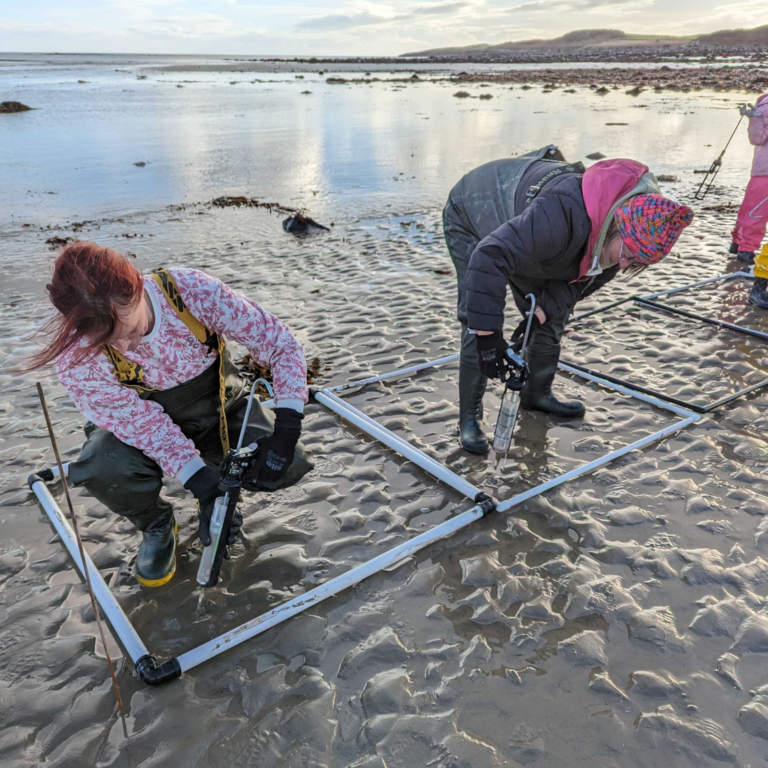
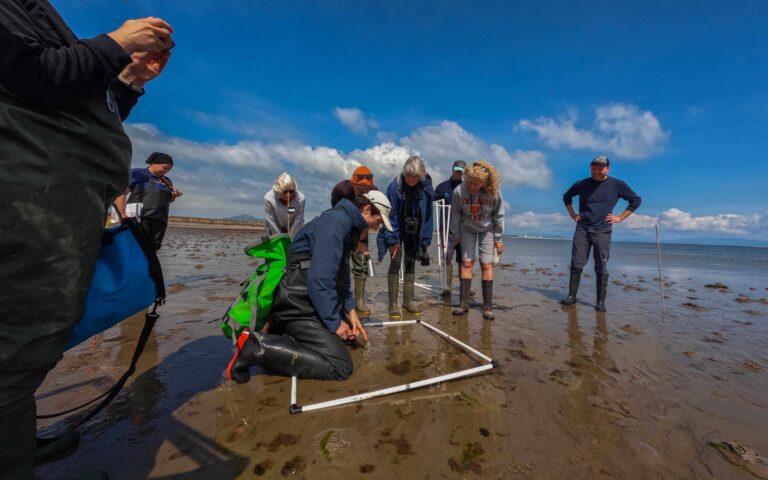
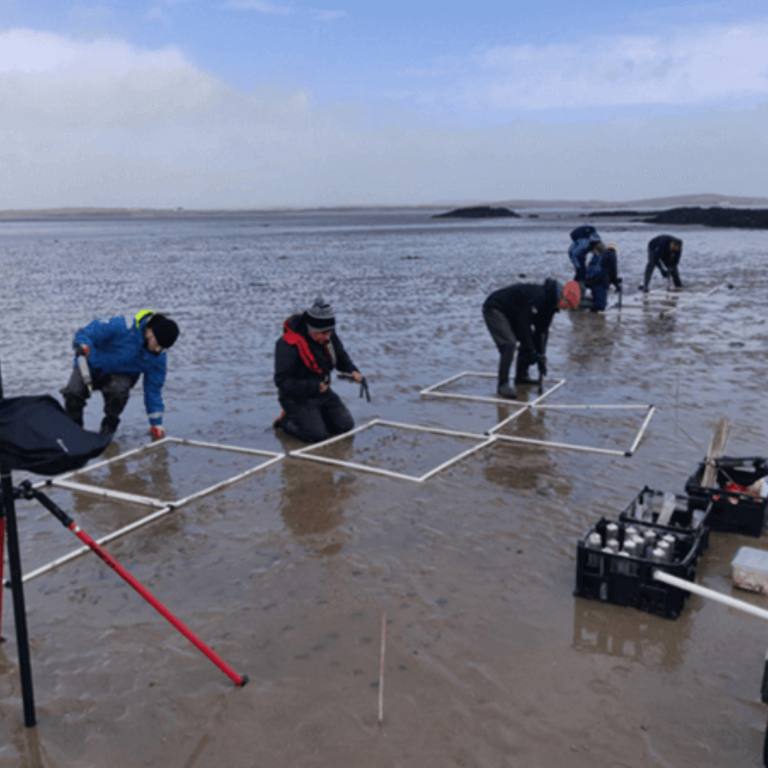
Volunteers supporting seagrass restoration work in Holyhead North Wales. Volunteers are crouching on the ground around quadrats monitoring seagrass.

North Wales seagrass restoration in Holyhead Bay

Thanks to the support of local volunteers and landowners Stena Line, 50,000 seagrass seeds were planted last month at sites near Holyhead, covering an area of 150 m2. The planting followed on from a successful stakeholder engagement session held at Holyhead Sailing Club in March 2024, which was attended by

Read More »
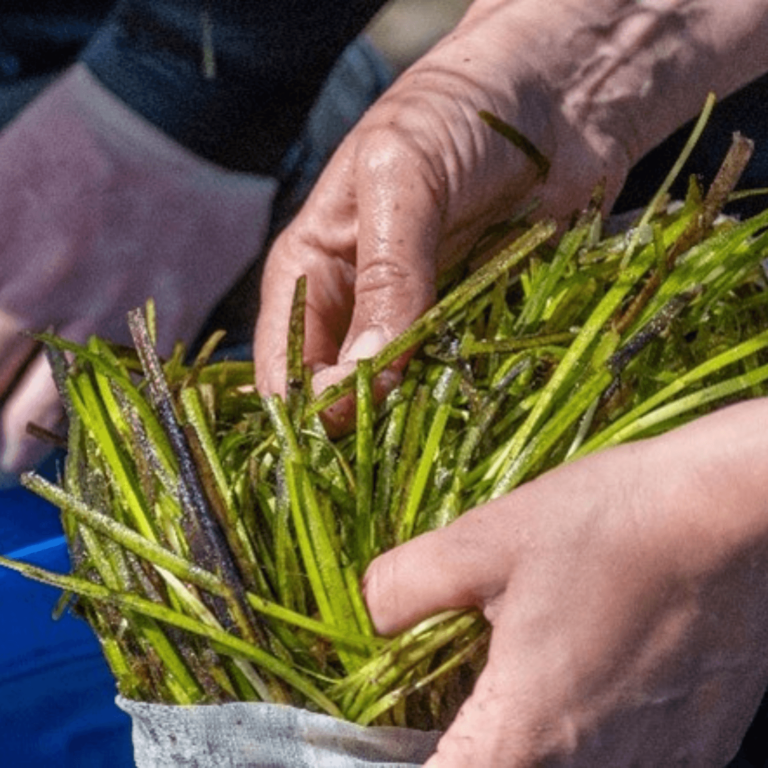
An image of a seagrass habitat

Seagrass meadows expanding near inhabited islands in Maldives

Swimming through the crystal clear waters of the Maldives, a nation renowned for its marine life, it could be easy to forget that these delicate ecosystems stand on the frontline of climate change and that seagrass habitats are in crisis globally. Now, my research, which combined hundreds of hours of fieldwork with thousands of satellite

Read More »

Making seagrass restoration more resistant to rising temperatures

New research demonstrates that seagrass habitat restoration can be enhanced by including other grasses in addition to the declining or lost species and – ultimately – that restoration efforts must proactively select species that can withstand current and intensifying stressors driven by human activities and climate change. Rising global temperatures

Read More »

Want to host the 16th International Seagrass Biology Workshop?

The World Seagrass Association Inc. invites expressions of interest from members and interested organisations/institutions who would like to host the 16th International Seagrass Biology Workshop (ISBW) in 2026. The International Seagrass Biology Workshop series is a meeting of research scientists, students and coastal environment managers focusing on global seagrass issues,

Read More »

You asked, we listened. Our latest updates to SeagrassSpotter

Things have been busy at Project Seagrass with lots of development on SeagrassSpotter. Since our last major update, we have been working to enhance the ways that SeagrassSpotter works for its users. We’re excited to share that our latest update includes many of the features you have been asking for,

Read More »

Seagrass app inspires a rise in citizen science across the globe

Internationally renowned charity Project Seagrass is marking it’s tenth anniversary by re-launching its citizen science website and mobile app SeagrassSpotter which enables anyone and everyone to engage with the seagrass meadows on their doorstep or anywhere else in the world, whether it’s there now or it once was. SeagrassSpotter was

Read More »

Project Seagrass celebrates its 10th birthday 🎉

Reflecting on 10 years of Project Seagrass   Project Seagrass was created on the 29th July 2013 with the vision of saving the worlds seagrass. As we approach our 10th birthday, we’re looking back on the last 10 years with our founder Ben Jones and CEO Leanne Cullen-Unsworth.   Where

Read More »

How eelgrass spread around the world

Seagrasses evolved from freshwater plants and use sunlight and carbon dioxide (CO2) for photosynthesis and are able to thrive in depths down to 50 meters. In contrast to algae, they possess roots and rhizomes that grow in sandy to muddy sediments. The grass-like, leaf-shoots produce flowers and complete their life

Read More »
A screenshot of the research paper "New directions for Indigenous and local knowledge research and application in fisheries science: Lessons from a systematic review" overlain on an image of seagrass in North Wales
new science

Indigenous and Local Knowledge in Fisheries Science

Seagrass meadows play a critical role in keeping our oceans healthy and stocked with food, providing valuable nursery habitat to over 1/5th of the world’s largest 25 fisheries. Seagrass meadows are also important to small-scale fisheries, particularly as a place to find and collect a reliable source of food with some

Read More »

Coastal Communities Network Gathering 2024

Earlier this month Project Seagrass’ Senior Conservation Officer Katy Waring attended the yearly gathering for coastal communities from the Coastal Communities Network  facilitated by Fauna and Flora International. The event was held on the island of Millport at their field studies centre.   The 3-day event was inspiring; groups from around

Read More »
From left to right: View of the STARESO harbor entrance with Posidonia meadow islands and an accumulation of dead leaves. Close-up of litter accumulation. Experimental benthic incubation device ('bell') installed on accumulations of Posidonia dead leaves (10 m deep). Credit: G.Lepoint & W. Champenois / ULiège
new science

Dead leaves in sea break down into a compost that produces oxygen

Researchers from the University of Liège (BE) studied the fate of the material produced by Posidonia seagrass meadows. This study, carried out in the Mediterranean Sea at STARESO, shows that the dead leaves of what is commonly known as Neptune grass accumulate in shallow areas, where they break down like

Read More »
Seagrass in Orkney

Climate Impact Partners and Deloitte Join Forces to Unlock Large-Scale Seagrass Recovery Financing

Climate Impact Partners and Deloitte, in collaboration with Project Seagrass and the UK’s National Oceanography Centre, announce a groundbreaking program to fund UK seagrass recovery and unlock long-term finance to save and reinstate vital seagrass meadows. The program will fund critical research across UK seagrass meadows, mapping the ecosystems and developing methods to restore them

Read More »
Neil is standing on board Project Seagrass' boat Gwen. He is wearing a hat, sunglasses, and a red coat.
Volunteer

Seagrass Ocean Rescue Volunteer Profile: Neil

The Seagrass Ocean Rescue North Wales programme relies on the commitment and enthusiasm of local volunteers. We spoke to regular volunteer Neil about his experiences of volunteering as part of the programme. Volunteer Interview Tell us a little bit about yourself: I grew up in North Wales, then moved around

Read More »