NEWS

NEWS

Keeping you up to date with Project Seagrass news and views with a mixture of field notes and commentary on seagrass and marine conservation topics.

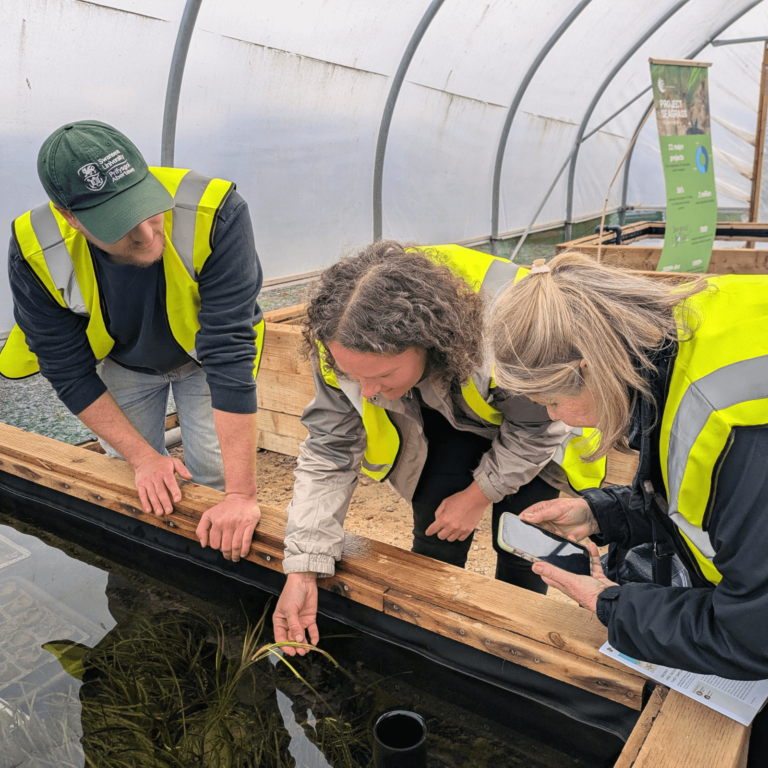
A member of Project Seagrass staff and two members of the community are leaning over one of the ponds inside the polytunnel. One member of the community is holding a strand of seagrass to look at a flower.

Project Seagrass hosts Seagrass Nursery Open Days

On the 9th and 10th of July Project Seagrass welcomed local organisations and members of the community to our Seagrass Nursery in West Wales as part of a series of Open Days.  On the 9th July representatives from Pembrokeshire Council, Carmarthenshire Council, Pembrokeshire Coastal Forum, Rebel Energy, SeaLife, Bodorgan Estate,

Read More »
An illustration of seagrass with the text "Seagrass Information Posters" overlayed

Multi-lingual seagrass information posters launched

Seagrass meadows provide a range of environmental, economic, and social benefits to people and planet. They provide habitat, food, and shelter to thousands of species of fish, invertebrates, mammals, reptiles, and birds. Through their diverse use as fishing grounds, they support the creation of jobs and provide access to food sources

Read More »
Four graphs outlining the present distribution and projected end-of-century changes in global macrophyte species diversity.

Study projects loss of brown macroalgae and seagrasses

Researchers predict that climate change will drive a substantial redistribution of brown seaweeds and seagrasses at the global scale. The projected changes are alarming due to the fundamental role of seaweeds and seagrasses in coastal ecosystems, and provide evidence of the pervasive impacts of climate change on marine life. In

Read More »

Project Update: Restoration Forth | June 2024

Restoration Forth aims to restore seagrass meadows and native oysters into the Firth of Forth, to create a healthier coastline for people and nature.   Find out more about the project here.  Orkney seagrass trip Next month the seagrass team will be departing for their annual seed collection trip in Orkney. Following

Read More »
Two adults are using DIS guns to insert seagrass seeds into sediment on the beach at Hafan y Mor. The sun is reflecting of the sea in the background.

Catalyst Cymru funding supports Pride Cymru collaboration

This Pride Month we’re celebrating our work with Pride Cymru. Thanks to support from Catalyst Cymru, Pride Cymru volunteers supported fieldwork to plant seagrass seeds as part of our programme of restoration work in North Wales. The planting took place earlier this year in Hafan y Môr, Pwllheli. An introduction

Read More »
ISBW Conference Logo

Project Seagrass head to Naples for ISBW

Between the 17th and 21st June 2024, over 500 scientists, conservation professionals, and managers will converge in Naples, Italy for the 15th International Seagrass Biology Workshop (ISBW15). It will be two years since the last meeting in Annapolis, USA. The theme of ISBW15 is “Seagrasses in the Anthropocene”, centred around

Read More »
Dugong feeding on seagrass, Great Fringing Reef, Red Sea Credit Anett Szaszi Ocean Image Bank

World Ocean Day 2024 – catalysing action for seagrass

The theme of the 2024 World Ocean Day is catalyzing action for our ocean and climate.   This recognises the fact that the health of the marine environment, including our globally declining seagrass meadows, requires significantly stronger local, national, and international action from both government and corporate leaders.  In this article

Read More »
Nusi, a member of FORKANI, tends to trees in a nursery.

Restoring the land to restore the sea

This year’s World Environment Day campaign focuses on land restoration, under the slogan “Our land. Our future. We are #GenerationRestoration.” Loss and degradation of coastal marine ecosystems, compromise the delivery of important ecosystem services to human society. Yet turning the tide on these losses and working towards a net gain

Read More »
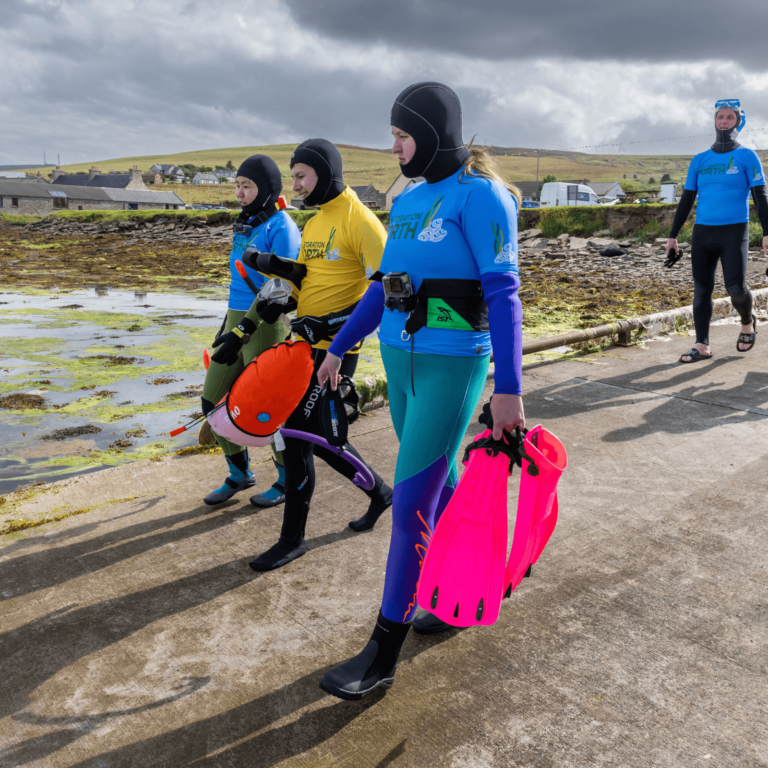
A group of Project Seagrass staff and volunteers are gathered on a beach in North Wales as part of our May fieldwork. Our North Wales project lead is kneeling by a quadrat providing a demonstration of how to monitor seagrass.

Fieldwork Notes from our May fieldwork

Read our Project Leads’ fieldwork notes from May: Solent Fieldwork (Anouska Mendzil, Solent Lead) Solent fieldwork update: Day 1 Myself and Manning arrived to the Isle of Wight around 14:00 and met Becky. We had an afternoon of preparation including labelling pins and mini-buoys, sorting kit, sorting data forms and

Read More »
biodiversity

Global fisheries threatened by loss of seagrass

Seafood consumption is both a love and a necessity for hundreds of millions of people all across the world. And the supply of seafood is a key part of maintaining food security for the whole planet. But as demand for seafood is increasing, stocks of wild fish and invertebrates (such

Read More »

2020 Biodiversity agenda: Can we make a difference?

Hello Team Seagrass! My name is Laura and I am an ambassador for Project Seagrass. I completed my professional training year with the conservation charity from 2015-2016. Last week I was privileged to attend the Cambridge Conservation Initiative’s Panel Discussion on Setting a new post-2020 biodiversity agenda. The 2-hour lecture/interactive

Read More »
biodiversity

Waste Not, Want Not. Discards that could feed those in poverty

  At least 7.3m tons of fish (usually dead or dying) are thought to be discarded each year from marine fisheries around the world. But these estimates come mostly from observations of large-scale industrial fisheries. Limited attention has been paid to small-scale fisheries, which are assumed to have low discard rates –

Read More »
Europe

Sewage and livestock waste is killing Britain’s seagrass meadows

Britain’s seagrass is a refuge for numerous species of fish, stabilises sandy beaches, and helps to lock away the carbon which humans produce. The meadows that surround the country’s coast have been called the “canaries of the sea”, due to their sensitivity to a changing environment. And like a canary

Read More »