NEWS

NEWS

Keeping you up to date with Project Seagrass news and views with a mixture of field notes and commentary on seagrass and marine conservation topics.

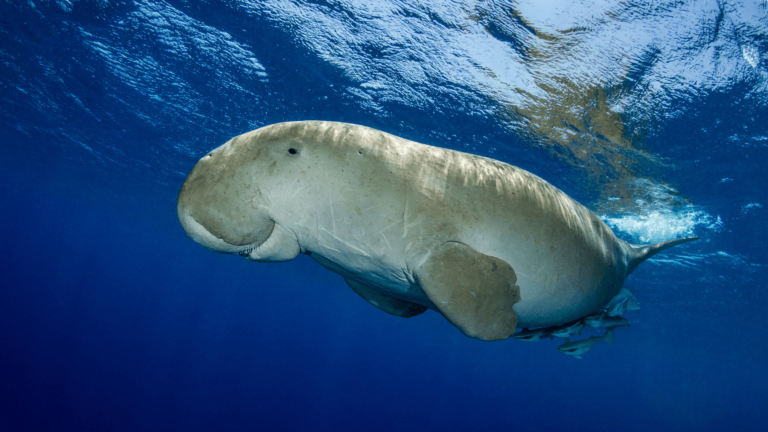
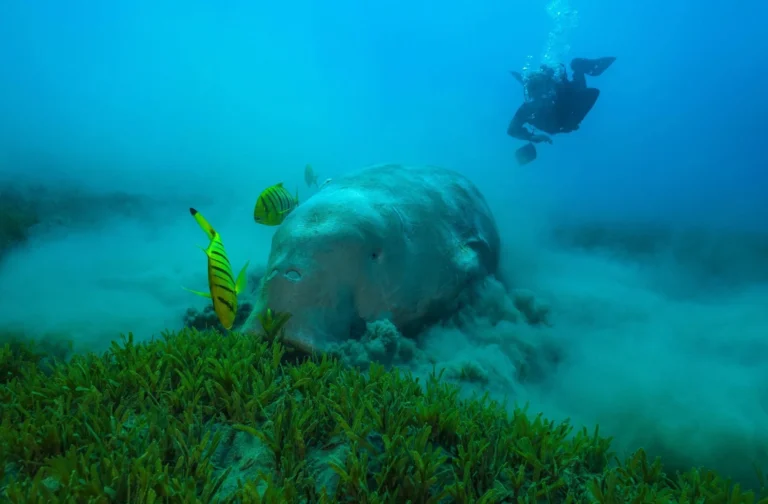
A dugong eating seagrass in the Red Sea, Egypt

Seagrass loss leaves Thailand’s dugongs struggling to survive

This article was originally published on Dialogue Earth under the Creative Commons BY NC ND licence. The author is Siripannee Supratya. Siripannee Supratya (Noina) is a Thai journalist focusing on the environment, science, laws and socio-political happenings. In addition to her journalism work, she is a creative communicator and a professional diver. She is on

Read More »
Coldplay Ticket Competition, Photo Credit Anna Lee

And the winners are… Coldplay Competition winners announced

Earlier this year, Project Seagrass launched a creative competition in collaboration with our official patrons, Coldplay. The competition invited entrants to submit inspiring, impactful, and creative designs communicating one of the following five themes: 1. The importance of seagrass 2. Seagrass and people 3. Seagrass around the world 4. Seagrass

Read More »
Seaweed being grown along a line.

Expanding seaweed farms pose a risk to vital marine life

Seaweed farming is a rapidly expanding global industry. As a food resource, it has high nutritional value and doesn’t need fertilisers to grow. Seaweed provides valuable habitats for marine life, takes up carbon and absorbs nutrients, plus it helps protect our coastlines from erosion. Usually, seaweeds grow on hard, rocky surfaces. Yet, to

Read More »
An information board with information about Porthdinllaen in North Wales. On the left hand pillar of the board is a QR code where users can scan to receive further information about the seagrass meadow in Porthdinllaen.

QR code on Wales Coast Path reveals the story of seagrass

A new QR code on the Wales Coast Path at Porthdinllaen and Morfa Nefyn reveals the story of the large seagrass meadow in the shallow water. Thousands of people visit this area every year to enjoy its natural beauty, but few are probably aware of the seagrass meadow – estimated

Read More »
Gathaagudu is an area of natural beauty. Credit: Cat Williams

Partnership is key to restoring shark bay seagrass

Gathaagudu/Shark Bay is located on Malgana (pronounced Mal-guh-nuh) Country. It’s a place of great natural beauty and a UNESCO World Heritage Site. The landscape is a stunning array of colors as the desert meets the ocean. Below the sea’s surface, 4,000 square kilometers of seagrass meadows sway. That’s equivalent to

Read More »
Seagrass Fish Fence
coastal erosion

The Use of Seagrass in Flood Defences and Reducing Beach Erosion

Ewan Garvey, one of Project Seagrass’ Interns for the 2025-26 academic year, explores how seagrass can provide protection for coastal communities. As the seasons transition from autumn into winter, storms often become a pressing concern for coastal communities. In recent years, the growing impacts of climate change have become increasingly

Read More »
Seagrass in Thorness
Internships

End of year reflections from our 2025-26 interns

In September 2025, Project Segrass welcomed Anya, Dylan, Will, Grace, Iestyn, Jasper, and Ewan as our interns for the 2025-26 academic year. In this Q&A our interns share their experiences and highlights from their first three months as interns with Project Seagrass. What have been the highlights from your internship

Read More »
Sea snail
biodiversity

Sea snails – Creatures that call seagrass home

In a new blog series, our Conservation Trainee Abi David explores some of the amazing creatures that call seagrass meadows their home. Sea snails are a hugely diverse group of marine gastropod found in all over the world. There is such a vast range of different colours, sizes, diets and

Read More »
A member of the Project Seagrass team holds a seagrass transplant in a gloved hand.
restoration

Introducing the Seagrass Hug

In 2024, the Project Seagrass team introduced the Seagrass Hug to our planting methodology. The method was developed by Anouska Mendzil, Senior Science Officer at Project Seagrass and Swansea University, and aims to determine whether surrounding seeding plots with more established transplants provides protection for emerging seeds in restoration practices.

Read More »