NEWS

NEWS

Keeping you up to date with Project Seagrass news and views with a mixture of field notes and commentary on seagrass and marine conservation topics.

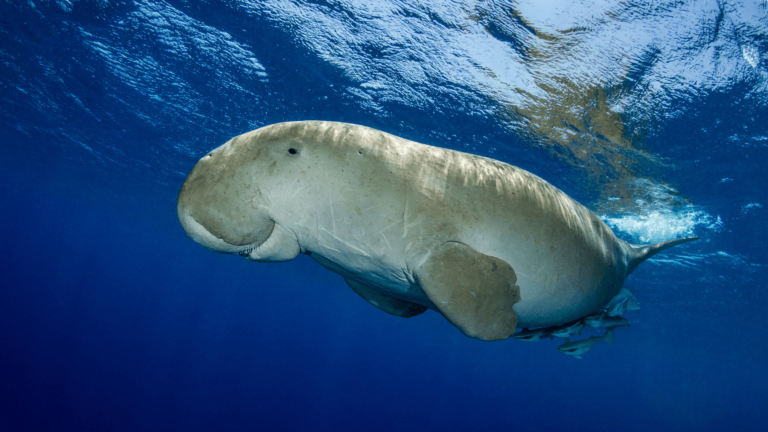
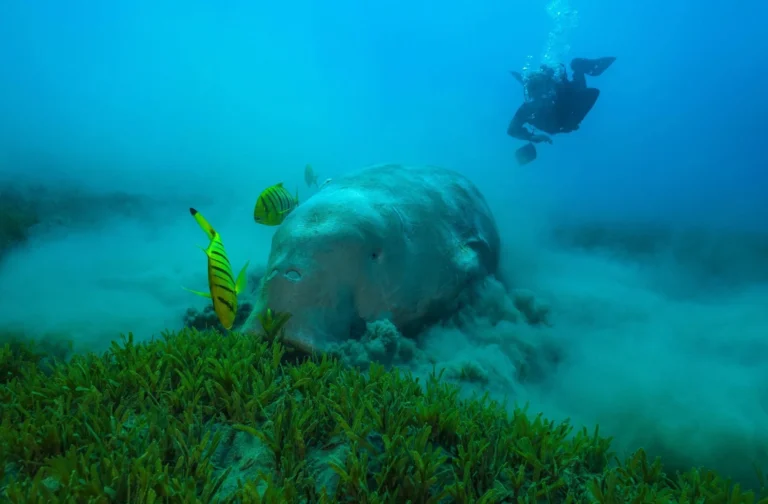
A dugong eating seagrass in the Red Sea, Egypt

Seagrass loss leaves Thailand’s dugongs struggling to survive

This article was originally published on Dialogue Earth under the Creative Commons BY NC ND licence. The author is Siripannee Supratya. Siripannee Supratya (Noina) is a Thai journalist focusing on the environment, science, laws and socio-political happenings. In addition to her journalism work, she is a creative communicator and a professional diver. She is on

Read More »
Coldplay Ticket Competition, Photo Credit Anna Lee

And the winners are… Coldplay Competition winners announced

Earlier this year, Project Seagrass launched a creative competition in collaboration with our official patrons, Coldplay. The competition invited entrants to submit inspiring, impactful, and creative designs communicating one of the following five themes: 1. The importance of seagrass 2. Seagrass and people 3. Seagrass around the world 4. Seagrass

Read More »
Seaweed being grown along a line.

Expanding seaweed farms pose a risk to vital marine life

Seaweed farming is a rapidly expanding global industry. As a food resource, it has high nutritional value and doesn’t need fertilisers to grow. Seaweed provides valuable habitats for marine life, takes up carbon and absorbs nutrients, plus it helps protect our coastlines from erosion. Usually, seaweeds grow on hard, rocky surfaces. Yet, to

Read More »
An information board with information about Porthdinllaen in North Wales. On the left hand pillar of the board is a QR code where users can scan to receive further information about the seagrass meadow in Porthdinllaen.

QR code on Wales Coast Path reveals the story of seagrass

A new QR code on the Wales Coast Path at Porthdinllaen and Morfa Nefyn reveals the story of the large seagrass meadow in the shallow water. Thousands of people visit this area every year to enjoy its natural beauty, but few are probably aware of the seagrass meadow – estimated

Read More »
Gathaagudu is an area of natural beauty. Credit: Cat Williams

Partnership is key to restoring shark bay seagrass

Gathaagudu/Shark Bay is located on Malgana (pronounced Mal-guh-nuh) Country. It’s a place of great natural beauty and a UNESCO World Heritage Site. The landscape is a stunning array of colors as the desert meets the ocean. Below the sea’s surface, 4,000 square kilometers of seagrass meadows sway. That’s equivalent to

Read More »
A screenshot of the research paper "New directions for Indigenous and local knowledge research and application in fisheries science: Lessons from a systematic review" overlain on an image of seagrass in North Wales
new science

Indigenous and Local Knowledge in Fisheries Science

Seagrass meadows play a critical role in keeping our oceans healthy and stocked with food, providing valuable nursery habitat to over 1/5th of the world’s largest 25 fisheries. Seagrass meadows are also important to small-scale fisheries, particularly as a place to find and collect a reliable source of food with some

Read More »

Coastal Communities Network Gathering 2024

Earlier this month Project Seagrass’ Senior Conservation Officer Katy Waring attended the yearly gathering for coastal communities from the Coastal Communities Network  facilitated by Fauna and Flora International. The event was held on the island of Millport at their field studies centre.   The 3-day event was inspiring; groups from around

Read More »
From left to right: View of the STARESO harbor entrance with Posidonia meadow islands and an accumulation of dead leaves. Close-up of litter accumulation. Experimental benthic incubation device ('bell') installed on accumulations of Posidonia dead leaves (10 m deep). Credit: G.Lepoint & W. Champenois / ULiège
new science

Dead leaves in sea break down into a compost that produces oxygen

Researchers from the University of Liège (BE) studied the fate of the material produced by Posidonia seagrass meadows. This study, carried out in the Mediterranean Sea at STARESO, shows that the dead leaves of what is commonly known as Neptune grass accumulate in shallow areas, where they break down like

Read More »
Seagrass in Orkney

Climate Impact Partners and Deloitte Join Forces to Unlock Large-Scale Seagrass Recovery Financing

Climate Impact Partners and Deloitte, in collaboration with Project Seagrass and the UK’s National Oceanography Centre, announce a groundbreaking program to fund UK seagrass recovery and unlock long-term finance to save and reinstate vital seagrass meadows. The program will fund critical research across UK seagrass meadows, mapping the ecosystems and developing methods to restore them

Read More »
Neil is standing on board Project Seagrass' boat Gwen. He is wearing a hat, sunglasses, and a red coat.
Volunteer

Seagrass Ocean Rescue Volunteer Profile: Neil

The Seagrass Ocean Rescue North Wales programme relies on the commitment and enthusiasm of local volunteers. We spoke to regular volunteer Neil about his experiences of volunteering as part of the programme. Volunteer Interview Tell us a little bit about yourself: I grew up in North Wales, then moved around

Read More »