
NEWS

NEWS

Keeping you up to date with Project Seagrass news and views with a mixture of field notes and commentary on seagrass and marine conservation topics.

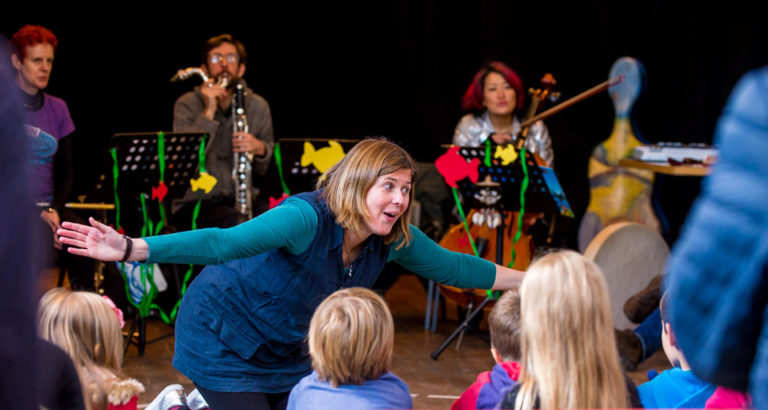
A Symphony For Scottish Seagrass

Hello Team Seagrass! I am Rufus, a volunteer with Project Seagrass and a marine biology graduate from the University of St Andrews. Since graduating in June 2017, I have begun working for the Scottish Chamber Orchestra’s Connect team and the University of St Andrews’ Music Centre. In this split position, I get to enjoy
Read More »

2018 – From Wales to the World.

Happy New Year Team Seagrass! I can’t believe it’s 2018 already, and I’m sure that is a sentiment we all share! 2017 was an unbelievable year for all kinds of reasons, yet despite the crazy world we now seem to live in, for a few of us it has been

Read More »

What does the future hold for seagrass?

The savannahs of the seas – our humble seagrass meadows are in peril In its Green Seas episode, Blue Planet II introduced us to seagrass meadows. Scarcely touched upon in past media when compared to coral reefs, mangroves and even kelp forests, we learnt about the vast potential of these

Read More »

Blue Planet, Green Seas. What’s the take home message?

This weekend we are in for a treat as the BBC Blue Planet team broadcast episode 5 “Green Seas” for the first time (Sunday 26th November, BBC One, 8pm – don’t miss it!). The episode will reveal amazing footage of charismatic animals such as the Weedy Sea Dragon, the Green Sea Turtle

Read More »

Seagrass meadows key fishing ground globally

Fishing in seagrass occurs around the globe; if there is seagrass (and people) there is fishing. Still, the nature and extent of fisheries in seagrass is poorly understood. It is a prerequisite for natural resource management to understand resource exploitation, therefore we decided to investigate this further. Seagrasses are plants that

Read More »

Festivals of Seagrass: Cause for Ocean Optimism!

Over the next few days the Save Posidonia Project, Formentera celebrates the Save Posidonia Festival. The idea behind the project is to host a festival where culture, sport and environmental activities will be carried out that celebrate the fantastic contribution that the seagrass Posidonia oceanica makes to Mediterranean well-being. The festival is aimed both

Read More »

Year FOUR of Project Seagrass!

So that’s 4 years, 1460 days, 35,040 hours, 2,120,400 minutes or 12,614,400 seconds of seagrass! 2016/2017 has been our biggest 12 months to date, with our hosting of the 12th International Seagrass Biology Workshop at Nant Gwrtheyrn the obvious highlight. But that’s not all we’ve been up to this year. Since our ‘3 years

Read More »

What a way to celebrate World Environment Day!

WOW! I only went and ran THREE marathons in SIX weeks!   TODAY, on non-other than World Environment Day (WED), I am SO happy to have completed the challenge I set down for myself, and to have raised over £1,700 for Project Seagrass to continue their great work. What an amazing way

Read More »
updates

Project Seagrass celebrates its 10th birthday 🎉

Reflecting on 10 years of Project Seagrass   Project Seagrass was created on the 29th July 2013 with the vision of saving the worlds seagrass. As we approach our 10th birthday, we’re looking back on the last 10 years with our founder Ben Jones and CEO Leanne Cullen-Unsworth.   Where

Read More »
Europe

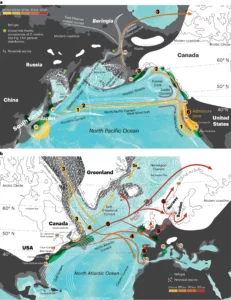
How eelgrass spread around the world

Seagrasses evolved from freshwater plants and use sunlight and carbon dioxide (CO2) for photosynthesis and are able to thrive in depths down to 50 meters. In contrast to algae, they possess roots and rhizomes that grow in sandy to muddy sediments. The grass-like, leaf-shoots produce flowers and complete their life

Read More »
biodiversity

Green sea turtles have traveled to the same seagrass to eat for 3,000 years

For approximately 3,000 years, generations of green sea turtles have returned to the same seagrass meadows to eat. This was discovered by Willemien de Kock, a historical ecologist at the University of Groningen, by combining modern data with archaeological findings. Sea turtles migrate between specific breeding places and eating places

Read More »