

NEWS

NEWS

Keeping you up to date with Project Seagrass news and views with a mixture of field notes and commentary on seagrass and marine conservation topics.

Global fisheries threatened by loss of seagrass

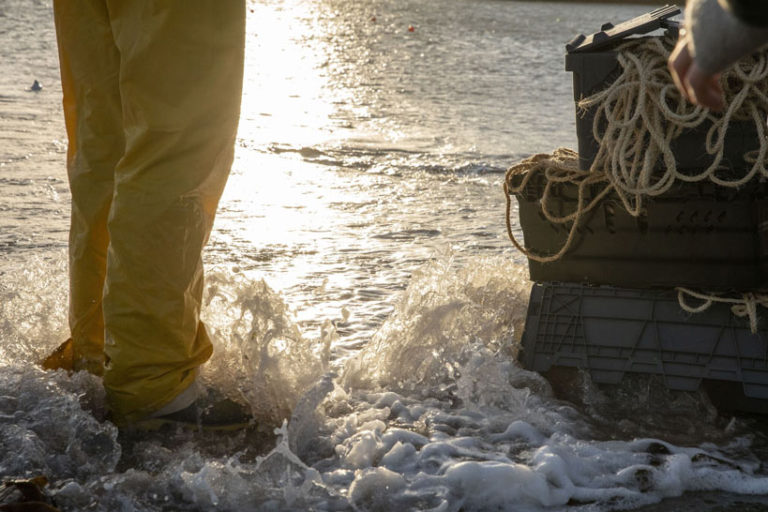
Seafood consumption is both a love and a necessity for hundreds of millions of people all across the world. And the supply of seafood is a key part of maintaining food security for the whole planet. But as demand for seafood is increasing, stocks of wild fish and invertebrates (such

Read More »

2020 Biodiversity agenda: Can we make a difference?

Hello Team Seagrass! My name is Laura and I am an ambassador for Project Seagrass. I completed my professional training year with the conservation charity from 2015-2016. Last week I was privileged to attend the Cambridge Conservation Initiative’s Panel Discussion on Setting a new post-2020 biodiversity agenda. The 2-hour lecture/interactive

Read More »

Waste Not, Want Not. Discards that could feed those in poverty

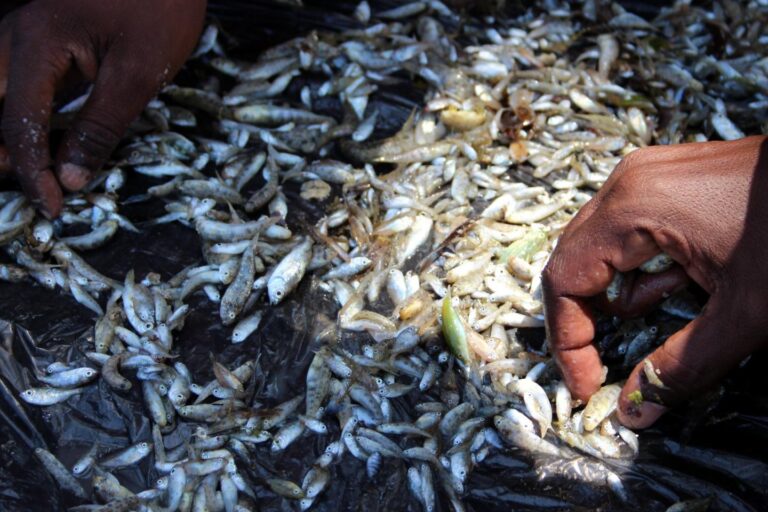
At least 7.3m tons of fish (usually dead or dying) are thought to be discarded each year from marine fisheries around the world. But these estimates come mostly from observations of large-scale industrial fisheries. Limited attention has been paid to small-scale fisheries, which are assumed to have low discard rates – some

Read More »

A Symphony For Scottish Seagrass

Hello Team Seagrass! I am Rufus, a volunteer with Project Seagrass and a marine biology graduate from the University of St Andrews. Since graduating in June 2017, I have begun working for the Scottish Chamber Orchestra’s Connect team and the University of St Andrews’ Music Centre. In this split position, I get to enjoy

Read More »

2018 – From Wales to the World.

Happy New Year Team Seagrass! I can’t believe it’s 2018 already, and I’m sure that is a sentiment we all share! 2017 was an unbelievable year for all kinds of reasons, yet despite the crazy world we now seem to live in, for a few of us it has been

Read More »

What does the future hold for seagrass?

The savannahs of the seas – our humble seagrass meadows are in peril In its Green Seas episode, Blue Planet II introduced us to seagrass meadows. Scarcely touched upon in past media when compared to coral reefs, mangroves and even kelp forests, we learnt about the vast potential of these

Read More »

Blue Planet, Green Seas. What’s the take home message?

This weekend we are in for a treat as the BBC Blue Planet team broadcast episode 5 “Green Seas” for the first time (Sunday 26th November, BBC One, 8pm – don’t miss it!). The episode will reveal amazing footage of charismatic animals such as the Weedy Sea Dragon, the Green Sea Turtle

Read More »

Seagrass meadows key fishing ground globally

Fishing in seagrass occurs around the globe; if there is seagrass (and people) there is fishing. Still, the nature and extent of fisheries in seagrass is poorly understood. It is a prerequisite for natural resource management to understand resource exploitation, therefore we decided to investigate this further. Seagrasses are plants that

Read More »
Europe

How eelgrass spread around the world

Seagrasses evolved from freshwater plants and use sunlight and carbon dioxide (CO2) for photosynthesis and are able to thrive in depths down to 50 meters. In contrast to algae, they possess roots and rhizomes that grow in sandy to muddy sediments. The grass-like, leaf-shoots produce flowers and complete their life

Read More »
biodiversity

Green sea turtles have traveled to the same seagrass to eat for 3,000 years

For approximately 3,000 years, generations of green sea turtles have returned to the same seagrass meadows to eat. This was discovered by Willemien de Kock, a historical ecologist at the University of Groningen, by combining modern data with archaeological findings. Sea turtles migrate between specific breeding places and eating places

Read More »
new science

What causes decline of tropical seagrass meadows?

Seagrass, a group of aquatic angiosperms, grows in shallow waters in the coastal sea and contributes most of the primary production while participating in many important ecological processes. Heat stress threatens the survival of seagrass, but its damage mechanisms are unclear. Recently, a research team led by Prof. Liu Jianguo

Read More »