
NEWS

NEWS

Keeping you up to date with Project Seagrass news and views with a mixture of field notes and commentary on seagrass and marine conservation topics.

Seagrasses starred in Ocean Hackathon Mexico 2020

Last October 9th, the Ocean Hackathon® 2020 took place in Mexico City. This is an event in which multidisciplinary teams have access to international databases and have 48 hours to develop a pilot project or proof of concept that targets an ocean-related problem. This year’s event, organized by IFAL (French

Read More »

The role of seagrass meadows in promoting Ocean Literacy

Ocean Literacy is defined as ‘an understanding of the ocean’s influence on us and our influence on the ocean.’ There are Seven Principles of Ocean Literacy: The Earth has one big ocean with many features. The ocean and the life in the ocean shape the features of Earth. The ocean is a major influence

Read More »

Lindisfarne National Nature Reserve

Holy Island. A place with a rich history of monks, Vikings and saints. Nowadays Holy Island, also known as Lindisfarne, is a hotspot for tourists wishing to learn about British heritage or walk along the beautiful coastline. I only learnt just a few days prior to travelling up to Lindisfarne

Read More »

A fortnight in North Wales

My name is Emma and I am a marine biology undergraduate student at Swansea University. This summer I started a year long internship placement with Project Seagrass as part of my degree scheme and boy did I jump in at the deep end! My first experience was to be joining

Read More »

Communities are central to conservation

Earlier this week saw the release of the Edinburgh Declaration on post-2020 global biodiversity framework, a bold call to action urging Parties to the Convention on Biological Diversity to work more closely with communities in order to meet 20 biodiversity goals set out in the Aichi accord, signed 10 years

Read More »

It’s an ill bird that fouls its own nest

Nearly 30,000 tonnes of sewage containing human waste is to enter the UK despite potential problems for human health. Yet, what stinks for me is that sewage and livestock waste are driving seagrass loss across the UK – we already have a problem, and we don’t need to exacerbate this.

Read More »

Who knew saving the planet could be so peaceful?

Like many of you, WWF staff have been working from spare rooms, kitchen tables and the occasional garden patio for the past few months. When a call came to join our partners at Project Seagrass and Swansea University on a seagrass seed collection trip to North Wales, it was a

Read More »

Two Aquarists went to Wales

Elise and myself look after all the native marine species at The Deep, an aquarium in Hull. I’m very new to all things native having previously worked with penguins and tropical fish but Elise is a pro, thankfully accepting me as her apprentice. We first heard about the work of

Read More »

From studies to seagrass

Mike, Sam, Sam and Owen all started out as students with a love for the ocean on their doorsteps, over the summer they became ‘underwater gardeners’ and joined the Seagrass Ocean Rescue team from the collection of almost a million seeds through to planting 1.5 hectares of seagrass in Dale,

Read More »

Project Seagrass at Awel y Mor Primary

We were extremely excited to build up a relationship with Project Seagrass. Being asked to take part has enabled us to develop our skills and knowledge as staff to help progress with our own school project ‘AYM Project Plastic’. The children have absolutely loved this experience! They have gained lots

Read More »
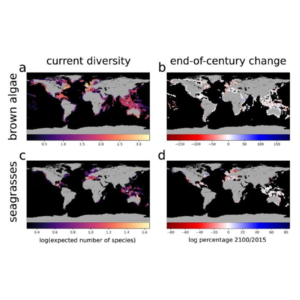
Four graphs outlining the present distribution and projected end-of-century changes in global macrophyte species diversity.
new science

Study projects loss of brown macroalgae and seagrasses

Researchers predict that climate change will drive a substantial redistribution of brown seaweeds and seagrasses at the global scale. The projected changes are alarming due to the fundamental role of seaweeds and seagrasses in coastal ecosystems, and provide evidence of the pervasive impacts of climate change on marine life. In

Read More »

Project Update: Restoration Forth | June 2024

Restoration Forth aims to restore seagrass meadows and native oysters into the Firth of Forth, to create a healthier coastline for people and nature.   Find out more about the project here.  Orkney seagrass trip Next month the seagrass team will be departing for their annual seed collection trip in Orkney. Following

Read More »
new science

Seagrass clone in the Baltic sea is more than 1,400 years old

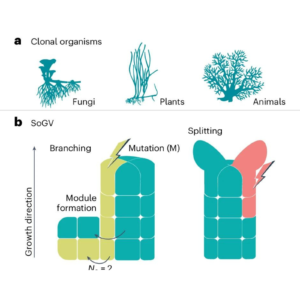
Using a novel genetic clock, a team of researchers from Kiel, London, Oldenburg, and Davis, California, has determined the age of a large marine plant clone for the first time. This seagrass clone from the Baltic Sea dates back to the migration period 1,400 years ago. The newly developed clock

Read More »
Two adults are using DIS guns to insert seagrass seeds into sediment on the beach at Hafan y Mor. The sun is reflecting of the sea in the background.

Catalyst Cymru funding supports Pride Cymru collaboration

This Pride Month we’re celebrating our work with Pride Cymru. Thanks to support from Catalyst Cymru, Pride Cymru volunteers supported fieldwork to plant seagrass seeds as part of our programme of restoration work in North Wales. The planting took place earlier this year in Hafan y Môr, Pwllheli. An introduction

Read More »
ISBW Conference Logo

Project Seagrass head to Naples for ISBW

Between the 17th and 21st June 2024, over 500 scientists, conservation professionals, and managers will converge in Naples, Italy for the 15th International Seagrass Biology Workshop (ISBW15). It will be two years since the last meeting in Annapolis, USA. The theme of ISBW15 is “Seagrasses in the Anthropocene”, centred around

Read More »
Dugong feeding on seagrass, Great Fringing Reef, Red Sea Credit Anett Szaszi Ocean Image Bank

World Ocean Day 2024 – catalysing action for seagrass

The theme of the 2024 World Ocean Day is catalyzing action for our ocean and climate.   This recognises the fact that the health of the marine environment, including our globally declining seagrass meadows, requires significantly stronger local, national, and international action from both government and corporate leaders.  In this article

Read More »