Ambition really is still critical for seagrass
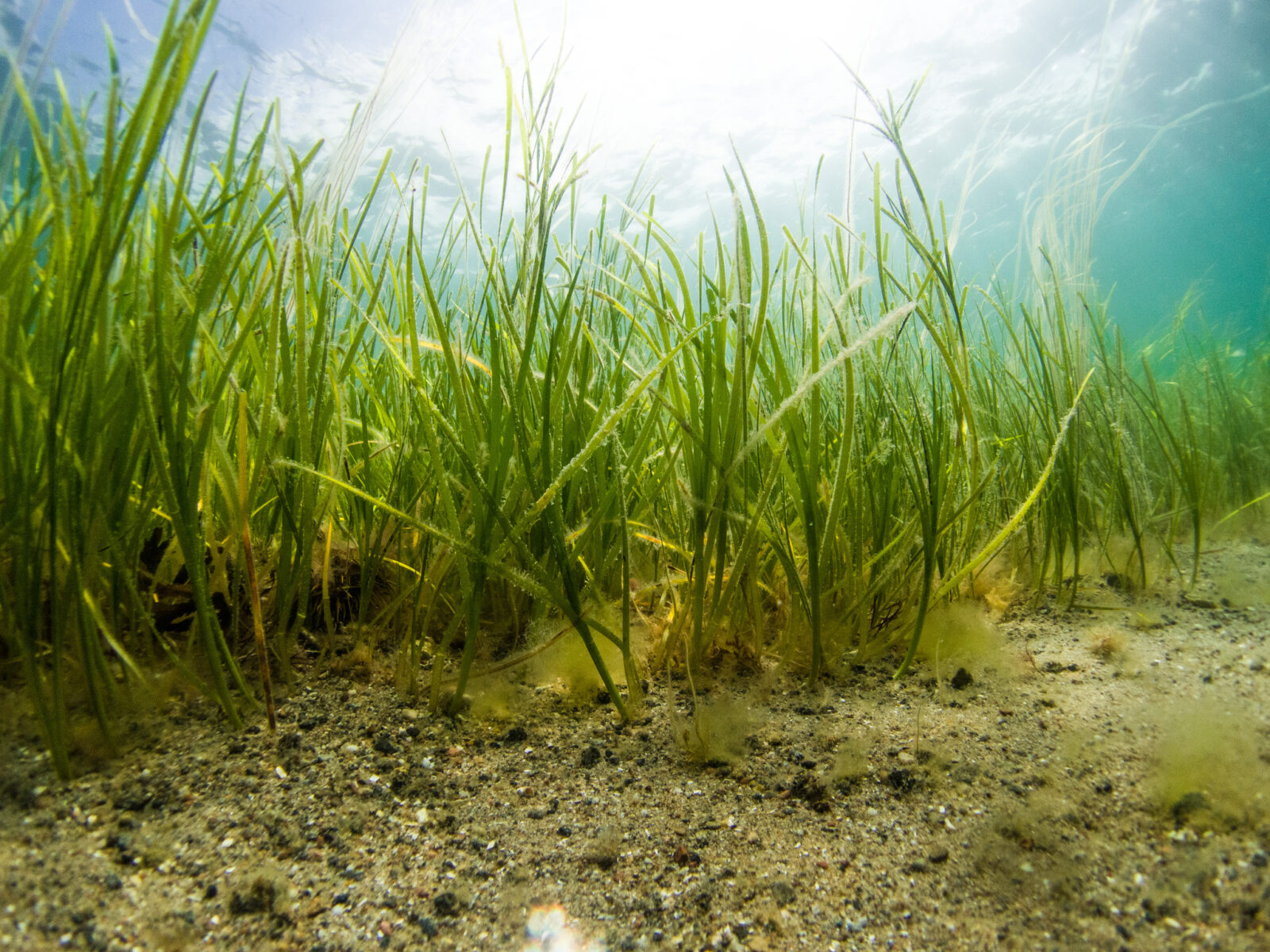
Eight years ago sat on a roof top café at Swansea University we ambitiously set up a small marine conservation organisation called Project Seagrass. Swansea has always seemed a fitting place for Project Seagrass to start. After all it was deemed the ‘lovely ugly town’ by its most famous son, the poet Dylan Thomas. Thomas also went on to describe the place as the ‘graveyard of ambition’, a phrase that’s referred to in an artistic inscription outside the local train station by a more modern Swansea poet that states “Ambition is Critical”. The analogies to seagrass are striking, both entities with image problems and a lack of ambition. The seagrass worlds most famous son Carlos Duarte termed seagrass the Ugly duckling of marine conservation. The inception of Project Seagrass was ultimately built around wanting to turn seagrass into that Swan and not be content to remain the Ugly Duckling. Just like the City with a university of growing reputation, and a leading football club, Project Seagrass was created with ambition. But times are changing for both seagrass and Swansea. When Carlsberg and Sky TV are sponsoring seagrass restoration, seagrass is in the latest GCSE syllabus, and political parties include it in their manifestos, seagrass has hit the big time. Seagrass is now the beautiful Swan, but now more than ever ambition really is critical for seagrass. Getting seagrass on the agenda is one thing, transforming the trajectory of this habitat is another thing. People have long appreciated the value of Coral reefs and Pandas, this appreciation alone hasn’t stopped their decline. The real battles are only just beginning for seagrass. We face a climate emergency, we stare down the barrel of a nature crisis, and we walk blissfully unaware into the extreme challenges of providing food security for a growing global human population. Maintaining and improving the capacity of our oceans to help fight these challenges is an urgent need. We can no longer ignore the plight of our marine ecosystems; we need to conserve and restore habitats at scale urgently. Not in 10 years, but now. In 2016, our director Benjamin Jones published his MRes thesis showing the perilous state of the UKs seagrass, Alix Green has just followed that up with a long-term estimate of the sheer scale of seagrass loss that’s occurred throughout the UK. Seagrass in the UK is not in a pretty state, and globally the trajectory is just as bad, with the Global Wetlands project revealing in a recent paper the scale of the continued global loss of seagrass. The Ugly Ducking may well have become the Swan, but this doesn’t mean the Swan is healthy. The worlds seagrass meadows still have major problems, as does the city of Swansea. Although enormous progress is clearly being made in seagrass restoration, with places such as Sweden, the Netherlands and the US storming ahead with their successful projects, its no good planting in one location if we’re losing it faster in another. Seagrass conservation must be way more than just restoration. Building on The Global Goal for Nature, at Project Seagrass we’ve begun to discuss the concept of how we can reach a state of Zero Net Loss of Seagrass, and ultimately create a vision towards Net Positive for Seagrass and eventually Full Recovery for Seagrass. Even at the spatial scale of Wales as a nation, this is no easy conundrum to solve. Just like the poverty and social challenges of Swansea that remain deep rooted, we recognise that on our 8th birthday, problems for seagrass are also deep rooted, and ambition for seagrass is critical now more than ever.
An East African Marine Safari
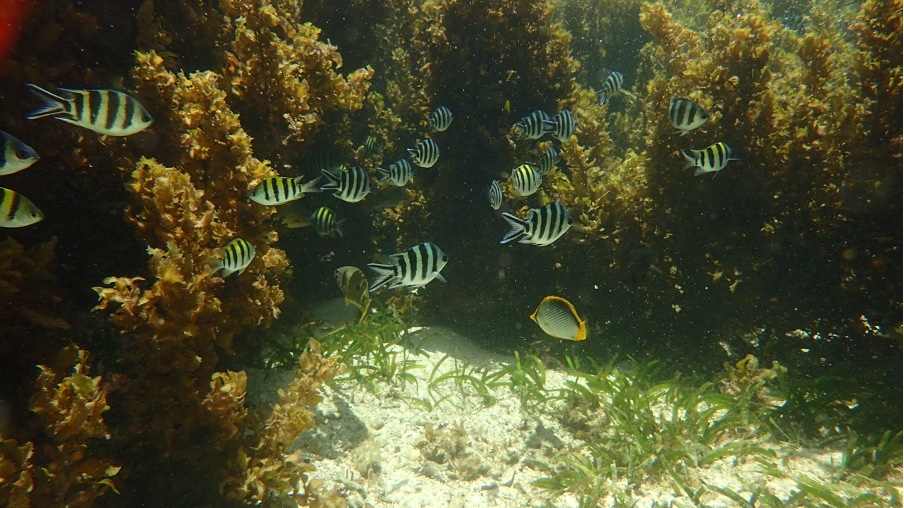
By Sam Freeman In the summer of 2018, after finishing my penultimate year of my undergrad Marine & Freshwater Biology degree, I travelled to Watamu. Watamu is a small but beautiful coastal town just north of Mombasa, in Kenya – East Africa. Watamu is famous for its picturesque sandy-white beaches and tourist filled hotels dedicated to ecotourism. I volunteered on the marine programme at an environmental conservation NGO called A Rocha Kenya for two months. They are based right in the middle of East Africa’s oldest marine protected area, the Watamu Marine National Park (WMNP). The park covers a 10 km2 section of the lagoon and back-reef, south of Watamu village, and includes a diverse array of habitats (including coral reefs, seagrass beds, mangrove areas and a range of intertidal habitats including mudflats, beaches, and rocky shorelines) between the sand dunes all the way out to the fringing reef crest. The WMNP is a smaller, more strictly managed area of the larger 164 km2 Watamu-Malindi Marine National Reserve which extends to the north (see figure 1). WMNP was created in 1968 and the Watamu Malindi Marine National Reserve was declared a UNESCO biosphere reserve in 1979. The park is officially managed by Kenya Wildlife Service, who are responsible for the management and conservation of the marine park. Figure 1: The geographical location of the Watamu Marine National Park within the wider Watamu Marine National Reserve along the coast of East Africa. Figure obtained from Sindorf et al. (2015). During my time there I was given responsibility to steward the two ongoing studies. I was put in charge of surveying the park for the location and distribution of IUCN Red listed soft pillow coral Anomastraea irregularis (figure 2). Whilst being internationally scarce, significant populations are located along the shallow rocky shores of the park. Additionally I was involved in snorkel elasmobranch (sharks, rays, guitarfish) surveys. This meant snorkelling out to the edge of the reef, 1 km from the park shore and taking stock of all the species I saw. My tropical species identification skills improved dramatically, as well as my tan! Other duties I was involved in were helping out around the site, fixing a makuti thatch roof, and setting up internet cabling to serve a new educational building that was out of signal range. This experience taught me a valuable lesson in the importance of independent stewardship of the work assigned to me. I had to learn to adapt quickly, and pickup new skills required for the task at hand, this has proved valuable to me countless times since. Figure 2: Photograph of an A. irregularis colony taken by Dawn Goebbels So how does Seagrass relate? Well… out of the 12 species of seagrass recorded in Kenya, 11 have been found inside WMNP. One of these seagrass species, Zostera capensis, is listed as Vulnerable on the IUCN Red List due to decreasing population. Seagrasses are the most dominant component of the park covering nearly 40% of the benthos (Cowburn et al., 2018). This value comes from a study that mapped habitats found in 8.35 km2 (83.5% of 10 km2) of the park’s area. The mapping revealed that subtidal seagrass covered 3.292 km2 of (39.4%) of the mapped area and Intertidal seagrass covered 0.359 (4.3%) (Cowburn et al. 2018) This renders WMNP an area of high importance regarding international seagrass conservation efforts. Seagrass support a large range of flora and fauna they associate with. This marine plant population is a vital part of the marine ecosystem due to their ecosystem services. Seagrass provides ecological roles, blue carbon storage, feeding grounds for coral reef organisms, habitat and nursery areas for numerous marine species, fishery support, sediment stabilisation, improved water quality and coastal defence. They must not be allowed to disappear. The current A Rocha Kenya marine intern Eric Thuranira has put together a seagrass identification guide for the species within WMNP: The 11 Species Cymodocea rotundata Cymodocea serrulate Enhalus acoroides Halodule uninervis Halodule wrightii Halophila ovalis Halophila stipulacea Syringodium isoetifilium Thalassia hemprichii Thallassodendron ciliatum Zostera capensis References: Cowburn, B., Musembi, P., Sindorf, V., Kohlmeier, D., Raker, C., Nussbaumer, A., . . . Kamire, J. (2018). The habitats and biodiversity of Watamu Marine National Park: Evaluating our knowledge of one of east africa’s oldest marine protected areas. Atoll Research Bulletin, (618). Sindorf, V., Cowburn, B. & Sluka, R.D. (2015) Rocky intertidal fish assemblage of the Watamu Marine National Park, Kenya (Western Indian Ocean). Environ Biol Fish 98, 1777–1785. https://doi.org/10.1007/s10641-015-0397-1
2020 : A Year In Review
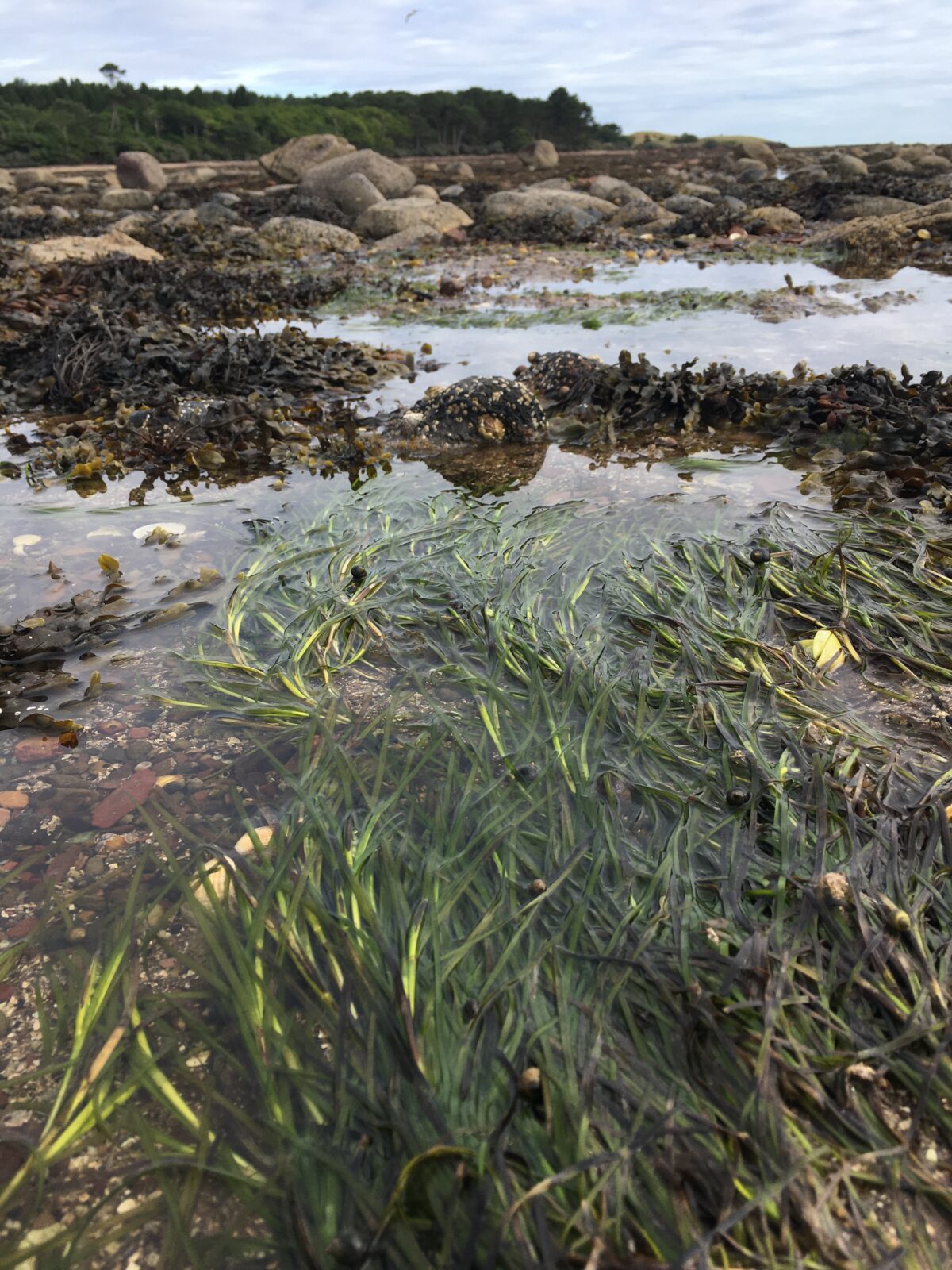
As 2020 draws to a close, we look back on a year that has been nothing short of unusual. Despite the challenges, it has been a year for reflection, growth and innovation, and we believe there’s never been more reason to work toward a brighter future. In the face of a pandemic, like everyone, Project Seagrass has had to adapt, but we’ve tried to continue our work, planting the final seeds in the two hectares of seagrass that represents the UK’s largest restoration project to date and forming relationships with like minded causes to work collaboratively in the fight against climate change. 2020: Key Highlights for Project Seagrass JANUARY Director, Dr Richard Lilley (aka RJ), attended the Scottish Wildlife Trusts Living Seas Parliamentary event in Edinburgh. He discussed the importance of using accessible science to engage communities, the need for restoration and the benefits of collaborative seascape conservation. We also began working with Emitwise to build a partnership, encouraging companies to make their first steps towards achieving net-zero emissions. FEBRUARY With planting finally on the horizon, the Seagrass Ocean Rescue team at Swansea University, worked around the clock preparing sandbags, seeds and rope. Despite delays and some sand related hiccups (finding sandbags whilst Wales was at high risk of floods proved increasingly difficult), an incredible team of volunteers, staff and the local community came together to plant a whopping ~750,000 seeds, just over 1.5ha of the 2ha target. Individuals came from far and wide to battle the elements and ensure planting was a success. MARCH March began with an exciting media follow up from the planting week, BBC, ITV and The Guardian had spoken with Dr Richard Unsworth to discuss the importance of the Dale restoration and how seagrass can be used to tackle climate change, this made a positive contrast to the emerging news of the coronavirus. In more positive news, Project Seagrass were shortlisted for a Green Heart Hero Reward, shortly after planting, Richard and Leanne attended the event in London to accept the award for outdoor innovation. As more information regarding the coronavirus came to light, our entire team worked tirelessly to ensure we were prepared for the rocky road ahead. APRIL As the UK-wide lockdown came into place, Project Seagrass, like many others, moved to work from home. Despite the change in workstyle, and the noticeable absence of fieldwork, the team reached out to our wider community. To celebrate Earth Day, we came together to read an extract from ‘The Loves of The Plants’ by Erasmus Darwin, grandfather of Charles Darwin. This marked the beginning of Project Seagrass’ efforts to commemorate international days of environmental awareness. Outreach technician, Evie Furness appeared on Lizzie Daly’s Youtube channel, speaking live and answering questions about seagrass. This came as part of Lizzie’s Earth Live Lessons, a series that began since the UK lockdown as a communal effort of scientists, filmmakers and conservationists. Following Evie’s lesson, Project Seagrass announced their ‘Seagrass As Art’ online exhibition, working in collaboration with Boston based seagrass artist, Nedret Andre, this was a continuation of our effort to involve the wider community whilst volunteer events and outreach were halted. MAY The 22nd May marked the International Day for Biological Diversity, in part of our celebrations, Project Seagrass launched (Re)Store, an opportunity for donors to give their support to secure and restore seagrass meadows. JUNE On 8th June, Team Seagrass came together to celebrate World Oceans Day with Wild Day’s. In true Project Seagrass style we put together a cheesy educational resource with the help of some sea faring friends. In addition to our celebrations, the new Project Seagrass website was launched! With updated information, the (Re)Store as well as several other new features. We also announced the winners of our ‘Seagrass As Art’ exhibition, we had entries from across the globe and winners from all age groups. All our winners were uploaded to Instagram as part of our highlight initiative! To conclude our celebrations, director Ben Jones performed his rendition of The Fresh Prince of Seagrass – this is a must see! In a significant step for global seagrass recognition, June marked the publishing of the UNEP ‘Out of The Blue’ report, a significant document that recognises the global importance of seagrass meadows to humanity. The incredible Frankie Morland released his song ‘The Ocean’, to raise awareness and funds for Seagrass Ocean Rescue, at Project Seagrass we appreciate the support and love we receive from our community, it’s very humbling to know how our work inspires the younger generations. As June drew to a close, our team managed to carry out a socially distant survey of our restoration site in Dale, with some promising progress. Finally, representatives attended the ‘Rewilding The Sea’ digital conference, an overview of what can be done to protect our coastal ecosystems. JULY In July, Project Seagrass celebrated its 7th birthday! To mark the occasion the Seagrass Ocean Rescue team returned to the Dale site to carry out surveys, by this stage there were several signs of growth. AUGUST As lockdowns eased, Project Seagrass successfully organised and carried out COVID friendly fieldwork in Porthdinllaen, North Wales, collecting half a million seeds. The team worked with the tides, snorkelling in the day and hand picking at night. Shortly after, we were pleased to announce our new seed picking location, a birding hotspot, the Lindisfarne National Nature Reserve in Northumberland. SEPTEMBER Another dive at the Dale site showed even more promising signs of growth, RJ updated our friends at Finisterre, with the first of a series of seasonal blog! We also partnered with Wild Saint London to launch limited edition ‘Sea Tails’ lounge socks, the purchase of these socks allow us to collect, process and plant one hundred seagrass seeds covering one square meter. Following the seed collection in August, the Seagrass Ocean Rescue team began the seed separation process, ready to plant the remaining area in Dale. Dr. Richard Unsworth and Dr. Leanne Cullen Unsworth
A Life On Our Planet
“I’ve had an extraordinary life. It’s only now that I appreciate how extraordinary. As a young man, I felt I was out there in the wild, experiencing the untouched natural world – but it was an illusion. The tragedy of our time has been happening all around us, barely noticeable from day to day – the loss of our planet’s wild places, its biodiversity. I have been witness to this decline. A Life on Our Planet is my witness statement, and my vision for the future. It is the story of how we came to make this, our greatest mistake – and how, if we act now, we can yet put it right. We have one final chance to create the perfect home for ourselves and restore the wonderful world we inherited. All we need is the will do so.” -Sir David Attenborough I imagine that by now a fair few of you reading this blog will have seen (or read) A Life On Our Planet; the‘ Witness Statement’ of Sir David Attenborough. If you haven’t, then I would absolutely encourage you to watch it. In fact do that NOW, you can come back to this blog later… If you were feeling anything like me, I was struggling to bring myself to watch the film. Against the background of COVID-19, the perpetual isolation from family and friends, the chronic lack of sleep from my early days of parenting and the harrowing reports I read daily relating to the triple crises of climate, biodiversity and pollution then quite frankly I felt I just didn’t have it in me to sit through some beautifully shot sequences of humanity trashing the planet! But I did sit down to watch it… and I am so very glad I did. Did I sit through a horror show? Well yes… But did it depress me? Well no… If anything the last 30 minutes of the film re-energised me. I needed a ‘pick me up’ and this film was it. If you are reading this blog, then chances are you already know that there has never been a more urgent need to restore damaged ecosystems than now, and I’m not just talking about seagrass ecosystems, but ALL ecosystems. It’s time to revive our planet. #Generation Restoration So here’s my CALL TO ACTION, head over to UNEP’s website NOW and join the #GenerationRestorationmovement today. There has never been a more urgent need to restore damaged ecosystems than now. Ecosystems support all life on Earth. The healthier our ecosystems are, the healthier the planet – and its people. The UN Decade on Ecosystem Restoration aims to prevent, halt and reverse the degradation of ecosystems on every continent and in every ocean. It can help to end poverty, combat climate change and prevent a mass extinction. However, the decade will only succeed if everyone plays a part. So join the movement today! 30km2 by 2030 As a team of interdisciplinary scientists, the work of Project Seagrass crosses the boundaries of both environmental conservation and social action. For seven years we have worked on the ground with coastal communities, both in the UK and internationally. If the last seven years has taught us anything at Project Seagrass, it’s that achieving our mission begins with how we build our team and how we work together. And now we need to work together more than ever: “At Project Seagrass, we are aiming to restore 30km2 of seagrass across the UK by 2030.” Whether you call it ‘rewilding’ or ‘restoration ecology’ the end point is the same. We need to put habitat back and quickly. Or as sir David said: “We have one final chance to create the perfect home for ourselves and restore the wonderful world we inherited. All we need is the will do so.” So to both UNEP and Sir David please know we are ‘all in’ with #GenerationRestoration, and after watching A Life On Our Planet, I am sure you will be too. Stay safe x RJ
Seagrasses starred in Ocean Hackathon Mexico 2020
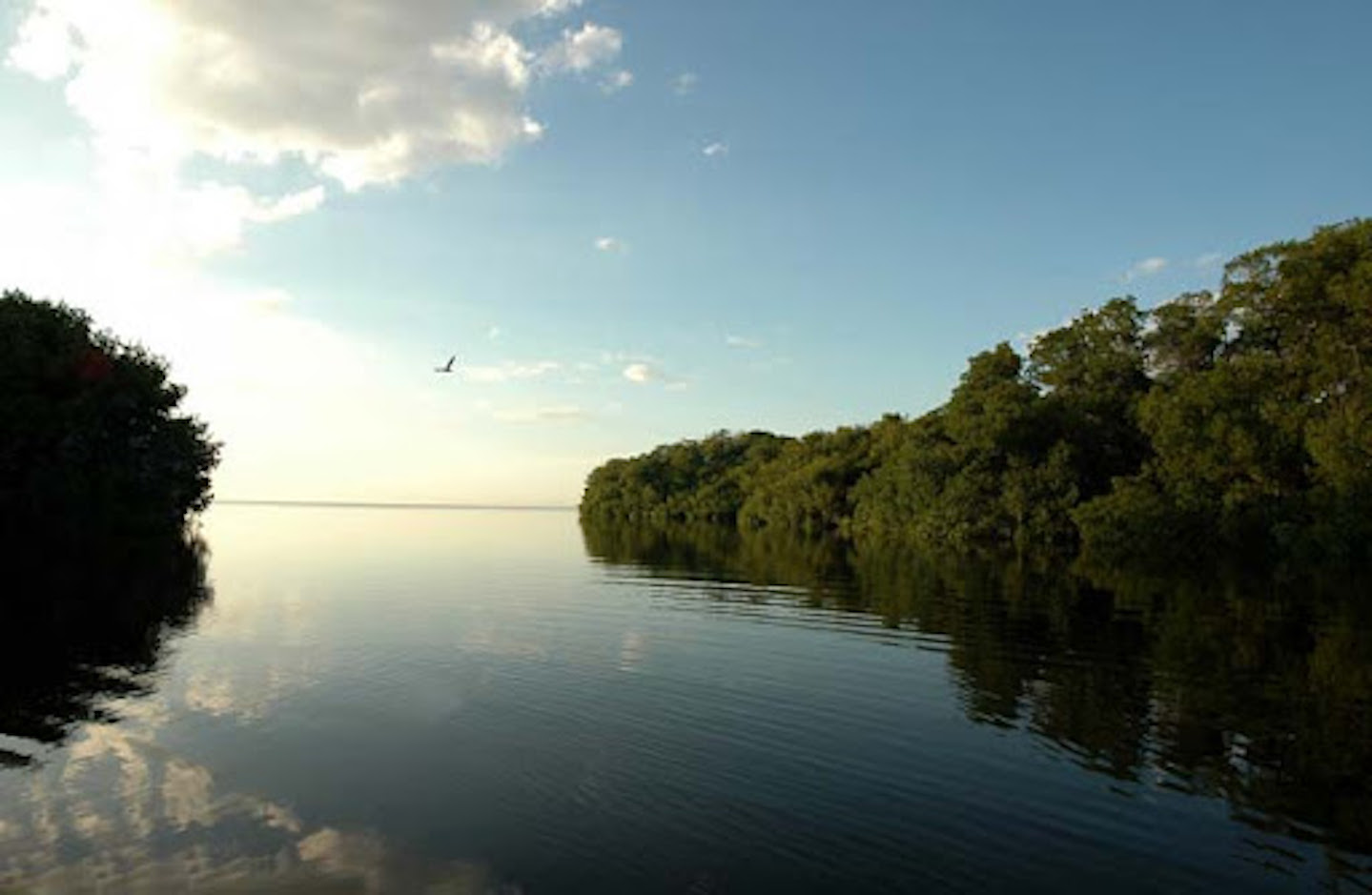
Last October 9th, the Ocean Hackathon® 2020 took place in Mexico City. This is an event in which multidisciplinary teams have access to international databases and have 48 hours to develop a pilot project or proof of concept that targets an ocean-related problem. This year’s event, organized by IFAL (French Institute of Latin America), had seagrasses as protagonists when the team called “Carbón ¡Oh no!” won the first place with a project that targeted seagrass beds conservation. In spite of their relevance and vulnerability, seagrass beds constitute one of the least protected ecosystems on the planet. For this reason, the “Carbón ¡Oh no!” team developed a model based on artificial intelligence that is capable of detecting changes in seagrass coverage through Landsat Satellite Images. With this model they aim to estimate the amount of carbon stored in seagrasses from “Los Petenes” Biosphere Reserve, then translate it into carbon credits and finally give an estimated value in dollars. The objective of their project is to attract the attention of governments and decision makers on the biological and economic importance of this ecosystem; as well as making visible the urgent need to preserve it and emphasize its potential to mitigate climate change. Additionally, they created a remote sensing prototype based on a micro-spectrograph that would be specialized incollecting data in situ with the purpose of complementing satellite information and strengthening monitoring in this areas; facilitating in this way the creation of management and rehabilitation plans. The ten team members who participated in the solution of the challenge are Luis Gerardo Canales (Earth Sciences and Mathematics, UNAM), José López (Biologist, UAM), Ismael Contreras (Eng. in Natural Resources, Chapingo), María Sara del Río (Biologist and Mathematics, UNAM), Joel Herrera (Physicist, UV), Karen Álvarez (Biologist, UAM), Christopher Foster (Earth Sciences, UNAM), Adrián Acevedo (Biologist, UNAM), Miriam Álvarez (Engineer Geologist, UNAM) and Maru Bernal (Biologist, UNAM). Mexico has new seagrass protectors! Title image credit: Los Petenes_CONANP
The role of seagrass meadows in promoting Ocean Literacy
Ocean Literacy is defined as ‘an understanding of the ocean’s influence on us and our influence on the ocean.’ There are Seven Principles of Ocean Literacy: The Earth has one big ocean with many features. The ocean and the life in the ocean shape the features of Earth. The ocean is a major influence on weather and climate. The ocean made the Earth habitable. The ocean supports a great diversity of life and ecosystems. The ocean and humans are inextricably interconnected. The ocean is largely unexplored. According to the Marine Biological Association (MBA) these seven Ocean Literacy ‘Principles’ were developed by hundreds of educators and scientists in the USA as a guide to teaching about the Ocean. These principles are now being used as a framework in Europe to develop strategies towards the goal of an Ocean Literate society As stated by the UK’s MBA. “Few of us are aware of how important the sea is to human wellbeing: medically, economically, socially, politically and environmentally. Many of us are unaware of how day-to-day choices and actions can have a cumulative effect on the health of the ocean – a necessary resource that must be protected for life on our blue planet to exist.” The need for improved Ocean Literacy It has long been recognised that improving public awareness about how the ocean can benefit the environment, economy, and society is important (Peterson and Lubchenco 1997, Costanza, 1999). In 2004, a Pew Ocean Commission report identified a need to improve public literacy about oceans. The authors of the report assumed that by enhancing public awareness and knowledge of the oceans, and their influence on our lives, would lead to increased public support for ocean restoration efforts. The Pew Oceans Commission called for‘a new era of ocean literacy that links people to the marine environment’’ [2, p. 91]. The Commission further argues that there is a ‘‘need to provide the public with understandable information about the structure and functioning of coastal and marine ecosystems, how ecosystems affect daily lives, and how we affect ecosystems’’ [2, p. 11]. Since this report was published, low levels of ocean literacy have been, and are continuingly being identified in many countries. These low levels of literacy can be a barrier for citizens to engage in environmentally responsible behaviour or consider ocean-related careers (Guest et al., 2015). Seagrass meadows role in developing Ocean Literacy in the UK Seagrass meadows have a central role to play in developing ocean literacy in the UK. First, they are coastal habitats, readily accessible from the shore by wading or snorkelling and in some locations (i.e. Porthdinllaen in Wales, Lindisfarne National Nature Reserve in England, or Tyninghame in Scotland) they can be easily accessed without specialist equipment simply by walking out at low tide. In addition, there are already well publicised examples from the USA of where restoration of the same seagrass habitat (same species) has lead to rapid recovery of coastal ecosystem services (see Orth et al, 2020). This creates a cause of optimism that similar results could be achieved in the UK since much of the science now exists it just needs to be applied to UK waters. Finally, there are already existing, recognised and celebrated Seagrass Education and Awareness programs running in the UK both through Project Seagrass and the National Marine Aquarium’s ReMEDIES program. This is supported by an active academic literature for further developing this area (Roth and Reynolds, 2020). Conversations are already underway between Project Seagrass and the London Aquarium about a 5-year strategy that would incorporate a national seagrass engagement program and a potential collaboration with BIAZA network of aquariums which could act as community hubs for engaging people with monitoring, and then the potential restoration of their local meadows. References: Pew Oceans Commission. America’s living oceans: charting a course for sea change. A report to the nation. Arlington, VA: Pew Oceans Commission; 2003 144pp. Costanza R. The ecological, economic, and social importance of the oceans. Ecol Econ 1999;31(2):199–213. Peterson CH, Lubchenco J. Marine ecosystem services. In: Daily G, editor. Nature’s services: societal dependence on natural ecosystems. Washington, DC: Island Press; 1997177–94. Guest, H., Lotze, H.K. and Wallace, D., 2015. Youth and the sea: Ocean literacy in Nova Scotia, Canada. Marine Policy, 58, pp.98-107. https://www.mba.ac.uk/ocean-literacy Orth, R.J., Lefcheck, J.S., McGlathery, K.S., Aoki, L., Luckenbach, M.W., Moore, K.A., Oreska, M.P., Snyder, R., Wilcox, D.J. and Lusk, B., 2020. Restoration of seagrass habitat leads to rapid recovery of coastal ecosystem services. Science Advances, 6(41), p.eabc6434. Roth, J. and Reynolds, L.K., 2020. Engaging students in seagrass-focused activities. Science Activities, pp.1-10.
Lindisfarne National Nature Reserve
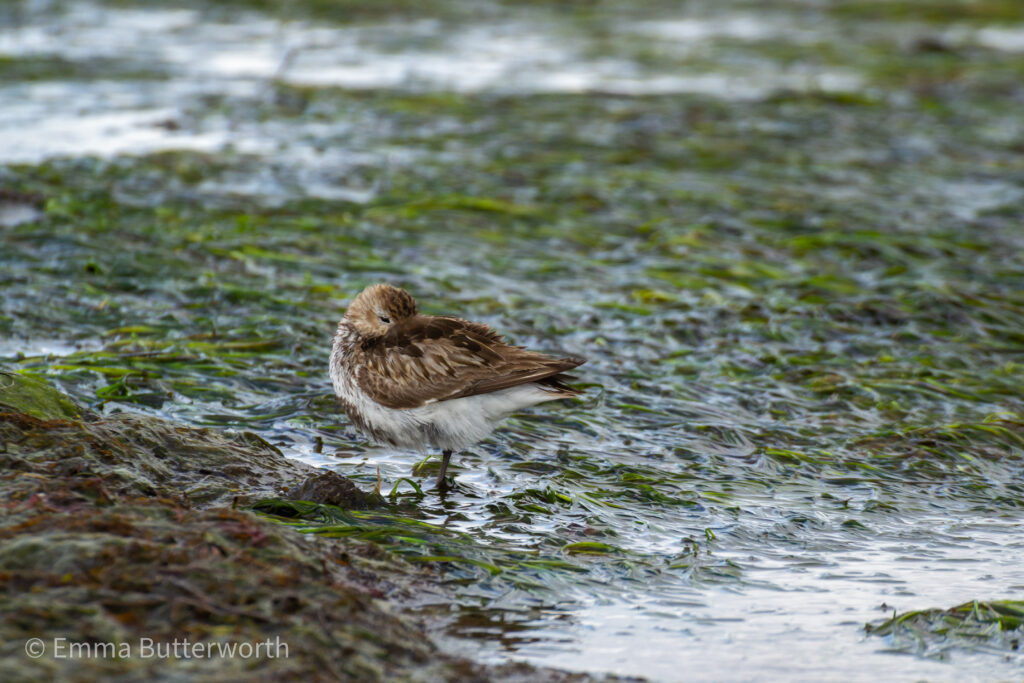
Holy Island. A place with a rich history of monks, Vikings and saints. Nowadays Holy Island, also known as Lindisfarne, is a hotspot for tourists wishing to learn about British heritage or walk along the beautiful coastline. I only learnt just a few days prior to travelling up to Lindisfarne National Nature Reserve (Lindisfarne NNR) that as well as history, the mudflats there are also home to seagrass meadows! This was the reason for my journey from Swansea to the Northumberland, to help collect and transport seagrass seeds from the meadow at Lindisfarne back to Swansea. Our weekend team was led by RJ, with me and three volunteers joining to lend a hand which was only made possible through support from BIAZA. Before we organised the trip, we needed consent from Natural England to collect the seeds. The Lindisfarne NNR is a site of Special Scientific Interest (SSSI) and so permissions are always sought when working in these environments (to ensure the best management of these places). However, since we are working in partnership with Lindisfarne NNR on this project, obtaining the consents for this work was straightforward. Thursday came about and we met at the Island late morning. Our timings were completely reliant on the tides as the only way to access the island and mudflats is to go when the tide is low. This gave us a window of a few hours to get our work done out on the meadow. The first task of the weekend was to collect 600 spathes (the parts of the seagrass that contain the seeds). The hours spent kneeling to pick those spathes were very peaceful. The only sounds were the wind whistling and the eerie wail of what must have been hundreds of seals hauled out on the sand across the flats. The strong gusts carried the sounds making it almost haunting. Similar to the day before, Friday involved more seed collection but this time we needed to do some more data collection. Quadrats were used to assess the condition of the meadow. This is important as this is the first time we have been able to collect seeds from this area. As well as collecting data, spending time on the meadow was a good opportunity for taking photos. There were dozens of wading birds, from curlews to dunlins, all using the seagrass meadow as a feeding ground. It was great to see so many species all gathered in one place!! After a final day of seed picking and some video shooting for social media, RJ showed me some of the coastal towns in the area. It was my first time in Northumberland and South East Scotland, so it was great to the see the beautiful towns like Dunbar and North Berwick. These are the communities which we will be working with if Project Seagrass can expand its restoration sites to Scotland, so it was wonderful to see them first hand. Overall is was a very successful weekend as we collected our goal of 600 spathes, the data needed, and footage. I also completed my personal goals of seeing interesting birds, doing photography, and learning about this incredible area of Britain!
A fortnight in North Wales
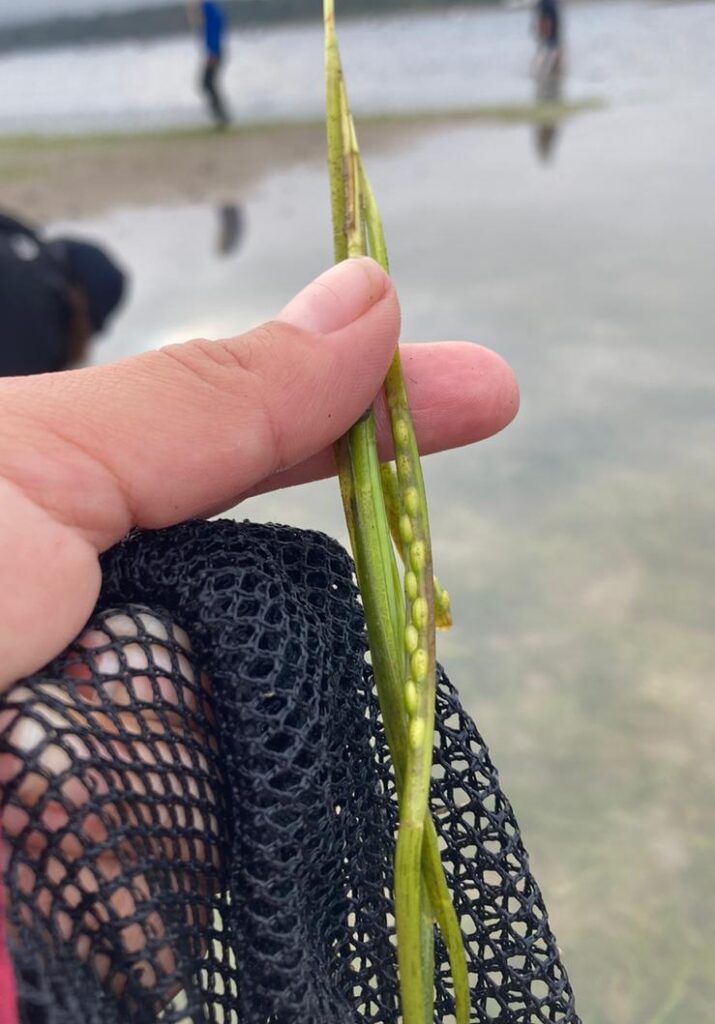
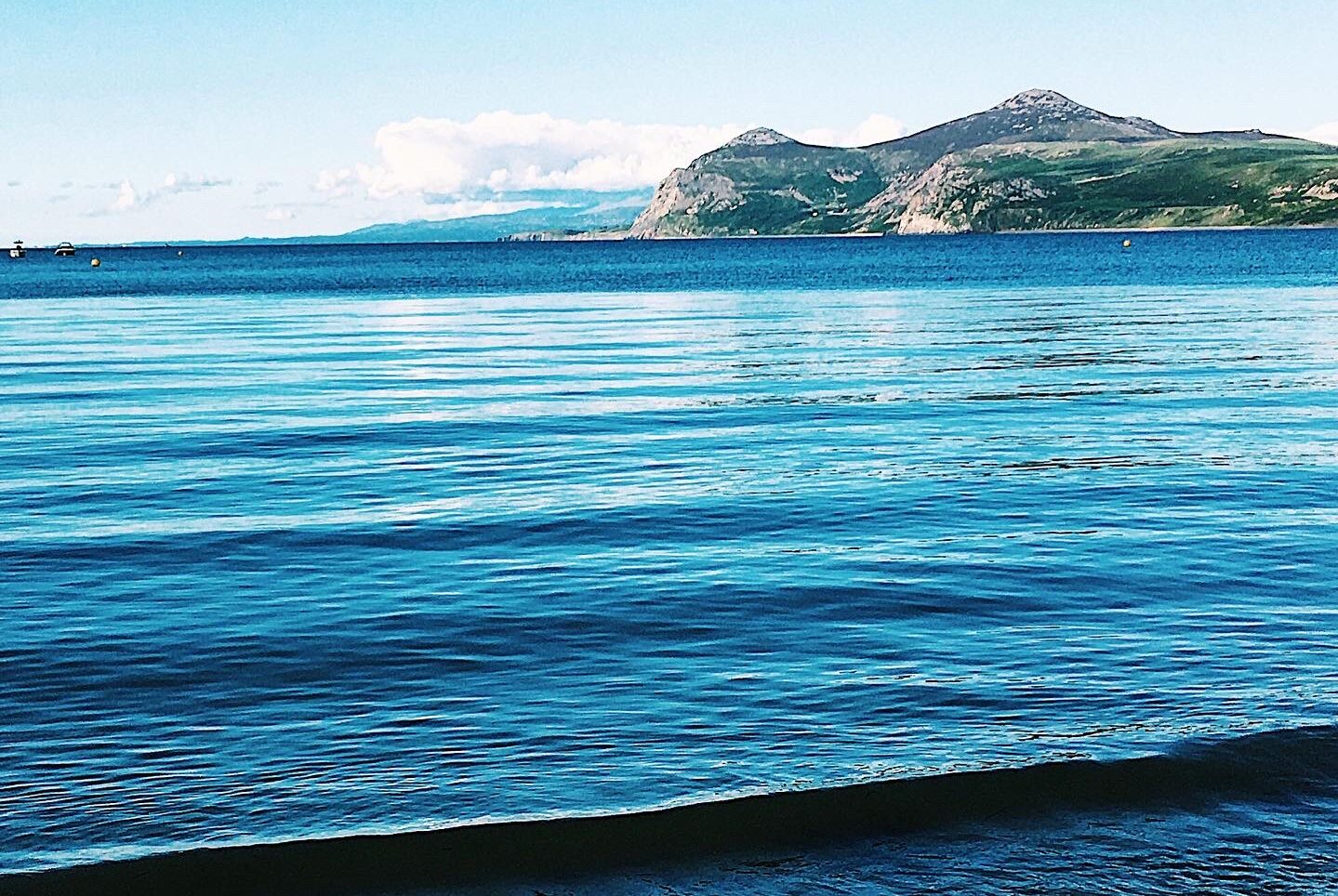
My name is Emma and I am a marine biology undergraduate student at Swansea University. This summer I started a year long internship placement with Project Seagrass as part of my degree scheme and boy did I jump in at the deep end! My first experience was to be joining the team and volunteers in North Wales for a fortnight of picking seagrass seeds, and so on Saturday 1st August Evie and I made the 5 hour drive from Swansea to the Llŷn a’r Sarnau Special Area of Conservation. After settling in, it was early to bed as work was to begin at 2am to catch the first low tide of the trip. The first night of a week of very strange sleep patterns! Meeting in the dark at Porthdinllaen beach, armed with headtorches and mesh bags, Dr Unsworth gave a quick briefing to make sure we were all up to speed with the nights task. To collect mature seeds we’d need to find seagrass spathes, which could be identified by their lime green or yellowish colouration. Despite it being the middle of the night, the light from our headtorches made finding spathes very easy. As well as spotting the all-important seagrass spathes, wading on the meadow at night gave a unique opportunity for spotting interesting creatures. The highlight of the night-time pickings was seeing tiny little cuttlefish, with such bright colours! Returning to Porthdinllaen during the day, we donned our wetsuits and weight belts ready to enter the water. With the sun shining (most of the time!) we entered the water, picking yet more seeds. This time we would dive, or reach, down to pick the spathes which were up to a few meters beneath the surface. This technique allowed us see the seagrass meadow in its own world, from beneath the waves. It was truly a stunning, life-filled landscape with pipefish, spider crabs, sticklebacks, wrasses and more! We continued this cycle for the first week, wading at night and snorkelling in the day. This changed during the second week, when the volunteers left and the dive gear came out. Those in the team qualified to dive would kit up and dive around low tide. Being able to stay down at the seagrass’s level rather than having to constantly duck dive down meant that far more spathes could be picked with much less effort. After two weeks of wading, snorkelling, and diving, we had amassed a very good number of spathes! It was a very successful trip, and our final task was to empty the huge blue tank and pack up all the gear into the van. This was no mean feat but in about half a day we were done, and so ended my first two weeks working with Project Seagrass!
Who knew saving the planet could be so peaceful?
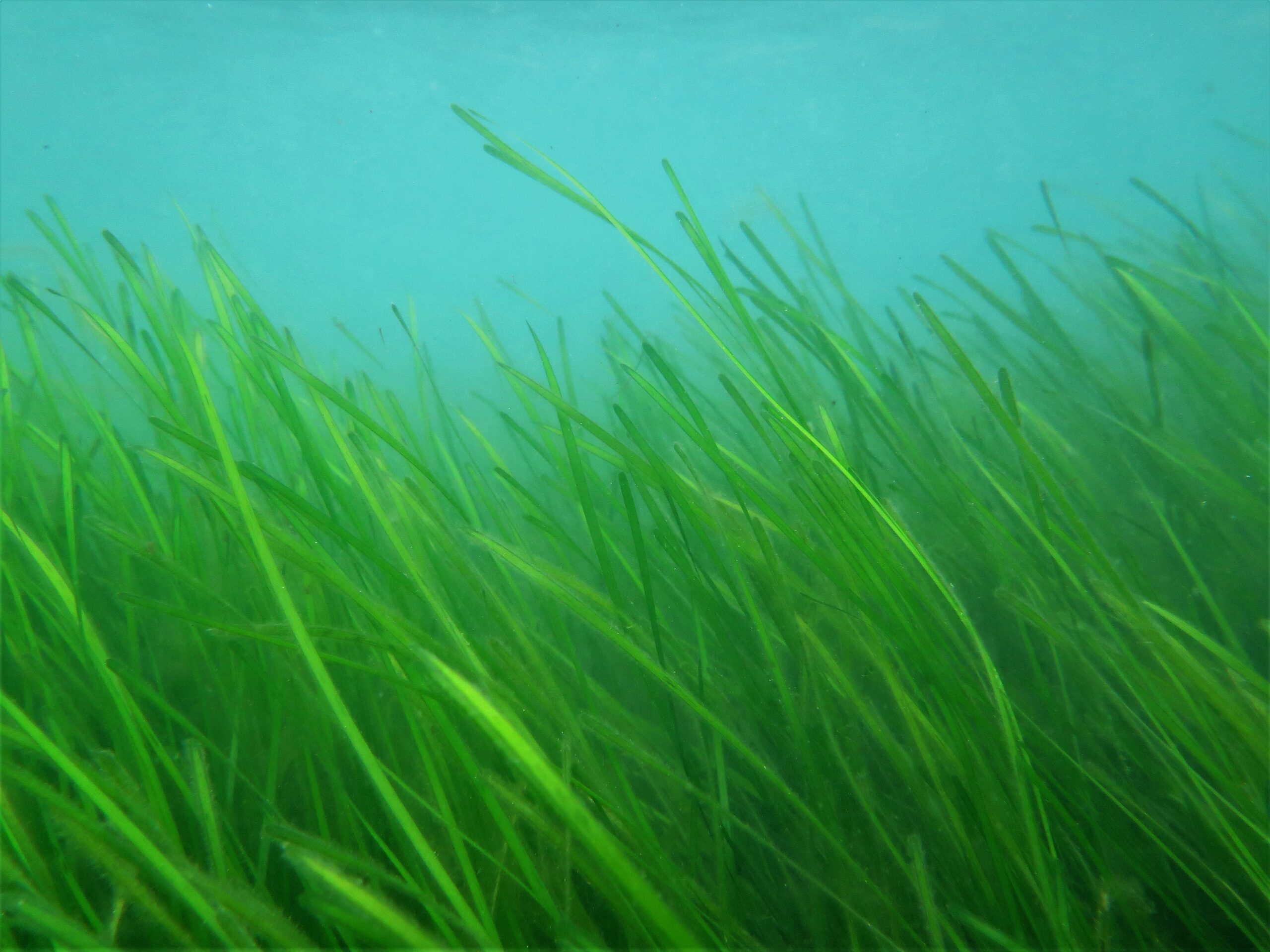
Like many of you, WWF staff have been working from spare rooms, kitchen tables and the occasional garden patio for the past few months. When a call came to join our partners at Project Seagrass and Swansea University on a seagrass seed collection trip to North Wales, it was a welcome break from the (new) norm. WWF has been working closely with Project Seagrass, Swansea University and Sky Ocean Rescue to conduct the biggest seagrass restoration project undertaken in the UK – aiming to restore 20,000 m2 of the marine plant, following the disappearance of up to 92 per cent of the UK’s seagrass in the last century. We’re always keen to share accounts of our work with partners with our supporters so with that in mind, I travelled to Porthdinllaen hoping to contribute to the long-term task of collecting up to a million seeds for planting at and also to document how and why we’re taking on such an endeavour! Our days began by greeting the dawn at low tide with mesh bags in hand as we waded through the shallows, searching for the bright green shoots that that indicate seed-bearing spathes of seagrass. These peaceful, pre-coffee excursions were taking place in the midst of a pandemic and so each of the volunteers setting forth each morning were alone together as we quietly spread out across the meadow for some socially distanced seed picking. After a week, I was convinced that no form of morning yoga, meditation or lie-in could be quite as restful as this! As the tide turned, we’d leave the bay and return in the afternoon when conditions were better for getting in the water and collecting seeds from deeper parts of the meadow. These were more energetic affairs – our makeshift snorkelling staging post abuzz with activity as people grappled with masks, fins and snorkels and braced themselves for a dip the chilly waters of the Irish Sea in August. With so little seagrass remaining in the UK, I’m reminded whenever I swim above what a shame it is that so few get the chance to experience the closest thing we have to underwater forests that exists within yards of the shore. As I dived from surface to seabed to search for seeds, I’d catch glimpses of the wildlife that depends on seagrass for shelter and sustenance – anemones clinging to individual blades of grass, spider crabs tracing the boundaries of individual patches and the young fish darting across the meadows that double up as their nurseries. Each afternoon, I’d promise myself that I’d remain in the water a little longer than the previous day, shortly before bouts of uncontrollable shivering would send me to shore after little less than an hour! After every session, our collected bounty would be added to a huge tub of harvested of seeds back at base which provided two constant reminders and affirmations of our progress – the first being the ever growing quantities… and the second being the ever worsening smell as the shoots collected earlier began to gently decompose and separate from their previously tightly held seeds. Suffice to say, there are some things we’re happy not to share with our supporters… Our seagrass meadows remain at risk and with so many of our iconic coastal species reliant on them, we can ill afford to lose more. What is less well known is that the case for restoring meadows, like the one at Port Dale where these seeds will soon be planted, is one that could help us save the planet. Healthy seagrass meadows can capture and store carbon emissions at a rate 35 times faster than tropical rainforests. We hope that this work of this partnership will lead to further successful restoration efforts across the country and bring a brighter future for these incredible coastal ecosystems. Words and photos by Sean Clement
Two Aquarists went to Wales
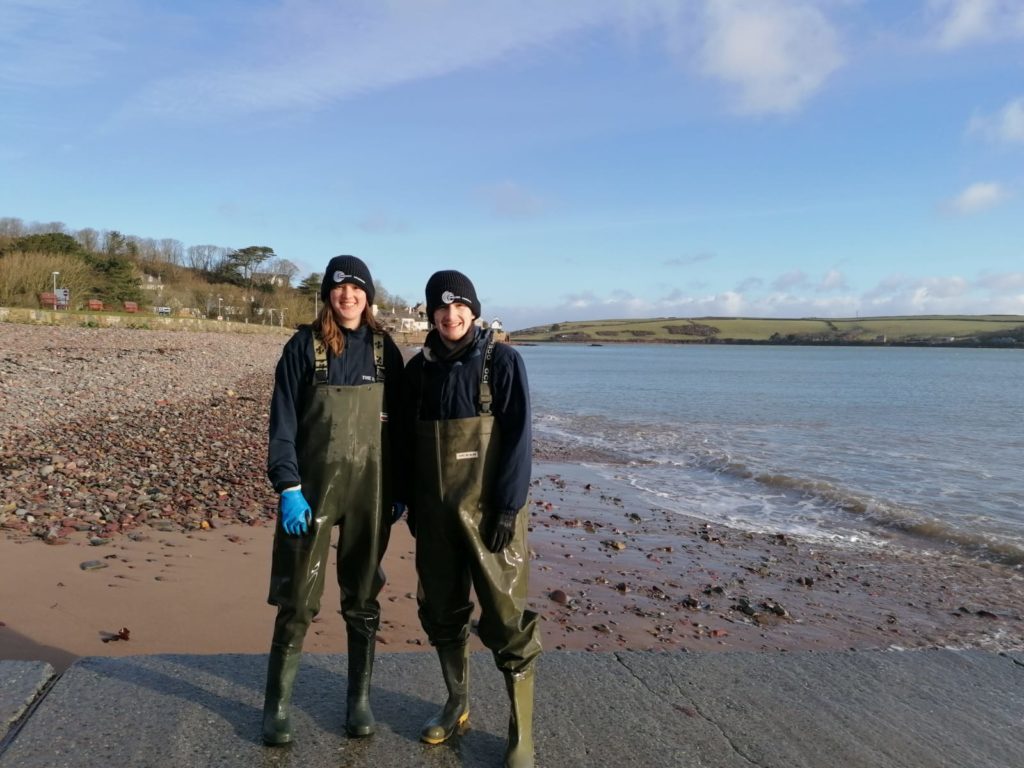
Elise and myself look after all the native marine species at The Deep, an aquarium in Hull. I’m very new to all things native having previously worked with penguins and tropical fish but Elise is a pro, thankfully accepting me as her apprentice. We first heard about the work of Project Seagrass and Swansea Uni when Elise went to the National Aquarium Conference (NAC) in late 2019. From there we attended the first BIAZA seagrass focus group meeting organised by Sam and only a few weeks after that we set off on the train to Wales. The seven hour journey was very much the calm before the storm but what a wonderful, happy storm it would prove to be. The scale of the work to be achieved in the week was imposing but equally impressive was the effort carried out to get to that point. Twenty thousand small bags had been filled by a small army of school children, volunteers and the dedicated project team before being hand tied to twenty kilometres of rope ready to be planted. Alongside that was the harvesting and preparation of the three quarters of a million seeds that would go into the bags. This doesn’t even touch on the logistical work carried out to put everything in place. During the week each rope, 100m long, would be laid to restore seagrass over an area of one and a half football pitches. Day one was spent loading the vans in typical Swansea rain with all the equipment needed and prepping the two boats (Calypso and Zostera) that would be used before driving down to Dale and getting everything set up for the week ahead. This was when the true scale of the project hit home, stepping into the library at the fort and seeing the piles of boxes containing the prepped bags and ropes. Watching this pile shrink through the week was immensely satisfying as it was a clear visible indicator of the fantastic work being done by everyone involved. The first task we were involved with was prepping the individual crates to be sent down to the boat for laying. This involved untangling the ropes, filling each bag with around fifty seeds, topping them up with sand and adding some water before coiling them again for soaking. This work was completed in small teams of between three to six people, the composition of these teams was always changing as different volunteers arrived each day and people swapped in and out of different jobs in the bigger picture. What never changed was the amazing work atmosphere and efficiency with which the process was carried out, fuelled by a constant supply of tea, cake and music. The opportunity to spend so much time working and chatting with such an amazing group of people will live long in the memory. The bag filling was paused every now and then by trips to the beach with the completed crates containing the seeds to load into the boats. As energy levels dropped through the week the work ethic of the team really shone, sharing the load of the heavy crates and sand bags. Work by the boat team was almost continuous as more and more lines were laid, one quick break being met with some well-deserved pea and ham soup from the locals. By Friday all targets had being met with seven hundred and fifty thousand seeds planted and the library empty of boxes. Everything was tidied up and it was time to head back to Swansea for a warm shower, a takeaway and a good sleep. Sitting down after pretty much non-stop activity allowed time to reflect on all that had been achieved and how much of a pleasure it had been to do our bit for the environment alongside such a great group of people. We are both so grateful that we were able to be involved and can’t thank Project Seagrass enough, very much looking forward to the day where we can go and see the seeds growing and the positive impact the project will have had on local diversity. Matt and Elise