Tag: Open Letter

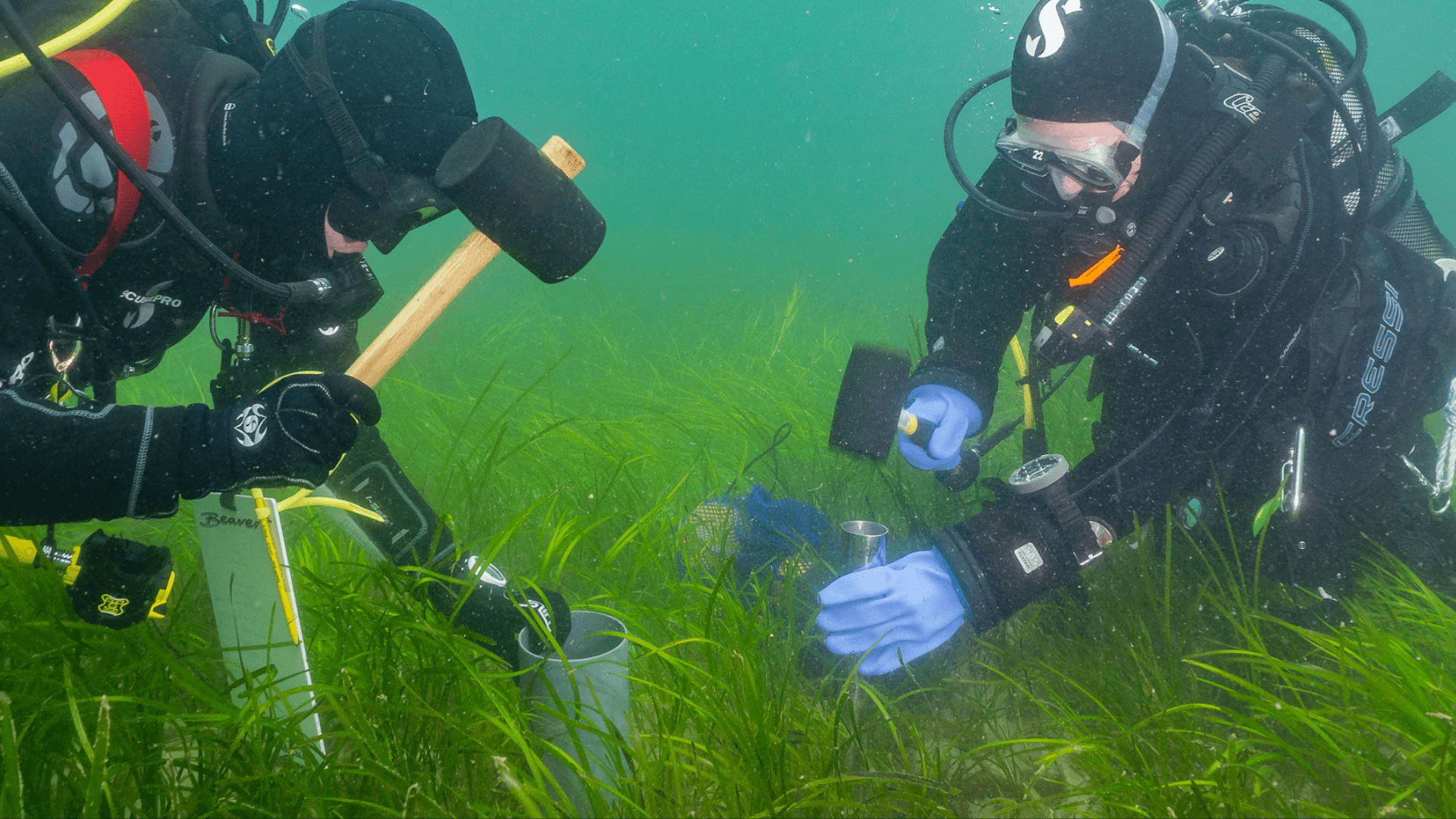
Two divers are taking seagrass cores from a seagrass meadow in Orkney as part of research into the biodiversity within these meadows.

Open Letter to Crown Estate Scotland. Scottish Seagrass Collaborative Response to: Approach to Marine Enhancement Proposals (issued November 2025)

The Scottish Seagrass Collaborative, responds to Crown Estate Scotland’s Approach to Marine Enhancement Proposals: We write as marine scientists, restoration practitioners, and organisations working across Scotland’s coasts and seas, in response to Crown Estate Scotland’s Approach to Marine Enhancement Proposals. We welcome Crown Estate Scotland’s commitment to responsible stewardship of

Read More »
Two divers are taking seagrass cores from a seagrass meadow in Orkney as part of research into the biodiversity within these meadows.

Open Letter to Crown Estate Scotland. Scottish Seagrass Collaborative Response to: Approach to Marine Enhancement Proposals (issued November 2025)

The Scottish Seagrass Collaborative, responds to Crown Estate Scotland’s Approach to Marine Enhancement Proposals: We write as marine scientists, restoration practitioners, and organisations working across Scotland’s coasts and seas, in response to Crown Estate Scotland’s Approach to Marine Enhancement Proposals. We welcome Crown Estate Scotland’s commitment to responsible stewardship of the seabed and its recognition that marine enhancement activities—such as seagrass meadow and native oyster restoration—deliver important public benefits. We also recognise the intention behind the Non-Commercial Enhancement Licence to provide a light-touch mechanism to support this work. However, we are concerned that the approach, as currently set out, risks creating unintended barriers to marine science, restoration, and climate action in Scotland—particularly through the inclusion of low-impact scientific surveys and sediment sampling (such as coring) within licensable activities. We ask: a zero-cost exemption for non-commercial, not-for-profit restoration activities to incentivise biodiversity positive activities rather than impose barriers and work collaboratively in consultation with the research and restoration community to develop all current and future guidance. Why sediment sampling matters Sediment coring and similar sampling methods are essential scientific tools. They are used to: identify and map habitats that store “blue carbon”; measure how much carbon is currently stored, and how much could be restored; design effective and well-targeted restoration projects; monitor whether restoration is successful over time; meet Scotland’s national and international obligations on climate and biodiversity reporting. These activities are temporary, small-scale, and reversible. A typical sediment core affects an area measured in centimetres, not metres, and causes negligible environmental impact. Treating this type of research in the same way as seabed occupation, construction, or extractive use risks undermining proportionality and evidence-based decision-making. Risks to restoration and blue carbon science Scotland is recognised internationally for leadership in marine nature-based solutions and blue carbon research. Yet marine carbon cannot be measured or verified without physical sampling of seabed sediments.  Requiring licences, fees, and extended approval timelines for this work risks: creating significant barriers to non-commercial marine restoration at a time when policy and science point toward the need for rapid development and scale-up. Applying fees and additional bureaucracy to generative, public-benefit restoration is counterproductive and misaligned with national biodiversity and climate goals. Marine habitat restoration is non-commercial, non-extractive, and enhances seabed value delivering public benefits (blue carbon, fish nurseries, nutrient remediation) that exceed licence costs. slowing down urgently needed research at a time when climate and biodiversity action must accelerate. Non-Commercial Marine Habitat Restoration in Scotland is currently driven by small non-profit eNGOs and community-led projects that struggle for funding. For example, the charity Seawilding is trialing seagrass and native oyster restoration methodologies in multiple sites in Argyll and Wester Ross. Along with others, the charity is developing the science, the know-how, and the methodologies to allow restoration at scale. The existing licensing regime and cost is already burdensome. To pile on more poses an existential threat to Seawilding and this essential work. creating barriers to delivering the Scottish Biodiversity Strategy to 2045 and the Marine and Coastal Restoration Plan. The proposed charges are counter to the Strategy & Plan, which encourages active restoration by community-based organisations and advocates streamlining and simplifying the process. In addition, the charges will create additional barriers to achieving targets in the Scottish Biodiversity Strategy to 2045 and the upcoming Natural Environment Scotland bill. Recent work by a panel of expert restoration researchers and practitioners highlighted that adding licensing costs and complexity makes small-scale restoration increasingly unfeasible and favours large developers without restoration expertise. Read more here. making publicly funded research harder to deliver within fixed budgets and timelines. discouraging foundational science before any future natural capital markets are even considered. adding bureaucracy where policy intent is to enable, not constrain, restoration. While the policy excludes natural capital markets, the paradox is that the research needed to responsibly inform any future policy on blue carbon is now harder to carry out. All public bodies, including seabed owners, have duties to support biodiversity recovery and climate action. Those goals cannot be met without access to the seabed for scientific research. Our request We respectfully ask Crown Estate Scotland to: Explicitly exempt low-impact, non-commercial scientific sampling (including sediment coring) carried out for research, restoration design, monitoring, and blue carbon assessment from licensing requirements; or Introduce a clear, fast-tracked, cost-free notification or consent process for these activities, separate from enhancement or occupation licences; and Work collaboratively with the research and restoration community to develop guidance that recognises the essential role of scientific sampling in delivering national biodiversity, climate, and nature-recovery objectives. Closing We strongly support Crown Estate Scotland’s ambition to be a responsible and proactive steward of the seabed. We believe this ambition will be best realised by ensuring that essential scientific research is enabled rather than hindered. Applying fees and additional bureaucracy to low-impact, public-benefit restoration science risks creating significant unintended barriers at a critical moment for Scotland’s seas. We ask for the Crown Estate to incentivise biodiversity positive activities rather than impose barriers such as this licensing and fee. Letter endorsed by: Action West Climavore Loch Dail an Inbhire croft Heriot Watt University Moray Ocean Community Open Seas Project Seagrass Scotland’s Rural College Seawilding Shark and Skate Scotland Solway Firth Partnership University of Edinburgh University of Glasgow

Read More »
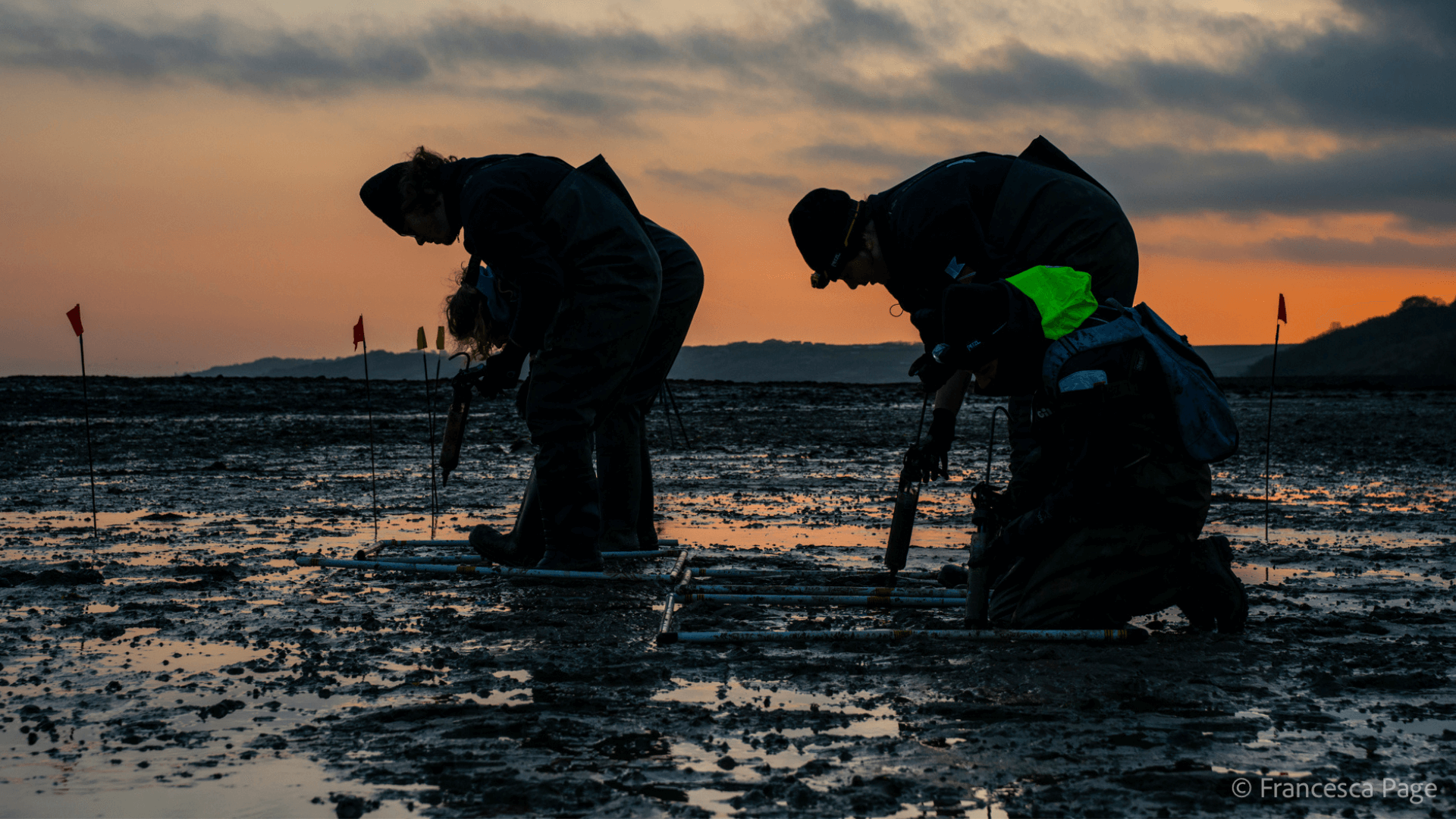
Seagrass Restoration taking place in the Solent at sunrise.

Our open letter to Secretary of State for Environment, Food and Rural Affairs Rt Hon Steve Reed OBE MP

Dr Richard Unsworth, Chief Scientific Officer at Project Seagrass, along with 35 other leading scientists from across the UK, responds to proposals from the UK government to make licensing for marine restoration more complex and costly. Dear Rt Hon Steve Reed OBE MP and team, This letter sets out our response as leading scientists, practitioners, and NGOs to the DEFRA consultation “Marine licences: changes to fees, exemptions and self-service licences”. We believe the proposed increases in fees and restrictions for marine licences will seriously undermine restoration efforts, making an already difficult activity even more challenging and, in many cases, unviable. The current licensing system for marine restoration is already unjust and fundamentally at odds with the UK Government’s national and international commitments. To introduce additional fees, administrative burdens, and restrictions at this time is, quite frankly, perverse. We specifically oppose: Any increase in fees for marine restoration licences. The urgent need is to remove fees entirely, not add to them. Further restrictions and additional charges on marine restoration projects larger than 5 hectares (we need marine restoration exemptions from this). Evidence clearly shows that scaling up restoration delivers greater resilience and enhanced ecosystem service (natural capital) benefits compared with small, fragmented projects. We specifically request: Practitioners need DEFRA to create a simplified, consistent, cost-free, and science-based licensing system for marine and coastal conservation. Currently, licensing is one of the most significant barriers to restoring the health of the UK’s seas. We see these proposed changes under the consultation as a missed opportunity to create such a system. The urgency could not be greater. Our climate and natural systems are breaking down, and the ocean is in crisis. In each of the last three summers (2023–2025), UK seas have endured unprecedented marine heatwaves. Never before has there been such a critical need for healthy coastal ecosystems that can bolster resilience, buffer climate impacts, and support food security. Yet our habitats have been decimated and continue to decline with DEFRA’s own assessment concluding that the UK marine environment is failing on 13 out of 15 indicators. Marine restoration is not optional; it is essential for our collective future. Restoring and conserving ocean habitats is also a legal obligation. The UK is a signatory to the Kunming–Montreal Global Biodiversity Framework and, under the Environment Act 2021, has binding targets for nature recovery. These commitments require all public bodies, including seabed owners to conserve and enhance biodiversity. The UK has already missed the Aichi Biodiversity Targets, largely due to regulatory barriers of the very kind now being proposed. Repeating these mistakes would be indefensible. The benefits of a streamlined licensing system are profound. It would enhance our capacity to tackle the climate and biodiversity crises, strengthen coastal resilience, and improve national food security. International examples demonstrate that simplified frameworks accelerate recovery and generate long-term ecological and social benefits. At conferences such as ReMeMaRe, UKSS, and the Seascape Conference, frustration with England’s current licensing regime has been a recurring theme. The system is widely regarded as unpredictable, inconsistent, costly, and burdensome, treating restoration projects as if they damage rather than enhance the marine environment. This not only delays urgent work but risks deterring vital investment in ocean recovery. The state of our marine environment illustrates the scale of the problem: estuaries are degraded, mudflats retreating, saltmarshes fragmented, and most seagrass meadows lost. Remaining habitats are scarce and highly vulnerable to climate change. Immediate reform is essential. Wales and Scotland are already moving in the right direction. Dialogue and regulatory reforms are creating enabling environments for restoration. England must now do the same. Without urgent change, regulation will remain a barrier to the large-scale environmental renewal that is desperately needed. We no longer have healthy ecosystems to use as restoration baselines. Historic habitats such as oyster reefs have vanished, while global heating accelerates ecological change. Restoration must therefore look forward, building climate-resilient ecosystems that reflect future needs rather than only past states. To do so, we need a legal and regulatory framework that supports ambition. The Kunming–Montreal Framework and the Environment Act 2021 require bold action, but these targets cannot be met without enabling legislation. In addition to the consequences of further restrictions on marine restoration for biodiversity, we also believe these restrictions place further restrictions upon our ability to reach Net Zero, and therefore see this as an issue not only for DEFRA but also for DESNZ. We therefore call on the Government to act swiftly to reform the licensing system for marine and coastal restoration. This is a practical and achievable step that would deliver immediate benefits for biodiversity, climate resilience, and food security. As scientists and practitioners at the forefront of UK marine research and restoration, we would welcome the opportunity to meet with you and your team to discuss solutions and pathways for progress. Yours sincerely, Dr Richard Unsworth FRSB, FHEA Associate Professor (Swansea University), Chief Scientific Officer (Project Seagrass) Signed on behalf of the following: Prof Martin J Attrill, Professor of Marine Ecology, University of Plymouth Dr Dan Barrios-O’Neill, Head of Marine Conservation, Cornwall Wildlife Trust Prof Michael Chadwick, King’s College London Sarah Chatfield, Nature Recovery Partnership Manager, Chichester Harbour Conservancy Dr Leanne Cullen-Unsworth, Chief Executive, Project Seagrass Dr Aline da Silva Cerqueira, Sussex Bay & King’s College London Dr Tim Ferrero, Senior Specialist – Hampshire & Isle of Wight Wildlife Trust Zia Fikardos, Marine Policy Officer, Royal Society for the Protection of Birds (RSPB) Angus Garbutt, Principal Scientist, UK Centre for Ecology & Hydrology Chris Graham, Head of Ocean Regeneration, Marine Conservation Society Tom Godfrey, Founder, Earth Change Dr Ian Hendy, Coastal Ecologist, Senior Lecturer, University of Portsmouth Chloë James, Seagrass Project Officer, Cornwall Wildlife Trust Prof Chris Laing, University of Exeter Dr Sally Little, Nottingham Trent University Louise MacCallum, Solent Seascape Project Manager, Blue Marine Foundation Niall McGrath, CEO, Robocean Ltd. Anouska Mendzil, Senior Science Officer, Project Seagrass & Swansea University Nigel Mortimer, Estuaries Officer, South Devon National Landscape Estuaries Partnership Dr Simon J. Pittman, School of Geography

Read More »