Tag: conference

CERF 2015 – Grand Challenges in Coastal and Estuarine Science

A long-standing tradition of Coastal and Estuarine Research Federation (CERF) conferences is the friendly and collegial environment and the unwavering support for early career scientists. This #CERF2015 was no exception with a multitude of leading marine scientists inspiring the next generation with #OceanOptimism as together we tackle the Grand Challenges

Read More »

Registration for the 12th International Seagrass Biology Workshop is Now Open!

The International Seagrass Biology Workshop (ISBW) is the only international meeting specifically tailored to seagrass scientists, professionals and students. Abstract submissions are now open as are proposals for workshops. All payment is via PayPal using credit/debit cards. There is one registration fee. It covers access to all parts of the conference program, including the

Read More »

The 4th International Marine Conservation Congress – Making Marine Science Matter.

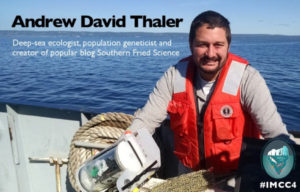
www.conbio.org The International Marine Conservation Congress (IMCC) represents one of the most important international meetings for marine conservation professionals and students. IMCC4 was recently held in St. John’s Newfoundland and Labrador between 30 July – 3 August 2016, building on from the success of Glasgow in 2014 and bringing together conservation professionals and students from across the globe. A key ambition for the conference is to develop new tools and foster collaborations that will further marine conservation science and policy. The overall theme of IMCCs is: “Making Marine Science Matter” For marine conservation to be effective, marine conservation science must genuinely matter to stakeholders, policy makers, and practitioners. To try to accomplish this, the IMCC congresses are generally organized around specific topics of interest for marine conservation, or as topics relevant to specific places. In addition to the regular conference proceedings, IMCC4 also witnessed the inauguration of “#OceansOnline”, a full day of Making Marine Science Matter through online communication and the use of other online resources. Here delegates participated in hands-on training workshops tailored to beginners, and facilitated discussion panels hosted by experts in their fields. Marine Science and Conservation Consultant Andrew Thaler was one of the plenaries – check him out at www.OceanographyforEveryone.com and at @SFriedScientist on Twitter. #OceansOnline is a first of its kind, and from a personal perspective it provided a platform for discussion on how internet tools can help marine scientists and conservation professionals with research, education and outreach. Something which is at the very heart of what we are trying to achieve with Project Seagrass and our SEA Program (Seagrass, Education, Awareness). Sessions about how and why we should talk about success in marine conservation and avoiding the pessimism trap gave us reason to pursue an outlook of #OceanOptimism. As well as ‘making waves inland’, the challenge for ocean literacy in land-locked locations – something that we should really not struggle with in the Britain, and yet we do, as we are never more than 70miles from the coast! #OceansOnline help bring together the online ocean community, facilitating new collaborations and pioneering new technologies. It was through #OceansOnline that I was directly involved, and proud to be. Inspirational colleagues from both academia and the fishing industry (see below) have made the point previously that policies about marine resource use of often decided in the absence of key stakeholders, and in particular with main fishermen feeling voiceless and ignored. This feeling is one that I can directly relate to from my work with the Lipsi Fishermen’s Association in Greece. Here I have worked with a group of fishers heavily reliant on the fisheries provision of their coastal seagrass ecosystems (Posidonia oceanica) and yet as a group they feel powerless to effect change in the regional fisheries management structure. So the idea was to run a workshop on “Bringing fishermen to the table” using online “Bambuser” technology. A simple concept, yet one that marks a pretty important development considering a lot of commercial fishermen (from both developed and developing countries) cannot attend conferences like IMCC4 or other such events. If the fishermen can’t come to the conference then the conference can come to the fishermen! As you can see from the screenshot below the Bambuser platform provides a livestream video feed and a chat function, allowing fishermen, scientists and policy makers to discuss issues around a virtual table. Whilst use of this technology is in its infancy for marine collaboration and communication, with the rapid developments in global internet speeds and connectivity, we all see online tools such as Bambuser as the future in providing essential communication channels between stakeholder groups. If the fishermen can’t come to the conference, then the conference can come to the fishermen! Whilst there may have been teething problems during the session (sound and stream quality in some locations), the general feedback we have received has been overwhelmingly positive. The feedback was overwhelmingly positive about the session. We hope the session provided an example of what can be achieved for our oceans ‘online’, and that we see more use of online technologies to bridge the gap between stakeholders and provide a platform for discussion for marine resource management. Well that’s me for now. Until the next time!

Read More »

The 13th International Coral Reef Symposium – Bridging Science To Policy

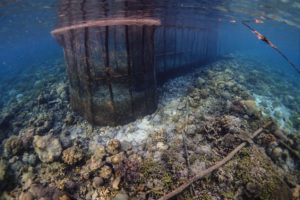
The International Coral Reef Symposium (ICRS) is the primary international meeting for researchers who are focused on coral reef science and management. In fact, as a conference it has a similar ecosystem focus to the International Seagrass Biology Workshop (ISBW) that we will be hosting in Wales this coming October. The Symposium, held in Hawai’i last week brought together over 2,500 coral reef scientists, policy makers and managers from around 100 different nations in a forum to present the latest research findings, case histories and management activities, and to discuss the application of scientific knowledge to achieving coral reef sustainability. Coral reefs are one of our planets most bountiful ecosystems and they provide essential ecological, economic and cultural services to the people of tropical and subtropical islands and coastal communities worldwide. Coral reefs can be are a huge source of income to adjacent coastal communities through eco-tourist activities. Latest estimates suggest coral reefs provide close to US$30 billion each year in goods and services, so not only are do they support enormous biodiversity they are also of immense value to humankind. However, whilst scientific knowledge about coral reefs has increased exponentially over the past few decades, the state of reefs globally has declined during this period. Globally coral reef ecosystems are being degraded. Multiple stressors from the global actors of climate change, ocean acidification and overfishing to localized habitat destruction (above) are all contributing to habitat loss. To address this disconnect, the theme of the 13th ICRS was “Bridging Science to Policy”, with specific goals focusing on: Improving trust and communications among scientists, policy makers, managers and stakeholders. Developing strong partnerships between political leaders and the scientific community. Guiding efforts and strategies for effective allocation of limited financial, human and institutional resources to halt and reverse coral reef decline locally and globally. Developing a framework for quantitatively evaluating the effectiveness of coral reef protection and recovery activities and initiatives by applying the best available science. The ICRS is of course devoted to the best reef science available, with the purpose of sharing scientific findings with government agencies, resource management, and non-government organizations throughout the world. Such conferences are immensely important because they provide the international science community with a platform to: Increase global knowledge and interest in coral reefs, including sustainable use and conservation strategies; Showcase successful science, conservation and management efforts; Develop collaborations and partnerships to increase international capacity to address coral reef issues; and Increase global awareness of reef degradation and possible solutions by extensive promotion in the media. It is exactly through increasing global awareness and the developing of collaborations and partnerships that we as a global community are likely to address global challenges, and it is for this reason that so many scientists are being encouraged to take the Oceans Online. To conserve the world’s oceans we must go beyond just the production of science, but to also use it to inform policy and management, and ultimately to catalyze change. This change will only happen if we can reach out to all stakeholders, and work together with a common purpose, for many this means stepping up to the challenge of becoming public advocates for our natural environment. Many marine scientists are taking the #OceansOnline! Increasing global awareness of reef degradation whilst promoting possible solutions and #OceanOptimism. There are already many scientists who have taken this message to heart and produce a wonderful array of online media through which to inspire and engage. For example a fantastic summary of the ICRS 2016 conference can be found here and outstanding leadership from all the signatories of the conference (the 2,500 scientists at the ICRS) imploring Australia to protect the Great Barrier Reef here. So for all those involved in LIVE TWEETING from ICRS2016 – thank you! All that remains is to share and promote the ‘distilled down’ “Take-Home Messages” from the conference that are pertinent for us all to share in and acknowledge. These are: Reefs are threatened, not doomed Climate change, pollution and overfishing are the 3 drivers that ALL have to be addressed Local, pro-active interventions can help to build resilience of reefs to climate change, but reefs cannot be climate-proofed Prevention is better than cure, but recovery is possible Scientists can help by spreading the message that reefs can still be saved if we actually try harder! So let us also get to work! #TeamSeagrass

Read More »

CERF 2015 – Grand Challenges in Coastal and Estuarine Science

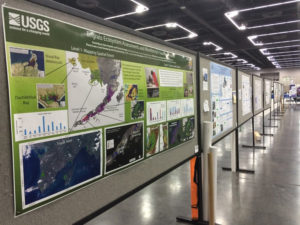
A long-standing tradition of Coastal and Estuarine Research Federation (CERF) conferences is the friendly and collegial environment and the unwavering support for early career scientists. This #CERF2015 was no exception with a multitude of leading marine scientists inspiring the next generation with #OceanOptimism as together we tackle the Grand Challenges together. This was despite a brilliant opening keynote by Berth Kerttula, Director of the National Ocean Council. ‘The Good, The Bad and The Ugly’ of marine problems! #CERF2015 was very active on social media, check out the hashtag To give you a quick history lesson, CERF conferences have been held biennially since 1971 with the aim of: ”…advancing human understanding and appreciation of the Earth’s estuaries and coasts, to the wise use and management of these environments and to making the results of their research and management actions available to their colleagues and to the public.” Such admirable ambitions are inline with our own at Project Seagrass and so CERF conferences are natural home for promoting our vision: “Our vision is that our marine ecosystems are healthy, well-managed and full of life.” At this conference a whole range of topics pertaining to seagrass meadows were discussed. Seagrass restoration techniques were presented by Per-Olav Moksnes, Louise Eriander and Eduardo Infantes of Göteborg University in Sweden, whilst Rohani Ambo-Rappe showcased us transplantation methods for seagrass restoration in the Indo-Pacific. Michael Rasheed from James Cook University, Australia was able to report on the protection of the Great Barrier Reef seagrasses. He presented work on innovative monitoring of seagrasses at high risk from coastal development. Similarly Len McKenzie (also of JCU) was able to report on the status of seagrass meadows adjacent to the highly urbanized city-state of Singapore. One of the most inspiring research projects to be discussed at CERF2015 must surely be the work of the Zostera Experimental Network (ZEN). Pamela Reynolds provided a summary of research into the biodiversity and complexity of seagrass functioning across the northern hemisphere. Such collaborative research is surely cause for #OceanOptimism!# There were some fantastic posters at the conference documenting a range of seagrass research topics. Yet it wasn’t just the established names who were doing exceptional seagrass research. There were over 700 students and early-career scientists at the conference who had produced some fantastic research and were contributing significantly to our global knowledge base. Not least Erin Voigt won best student talk ‪#CERF2015‬ for her work on the effect of structural complexity and biodiversity on seagrass ecosystem function. To all those involved in the hosting of the conference – thank you, and to all those who are conducting seagrass research – thank you! Keep up the good work and see you at ISBW2016. ‪#TeamSeagrass

Read More »

Registration for the 12th International Seagrass Biology Workshop is Now Open!

The International Seagrass Biology Workshop (ISBW) is the only international meeting specifically tailored to seagrass scientists, professionals and students. Abstract submissions are now open as are proposals for workshops. All payment is via PayPal using credit/debit cards. There is one registration fee. It covers access to all parts of the conference program, including the following: Shuttle bus from Bangor (on Sunday 16th Oct and Monday 17th Oct) and return on 21st and 22nd Oct. Welcome event Field trip (excluding option extra activities e.g. diving) Poster event Conference dinner Tea and coffee Additional local trips Onsite Wifi access Accommodation bookings will include all meals (approx. £95 pppn) and need to be paid directly to Nant Gwrtheyrn. See the Accommodation page here. For more information check out the registration page here.

Read More »