NEWS

NEWS

Keeping you up to date with Project Seagrass news and views with a mixture of field notes and commentary on seagrass and marine conservation topics.

Project Seagrass Launch – Thank You

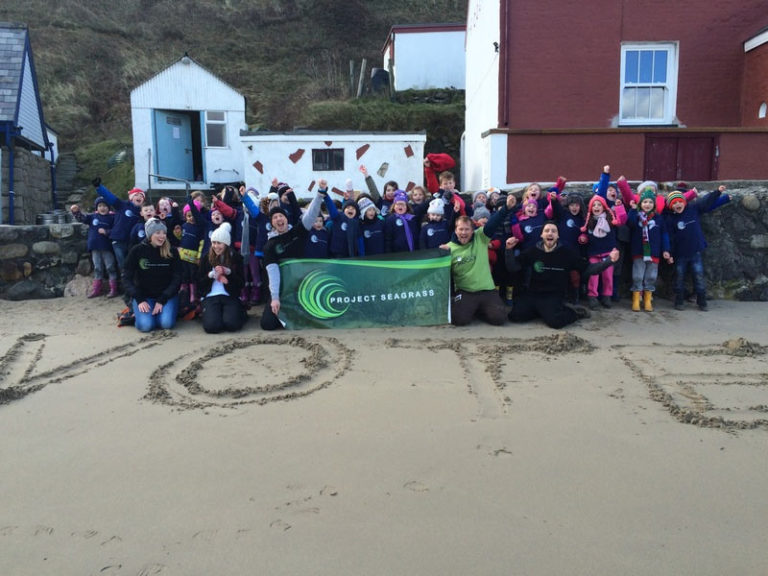
Yesterday evening, we hosted our official Project Seagrass launch event and its safe to say it was a blast. We were excited and thrilled to see so many faces, some old and some new – we couldn’t be sure how many of you would make it despite the RSVP! Back

Read More »

A Glimmer of Hope for Seagrass in the Wakatobi National Park?

Back in December 2015 I spent a couple of weeks in the Wakatobi, Indonesia, initiating phase II of the Wakatobi Seagrass Program. This seeks to build on work carried out though a previous project “Recognising the role of seagrass meadows in food security: re-prioritising the marine conservation agenda” (2011-2014), which

Read More »

Restoring our Damaged Seagrass Meadows

When you think about areas requiring bold initiatives to protect the environment, the small Welsh costal village of Porthdinllaen might not be the first place that comes to mind, and with only two dozen buildings and a miniscule population you might find it surprising that the environment there is under

Read More »

CERF 2015 – Grand Challenges in Coastal and Estuarine Science

A long-standing tradition of Coastal and Estuarine Research Federation (CERF) conferences is the friendly and collegial environment and the unwavering support for early career scientists. This #CERF2015 was no exception with a multitude of leading marine scientists inspiring the next generation with #OceanOptimism as together we tackle the Grand Challenges

Read More »

Starting the Seagrass and Dugong fightback

  The Dugong (Dugong dugon) is IUCN Red listed as Vulnerable, in many of the 46 range states that contain Dugong its status is a lot worse. Historic hunting, loss of its seagrass habitat and the impacts of by-catch have been the primary causes of its decline. Back in 2007 the

Read More »

Registration for the 12th International Seagrass Biology Workshop is Now Open!

The International Seagrass Biology Workshop (ISBW) is the only international meeting specifically tailored to seagrass scientists, professionals and students. Abstract submissions are now open as are proposals for workshops. All payment is via PayPal using credit/debit cards. There is one registration fee. It covers access to all parts of the conference program, including the

Read More »

Learning to protect seagrass in the heart of the Coral triangle.

  Indonesia is at the heart of the Coral Triangle, an area characterised by having the World’s highest marine biodiversity. With over 17000 islands, 51,00km2 of coral reef and at least 30000 km2 of seagrass its marine life is extensive and spectacular. But with a growing population, rapidly expanding GDP,

Read More »
A screenshot of the research paper "New directions for Indigenous and local knowledge research and application in fisheries science: Lessons from a systematic review" overlain on an image of seagrass in North Wales
new science

Indigenous and Local Knowledge in Fisheries Science

Seagrass meadows play a critical role in keeping our oceans healthy and stocked with food, providing valuable nursery habitat to over 1/5th of the world’s largest 25 fisheries. Seagrass meadows are also important to small-scale fisheries, particularly as a place to find and collect a reliable source of food with some

Read More »

Coastal Communities Network Gathering 2024

Earlier this month Project Seagrass’ Senior Conservation Officer Katy Waring attended the yearly gathering for coastal communities from the Coastal Communities Network  facilitated by Fauna and Flora International. The event was held on the island of Millport at their field studies centre.   The 3-day event was inspiring; groups from around

Read More »
From left to right: View of the STARESO harbor entrance with Posidonia meadow islands and an accumulation of dead leaves. Close-up of litter accumulation. Experimental benthic incubation device ('bell') installed on accumulations of Posidonia dead leaves (10 m deep). Credit: G.Lepoint & W. Champenois / ULiège
new science

Dead leaves in sea break down into a compost that produces oxygen

Researchers from the University of Liège (BE) studied the fate of the material produced by Posidonia seagrass meadows. This study, carried out in the Mediterranean Sea at STARESO, shows that the dead leaves of what is commonly known as Neptune grass accumulate in shallow areas, where they break down like

Read More »
Seagrass in Orkney

Climate Impact Partners and Deloitte Join Forces to Unlock Large-Scale Seagrass Recovery Financing

Climate Impact Partners and Deloitte, in collaboration with Project Seagrass and the UK’s National Oceanography Centre, announce a groundbreaking program to fund UK seagrass recovery and unlock long-term finance to save and reinstate vital seagrass meadows. The program will fund critical research across UK seagrass meadows, mapping the ecosystems and developing methods to restore them

Read More »
Neil is standing on board Project Seagrass' boat Gwen. He is wearing a hat, sunglasses, and a red coat.
Volunteer

Seagrass Ocean Rescue Volunteer Profile: Neil

The Seagrass Ocean Rescue North Wales programme relies on the commitment and enthusiasm of local volunteers. We spoke to regular volunteer Neil about his experiences of volunteering as part of the programme. Volunteer Interview Tell us a little bit about yourself: I grew up in North Wales, then moved around

Read More »