NEWS

NEWS

Keeping you up to date with Project Seagrass news and views with a mixture of field notes and commentary on seagrass and marine conservation topics.

The British Science Festival – Swansea University, Wales.

A sunny Saturday in Swansea and Project Seagrass had a stall set up ready for the British Science Festival’s Family Fun weekend. A big seagrass mural was laid out surrounded by crayons and paints for kids to get stuck in, and immediately the crowds hit. Kids everywhere colouring all kinds of

Read More »

3 YEARS TODAY – What a difference a year makes!

Sitting down to write this I really don’t know quite where to begin! What a year it has been, in fact, what a 3 years! Although for me it seems that soooooo much has happened in just the last 12 months! Before I start, on a personal note, I remember

Read More »

Project Seagrass goes to Cornwall

As masters students from both Swansea and Glasgow Universities, we’re both currently carrying out seagrass related research projects. Beth is performing her masters project, and Lauren is performing her final year honours project.  Beth is studying the impacts of chain moorings on seagrass, particularly looking at how chain width effects

Read More »

Intern Spotlight: Laura Pratt

As a third year Biology Student from Cardiff University, I’ve been lucky to get involved with Project Seagrass, which has its offices within the University. I first started working with the team last summer when I took part in an 8 week CUROP placement (Cardiff University Research Opportunities Programme) at

Read More »

Project Seagrass at the Glasgow Science Festival 2016

Launched in 2007, Glasgow Science Festival (http://www.glasgowsciencefestival.org.uk) has grown to be one of the largest science festivals in the UK. The festival takes memorable events to non-traditional venues across the City of Glasgow where researchers, charities and non-governmental organistations are able to engage with people, from all ages and backgrounds.

Read More »

Long Lost Seagrass & Our Spring Survey Report

During April I returned to the Llyn Peninsula, along with Project Seagrass directors RJ Lilley, Ben Jones and Richard Unsworth to conduct the Spring SeagrassWatch survey, 1/4 of the yearly seagrass monitoring survey that we’ve been conducting at Porthdinllaen for the past two years. In addition, we also checking seeds from Project ReStore and

Read More »

Flotsam and jetsam: The story of the fuzz ball

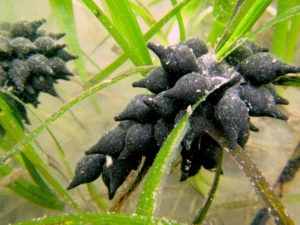
Are they aliens, are they dinosaur eggs, or are they just some ‘organic’ bath sponges that fell of the ship from China?These are the questions people might rightfully be asking when they come across numerous fuzzy round balls washed upon the beach. Well in the village of Inverallochy, North of

Read More »
biodiversity

Starting the Seagrass and Dugong fightback

  The Dugong (Dugong dugon) is IUCN Red listed as Vulnerable, in many of the 46 range states that contain Dugong its status is a lot worse. Historic hunting, loss of its seagrass habitat and the impacts of by-catch have been the primary causes of its decline. Back in 2007 the

Read More »
conference

Registration for the 12th International Seagrass Biology Workshop is Now Open!

The International Seagrass Biology Workshop (ISBW) is the only international meeting specifically tailored to seagrass scientists, professionals and students. Abstract submissions are now open as are proposals for workshops. All payment is via PayPal using credit/debit cards. There is one registration fee. It covers access to all parts of the conference program, including the

Read More »
biodiversity

Learning to protect seagrass in the heart of the Coral triangle.

  Indonesia is at the heart of the Coral Triangle, an area characterised by having the World’s highest marine biodiversity. With over 17000 islands, 51,00km2 of coral reef and at least 30000 km2 of seagrass its marine life is extensive and spectacular. But with a growing population, rapidly expanding GDP,

Read More »
biodiversity

Puttalam Lagoon – Paradise Lost?

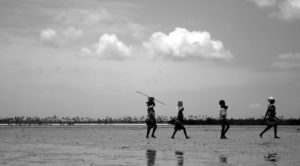
At the end of August I spent 10 days conducting fieldwork in Pattalam Lagoon, which is situated in the north west of Sri Lanka. The purpose of my visit to Puttalam Lagoon was to set up socio-economic and fish landings surveys with a research collaborator, who will now complete the

Read More »