NEWS

NEWS

Keeping you up to date with Project Seagrass news and views with a mixture of field notes and commentary on seagrass and marine conservation topics.

Intern Spotlight: Laura Pratt

As a third year Biology Student from Cardiff University, I’ve been lucky to get involved with Project Seagrass, which has its offices within the University. I first started working with the team last summer when I took part in an 8 week CUROP placement (Cardiff University Research Opportunities Programme) at

Read More »

Project Seagrass at the Glasgow Science Festival 2016

Launched in 2007, Glasgow Science Festival (http://www.glasgowsciencefestival.org.uk) has grown to be one of the largest science festivals in the UK. The festival takes memorable events to non-traditional venues across the City of Glasgow where researchers, charities and non-governmental organistations are able to engage with people, from all ages and backgrounds.

Read More »

Long Lost Seagrass & Our Spring Survey Report

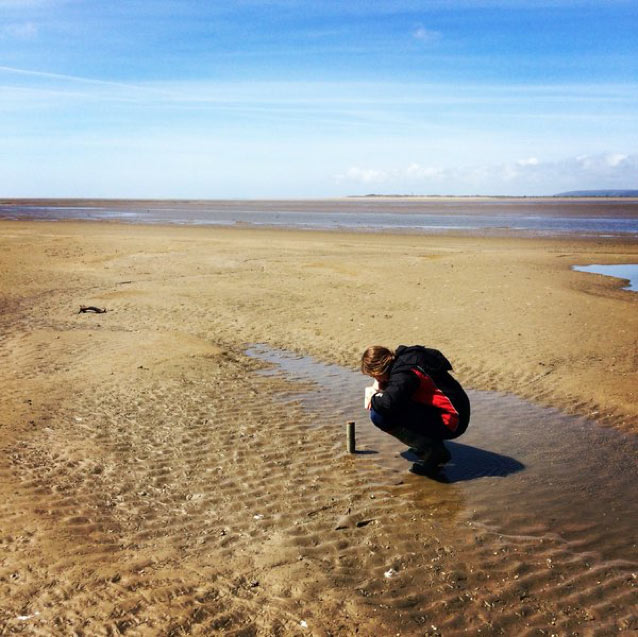
During April I returned to the Llyn Peninsula, along with Project Seagrass directors RJ Lilley, Ben Jones and Richard Unsworth to conduct the Spring SeagrassWatch survey, 1/4 of the yearly seagrass monitoring survey that we’ve been conducting at Porthdinllaen for the past two years. In addition, we also checking seeds from Project ReStore and

Read More »

Flotsam and jetsam: The story of the fuzz ball

Are they aliens, are they dinosaur eggs, or are they just some ‘organic’ bath sponges that fell of the ship from China?These are the questions people might rightfully be asking when they come across numerous fuzzy round balls washed upon the beach. Well in the village of Inverallochy, North of

Read More »

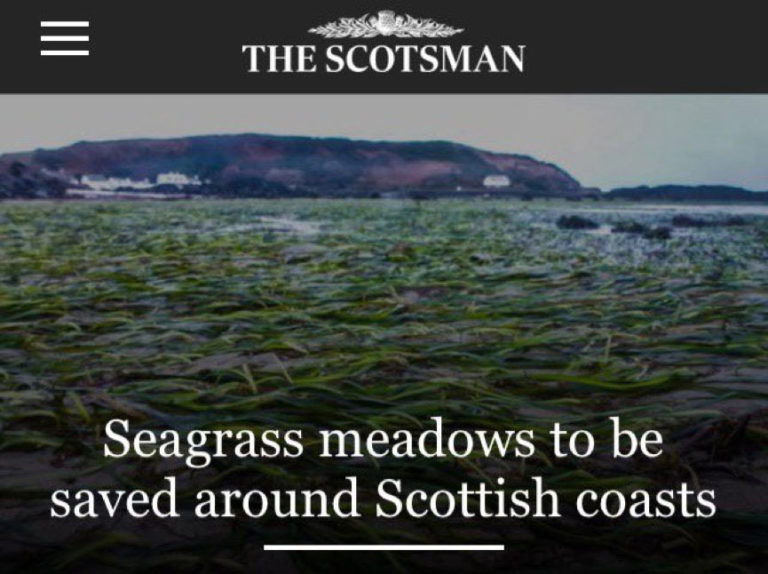
A New Dawn For Scottish Seagrass

Seagrasses grow all around the coast of the UK and around our islands within the intertidal zone. Scotland plays host to the highest abundance of seagrass when compared to the rest of UK, this is due to the better water quality and also a higher number of available sheltered sites

Read More »

Intern Spotlight: Lauren Clayton

As a Marine Biology student at the University of Glasgow, Scotland, I was lucky enough to be accepted on to a Maters Work Placement. This course allows a few selected students to take a year between the 3rd and 4th year of their degree to experience working for an organisation

Read More »

Where is all the seagrass? Project Seagrass wants you to help!

Help us record the seagrass near you At Project Seagrass we created a conservation tool that could lead to new discoveries about one of the ocean’s most underappreciated habitats — seagrass. With our new phone app and website, Seagrass Spotter, ocean enthusiasts around the British Isles can become citizen scientists who

Read More »

Seagrass Provides Easter Eggcitement

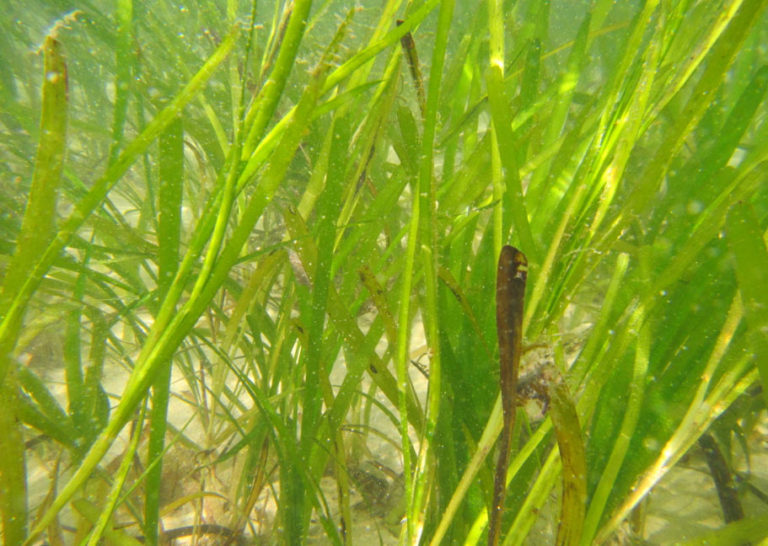
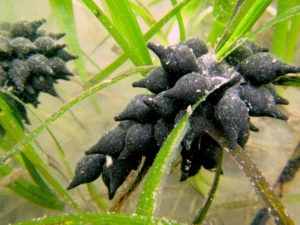
Seagrass meadows provide a suitable environment for eggstraordinary creatures to lay and secure their weird and wonderful eggs. As its Easter, we thought it would be a nice opportunity to introduce you to eggs that can be found in seagrass meadows around our coast. Cuttlefish eggs or “sea grapes” attached

Read More »
conference

CERF 2015 – Grand Challenges in Coastal and Estuarine Science

A long-standing tradition of Coastal and Estuarine Research Federation (CERF) conferences is the friendly and collegial environment and the unwavering support for early career scientists. This #CERF2015 was no exception with a multitude of leading marine scientists inspiring the next generation with #OceanOptimism as together we tackle the Grand Challenges

Read More »
biodiversity

Starting the Seagrass and Dugong fightback

  The Dugong (Dugong dugon) is IUCN Red listed as Vulnerable, in many of the 46 range states that contain Dugong its status is a lot worse. Historic hunting, loss of its seagrass habitat and the impacts of by-catch have been the primary causes of its decline. Back in 2007 the

Read More »
conference

Registration for the 12th International Seagrass Biology Workshop is Now Open!

The International Seagrass Biology Workshop (ISBW) is the only international meeting specifically tailored to seagrass scientists, professionals and students. Abstract submissions are now open as are proposals for workshops. All payment is via PayPal using credit/debit cards. There is one registration fee. It covers access to all parts of the conference program, including the

Read More »
biodiversity

Learning to protect seagrass in the heart of the Coral triangle.

  Indonesia is at the heart of the Coral Triangle, an area characterised by having the World’s highest marine biodiversity. With over 17000 islands, 51,00km2 of coral reef and at least 30000 km2 of seagrass its marine life is extensive and spectacular. But with a growing population, rapidly expanding GDP,

Read More »
biodiversity

Puttalam Lagoon – Paradise Lost?

At the end of August I spent 10 days conducting fieldwork in Pattalam Lagoon, which is situated in the north west of Sri Lanka. The purpose of my visit to Puttalam Lagoon was to set up socio-economic and fish landings surveys with a research collaborator, who will now complete the

Read More »