NEWS

NEWS

Keeping you up to date with Project Seagrass news and views with a mixture of field notes and commentary on seagrass and marine conservation topics.

What does the future hold for seagrass?

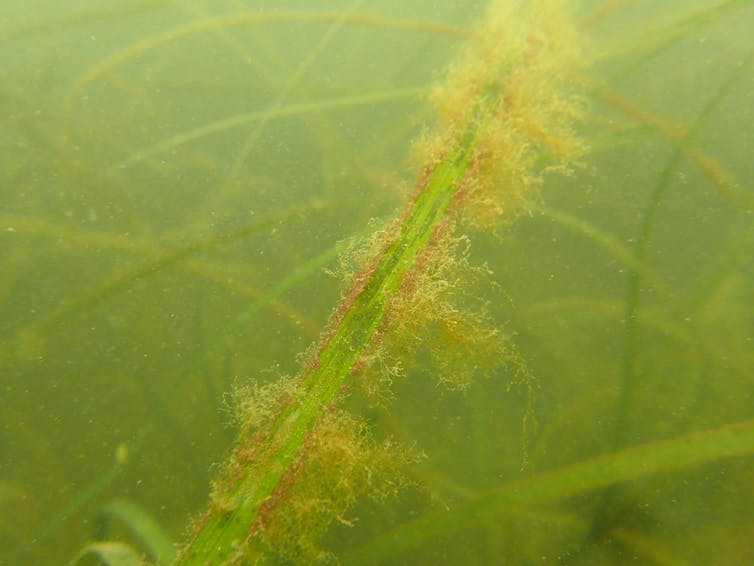
The savannahs of the seas – our humble seagrass meadows are in peril In its Green Seas episode, Blue Planet II introduced us to seagrass meadows. Scarcely touched upon in past media when compared to coral reefs, mangroves and even kelp forests, we learnt about the vast potential of these

Read More »

Blue Planet, Green Seas. What’s the take home message?

This weekend we are in for a treat as the BBC Blue Planet team broadcast episode 5 “Green Seas” for the first time (Sunday 26th November, BBC One, 8pm – don’t miss it!). The episode will reveal amazing footage of charismatic animals such as the Weedy Sea Dragon, the Green Sea Turtle

Read More »

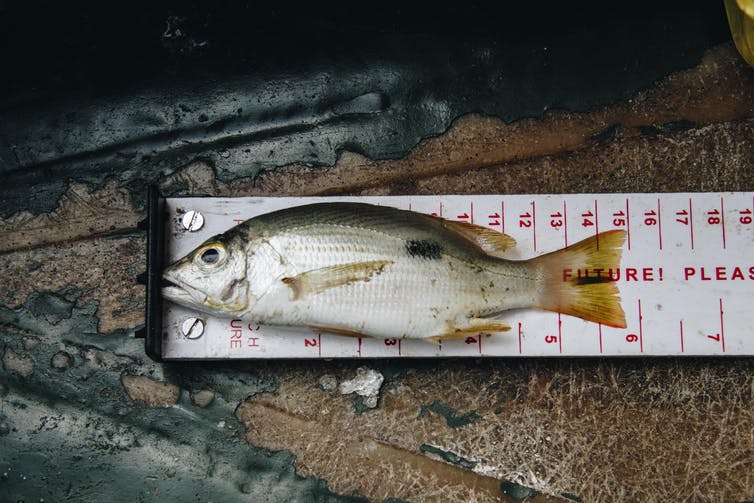
Seagrass meadows key fishing ground globally

Fishing in seagrass occurs around the globe; if there is seagrass (and people) there is fishing. Still, the nature and extent of fisheries in seagrass is poorly understood. It is a prerequisite for natural resource management to understand resource exploitation, therefore we decided to investigate this further. Seagrasses are plants that

Read More »

Festivals of Seagrass: Cause for Ocean Optimism!

Over the next few days the Save Posidonia Project, Formentera celebrates the Save Posidonia Festival. The idea behind the project is to host a festival where culture, sport and environmental activities will be carried out that celebrate the fantastic contribution that the seagrass Posidonia oceanica makes to Mediterranean well-being. The festival is aimed both

Read More »

Year FOUR of Project Seagrass!

So that’s 4 years, 1460 days, 35,040 hours, 2,120,400 minutes or 12,614,400 seconds of seagrass! 2016/2017 has been our biggest 12 months to date, with our hosting of the 12th International Seagrass Biology Workshop at Nant Gwrtheyrn the obvious highlight. But that’s not all we’ve been up to this year. Since our ‘3 years

Read More »

What a way to celebrate World Environment Day!

WOW! I only went and ran THREE marathons in SIX weeks!   TODAY, on non-other than World Environment Day (WED), I am SO happy to have completed the challenge I set down for myself, and to have raised over £1,700 for Project Seagrass to continue their great work. What an amazing way

Read More »

Talking about Plastic Pollution during EU Green Week

Kayaking on the Isle of Skye’s lochs you feel as though you’re a million miles from civilisation; back to basics with wildlife flitting about you and crystal clear waters to peer into. There’s no rumble in your ear of background traffic noise or aeroplanes going overhead. Just you, your paddling

Read More »

Searching for seagrass on Skye

Scotland threw it all at us, and I think for the most, we enjoyed every part! After 13 hours on the road, we turned off to Heaste, the village we were staying in on the Isle of Skye. We headed off down a single-track lane, full of blind corners and summits,

Read More »
A screenshot of the research paper "New directions for Indigenous and local knowledge research and application in fisheries science: Lessons from a systematic review" overlain on an image of seagrass in North Wales
new science

Indigenous and Local Knowledge in Fisheries Science

Seagrass meadows play a critical role in keeping our oceans healthy and stocked with food, providing valuable nursery habitat to over 1/5th of the world’s largest 25 fisheries. Seagrass meadows are also important to small-scale fisheries, particularly as a place to find and collect a reliable source of food with some

Read More »

Coastal Communities Network Gathering 2024

Earlier this month Project Seagrass’ Senior Conservation Officer Katy Waring attended the yearly gathering for coastal communities from the Coastal Communities Network  facilitated by Fauna and Flora International. The event was held on the island of Millport at their field studies centre.   The 3-day event was inspiring; groups from around

Read More »
From left to right: View of the STARESO harbor entrance with Posidonia meadow islands and an accumulation of dead leaves. Close-up of litter accumulation. Experimental benthic incubation device ('bell') installed on accumulations of Posidonia dead leaves (10 m deep). Credit: G.Lepoint & W. Champenois / ULiège
new science

Dead leaves in sea break down into a compost that produces oxygen

Researchers from the University of Liège (BE) studied the fate of the material produced by Posidonia seagrass meadows. This study, carried out in the Mediterranean Sea at STARESO, shows that the dead leaves of what is commonly known as Neptune grass accumulate in shallow areas, where they break down like

Read More »
Seagrass in Orkney

Climate Impact Partners and Deloitte Join Forces to Unlock Large-Scale Seagrass Recovery Financing

Climate Impact Partners and Deloitte, in collaboration with Project Seagrass and the UK’s National Oceanography Centre, announce a groundbreaking program to fund UK seagrass recovery and unlock long-term finance to save and reinstate vital seagrass meadows. The program will fund critical research across UK seagrass meadows, mapping the ecosystems and developing methods to restore them

Read More »
Neil is standing on board Project Seagrass' boat Gwen. He is wearing a hat, sunglasses, and a red coat.
Volunteer

Seagrass Ocean Rescue Volunteer Profile: Neil

The Seagrass Ocean Rescue North Wales programme relies on the commitment and enthusiasm of local volunteers. We spoke to regular volunteer Neil about his experiences of volunteering as part of the programme. Volunteer Interview Tell us a little bit about yourself: I grew up in North Wales, then moved around

Read More »